What's on this page
- What heavy equipment financing actually is
- The machines this covers: excavators, dozers, loaders, and more
- Attachments and implements: financed with the machine or separately
- Financing versus leasing heavy equipment
- What the rate really depends on
- Illustrative rate ranges by borrower and equipment profile
- The term length tradeoff: matching the loan to the machine
- Down payment and the norm on heavy equipment
- The total cost of financing, worked in full
- Where every dollar you repay actually goes
- Financing versus paying cash
- New versus used heavy equipment: how financing differs
- Buying at auction and how financing treats it
- The lender ladder: dealer, bank, SBA, and specialty equipment lenders
- Balloon payments and dollar buyout structures
- Section 179 and depreciation, in general terms
- What lenders actually look at
- Red flags in heavy equipment financing contracts
- How to compare heavy equipment financing offers
- Financing with bad credit or a new construction business
- A worked example: one machine, financed end to end
- Common mistakes when financing heavy equipment
- The bottom line
Short answer: Heavy equipment financing is a loan secured by the machine itself, priced mainly on credit, time in business, and the equipment's age and hours, with illustrative rates from the high single digits for a strong file on a new machine to the mid teens for a newer operation on a used one. Down payments commonly run 10 to 20 percent, and the number that actually matters is the total of payments over the full term, not the monthly figure a dealer leads with.
Heavy equipment financing runs on the same underlying mechanics as financing any serious piece of business equipment, with one wrinkle that changes almost every number in the deal: the collateral is a large, slow-depreciating but hard-working asset that racks up real hours on real jobsites, and that fact shapes the rate, the term, and the resale math more than it does for a small shop tool. A machine that finances the wrong way can quietly cost thousands more than the same machine financed well, and the difference rarely shows up until the loan is already signed.
This breakdown covers what heavy equipment financing is, how rates are set by credit, time in business, and the machine itself, the term-length tradeoff, the down payment norm, and the total-cost math worked all the way through on a real example. It also covers the parts specific to heavy equipment: attachments, auction purchases, and the lender ladder that runs from the dealer’s own finance desk to a bank to a specialty equipment lender. If you are still deciding whether to buy the machine at all rather than lease it, our lease vs buy analysis runs that comparison in full; this breakdown assumes you are financing a purchase and want to do it well. Model your own numbers as you read with the equipment financing calculator.
Key takeaways
- Heavy equipment financing is a loan secured by the machine itself, which makes it easier to qualify for and cheaper than unsecured business debt.
- Rates are driven mainly by credit, time in business, and the machine's age and hours. Illustrative ranges run from the high single digits to the mid teens.
- Match the term to the machine's realistic working life. A term that outlasts the equipment's earning years means paying on a dead asset.
- The real cost is the interest plus fees over the full term, never the monthly payment a dealer or lender leads with.
- New machines generally finance on better terms than used; the gap can erase a used machine's sticker-price discount once financing is added.
What heavy equipment financing actually is
Heavy equipment financing is a loan whose collateral is the machine you are buying, whether that is a single skid steer for a landscaping crew or an excavator for a grading contractor. Because the machine secures the debt, the lender’s downside is covered by an asset it can repossess and resell, so these loans are usually easier to approve and carry lower rates than a general business loan or a line of credit backed by nothing but your promise to pay. You are, in effect, borrowing against the value of the machine itself.
The structure is straightforward on paper. You contribute a down payment, typically a share of the purchase price, and the lender advances the rest. You repay that balance in fixed monthly installments over an agreed term, with interest, until the loan is cleared and the machine is yours free of any lien. Some agreements transfer ownership at the end for a token final payment, but economically they behave like a purchase loan. The machine ideally earns job revenue across the same years you are paying it off, so the asset helps fund its own financing out of the value it produces.
The machines this covers: excavators, dozers, loaders, and more
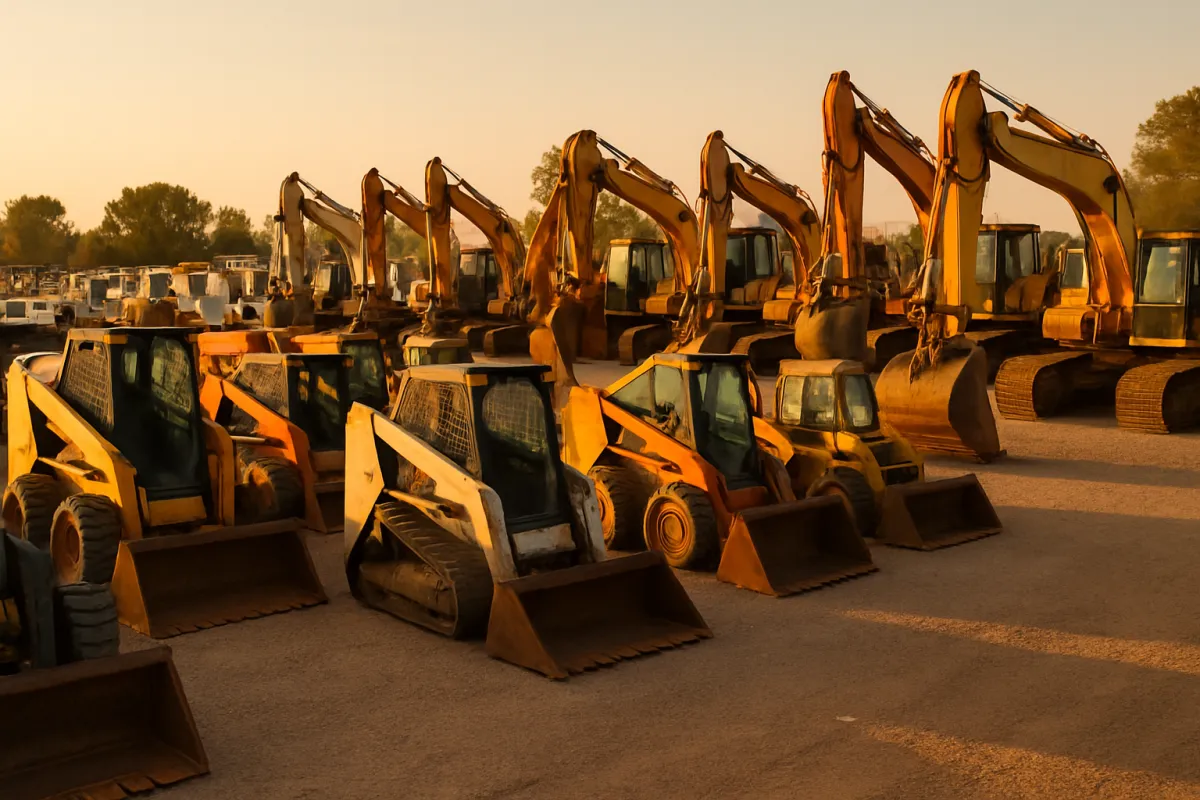
“Heavy equipment” spans a wide range of machinery, and a lender treats each category a little differently based on how common it is and how liquid its resale market is. Excavators, skid steers, and compact track loaders sit at the common, liquid end, with deep used markets and plenty of comparable sales, which generally supports friendlier terms. Bulldozers, motor graders, backhoes, and wheel loaders follow close behind, still common enough that most equipment lenders quote them without hesitation.
Cranes, specialized paving equipment, and large-scale earthmoving machines sit further out on the spectrum. They cost more, the pool of buyers who can operate and resell them is smaller, and a lender prices that narrower market into the rate and the term. None of this means specialized equipment cannot be financed well, only that the specific machine, not just the broad category “heavy equipment,” decides much of what a lender will offer. Price the collateral honestly before assuming a headline rate applies to your unit.
Attachments and implements: financed with the machine or separately
A base machine is rarely the whole purchase. Buckets, grapples, augers, hydraulic hammers, forks, and other attachments can add a meaningful share of the total cost, and how they are financed varies by lender and deal. Some lenders roll attachments into the same loan as the base machine, treating the whole package as one piece of collateral with one payment. Others finance the machine and the attachments as separate lines, which can make sense when an attachment will be swapped, sold, or upgraded on a different schedule than the machine itself.
The practical question to ask before signing is whether the attachments are included in the collateral description and the payoff figure, because that affects what happens at trade-in, at payoff, or if the loan ever needs to be refinanced. Bundling is usually simpler to manage month to month; separating is usually cleaner when the attachments turn over faster than the base machine. Neither is automatically wrong, but assuming the answer without checking the paperwork is how operators end up confused about what they actually own free and clear.
Financing versus leasing heavy equipment
Financing and leasing both put a machine to work without paying the full price up front, but they answer different questions. Financing builds toward ownership: once the loan is paid off, the machine is yours, and it continues earning without a payment attached. Leasing trades ownership for flexibility, typically a lower monthly payment and the option to upgrade, return, or buy the machine out at the end of the term, which suits equipment that changes quickly or that a business wants to keep off its balance sheet.
For most contractors planning to run a machine for its full working life, financing toward ownership is the cheaper path over time, because a lease that runs long enough to approximate ownership usually costs more in total than a purchase loan would have. Leasing earns its keep when the equipment need is short-term, seasonal, or genuinely uncertain, or when preserving the option to swap technology matters more than owning the metal outright. Our buy versus lease breakdown works the payback math on this decision in full.
What the rate really depends on
The interest rate on a heavy equipment loan is not one market number; it is priced deal by deal, and a handful of factors do most of the work. Credit, both personal and business, is the first, because it is the lender’s best read on how likely you are to repay. The second is time in business and operating history, since an established contractor with steady project revenue is a safer bet than a new operation with no track record, and lenders price that difference directly into the rate.
The machine itself is the third factor, and it matters more here than it does for a lot of equipment, because heavy machinery is priced on hours and condition in a way that can be harder to verify at a glance than a newer, lower-hour unit. Age, hours, make and model, and how liquid the resale market is for that specific machine all feed into the lender’s view of the collateral. A common, easily resold excavator in good condition supports a lower rate than an unusual or highly specialized machine a lender would struggle to move if it had to repossess.
Illustrative rate ranges by borrower and equipment profile
It helps to see how those factors translate into rough rate bands. The chart below sketches illustrative annual rates for four borrower and machine combinations financing the same class of equipment. These are planning shapes, not quotes, and real offers vary by lender, region, equipment type, and the specifics of your file.
Illustrative heavy equipment loan rate, by borrower and equipment profile
Same equipment class, different borrower and collateral. Illustrative planning ranges, not quotes.
A strong, established contractor buying new can pay well under half the rate a new operation pays on a used machine. Bar widths are each rate as a share of the highest shown, roughly 15 percent.
The spread in that chart is the whole reason it pays to shop the deal and to strengthen your file before you apply. Moving from the new-business band toward the established band, or from a used machine toward a new one, can meaningfully cut the rate, and on a six-figure balance over several years that difference compounds into real money. It is also why a used machine that looks like a bargain at auction can quietly cost more to finance once the higher rate is added back in.
The term length tradeoff: matching the loan to the machine
The term is the number of months you take to repay the loan, and it trades monthly comfort against total cost. A longer term lowers the monthly payment, easing cash flow, but it stretches the interest across more months and raises the total you pay. A shorter term does the reverse: higher monthly payments, less total interest, and the debt cleared faster. Neither is universally right; the correct term depends on the machine.
The governing principle is to match the term to the machine’s realistic working life and the job revenue it produces. Financing a machine over a period longer than it will realistically earn well means paying on an asset already past its productive prime, which is how contractors end up servicing debt on a machine headed for major overhaul or resale. Financing it over too short a term can strain cash flow needlessly. Older or higher-hour machines, with less usable life left, should carry shorter terms for exactly this reason, which is also why lenders commonly cap the term on used equipment to something well short of what a new machine can carry.
Down payment and the norm on heavy equipment
Most heavy equipment loans ask for a down payment, and a range of 10 to 20 percent of the price is a commonly cited norm, though the actual figure moves with the lender, the borrower’s file, and the machine’s age and specialization. The down payment does several things at once: it lowers the amount financed, shrinks the monthly payment, cuts the total interest paid over the term, and often earns a slightly better rate because the lender is advancing less against the same collateral.
The catch is that every dollar of down payment is a dollar of working capital that leaves the business the day you buy the machine. If cash is scarce or has a better use funding the next bid, a smaller down payment preserves it at the cost of a little more interest. If the business is cash-comfortable and wants to minimize the financing cost, a larger down payment is cheaper over the term. Run both against your own numbers in the calculator before deciding, because the interest saved is easy to quantify while the value of the cash kept depends on what else it funds.
The total cost of financing, worked in full
Here is the number that actually matters, and the one buyers most often skip past in favor of the monthly payment. The total cost of financing is the interest plus any fees paid across the entire term, on top of the machine’s price. It is what the convenience of borrowing actually costs.
Work it on an illustrative deal. Take a $120,000 used excavator with 15 percent down, so $18,000 leaves the account up front and $102,000 is financed. At an illustrative 11 percent annual rate over 60 months, the monthly payment lands near $2,218. Multiply that by 60 payments and the total of payments comes to roughly $133,080, so about $31,080 of that is interest. Add a small documentation fee and the financing cost climbs a little further. All in, that $120,000 excavator costs somewhere around $151,100 by the time the loan is done, and the extra amount is the price of not paying cash.
The discipline this enforces is simple: always compare the total of payments, never the monthly figure alone. A lender can make almost any machine look affordable by stretching the term until the payment shrinks, but a longer term quietly piles on interest. Two offers with similar monthly payments can carry very different total costs if their terms differ, and the only honest comparison is the full amount paid from first payment to last.
Where every dollar you repay actually goes
It helps to see the composition of what you repay. On the illustrative deal above, most of what you hand over is principal, the money borrowed, with interest and a small fee making up the rest. The stacked bar below shows that split across the full term.
Where every dollar you repay on a financed excavator goes
Illustrative $102,000 financed at 11% over 60 months, plus a small documentation fee. Shares sum to 100.
Close to a quarter of every dollar repaid on this illustrative deal is the cost of financing rather than the machine. A higher rate or a longer term grows the interest slice; more down or a shorter term shrinks it.
That interest slice is not fixed; it is the lever the earlier sections describe in action. A stronger rate, a shorter term, or a larger down payment all shave it down, while a weak rate stretched over a long term fattens it. Every improvement to the rate or the structure moves the line in your favor, and on a yard financing several machines the same way, that improvement multiplies across every unit.
Financing versus paying cash
If the business has the cash on hand, the honest question is not whether it can afford the machine but whether it should spend the cash or finance and keep it. Paying cash is the cheapest path in pure dollar terms, because it carries no interest or fees at all. But cash spent on a machine is cash unavailable for fuel, maintenance, payroll, or the next opportunity, and that opportunity cost is the hidden other side of the ledger.
The case for financing rests on preserving working capital. The cash that would have gone into the machine stays available to cover a slow month, an unexpected repair, or a chance to bid on a bigger job, and financing spreads the machine’s cost across the same years it is earning. The premium paid for that flexibility is the interest, and the decision comes down to a comparison: if the machine reliably produces more profit than the financing costs, and the cash has a better use than sitting in a depreciating asset, financing is the disciplined choice even when paying cash outright is possible. If the machine’s utilization is thin and the cash has nowhere better to go, paying cash and skipping the interest wins.
New versus used heavy equipment: how financing differs
Financing follows the collateral, so new and used machines are financed on noticeably different terms. New equipment usually finances better across the board: lower rates, longer available terms, and smaller down payments, helped along by manufacturers or their captive finance arms who sometimes subsidize new-equipment loans to move inventory, occasionally with promotional rates well below what an independent lender would offer.
Used machines are financeable too, but the terms tighten. Rates commonly run several points higher because the collateral is worth less and its remaining life is harder to pin down, terms are shorter because lenders cap the loan to the machine’s realistic remaining working life, and down payments are often larger to give the lender more cushion. The consequence worth remembering is that cheap new-equipment financing can narrow or even erase the sticker savings that made a used machine attractive in the first place. Never compare a used sticker price to a new one; compare the total financed cost of each. Our used versus new valuation breakdown works through the ownership-cost side of that same decision.
Buying at auction and how financing treats it
Auctions are a common way to buy heavy equipment, and they add a wrinkle financing does not always handle smoothly. Auction purchases often require payment on a tight timeline, sometimes within days, which can be faster than a standard financed closing. Some equipment lenders offer pre-approved buying power specifically for auction purchases, letting a qualified buyer bid with financing already arranged; others require the machine to be inspected and appraised first, which can be difficult on an auction’s compressed schedule.
The collateral question also looks different at auction. A machine sold “as is” with limited inspection history is a harder asset for a lender to price confidently, which can mean a higher rate, a larger down payment, or a shorter term than the same machine bought through a dealer with a service history attached. None of this rules auction purchases out, but it means lining up financing, or at least a lender’s appetite for auction collateral, before the gavel falls rather than after.
The lender ladder: dealer, bank, SBA, and specialty equipment lenders
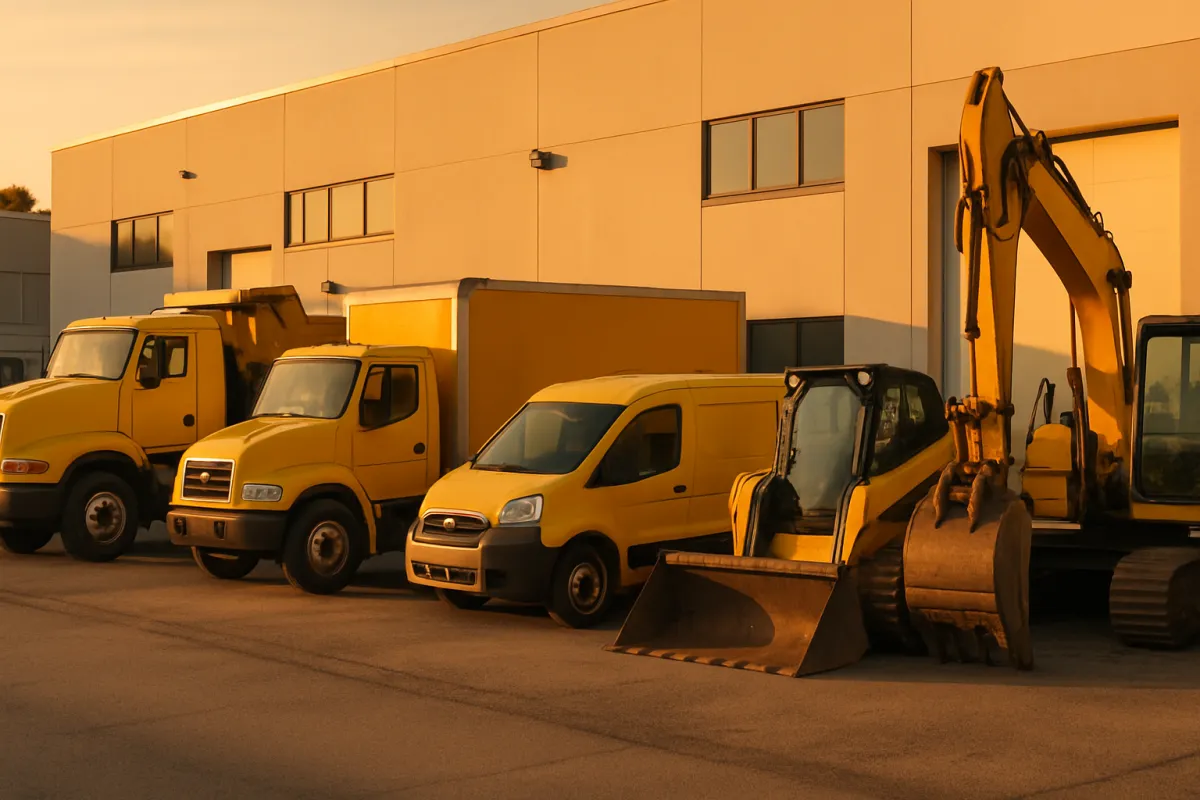
Where you borrow shapes both the price and the speed of the deal. At one end sits captive or dealer financing arranged through the equipment manufacturer or dealership at the point of sale, often the fastest and most convenient path, sometimes with promotional rates on new machines a bank cannot match because the manufacturer is motivated to move inventory.
Banks and credit unions typically offer the lowest rates for well-qualified, established contractors, but they move slowly and scrutinize the file hardest. An SBA-backed loan can also fund equipment, often at a competitive rate with a longer term than a conventional bank loan allows, at the cost of more paperwork and a slower close; our SBA equipment financing breakdown covers when that route is worth the extra process. Online and specialty equipment finance companies occupy the middle: faster than a bank, more flexible with newer operations and thinner files, but priced higher to cover the added risk and speed. The move that consistently pays is to get more than one quote across the ladder, because the same machine is priced very differently at each rung.
Balloon payments and dollar buyout structures
Heavy equipment loans end in different ways, and the ending changes both the monthly payment and the total cost. A dollar-buyout structure, common on equipment finance agreements, means regular payments run the full term and then a token final payment transfers ownership, so it behaves like a straightforward purchase loan. A balloon structure keeps the monthly payment lower by deferring a large lump sum to the end of the term, which must then be paid, refinanced, or settled by returning the machine depending on the agreement.
Balloons improve monthly cash flow but raise the total cost of financing and concentrate risk at the end of the term, when the business may or may not have the cash or the refinancing options assumed at signing. There are legitimate uses, mostly around matching payments to a seasonal construction cycle, but a balloon should never be a surprise. Read exactly what falls due, how much, and when, and have a concrete plan for it before signing.
Section 179 and depreciation, in general terms
Financed heavy equipment interacts with the tax code in ways that can meaningfully change the real cost, and this is one area where general awareness matters but specifics belong with a professional. In broad terms, businesses can often deduct the cost of qualifying equipment, sometimes a large share of it in the year placed in service, through provisions commonly discussed under names like Section 179 and bonus depreciation in the United States, and financing does not generally disqualify you from claiming the applicable depreciation on the full cost.
The practical effect is that the after-tax cost of a machine can be lower than the sticker suggests, and the interest paid may itself be deductible as a business expense, illustratively. But the rules carry limits, qualification tests, phase-outs, and annual changes, and they differ by how the business is structured. Nothing here is tax advice, and no figure in this breakdown should be treated as a promise about your situation. Involve an accountant before you sign, so the financing structure and the tax treatment are planned together.
What lenders actually look at
Approving a heavy equipment loan comes down to a handful of questions the lender is really asking. Time in business and operating history sit near the top: a longer track record signals stability and lowers the perceived risk, which is why newer operations face higher rates and stiffer requirements. Project revenue and cash flow are next, specifically whether the new payment is comfortably covered by the business’s actual earnings rather than optimistic bidding projections.
Credit history, personal and business, tells the lender how debt has been handled before, and it moves the rate as directly as anything. Because the loan is secured by the machine, the equipment itself is part of the underwriting: its age, hours, condition, and resale market all matter, since that collateral is the lender’s fallback if the loan goes bad. Newer operations and thin files are not shut out; dealer and specialty equipment lenders exist specifically to serve them, usually at higher rates, larger down payments, or with a personal guarantee attached.
Red flags in heavy equipment financing contracts
Not every financing offer on a machine is a good one, and a few warning signs reliably mark the deals worth a second, harder look.
- A rate quoted only as a monthly payment or a factor, never as an APR. If the annualized rate is not visible, offers cannot be compared, and that opacity is usually deliberate. Ask for the APR and the total of payments in writing.
- Prepayment penalties or front-loaded interest. These quietly punish paying early and can erase the flexibility a business thought it was buying.
- A balloon payment buried in a low monthly quote. A payment that looks great may hide a large lump sum due at the end.
- Vague or open-ended fees. Documentation and administrative fees should be named and capped in the contract, not left as blanks a lender can fill in later.
- Pressure to sign before comparing quotes. A sound deal survives a second lender’s look; one that cannot is telling you something.
The pattern behind all of these is a lender making the deal look cheaper or simpler than it is. The defense is the same each time: insist on the APR and the total of payments, read the end-of-term terms, and compare at least two written offers before committing.
How to compare heavy equipment financing offers
How do you compare heavy equipment financing offers when down payments, rates, and terms all vary at once? Normalize each offer to two numbers: the APR, which prices the borrowing itself, and the all-in cost, meaning the down payment plus the total of payments plus every fee. The monthly payment is the figure a seller leads with precisely because it hides the differences: a longer term or a smaller down payment shrinks the monthly while quietly raising the total.
Work it on the excavator this breakdown has priced throughout. Offer one is the familiar deal: a $120,000 machine with 15 percent down, so $18,000 up front and $102,000 financed at 11 percent over 60 months, near $2,218 a month and about $133,080 in total payments, for an all-in cost around $151,100 with a small fee. Offer two on the same machine asks only 10 percent down, $12,000, and finances $108,000 at 11.5 percent over 72 months, which lands near $2,082 a month, friendlier than offer one, with about $149,900 in total payments, for an all-in cost around $161,900 including fees. Offer two looks cheaper every single month and still costs roughly $10,800 more before it is done. Only the normalized comparison shows that, and every figure here is illustrative. Run each offer through the calculator and the cheaper deal identifies itself.
Financing with bad credit or a new construction business
A thin credit file or a construction business still in its first year or two does not automatically close the door on heavy equipment financing, but it does change the shape of the deal. Dealer and vendor finance programs are often the friendliest entry point, since the dealer wants the machine sold and may work with lenders who specialize in thinner files. Specialty equipment finance companies exist specifically to serve this segment, usually trading a higher rate and a larger down payment for a faster, more flexible approval than a bank would offer.
A personal guarantee is common on thinner files, meaning the owner stands behind the loan personally in addition to the business. Building a track record, even on a smaller machine financed and paid reliably for a year or two, is one of the most direct ways to unlock better terms on the next purchase. Our small business loan guide covers the broader financing landscape a newer operation is working within, beyond equipment specifically.
A worked example: one machine, financed end to end
Pull it all together on a single deal so the pieces connect. A grading contractor buys a $120,000 used excavator and finances it. It puts 15 percent down, which is $18,000 out of pocket today, leaving $102,000 to finance. The file is an average one on a used machine, so it is quoted an illustrative 11 percent annual rate, and it chooses a 60-month term because that comfortably fits the excavator’s expected working life on this contractor’s jobs.
The monthly payment on those terms works out to roughly $2,218. Across 60 payments the business pays about $133,080 to retire the $102,000 balance, so close to $31,080 of that is interest, the price of financing. Add the up-front $18,000 down payment and the all-in cash outlay comes to around $151,100 for a machine that would have cost $120,000 in cash, plus a small documentation fee on top. Whether that trade is a good one depends on what the $120,000 in preserved cash earned elsewhere and how much job profit the excavator produced while it was being paid off. Run your own version of this in the calculator before committing, and if the equipment is not an excavator at all but a kitchen line or a machine tool, our equipment financing breakdown works the same mechanics on that collateral instead.
Common mistakes when financing heavy equipment
A handful of mistakes show up again and again on financed machines, and most are avoidable with a little planning.
- Comparing monthly payments instead of the all-in cost. A lower payment on a longer term can cost more in total, as the worked comparison above shows.
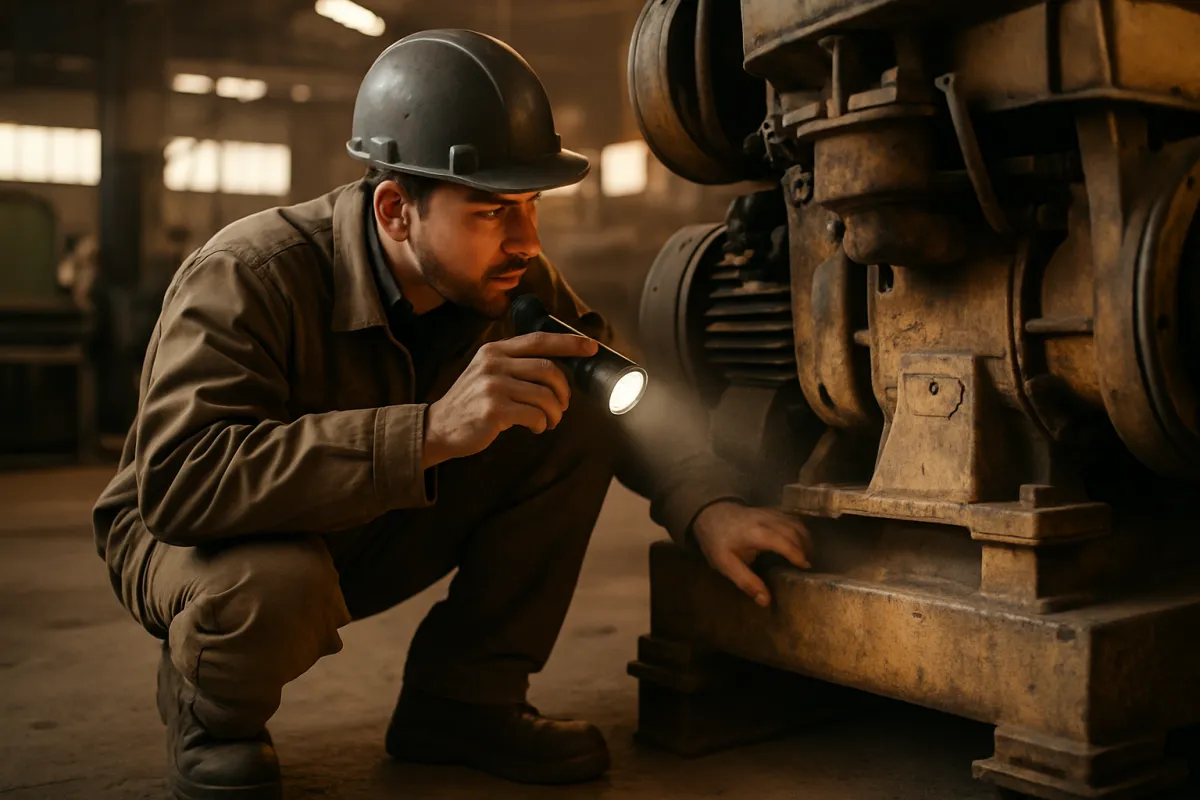
- Skipping an independent inspection on a used or auction machine. The collateral is the loan’s backstop; buying hours or damage you did not account for weakens that backstop and your own equity in the deal.
- Matching the term to the loan’s lowest payment instead of the machine’s working life. Paying on a machine past its productive years is paying for nothing.
- Treating the down payment as fixed. It is a lever; running the numbers at a few different down payment levels often reveals a sweet spot between cash preserved and interest paid.
- Signing the first offer without a second quote. The lender ladder prices the same machine very differently rung to rung, and the only way to know is to ask more than one lender.
The bottom line
Heavy equipment financing is not complicated once you see its shape. It is a loan secured by the machine itself, priced mainly on credit, time in business, and the equipment’s age and condition, repaid over a term that should match how long the machine will realistically earn. The cost that matters is the interest plus fees across the full term, not the monthly payment a dealer leads with, and on a typical deal that cost can add a fifth or more to the price of the machine.
The contractors who finance well treat the loan as a set of levers rather than a fixed quote. They strengthen the file before applying, shop the deal across the dealer-bank-online ladder, size the down payment to balance interest against working capital, match the term to the machine’s realistic working life, and read the end-of-term and prepayment terms before signing. Do that, and financing becomes what it should be: a way to put a machine to work today and let it help pay for itself, at a cost chosen deliberately rather than one the paperwork chose instead.
Written from the borrower’s side of the table, not the lender’s: this breakdown is educational material, not financial, tax, lending, or legal advice, and it endorses no specific lender, program, or machine. Every rate, payment, percentage, and split here is an illustrative sketch built to teach how the math works, and an actual offer will be priced on your own credit, revenue, history, and the specific equipment, in a market that moves constantly. Section 179 and depreciation rules in particular carry limits, qualifications, and annual changes that vary by jurisdiction and business structure. Get written quotes on the real deal in front of you, and put your accountant and a lender you trust between you and any signature.
Frequently asked questions
How does heavy equipment financing work?
Heavy equipment financing is a loan secured by the machine itself, so an excavator, a skid steer, or a loader stands in as the collateral rather than your house or an unsecured personal guarantee alone. You put down a share of the price, a lender advances the rest, and you repay it in fixed monthly installments over an agreed term. Because the lender can repossess and resell the machine if you default, these loans are usually easier to qualify for and priced below unsecured business debt. The machine earns job revenue across the same years you are paying it off, which is the entire point of the structure.
What are typical heavy equipment financing rates?
Illustratively, heavy equipment loan rates commonly span from the high single digits for a strong, established contractor buying new, to the mid teens for a newer operation financing a used machine. Credit, time in business, and the equipment's age and hours do most of the work in setting where a specific deal lands. These are planning ranges, not quotes, and the only rate that counts is the one a lender puts in writing after reviewing your file and the specific machine.
How much down payment does heavy equipment financing require?
A down payment in the range of 10 to 20 percent of the machine's price is a commonly cited norm, though some programs advertise less down for a strong file on newer equipment and others ask for more on an older or specialized unit. A larger down payment shrinks the amount financed, lowers the monthly payment, and cuts the total interest paid, at the cost of tying up cash the business could use elsewhere. Confirm the actual requirement with a lender rather than budgeting from any single figure.
Is it cheaper to finance heavy equipment or pay cash?
Paying cash is the cheapest path in pure dollar terms, since it carries no interest or fees at all. But cash spent on a machine is cash unavailable for fuel, payroll, repairs, or the next bid, and that opportunity cost is the other side of the ledger. Financing spreads the machine's cost across the years it is earning on jobs, so the asset helps fund its own payment while cash stays available. Whether financing is the better call depends on whether the machine's earnings comfortably outrun what the financing costs.
Does financing used heavy equipment cost more than financing new?
Usually, yes. New machines generally finance on better terms across the board because the collateral holds its value longer and is easier for a lender to price, and manufacturers or their captive finance arms sometimes subsidize new-equipment rates to move inventory. Used machines are financeable, but rates commonly run several points higher, terms are often shorter because a lender caps the loan to the machine's remaining working life, and down payments tend to be larger. The gap can narrow or erase a used machine's sticker-price discount once financing is added, so price both machines with financing attached before comparing.
What is a balloon payment on a heavy equipment loan?
A balloon structure keeps the monthly payment lower by deferring a large lump sum, the balloon, to the end of the term, which you then pay, refinance, or settle by returning the machine depending on the agreement. It eases monthly cash flow but raises the total cost of financing and concentrates risk at the end of the term. The more common alternative is a dollar-buyout structure, where regular payments run the full term and a token final payment transfers ownership, behaving like a straightforward purchase loan. Read exactly what falls due and when before signing either one.
Can a new construction business get heavy equipment financing?
It is harder than for an established contractor, but it is not automatically closed off. Newer operations commonly qualify through dealer, vendor, or specialty equipment lenders rather than a bank, usually at a higher rate, a larger down payment, or with a personal guarantee attached, because the lender is pricing for the added risk of a thin operating history. Building time in business, steady project revenue, and clean personal and business credit are the levers that most directly improve the terms available on the next machine.
What do lenders look at when approving heavy equipment financing?
Lenders weigh time in business, revenue and cash flow, credit history, and the machine itself. A longer operating history and project revenue that comfortably covers the new payment improve the rate and the approval odds, and clean personal and business credit moves the number as directly as anything. Because the loan is secured by the machine, its age, hours, condition, and resale market matter too, since that collateral is the lender's fallback if the loan goes bad. Newer operations and thinner files can still qualify, typically through dealer or online equipment-finance programs, usually at a higher rate and with a larger down payment or personal guarantee.