
What's on this page
- The depreciation cliff
- Cost per year of life: the number that decides it
- When new genuinely wins
- The total-cost lens
- Inspecting used equipment like you mean it
- Hour meters and maintenance logs
- Auction, dealer, or private party
- The warranty gap math
- The refurbished middle ground
- Pricing the downtime risk
- Financing new versus used
- The resale value strategy
- Where used is the smart buy
- Where new pays its premium
- The tax treatment sketch
- A worked example: one machine, three ways
- Red flags that kill a used deal
- Mistakes buyers make on both sides
- The bottom line
Short answer: Buy used when someone else has already paid the steep year-one depreciation and the cost per remaining year of life, price divided by working years left plus an honest repair and downtime allowance, beats new. Buy new where downtime is expensive, technology generations matter, or subsidized financing and warranty coverage close the gap. The sweet spot is buying around year three and selling around year seven.
Machine valuation starts with the same quiet question on every purchase: pay full price for new, or let someone else eat the depreciation and buy used? Most buyers answer it with a temperament, the cautious buy new, the frugal buy used, and both are guessing. The real answer is arithmetic, and the arithmetic has a shape: a steep cliff in year one, a long flattening slope after, and a price for risk that most spreadsheets never carry.
This case study runs that arithmetic end to end: the depreciation cliff and why it makes used equipment structurally cheap, the cost-per-year-of-life number that decides most comparisons, when new genuinely earns its premium, how to inspect, where to buy, and a worked example pricing one machine three ways. It extends the total-cost framework from our buy-vs-lease analysis, and you can run your own numbers as you read with the equipment ROI calculator.
Key takeaways
- New equipment loses its value fastest in year one. Buying used means someone else paid for that cliff, which is the entire structural advantage.
- The deciding number is cost per remaining year of life: price divided by working years left, plus an honest repair and downtime allowance.
- New wins where downtime is expensive, technology generations matter, or subsidized financing and warranty coverage close the gap. Price those, do not assume them.
- Channel sets risk: auctions are cheapest and least protected, dealers cost more and give recourse, private party sits between. The discount is payment for risk you now carry.
- The flattest part of the curve is the sweet spot: buying around year three and selling around year seven captures cheap working years and hands the steep losses to others.
The depreciation cliff
The moment a new machine goes to work for its first owner, it stops being new, and the market reprices it immediately and brutally. That first-year drop is the cliff: for common commercial categories, a machine can shed a double-digit share of its value in year one alone, illustratively 20 to 30 percent, before it has consumed more than a sliver of its working life. The years after are gentler. Value keeps falling, but along a flattening slope, because each additional year of age tells the market less than the first one did.
Illustrative value remaining by age
Share of original price a typical durable machine retains. Shape, not a quote.
The first year costs more value than years four through six combined. Whoever owns the machine through the cliff pays for it; whoever buys after the cliff gets working years at a structural discount.
The exact curve varies by category. Trucks and generic machinery fall fast early and hold residual value for years; fast-moving technology falls and keeps falling; specialty gear with thin resale markets can drop harder still. But the shape is nearly universal, and the shape is the argument: the price of a machine and the working life of a machine do not decline together. Value drops fastest exactly when capability drops slowest, and that wedge between price and capability is where every good used purchase lives.
Cost per year of life: the number that decides it
Strip the emotion out and the used-versus-new comparison reduces to one metric: what does each candidate cost per year of working life it delivers? Take the price, divide by the productive years remaining, and you have the raw number. Illustratively: a new machine at $60,000 with a 12 year useful life costs $5,000 per year of life. The same model at three years old, priced at $33,000 with nine years left, costs about $3,667 per year. The used machine delivers the same working year for roughly a quarter less, before any other consideration.
That raw number is the start, not the verdict, because the used machine carries costs the new one does not: a heavier repair line, more down days, no warranty umbrella. So the honest version of the metric adds an annual allowance for those. If the used machine needs an extra $1,200 a year in repairs and downtime coverage, its true cost per year rises to about $4,867, and the gap to new narrows to a few hundred dollars a year. Sometimes the gap survives the adjustment and used wins clearly. Sometimes it evaporates and new wins. Either way, the number decided it, not a temperament.
This is the same discipline our buy-vs-lease case study applies to ownership itself: count the full cost, not the sticker, and let the arithmetic call it. Put your own candidates through the ROI calculator and the companion on this page, and the comparison stops being a debate.
When new genuinely wins
Used wins the default case, so it is worth being precise about the cases new wins, because they are real and they recur. The first is warranty value: a new machine’s warranty is a repair-and-downtime insurance policy included in the price, and on complex equipment with expensive failure modes, that policy is worth thousands. Price it out honestly, what would two years of full coverage cost you to replicate, and add it to the used side’s costs before comparing.
The second is financing. Manufacturers subsidize loans on new equipment to move inventory, and promotional rates can sit far below what a lender charges on a used unit. Cheap money on the big sticker versus expensive money on the small one narrows the real gap, sometimes to nothing. The third is uptime-critical operation. Where a down day costs serious revenue, the used discount has to cover not just repairs but the expected extra days of lost production, and it often cannot.
The fourth is technology generations. Where a new generation genuinely cuts fuel, labor, or cycle time, a used machine from the prior generation carries an operating-cost penalty every single day it runs, and that penalty compounds past the purchase saving. None of these four is an argument for new by reflex. Each is a number: warranty value, rate gap, downtime delta, efficiency delta. Add them to the comparison and let the total decide.
The total-cost lens
Everything in this comparison belongs inside the total-cost-of-ownership frame, because the sticker gap between used and new is only one line in a five-year story. Our buy-vs-lease analysis showed that the purchase is typically under half of what equipment truly costs over five years; maintenance, downtime, financing, insurance, and disposal make up the rest. Used versus new moves several of those lines at once, and not all in the same direction.
Used lowers the purchase line and usually the insurance line, raises the maintenance and downtime lines, and often raises the financing line through worse rates. New raises the purchase line, lowers maintenance and downtime through warranty and fresh components, and often lowers financing through subsidized rates. The verdict depends on which movements dominate for your machine and your operation, which is exactly why category-level rules of thumb, covered later in this case study, exist but never settle an individual deal.
The practical method: build the same five-year table for each candidate, purchase share, repairs, downtime allowance, financing cost, and compare totals rather than stickers. It takes twenty minutes, and it is the difference between buying a discount and buying a story about a discount. The worked example below runs the full table for one machine three ways.
Inspecting used equipment like you mean it
Everything good about a used deal depends on the machine being what it appears to be, which makes inspection the highest-leverage hour in the entire process. The mindset matters more than any single check: you are not confirming a purchase you have already decided on, you are hunting for the reason not to buy. Buyers who inspect to confirm find confirmation; buyers who inspect to disqualify find the truth.
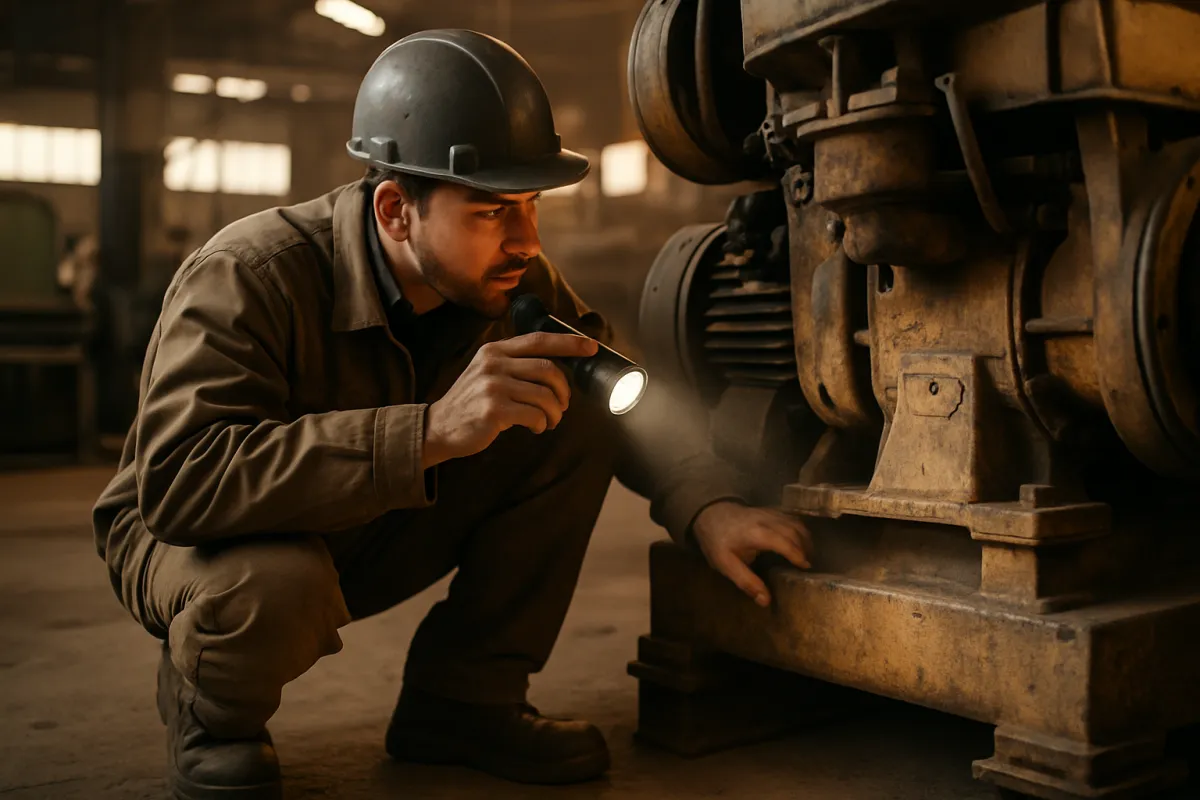
The core checklist mindset, adaptable to any category: run the machine under real load, not idle, because idle hides everything expensive. Check fluids for contamination and leaks, look for fresh paint and new fasteners in places that suggest concealed repairs, and test every function including the ones the seller says nobody uses. Learn the two or three wear points that kill machines in that specific category, and go straight at them. Bring a knowledgeable third party if the machine is outside your expertise; a few hundred dollars of technician time, illustratively, is the cheapest insurance in the deal. And weigh the seller’s behavior as evidence: transparency about flaws is a good sign, and friction around inspection is the loudest red flag there is.
Hour meters and maintenance logs
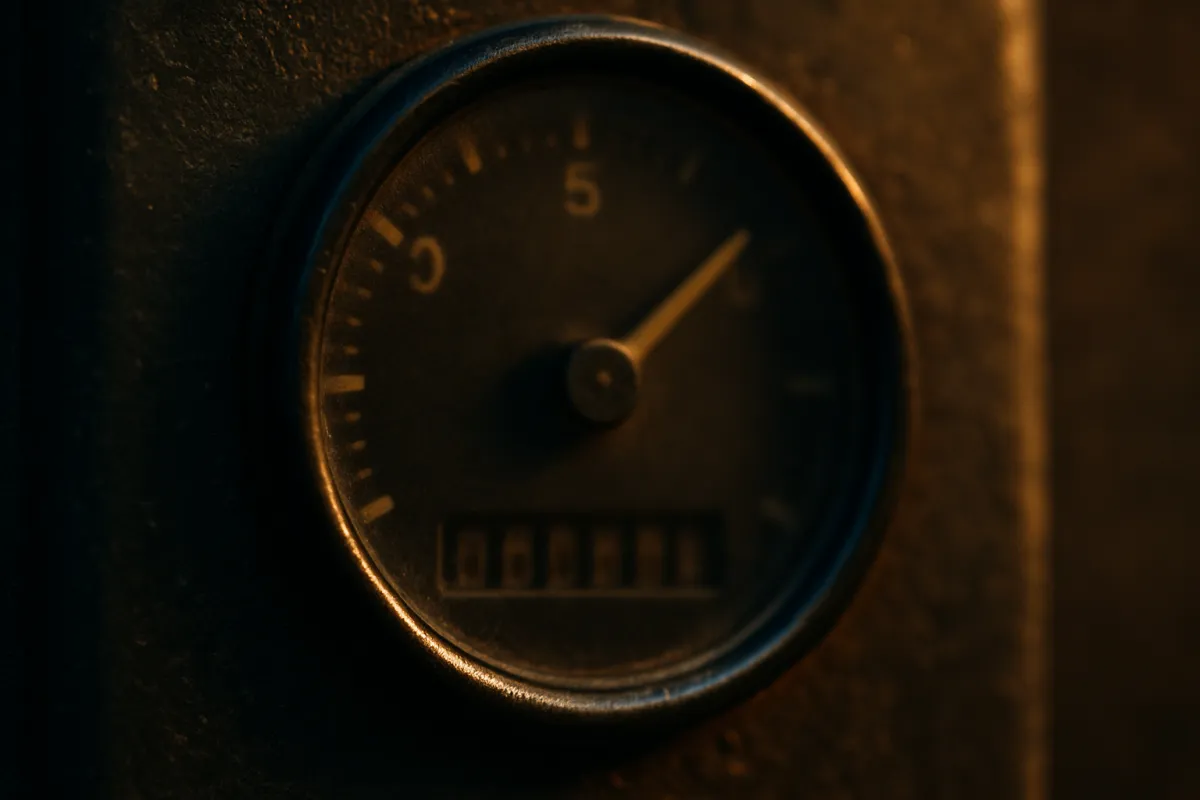
Two artifacts tell you more about a used machine than everything else combined. The first is the hour meter, or its equivalent usage record, because age in years is a weak proxy for wear while hours of operation are the real odometer. A six year old machine with light hours can be a better buy than a three year old machine that ran two shifts a day, and the hour-to-age ratio also tells you how the machine lived: steady moderate use is the gentle life, and extreme readings in either direction deserve questions.
The second artifact is the maintenance log. A documented service history, dated, itemized, ideally with invoices, is the single best predictor of remaining life, because machines that were maintained on schedule fail on schedule, and machines with no history fail on theirs. A complete log justifies paying toward the top of the range; a missing log does not make a machine unbuyable, but it converts unknown history into a discount you should demand and a repair reserve you should budget. Meters can be swapped and logs can be curated, so read both against the physical evidence: pedal wear, seat wear, polished contact points. When the artifacts and the metal disagree, believe the metal.
Auction, dealer, or private party
Where you buy sets how much risk you carry, and the three main channels form a clean ladder: price and risk fall and rise together. Auctions sit at the cheap, dangerous end. Machines sell as-is, inspection is often limited to a walk-around with no load testing, recourse is zero, and the competitive dynamic tempts buyers into paying dealer prices for auction risk, the worst square on the board. The auction discount is real, but it is payment for risk transferred to you, and it is only a bargain if you have the expertise to price that risk and the balance sheet to absorb a bad unit.
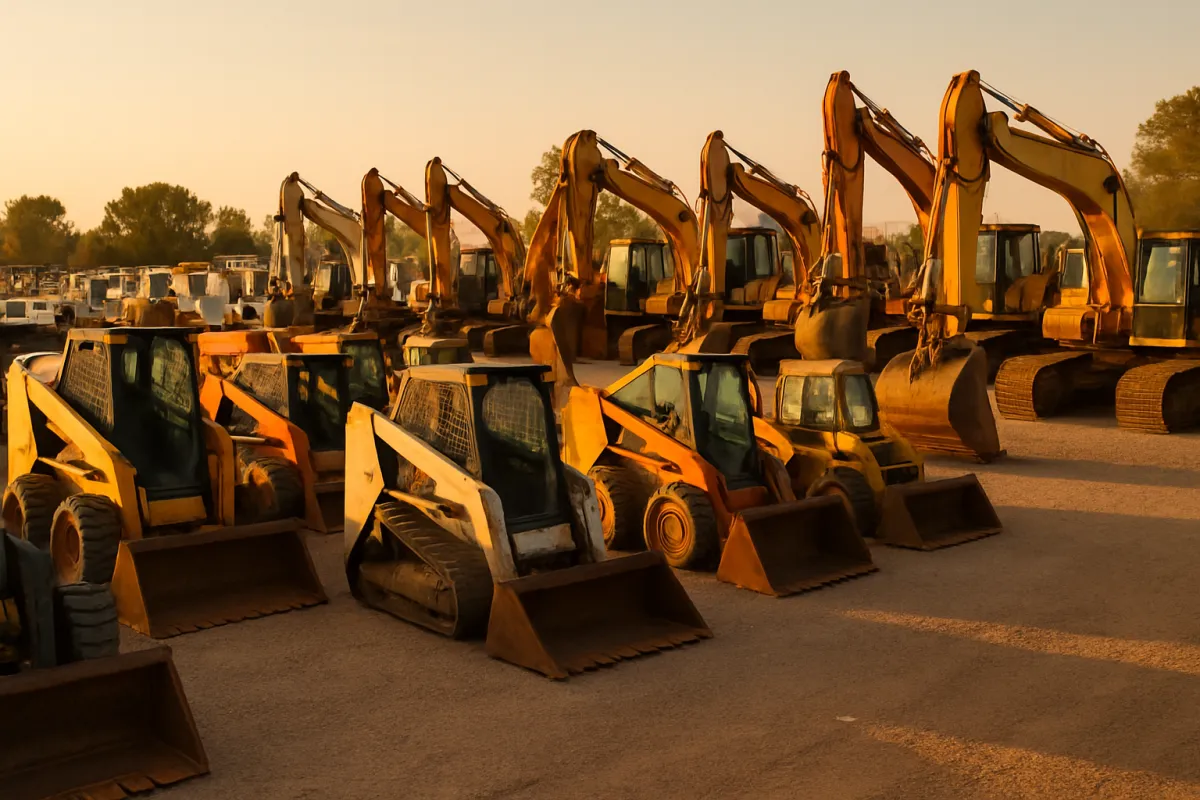
Dealers sit at the expensive, protected end: inspected and often reconditioned machines, some form of limited warranty or recourse, financing on site, and a business that depends on not selling junk. You pay for all of that, illustratively a meaningful premium over auction pricing for the same machine. Private party sits between: better prices than dealers, the chance to meet the actual owner and hear the machine’s history firsthand, but no recourse and wildly variable honesty. The channel choice is itself a cost-per-year input: the dealer premium buys down repair risk, the auction discount buys it up, and the right rung depends on how well you can inspect and how badly a bad unit would hurt. Note that the channel question, where to hand over the money, is a separate decision from the condition question this case study runs; our where to buy restaurant equipment rundown prices all seven buying channels side by side, supply stores, marketplaces, and liquidations included.
The warranty gap math
The warranty is the cleanest single difference between new and used, so price it like the insurance policy it is. A new machine typically carries one to several years of coverage; the used machine carries none, or a stub. The gap has a market price: the extended warranty or service contract a dealer will happily sell you. Illustratively, two years of comprehensive coverage on a mid-five-figure machine might be quoted around $2,400, and that quote is information, because it is the seller’s priced estimate of your repair exposure plus their margin.
Now run it as insurance math. If your realistic repair exposure over those two years is around $1,000 a year, the warranty costs more than the expected repairs, and self-insuring, banking the premium against future bills, wins on average. That is the usual result, because warranties are priced to profit on the average buyer. The warranty earns its price in two situations: when a single worst-case failure, a five-figure component on a machine your revenue depends on, would hurt more than its probability suggests, or when the machine’s failure modes are opaque enough that you cannot estimate exposure at all.
The useful trick runs in reverse, too. When comparing used against new, add the warranty’s replication cost to the used side, or subtract it from the new side, so both machines carry equivalent protection on paper. That single adjustment makes the sticker comparison honest, and it frequently shrinks a dramatic-looking used discount into a modest one.
The refurbished middle ground
Between raw used and full-price new sits the certified refurbished tier: machines a dealer or manufacturer has inspected, rebuilt where components demanded it, and backed with a limited warranty. Done honestly, refurbishment attacks the two largest used-equipment risks directly, unknown condition and zero recourse, and the premium over raw used is usually smaller than the remaining discount to new. For buyers who lack the expertise to inspect deeply, or the appetite to absorb a bad unit, it is often the rational rung on the ladder.
The caveat is that certified is a marketing word until proven otherwise. A manufacturer program with published rebuild standards and a real warranty is one thing; a dealer sticker on a machine that got a wash and an oil change is another, and both use the same vocabulary. The screen is simple: ask exactly what was inspected, what was replaced, and what the warranty covers in writing. A genuine program answers in specifics; a sticker program answers in adjectives.
Priced correctly, refurbished slots straight into the cost-per-year framework: more purchase cost than raw used, less repair allowance, some warranty value. Our espresso ROI case study reached the same verdict for rebuilt machines from reputable technicians: for revenue-critical equipment, the rebuilt unit from someone who stands behind it is often the best value on the board, precisely because it keeps most of the used discount while deleting most of the used risk.
Pricing the downtime risk
Here is the cost that flips more used-versus-new verdicts than any other, and the one buyers most reliably skip: the used machine will likely spend more days broken, and those days have a price. Our espresso machine case study made the point unforgettable, a cafe’s machine down for one morning costs more than a year of preventive maintenance, and the same logic scales to every operation where equipment sits in the revenue path.
The pricing method is straightforward. Estimate the extra down days per year the used machine’s age implies, illustratively one to three for a well-inspected unit, more for an auction mystery. Multiply by what a down day costs you: lost production, idle labor, missed deliveries. A shop where a down day costs $700 adds maybe $1,400 a year to the used side, $7,000 over five years, and a large sticker discount survives that easily. An operation where a down day costs $5,000 adds a number that eats the entire discount, and new, or refurbished with guaranteed service response, wins outright.
This is why the same machine can be a smart used buy for one business and a reckless one for its neighbor. The machine did not change; the price of a dead day did. Put your own downtime number into the comparison before deciding, because it is the input that most often overturns the sticker verdict, and it is the one no seller will ever calculate for you.
Financing new versus used
Money has a price, and it is not the same price on both sides of this comparison. Lenders and manufacturers treat new equipment as better collateral: it has a warranty, a predictable value curve, and a maker with an incentive to move it. The result, illustratively, is promotional new-equipment financing that can run from low single digits down to zero in aggressive quarters, against used-equipment loans that commonly price several points higher, with shorter terms and larger down payments demanded.
The arithmetic consequence is that the financed gap is smaller than the sticker gap. Illustratively: $60,000 new at a subsidized low rate versus $33,000 used at a market rate several points higher can end up with total financing costs that claw back a few thousand dollars of the used advantage over a five year term. On a wide gap, the used machine still wins comfortably. On a narrow gap, a machine only modestly discounted from new, cheap manufacturer money can genuinely flip the verdict, which is precisely what the promotional rate exists to do.
So price both candidates with their real financing attached, not at their stickers, and read promotional rates the way you read warranties: as a real, quantifiable subsidy that belongs in the comparison, and also as a sales instrument designed to make the bigger invoice feel smaller. The framework from our buy-vs-lease analysis applies unchanged: match the term to the machine’s earning life, and let the total cost, not the monthly payment, make the call. Our worked equipment financing case study prices the used version of the same kitchen deal alongside the new one, so you can watch that verdict move in real numbers.
The resale value strategy
The depreciation curve is not just a warning; it is a strategy map, and the strategy is to occupy its flattest stretch. Recall the illustrative shape: 100 percent of value when new, 75 percent at one year, 55 percent at three, 35 percent at six. The steep losses live at the front. A buyer who purchases at three years and sells at seven owns the machine through the gentlest part of the slope, paying perhaps 55 percent of original value on the way in and recovering something near 30 on the way out.
Run that arithmetic: roughly 25 points of original value consumed across four working years, illustratively about six percent of the original price per year of use. The buyer who bought the same machine new and sold at four years consumed something closer to half its value over the same span, double or more per working year. Same machine, same years of work, wildly different bills, and the only difference is which segment of the curve each owner occupied.
The strategy has requirements. It works for durable categories with liquid resale markets, where a seven year old machine still finds a buyer at a fair price. It demands disciplined maintenance and a documented log, because the exit price assumes the machine sells as a good example, not a tired one. And it means buying with the exit in mind: mainstream brands, common configurations, and the service history that lets the next buyer say yes quickly. Owned this way, equipment stops being a sunk cost and becomes a position you enter and exit at chosen points on a curve you can see in advance.
Where used is the smart buy
Category behavior is consistent enough that a map is worth drawing. Used shines where three properties line up: mechanical simplicity, so condition is inspectable; durability, so mid-life machines have real years left; and slow technology cycles, so an older unit gives up little capability. Work trucks are the textbook case: long-lived, easy to assess, supported everywhere, and steeply discounted after the early years. Commercial mowers and grounds equipment follow the same pattern, as does generic machinery, compressors mid-life, conveyors, shelving and racking systems, mixers, and most of the metal that does simple jobs slowly.
Two more categories quietly favor used. The first is anything rebuildable: machines built to be resealed and rebushed indefinitely, where a documented rebuild resets the clock at a fraction of new price, the pattern our espresso ROI case study found in rebuilt two-group machines from reputable technicians. The second is redundant capacity: backup units and surge equipment that will run occasionally, where the low utilization argument from our buy-vs-lease framework says minimize the capital, and used is the natural way to do it.
The common thread is inspectability plus forgiveness. In these categories a diligent buyer can see what they are getting, and a mistake costs a repair bill rather than a stopped operation. That is the profile where the depreciation discount is nearly free money, and where the used market should be the first stop, not the fallback.
Where new pays its premium
The mirror image: new earns its price where failure is expensive, condition is opaque, or capability moves fast. Precision equipment leads the list, machines whose value lives in tolerances and calibration, where wear is invisible to a flashlight inspection and a worn example produces scrap at full speed. Buying used precision gear without certified inspection is buying someone else’s drift, and the discount rarely covers the recalibration, the rework, or the discovery that the frame itself is tired.
Next, anything near the end of its design life. A compressor or boiler at year eight of a ten year expected life is cheap for a reason: the remaining-years denominator in the cost-per-year math has collapsed, and the major-failure odds have not. A deep discount on two remaining years is usually a worse buy than a fair price on nine. Close behind: single-point-of-failure machines in the revenue path, where the downtime pricing above dominates everything, and equipment in fast technology cycles, where the prior generation’s operating costs quietly tax every hour of use.
Finally, new wins wherever the subsidies stack: when promotional financing, warranty value, and a genuine efficiency gain all land on the same machine, the priced-out gap to used can shrink to a margin not worth the risk. The category map is a starting point, and every individual deal still deserves its own table, but as a first sort: buy used where you can see the condition and survive the failure, and buy new where you cannot do either.
The tax treatment sketch
Taxes touch this decision, but more gently than sales pitches suggest. The headline fact: depreciation deductions exist for both new and used equipment. Modern rules in many jurisdictions allow accelerated or immediate expensing on qualifying purchases whether the machine is new or used, subject to limits and conditions that shift with legislation, so the write-off is rarely the tiebreaker between the two.
What does differ is the size of the base, you deduct from what you paid, so the new machine offers a larger deduction on a larger outlay, which is a bigger tax shield but not free money, and the timing rules, which determine how fast either purchase turns into deductions. Financing structure can interact with all of it, and a later sale of the machine can pull some deductions back through recapture. Every one of those details is jurisdiction-specific, year-specific, and business-specific.
So the honest sketch is this: assume both sides of your comparison get meaningful tax treatment, do not let anyone sell you a machine primarily as a tax move, and have your accountant run the actual after-tax comparison before you sign. The pre-tax cost-per-year math in this case study usually survives the tax adjustment with its verdict intact; when it does not, your accountant is the one who will catch it, not the sales desk.
A worked example: one machine, three ways
Put the whole framework on one machine, illustratively. The candidate is a $60,000 machine new, with a 12 year useful life. The same model at three years old runs $33,000 with nine years left; at six years old, $21,000 with six years left. Three prices, three risk profiles, one five-year table each.
The new machine: purchase share of five years is 5/12 of $60,000, about $25,000. Repairs are light, warranty covers the early years, call it $3,000 across the five, and downtime allowance $1,000. Five-year total: about $29,000. The three year old machine: purchase share is 5/9 of $33,000, about $18,300, repairs at $1,200 a year make $6,000, downtime allowance $2,700. Total: about $27,000.
Five-year cost of the used pick, three years old
Illustrative split of the ~$27,000 total from the worked example.
Even on the winning pick, a third of the true five-year cost is repairs and downtime that never appear on the invoice. Sticker-only comparisons miss exactly this.
Now the six year old machine, the sticker bargain: purchase share is 5/6 of $21,000, about $17,500, because you are consuming nearly all its remaining life. Repairs at $2,000 a year add $10,000, and the downtime allowance rises to $4,000. Total: about $31,500, the most expensive of the three despite the lowest price. The three year old unit wins, the new machine runs second, and the cheapest sticker finishes last. That ordering is not universal, raise the downtime cost and new wins, but the method that produced it is. Run your own three-way version through the ROI calculator and the companion beside this article.
Red flags that kill a used deal
Some findings do not lower the price; they end the conversation. Treat these as walk-away signals, not negotiating chips.
- No maintenance history and a seller unbothered by that. Unknown history is a discount; indifference to it from a commercial seller is a tell.
- Resistance to inspection under load. Any excuse for why the machine cannot be run hard today is the finding itself.
- Fresh paint in structural or high-wear areas. Paint is cheap, and it is applied where someone wanted you not to look.
- Meter or records that disagree with the physical wear. When the odometer story and the metal disagree, the metal is telling the truth and the seller is not.
- Signs of fire, flood, or structural repair. Frame damage and immersion history convert a machine into a lottery ticket with a bad expected value.
- Pressure to close before your technician can attend. Urgency is the oldest tool for selling problems, and it works only on buyers who let it.
None of these requires certainty to act on. The used market’s entire compensation for risk is the discount, and a deal that asks you to accept concealed risk on top of normal risk is mispriced by definition. There is always another machine.
Mistakes buyers make on both sides
The recurring failures, collected from both directions. On the used side: comparing stickers instead of cost per remaining year, the foundational error this case study exists to correct. Skipping the downtime pricing, which flips verdicts silently. Inspecting to confirm rather than disqualify. Paying dealer prices at auction after competitive bidding erased the discount that justified being there. And buying maximum age for minimum price, where the collapsed remaining-life denominator makes the bargain the most expensive option on the table, exactly as the worked example showed.
On the new side: paying the full cliff for durability the job never needed, the classic case of a machine bought new to sit at 30 percent utilization, which our buy-vs-lease framework would have flagged before the sticker conversation even started. Treating the warranty as priceless instead of pricing it. Letting a promotional rate sell a bigger invoice than the work justified. And ignoring the resale strategy entirely, buying new and holding to scrap, which pays for the whole curve when the flattest stretch was available for half the price per year.
The meta-mistake underneath all of them is deciding by identity, the cautious buyer who always buys new, the frugal one who always buys used, instead of by arithmetic. Every machine, every operation, and every year deserves its own table, and buyers who run it are consistently the ones whose yards hold equipment that earns rather than equipment that explains itself.
The bottom line
Used versus new is not a personality test; it is a curve and a table. The curve says new equipment sheds value fastest in its first years while giving up capability slowly, which makes lightly used machines structurally cheap per year of working life. The table, price over remaining years, plus honest repair, downtime, warranty, and financing lines, converts that structure into a verdict for your specific deal. Used wins the default case in durable, inspectable categories; new wins where downtime is expensive, precision is invisible, technology moves, or subsidized money and warranty value close the gap; and the flattest stretch of the curve, bought around year three and sold around year seven, is the quiet sweet spot the sticker never advertises.
The buyers who get this right are not the boldest bidders or the most loyal dealership customers. They are the ones who inspect to disqualify, read hour meters against the metal, price the dead days, and put every candidate through the same twenty-minute table before signing anything. Run yours through the equipment ROI calculator, and let the machine that costs least per working year, fully costed, be the one that gets the purchase order.
Written from the buying side of the table, not the selling side: this case study is educational material, not financial, tax, legal, or purchasing advice. Every price, percentage, curve, and repair figure here is an illustrative sketch meant to teach a method, and the used market prices each individual machine on its own history, hours, and condition. Depreciation schedules, financing offers, warranty terms, and tax rules change constantly and vary by jurisdiction and category, so run the numbers on the actual unit in front of you, and put your accountant, your lender, and a technician you trust between you and any signature.
Frequently asked questions
Is it better to buy used or new equipment for a business?
Neither wins by default; the honest answer comes from cost per remaining year of life. Divide each candidate's price by the working years it has left, add a realistic repair and downtime allowance for the used option, and compare. Used typically wins for durable, mechanically simple equipment because the first owner absorbed the steepest depreciation. New wins where downtime is expensive, technology moves fast, or warranty coverage on a revenue-critical machine is worth its priced-out value.
How much value does new equipment lose in the first year?
Illustratively, a meaningful double-digit percentage, often cited in the range of 20 to 30 percent for common commercial categories, simply because the machine is no longer new. The drop is steepest in year one and flattens with each year after, which is why the depreciation curve looks like a cliff followed by a slope. Exact figures vary widely by category, brand, hours, and market conditions, so treat any single number as a planning shape rather than a quote.
How do you calculate cost per year of equipment life?
Divide the purchase price by the number of productive years the machine has left, then add the annual repair and downtime budget the machine's age implies. A new $60,000 machine with a 12 year life costs $5,000 per year of life before repairs, illustratively. A three year old example at $33,000 with 9 years left costs about $3,667 plus a heavier repair line. The comparison only works when both sides carry their full costs, not just their stickers.
What should I check when inspecting used equipment?
Start with the hour meter or usage record and judge wear against age, since a lightly used old machine can beat a hammered young one. Then ask for maintenance logs, because documented service history is the single best predictor of remaining life. Check the known wear points for that category, look for fresh paint hiding repairs, fluid leaks, and mismatched parts, and run the machine under load rather than at idle. If the seller resists any of this, that resistance is itself the finding.
Is buying equipment at auction risky?
It carries the most risk of the three main channels, and the discount exists precisely to pay you for that risk. Auctions typically sell as-is with limited or no inspection under load, no recourse, and competitive pressure that erodes the discount that justified attending. They suit buyers who know the category deeply, can inspect quickly, and can absorb a bad unit. Dealers cost more but add inspection, reconditioning, and some recourse; private party sits between the two on both price and risk.
Are extended warranties on used equipment worth it?
Run them as insurance math, because that is what they are. Compare the warranty price against your realistic repair exposure over the same term, and remember the seller priced it to profit on the average buyer. Self-insuring by banking the premium usually wins on expected value for buyers who can absorb a worst-case repair. The warranty earns its price when a single failure would stop revenue you cannot afford to lose, or when the machine's failure modes are expensive and hard to predict.
Can you finance used equipment, and at what rates?
Yes, though typically on less friendly terms than new. Manufacturers subsidize new equipment financing to move inventory, with promotional rates that are sometimes far below market, while used equipment loans commonly run several points higher with shorter terms and larger down payments, illustratively. The rate gap narrows the sticker gap, so a fair comparison prices both machines with their real financing attached. On smaller gaps, cheap new-equipment money can genuinely flip the verdict.
What is certified refurbished equipment and is it a good middle ground?
It is used equipment that a dealer or manufacturer has inspected, rebuilt where needed, and backed with a limited warranty, priced between raw used and new. Done honestly, it removes the two biggest used-equipment risks, unknown condition and zero recourse, for a premium that is usually smaller than the remaining discount to new. The word certified is only as good as the party behind it, so the value depends entirely on who did the work and what the warranty actually covers.