

What's on this page
- What restaurant insurance actually costs
- The coverage stack a food business carries
- General liability and what it pays for
- Property and contents coverage
- Business interruption and the months after a fire
- Equipment breakdown and the walk-in that dies on a Saturday
- Liquor liability and the dram shop exposure
- Workers compensation and the payroll rate
- Commercial auto for delivery and catering
- Cyber coverage and the point of sale
- Umbrella and excess liability
- The endorsements worth pricing separately
- How a business owner policy bundles part of the stack
- Illustrative premium by coverage line
- What revenue and payroll do to the price
- Cooking method, seating, and the fryer on the line
- Alcohol share and why the bar changes everything
- Claims history and experience rating
- Location, building, and protection class
- Deductibles, retentions, and the trade-off that pays
- Limits, aggregates, and the number that outranks the premium
- Where the insurance dollar goes
- Coinsurance and the clause that quietly guts a claim
- Certificates, additional insureds, and what the lease demands
- How to shop the stack without buying the cheapest paper
- Common mistakes that inflate a restaurant premium
- A worked example: two illustrative concepts
- The bottom line
Short answer: There is no single restaurant insurance cost, because a restaurant buys a stack of eight or nine separately priced coverages. Illustratively, a sixty-seat full-service restaurant with a bar lands near $19,800 a year and a small counter-service cafe with one delivery van near $10,280. Workers compensation and general liability are more than half the bill, and premium tracks revenue, payroll, insured value, alcohol sales, and vehicles rather than square footage.
A restaurant buys insurance the way it buys a hood: not because anybody wants one, but because the room does not legally or practically work without it. The difference is that the hood is quoted once and the insurance program is quoted every single year, in eight or nine separate pieces, by people who quietly assume the operator already knows what each piece does. Most owners find out what their coverage actually pays for during the one week they need it, which is the worst possible moment to learn that the business income limit ran out at three months.
This coverage brief takes the stack apart line by line: what general liability, property and contents, business interruption, equipment breakdown, liquor liability, workers compensation, commercial auto and cyber each actually pay for, what moves the price of each, how a business owner policy bundles part of it, and how deductibles and limits reshape the total. It closes with an illustrative annual program for two very different food businesses. Every figure here is a planning shape rather than a quote, and the equipment ROI calculator and the companion beside this brief run the same arithmetic on your own revenue and payroll.
Key takeaways
- There is no single restaurant insurance cost, because a restaurant buys a stack of eight or nine separately priced coverages. Illustratively a sixty seat full service restaurant with a bar lands near $19,800 a year and a small counter service cafe with one delivery van near $10,280.
- Two lines dominate most food service programs. On the illustrative full service example, workers compensation is about 31 percent of the total and general liability about 24 percent, so together they are more than half the bill.
- Premium tracks exposure units rather than square footage. Revenue drives liability, payroll drives workers compensation, insured value drives property and equipment breakdown, alcohol sales drive liquor liability, and every vehicle on the policy carries its own charge.
- As a share of sales the smaller business often pays more. The illustrative restaurant lands near 1.65 percent of revenue and the illustrative cafe near 2.28 percent, because a delivery van and the fixed floors under small policies do not shrink with the sales line.
- Deductibles and limits move the number more honestly than carrier shopping does. Lifting the property deductible from $1,000 to $5,000 illustratively trims about fifteen percent off the property and breakdown lines, and that is only a saving if the business can write the extra $4,000 check on the day.
What restaurant insurance actually costs
How much does restaurant insurance cost? The honest answer is that the question is malformed, because there is no product called restaurant insurance. There is a program: a set of separate policies and endorsements, each written by a different underwriting logic, each priced off a different unit of exposure, and each renewable on its own terms. An owner who asks for one number is usually quoted the cheapest single piece of the stack and then discovers the rest at renewal.
On the illustrative model used throughout this brief, a sixty seat full service restaurant with a bar, roughly $1.2 million of annual revenue, $380,000 of payroll, $220,000 of equipment and contents, alcohol at a fifth of sales and no delivery vehicle lands near $19,800 a year across the whole program. A counter service cafe at $450,000 of revenue, $150,000 of payroll, $95,000 of contents, no alcohol and one delivery van lands near $10,280.
Those two totals are the useful part, and not because either matches your business. They are useful because the gap between them is explained entirely by exposure units rather than by luck or negotiation. Change the payroll and workers compensation moves. Change the alcohol share and liquor liability moves. Add a van and a whole new policy appears. Once you can see which unit drives which line, a quote stops being a verdict and becomes something you can audit.
The coverage stack a food business carries
A typical food service program has a core and a set of situational layers. The core is general liability, property and contents, business interruption, and equipment breakdown. Those four describe the room, the things in it, and the money the room earns while it is intact. In many programs these four are bundled together as a business owner policy rather than bought individually.
The situational layers attach to what the business actually does. Employees bring workers compensation. Alcohol brings liquor liability. Vehicles bring commercial auto. Card payments and an online ordering channel bring cyber. Hired staff and a growing crew bring employment practices coverage into the conversation. Above all of it sits an umbrella or excess layer that extends the liability limits without rewriting the underlying policies.
The practical consequence of that structure is that adding one operating decision can add a whole policy rather than a line item. Deciding to deliver your own food is not a fuel and wages decision, it is a commercial auto decision. Deciding to add a small bar is not a beverage margin decision, it is a liquor liability decision, and our walkthrough on opening a bar prices that decision end to end for a standalone concept rather than a bar program bolted onto a kitchen. Our breakdown of restaurant startup costs treats insurance as one prepaid category in the opening budget, which is the right frame for month one. This brief treats it as an operating cost that repeats forever, which is the right frame for every month after.
General liability and what it pays for
General liability responds when the business causes bodily injury or property damage to somebody who is not an employee. In a restaurant that means the slip on a wet floor, the guest burned by a plate, the tripped patron on a patio step, the coat destroyed by a spilled tray, and the foodborne illness claim that arrives three weeks after the meal. It pays defense costs as well as settlements, and the defense half is the part operators underestimate, because a claim that goes nowhere still costs money to make go nowhere.
Carriers price it primarily off revenue, because revenue is the best available proxy for how many people passed through the room. Secondary factors include the seating count, whether there is a patio or a delivery operation, how much of the menu is cooked to order, and whether the concept attracts late night crowds. On the illustrative rate used here, general liability runs about $4 per $1,000 of annual revenue, which puts the full service example near $4,800 and the cafe example near $1,800.
Two structural details matter more than the price. The first is that the per occurrence limit and the annual aggregate are different numbers, and the aggregate is what a bad year actually spends. The second is that products and completed operations, which is where food illness claims live, may sit inside the aggregate rather than beside it. Read those two lines before you compare quotes.
Property and contents coverage
Property coverage pays to repair or replace the physical things the business owns or is responsible for. For a tenant restaurant that is rarely the building. It is the cook line, the refrigeration, the bar equipment, the furniture, the point of sale hardware, the inventory, and, importantly, the tenant improvements and betterments, meaning all the construction the operator paid for inside somebody else’s shell.
That last category is the one owners routinely leave off the schedule. A restaurant buildout can be the single largest line in an opening budget, as our rundown on what it costs to open a restaurant sets out, and if the hood, the ductwork, the walk in and the finishes are not scheduled as your property, a fire in a leased space can leave the tenant funding the rebuild of their own improvements out of pocket.
Pricing runs off the insured value rather than off revenue. On the illustrative rate used here, property and contents runs about 1.1 percent of insured value a year, so $220,000 of equipment, improvements and stock prices near $2,420 and $95,000 prices near $1,045. Fire protection, building construction, sprinklers, alarm monitoring and the age of the wiring all move the rate. Inventory a full contents schedule before you buy, and revisit it whenever you replace a major appliance, because the value you insured three years ago is not the value you would have to spend today.
Business interruption and the months after a fire
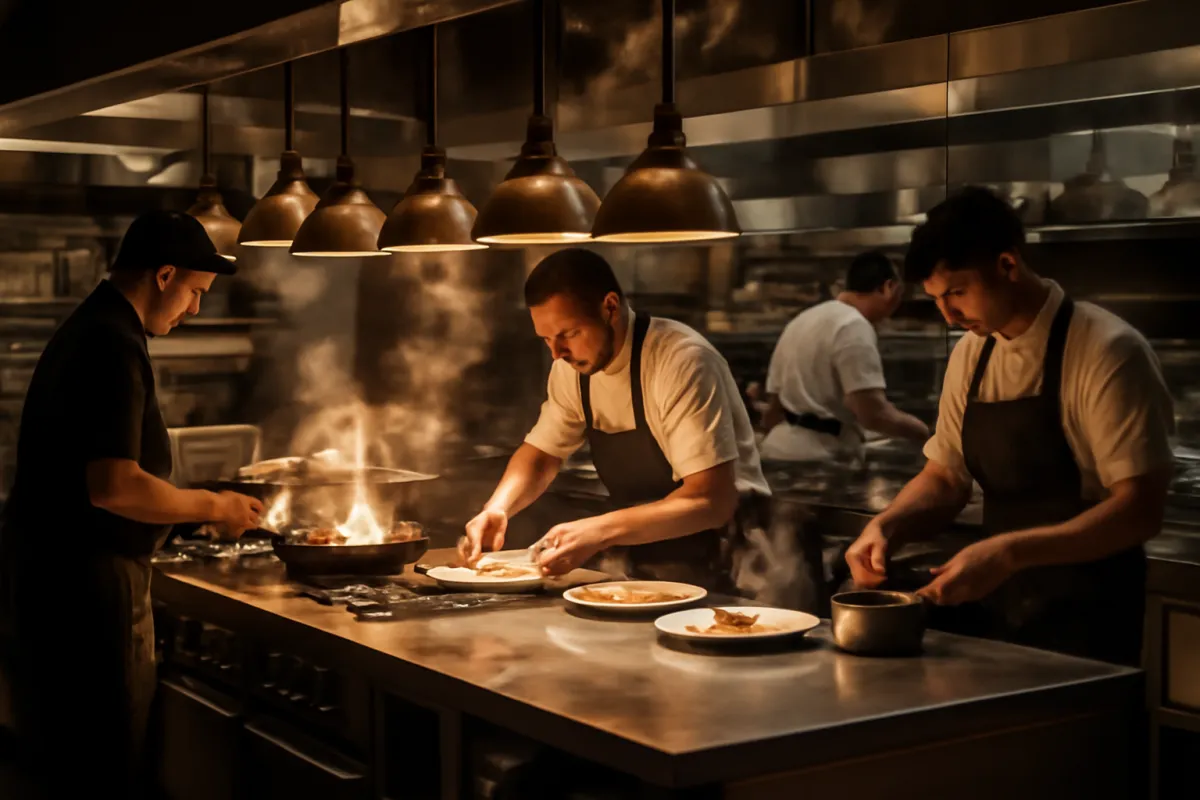
Property coverage rebuilds the kitchen. Business interruption, more precisely written as business income coverage, pays for the fact that the kitchen was not earning while it was being rebuilt. It replaces the net profit the business would have made and the continuing expenses it still has to pay, which typically means rent, loan payments, insurance, and the salaries of the people you cannot afford to lose.
The two settings that decide whether it works are the indemnity period and the waiting period. The indemnity period is how many months the coverage will run, commonly twelve, and the waiting period is the gap before it starts, often measured in days rather than dollars. Restaurants underbuy the indemnity period more often than any other setting, because they estimate the rebuild and forget the queue in front of it: insurance adjustment, contractor availability, permit review, health department sign off, hood and suppression certification, and then hiring a crew back.
On the illustrative model used here, business interruption is priced as a proportion of the property premium, near 35 percent of it, which puts the full service example at about $847 and the cafe at about $366. That looks like a rounding error next to workers compensation, and it is the line most likely to decide whether the business reopens at all. Extra expense coverage, which funds the temporary measures that shorten the closure, is worth pricing alongside it.
Equipment breakdown and the walk-in that dies on a Saturday
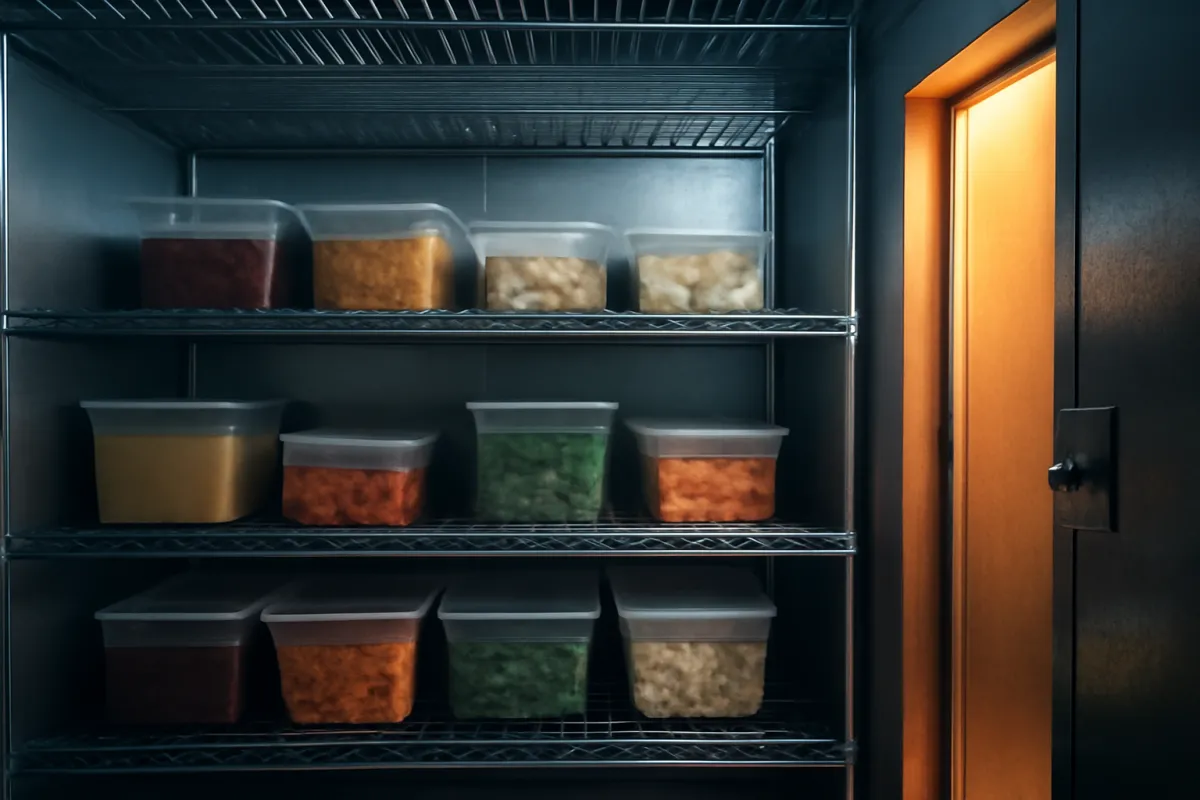
Standard property coverage responds to external causes: fire, water, wind, impact, theft. It generally does not respond when a compressor seizes, a control board fails, a boiler goes down, or a motor burns out from the inside. That gap is exactly what equipment breakdown coverage, historically called boiler and machinery, exists to fill, and in a food business the gap sits directly over the most expensive failure modes on the floor.
The coverage typically pays three things: repair or replacement of the failed equipment, the spoiled product that failure destroyed, and the income lost while the equipment was down. That combination is why it matters more in a restaurant than in most small businesses. A walk in that fails on a Saturday night is a compressor bill plus a week of protein plus a closed kitchen, and the compressor is usually the smallest of the three. Our commercial refrigerator case study prices the machines themselves, which is the part this coverage cares least about.
Illustratively the line runs about 0.35 percent of insured equipment value, so $220,000 of contents prices near $770 and $95,000 near $333. It is one of the cheapest pieces of the stack and one of the most frequently claimed, because equipment fails far more often than buildings burn. Check whether spoilage and lost income are included by default or sold as endorsements, and check the spoilage sublimit against what your walk in actually holds during a normal week.
Liquor liability and the dram shop exposure
Liquor liability responds to harm caused by a person the business served alcohol to, which is a fundamentally different exposure from the ones general liability covers. The injury usually happens somewhere else, often hours later, and the claim arrives against the business that poured the last drink. General liability policies commonly exclude this exposure for businesses that manufacture, sell or serve alcohol, which is precisely why the separate line exists.
The legal framework behind it, generally referred to as dram shop law, varies substantially from state to state and changes over time. Some states impose broad responsibility, some narrow it sharply, some address service to minors and visibly intoxicated patrons differently, and some tie the exposure to license conditions. This brief cannot tell you which regime applies to your address, and any source that offers a confident national answer is guessing. Your state alcohol beverage authority and a broker who writes hospitality accounts are the right places to ask, and our walkthrough on getting a liquor license covers the permission side of the same question.
Pricing runs off alcohol sales rather than total sales, which is why a bar forward concept and a restaurant selling occasional wine pay very different premiums on identical revenue. On the illustrative rate used here, about $9 per $1,000 of alcohol sales, the full service example with $240,000 of alcohol sales prices near $2,160. A documented serving policy, server training and refusal procedures are the operational controls that underwriters actually reward.
Workers compensation and the payroll rate
Workers compensation pays medical costs and wage replacement when an employee is hurt at work, and in exchange it generally limits the employee’s ability to sue the employer over the same injury. Kitchens produce burns, cuts, slips, strains and repetitive injuries at a rate that office work never approaches, which is why food service payroll is rated the way it is.
Pricing runs off payroll, per $100 of it, using classification codes that separate kitchen work from service work from clerical work from delivery. The rate attached to each code is set through state level rating machinery rather than invented by an individual carrier, and it differs meaningfully from one state to the next. A few states run monopolistic funds where coverage is bought from the state rather than a private carrier. There is no national workers compensation rate for restaurants, and anybody quoting you one is quoting an average of things that are not comparable.
On the illustrative rate used throughout this brief, $1.60 per $100 of payroll, a $380,000 payroll prices near $6,080 and a $150,000 payroll near $2,400. That makes it the largest single line in the full service example. Two controls matter: classifying payroll accurately so that office and delivery hours are not rated as kitchen hours, and keeping the injury frequency down, because frequency drives the experience modifier that multiplies everything. Our walkthrough on hiring restaurant staff covers the payroll side of the same crew.
Commercial auto for delivery and catering
The moment a business owns a vehicle, or systematically sends employees out in their own cars on company errands, personal auto coverage stops being the right answer. Personal policies commonly exclude or restrict business use, and a delivery run is business use. Commercial auto covers liability for damage the vehicle causes, physical damage to the vehicle itself, and the medical and uninsured motorist pieces required in the jurisdiction.
Two variants matter to food businesses. Owned auto covers vehicles titled to the business: the catering van, the truck, the delivery car. Hired and non owned auto covers the far more common situation where employees drive their own vehicles for the business, which is how most in house delivery actually works. Skipping the second because the business owns no vehicles is one of the more common uncovered exposures in food service.
On the illustrative rate used here, about $2,400 per vehicle per year, one delivery van adds $2,400 to the cafe example and nothing to the restaurant example, which owns none. That single decision is why the smaller business in this brief pays a higher share of revenue for insurance than the larger one. Driver records, radius of operation, vehicle value and how many hours the vehicle is on the road all move the rate. Our walkthrough on starting a catering business treats the vehicle as an operating asset, and the premium belongs in that arithmetic.

Cyber coverage and the point of sale
A restaurant is a payment business that happens to serve food. Card data moves through the point of sale, the online ordering channel, the reservation platform, the delivery marketplace integrations and the loyalty database, and every one of those is a place where an incident can start. Cyber coverage exists because standard property and liability policies were not written for data, and generally will not respond to it.
The coverage splits into first party and third party pieces. First party pays the costs the business itself absorbs: forensic investigation, notification, credit monitoring, restoring systems, and the income lost while the systems were down. Third party pays claims made against the business by others, along with the regulatory and card brand consequences that follow a payment breach. Ransomware and funds transfer fraud are usually addressed by specific insuring agreements rather than assumed.
On the illustrative model here the line prices at a small fixed amount plus a slice of revenue, landing near $960 for the full service example and $735 for the cafe. It is one of the smallest lines in the stack and among the fastest moving, because the underlying exposure keeps changing. The practical controls that reduce both the premium and the odds are the boring ones: current point of sale software, segmented networks, multi factor authentication on anything financial, and staff who are trained not to act on a plausible email. Our rundown on restaurant point of sale systems covers the stack this coverage sits behind.
Umbrella and excess liability
An umbrella sits above the liability policies and extends their limits without rewriting them. When a general liability claim exhausts its underlying limit, the umbrella responds for the layer above. It typically sits over general liability, commercial auto and, where the carrier allows, liquor liability, and it requires those underlying policies to carry minimum limits before it will attach.
The reason restaurants buy one is that liability outcomes have a long tail. Most claims are small, and the rare large one is not proportional to the size of the business. A serious injury claim does not scale down because the restaurant only seats sixty, and a business with a $1 million underlying limit and a $2 million outcome pays the difference from the balance sheet, or from the doors closing.
Umbrella pricing depends heavily on what sits underneath it. Liquor and auto exposures both raise the attachment risk, and both raise the price. On the illustrative model here, a first layer prices near $1,200 with no alcohol underneath and near $1,800 with alcohol underneath. It is one of the better value lines in the stack per dollar of limit purchased, which is why the standard advice is to buy limits rather than to buy coverage breadth you may never trigger.
The endorsements worth pricing separately
Beyond the main policies sits a set of endorsements that are cheap individually and decisive occasionally. Food contamination and spoilage coverage responds when a health authority orders product destroyed or the business closed after a contamination event, and it commonly funds the cleanup, the replacement stock and the lost income. Utility service interruption responds when an off premises power or water failure stops the business, which standard business income coverage often excludes.
Employment practices liability responds to claims from employees over hiring, termination, wage disputes, discrimination and harassment. Food service employs a large, young, high turnover workforce, which is exactly the profile that generates these claims. Sign and awning coverage, outdoor property and patio furniture, and coverage for food trucks or carts operated away from the premises are all schedule items rather than assumptions.
Employee dishonesty coverage responds to theft by staff, which in a cash and inventory heavy business is a real rather than theoretical exposure. Ordinance or law coverage funds the gap between rebuilding what was there and rebuilding what current code now requires, and in an older building with an outdated hood or electrical service that gap can be larger than the loss itself. None of these are in the illustrative totals in this brief, which is deliberate: adding them moves the number, and pretending otherwise would make the comparison dishonest.
How a business owner policy bundles part of the stack
A business owner policy, universally shortened to BOP, packages general liability with property coverage and commonly adds business income, and sometimes equipment breakdown, into one contract at one renewal. It exists because underwriting four small policies separately costs more in administration than the risk difference justifies, so carriers hand part of that saving back in the package price.
On the illustrative model used here, the four lines a BOP typically absorbs run $4,800 of general liability, $2,420 of property, $847 of business income and $770 of equipment breakdown, which is $8,837 for the full service example. Bundling them illustratively trims about twelve percent off that subtotal, roughly $1,060, which takes the whole program from near $19,800 to near $18,780. The saving is real and it is not the reason to do it. The reason is that one contract has one set of definitions, one deductible structure and one renewal date, which removes the gaps that appear between separately purchased policies.
What a BOP does not include is the part that catches people out. Workers compensation, liquor liability, commercial auto and cyber are almost always separate. An owner told they are covered by a BOP and assuming that means covered is the single most common misunderstanding in small food service insurance. Ask specifically which of the eight or nine lines in this brief are inside the package and which are not.
Illustrative premium by coverage line
Lay the lines side by side and the shape of a full service program becomes obvious. The chart below sketches the illustrative annual premium for each coverage in the sixty seat restaurant example: $1.2 million of revenue, $380,000 of payroll, $220,000 of contents, alcohol at a fifth of sales, and no vehicle on the policy. Treat these as planning shapes rather than quotes.
Illustrative annual premium by coverage line
The sixty seat full service example: $1.2M revenue, $380K payroll, $220K contents, 20 percent alcohol share, no vehicle. Shape, not a quote.
Commercial auto is absent because this example owns no vehicle. Add one and an illustrative $2,400 line appears, larger than every entry below liquor liability. Total across the eight lines shown is about $19,837.
Two readings come out of that shape. The first is that the two biggest lines, workers compensation and general liability, are both priced off operating volume, so they grow automatically as the restaurant succeeds. The second is that the four cheapest lines together, cyber, business income, equipment breakdown and part of the umbrella, cost less than general liability alone and cover the failures most likely to actually happen. Run your own revenue and payroll through the companion beside this brief to see how the ranking reorders.
What revenue and payroll do to the price
Revenue and payroll are the two levers with the most weight, and they pull in the same direction. Revenue drives general liability and part of the cyber line, because it proxies for foot traffic and transaction volume. Payroll drives workers compensation, because it proxies for hours of exposure to the hazards of the job. Together those two account for roughly 55 percent of the illustrative full service program.
That has an uncomfortable implication: the program grows as the business grows, automatically, whether or not anything got riskier. A restaurant that lifts revenue by a third without changing anything else will see the liability line lift by roughly a third at the next audit. Many policies are auditable, meaning the carrier reconciles estimated exposure against actual at year end and bills or refunds the difference, so understating the estimate does not save money, it defers it.
The right response is to treat insurance as a variable operating cost rather than a fixed one and budget it as a percentage. On the illustrative examples that percentage is around 1.65 percent of revenue for the full service restaurant and around 2.28 percent for the cafe. Put that alongside the other percentage lines you already track. Our note on restaurant profit margin and our breakdown of labor cost percentage both work in the same units, and insurance belongs on that page rather than in a drawer.
Cooking method, seating, and the fryer on the line
Underwriters care what happens on the cook line, because grease fires are the dominant severe loss in food service. A concept that only assembles cold product carries a different property and liability profile from one that runs a fryer, a charbroiler or solid fuel cooking, and the rate reflects it. Adding a fryer to a menu is a kitchen decision with an insurance consequence, and it is worth asking about before the equipment arrives rather than after.
What the carrier will want to see is documented: a compliant hood and duct system, a current wet chemical suppression contract with inspections on schedule, a hood and duct cleaning interval appropriate to the cooking volume, and extinguishers with current tags. Those are the same items a fire inspector checks. Our fryer cost case study prices the equipment and the suppression package that sits over it, and our hood cost case study prices the ventilation, both of which underwriters treat as risk controls rather than as amenities.
Seating and service style matter for liability rather than property. More seats means more people in the aisles and more exposure. Table service, patio seating, valet, live entertainment and late night hours each add their own layer. Delivery adds a vehicle exposure and an away from premises food handling exposure at the same time. None of these are reasons to avoid the format. They are reasons to price the format honestly before committing to it.
Alcohol share and why the bar changes everything
Alcohol is the single operating decision that reshapes a program most sharply, and the reason is that it adds an exposure the other policies exclude rather than merely making an existing exposure bigger. The general liability policy commonly carves out harm caused by a served patron. Liquor liability is bought to fill that carve out, and its price scales with how much alcohol crosses the bar.
On the illustrative rate here, a restaurant with alcohol at a fifth of a $1.2 million revenue line has $240,000 of alcohol sales and a liquor liability premium near $2,160. Push the alcohol share to half and the exposure and the line more than double. Take alcohol to zero and the line vanishes entirely, along with the umbrella loading that sat above it, which on the illustrative figures is another $600.
That is not an argument against a bar. Beverage margin is one of the strongest gross margin lines a restaurant has, and the incremental premium is small next to the incremental contribution. It is an argument for pricing the whole package together: license, premium, training, and margin, in one calculation rather than three separate ones. The operational controls that underwriters look for, meaning a written service policy, training records, identification procedures and refusal documentation, are cheap and they also reduce the chance of the claim that makes the premium argument moot.
Claims history and experience rating
Nothing you can buy affects the renewal price as much as the claims already on the record. Carriers look at loss runs, typically several years of them, and they read frequency and severity differently. A single large loss can be underwritten as bad luck. A pattern of small claims is read as a management problem, and management problems are what carriers decline.
On the workers compensation line this is formalized. Once a business is large enough to qualify, an experience modifier is calculated from its own loss history against the expected losses for its classification, and that factor multiplies the premium up or down. The mechanics of the calculation are set by rating organizations and state rules rather than by the carrier, so the way to move it is to change the underlying loss experience, not to argue about the arithmetic.
The practical consequences are unglamorous and they work. Fix the floor surfaces, the lighting and the mats that produce slip claims. Get injuries reported and treated early, because delayed small claims become expensive claims. Keep the suppression and cleaning schedules current. Document training. A restaurant with three clean years and a tidy file gets a genuinely different set of quotes from one with three years of small kitchen injuries, and that difference compounds every renewal.
Location, building, and protection class
Geography moves property rates more than anything the operator does. Distance from a responding fire station and from a water supply feeds a protection classification that carriers use directly. Exposure to wind, hail, wildfire, flood or earthquake in the region changes both the price and what the standard policy will exclude, and flood and earthquake are commonly excluded and bought separately where they matter.
Building construction and condition matter for the same reason. Sprinklers, alarm monitoring, fire resistive versus frame construction, roof age, the age and type of the electrical service, and whether the plumbing has been updated all feed the rate. A restaurant in a modern sprinklered shell and one in a century old timber frame building can pay very different property premiums on identical contents values.
The liability side responds to a different set of geographic facts: local litigation patterns, the applicable dram shop regime, crime and vehicle theft rates, and the traffic environment around a delivery radius. This is why a national average premium is close to meaningless as a planning figure. The only number that describes your restaurant is one produced by someone looking at your address, and the useful thing an average tells you is roughly what order of magnitude to budget while you go and get it.
Deductibles, retentions, and the trade-off that pays
A deductible is the part of every claim the business funds itself, and it is the most direct lever an operator has on premium. Raising it lowers the price because it removes the small frequent claims from the carrier’s book entirely and leaves them with the business. On the illustrative figures here, moving the property deductible from $1,000 to $5,000 trims roughly fifteen percent off the combined property and equipment breakdown lines, which is about $479 a year on the full service example and $207 on the cafe.
The arithmetic only works if the business can actually fund the retained amount on the day it happens. A $4,000 increase in retained risk against a $479 annual saving pays for itself in a bit over eight claim free years, and pays back much faster than that if you would have chosen not to claim small losses anyway. It is a bad trade for a business with no cash reserve, and a good one for a business that keeps a working float, because it stops the operator claiming small amounts and damaging their own loss run.
Liability policies work slightly differently. Some carry a deductible, some a self insured retention that includes defense costs, and the distinction matters because defense costs on a claim that goes nowhere can exceed the retention on their own. Read which model applies before assuming that a low liability deductible is the safer choice.
Limits, aggregates, and the number that outranks the premium
The premium is the price. The limit is the product. Comparing two quotes on premium while the limits differ is the most common way an operator buys something cheaper and worse without noticing, and it is easy to do because limits appear as an unremarkable line in a declarations page rather than as a headline.
Three numbers deserve reading in every liability quote. The per occurrence limit is the most the policy pays for one event. The general aggregate is the most it pays across the entire policy year, and a year with several claims can exhaust it long before the last one is settled. The products and completed operations aggregate governs food related claims specifically and may or may not sit inside the general aggregate. Two quotes with identical per occurrence limits can be very different policies once those aggregates are compared.
On the property side the equivalent question is whether values are insured on replacement cost or actual cash value. Replacement cost pays what it costs to buy the equivalent new item today. Actual cash value pays that figure less depreciation, which on a ten year old cook line can be a fraction. Our case study on new versus used equipment explains how quickly commercial equipment depreciates on paper, and that same depreciation curve is what an actual cash value settlement applies to your claim.
Where the insurance dollar goes
Group the lines by what they protect and the program resolves into five blocks. The stacked bar below splits the illustrative $19,837 full service program: workers compensation, general liability, the property block combining property, business income and equipment breakdown, liquor liability, and the layer block combining the umbrella and cyber.
Where the insurance dollar goes
Illustrative split of the $19,837 full service program, summing to 100 percent.
Payroll and revenue between them set 55 percent of this program before anybody discusses the building. Commercial auto sits outside this split because the example owns no vehicle.
The block that surprises operators is the property one. Everything physical the restaurant owns, plus the income it earns, plus the machinery that keeps the product cold, together account for a fifth of the program. The half of the bill that feels least tangible, meaning liability in its various forms, is the half that exists for the events that end businesses rather than inconvenience them.
Coinsurance and the clause that quietly guts a claim
Coinsurance is the clause most likely to turn a paid claim into a disappointing one, and almost nobody reads it before a loss. It is a condition requiring the insured to carry a limit equal to at least a stated percentage of the property’s full value, commonly eighty or ninety percent. Insure for less and the settlement on any claim, including a partial one, is reduced in proportion.
The mechanism is simple arithmetic. If the clause requires eighty percent of a $200,000 value, meaning $160,000 of limit, and the business carries only $120,000, then the settlement on a covered loss is reduced by the ratio of what was carried to what was required, which is three quarters. A $40,000 loss becomes a $30,000 settlement before the deductible. The penalty applies to every claim, not just to total losses, which is why underinsuring to save premium is such a poor trade.
Two habits prevent it. Schedule contents properly and update the schedule when equipment is added, because a kitchen quietly accumulates value. And insure improvements and betterments at what it would cost to rebuild them today rather than at what they cost when the buildout was done, because construction pricing does not stand still. Our case study on kitchen equipment cost is a reasonable place to sanity check what a replacement cook line would actually run.
Certificates, additional insureds, and what the lease demands
A commercial lease usually dictates a meaningful part of the insurance program, and the requirements are typically specific: minimum liability limits, property coverage on improvements, evidence of workers compensation, a waiver of subrogation, and the landlord named as an additional insured on the liability policy. Those are contractual obligations, not suggestions, and failing to maintain them can be a lease default independent of any claim.
An additional insured endorsement extends the policy’s protection to another party for liability arising out of your operations. Landlords ask for it. So do franchisors, event venues, caterers’ clients, and some suppliers. Each request is an endorsement rather than a certificate, and the distinction matters: a certificate of insurance is a summary document that evidences coverage, while the endorsement is the thing that actually grants it. Sending a certificate that names somebody as additional insured when no endorsement exists is a problem waiting for a claim.
Lenders add their own requirements, typically a loss payee designation on financed equipment and evidence that the collateral is insured for at least the loan balance. If you are financing a cook line, expect the funder to specify this in the agreement. Our restaurant equipment financing case study covers the funding side, and the insurance conditions attached to it are usually in the same document.
How to shop the stack without buying the cheapest paper
Start by writing down the exposure units before you talk to anybody: annual revenue, payroll split by classification, contents and improvements value, alcohol sales, vehicle count, seating, cooking equipment, hours and service style. Every quote you receive is built from those numbers, and providing them consistently is the only way to get quotes that are actually comparable.
Then compare on a fixed grid rather than on price. Same limits per occurrence and in aggregate, same deductibles, same indemnity period on business income, same treatment of products and completed operations, same replacement cost basis, same list of endorsements. A quote that is fifteen percent cheaper on a different grid is not cheaper, it is a different product. Ask each broker to mark where their proposal differs from the grid rather than discovering it at claim time.
Use a broker who writes hospitality accounts rather than a generalist, because the exclusions that matter in food service are specific and a specialist knows which carriers apply them. Re market the program every year or two even when you are happy, since carrier appetite for restaurant risk moves and a market that loved your account last year may not this year. And ask what the carrier will want to see to improve the rate, because that list is usually short, operational and cheap.
Common mistakes that inflate a restaurant premium
The first is insuring the equipment and forgetting the buildout. Tenant improvements are usually the largest property value in a leased restaurant, and leaving them off the schedule creates both an underinsurance gap and a coinsurance penalty on everything else.
The second is buying a business owner policy and assuming it is the program. Workers compensation, liquor liability, commercial auto and cyber almost always sit outside it, and the gap is discovered at the worst possible time.
The third is misclassifying payroll. Rating every hour as kitchen work when a meaningful share is clerical or delivery overstates the workers compensation base, and the year end audit will not fix a classification error that was never raised.
The fourth is an indemnity period that assumes the rebuild is the whole delay. Permits, inspections, hood certification, adjuster timelines and rehiring all sit in front of reopening, and a business income limit that runs out before the doors open funds none of the last months.
The fifth is letting the loss run fill with small claims that the business could comfortably have funded itself. Frequency drives renewal pricing harder than severity does, and the cumulative cost of several small claims is often more than they paid out.
The sixth is treating the annual renewal as a formality. Revenue moved, payroll moved, equipment was added, a patio opened, delivery started. A program that was correct at the last renewal describes a business that no longer exists.
A worked example: two illustrative concepts
Take the sixty seat full service restaurant first. Illustratively $1.2 million of annual revenue, $380,000 of payroll, $220,000 of equipment, improvements and stock, alcohol at a fifth of sales, and no vehicle. General liability at $4 per $1,000 of revenue is $4,800. Property at 1.1 percent of insured value is $2,420. Business income at 35 percent of the property line is $847, and equipment breakdown at 0.35 percent of value is $770. Liquor liability at $9 per $1,000 of $240,000 of alcohol sales is $2,160. Workers compensation at $1.60 per $100 of payroll is $6,080. Cyber is $960 and the umbrella $1,800. The program totals about $19,837, which is roughly $1,653 a month and about 1.65 percent of revenue.
Now the counter service cafe. Illustratively $450,000 of revenue, $150,000 of payroll, $95,000 of contents, no alcohol, and one delivery van. General liability is $1,800, property $1,045, business income $366, equipment breakdown $333, workers compensation $2,400, commercial auto $2,400, cyber $735 and the umbrella $1,200. The program totals about $10,278, or roughly $857 a month and about 2.28 percent of revenue.
The comparison is the lesson. The restaurant spends nearly twice the money and earns nearly three times the revenue, so the smaller business carries the heavier relative load. Two things drive that. The van adds $2,400 to a program a third the size, and the fixed floors under small policies, meaning cyber and the umbrella layer, barely shrink at all as the business gets smaller. Bundling the four core lines into a business owner policy would trim about $1,060 from the restaurant program and about $425 from the cafe. Run your own revenue, payroll, contents and alcohol share through the equipment ROI calculator and the companion beside this brief to see where your own program lands.
The bottom line
Restaurant insurance has no single price because it is not a single product. It is eight or nine coverages, each priced off a different exposure unit, and the total is whatever your revenue, payroll, insured value, alcohol sales and vehicle count add up to. Illustratively that is near $19,800 a year for a sixty seat full service restaurant with a bar and near $10,280 for a small counter service cafe with a delivery van, which is 1.65 percent and 2.28 percent of revenue respectively.
Operators who buy this well do three things in order. They list the exposure units before they shop, because those numbers are the quote. They compare on a fixed grid of limits, deductibles and endorsements rather than on headline premium, because two quotes on different grids are not comparable at all. And they treat the cheap lines with respect, since equipment breakdown, business income and the contamination endorsements cost a few hundred dollars each and cover the failures most likely to actually happen to a kitchen.
Put the number in context with our breakdown of restaurant startup costs for the opening budget, our note on restaurant profit margin for where the premium sits against the operating lines, and our walkthrough on opening a restaurant for where the broker conversation belongs in the sequence. Then go and get three real quotes, because the only premium that describes your restaurant is one written by somebody who has looked at it.
Written for an operator budgeting a coverage program rather than for anyone selling one: this coverage brief is educational material and not insurance, legal, tax or financial advice, and it recommends no carrier, broker, policy form or limit. Every premium, rate per unit, percentage share and annual total above is an illustrative planning sketch built to show how a food service program is assembled and priced, and no figure here reflects any real carrier’s filed rates. Workers compensation requirements, rating machinery and classification rules are set state by state and a few states require coverage from a state fund; dram shop responsibility for alcohol service likewise varies by state and changes over time, and neither can be answered nationally. Policy wordings, exclusions, sublimits, coinsurance conditions and endorsement availability differ between carriers and between forms of the same carrier. Gather written quotes on identical limits and deductibles, read the declarations and the exclusions rather than the summary, and put a licensed broker, your landlord’s lease requirements and your own state authority between you and any coverage decision you make.
Frequently asked questions
How much does restaurant insurance cost per year?
There is no single number, because a restaurant does not buy one policy. It buys a stack of separate coverages that are each priced off a different exposure unit. On the illustrative examples used throughout this coverage brief, a sixty seat full service restaurant with a bar, about $1.2 million of revenue and about $380,000 of payroll lands near $19,800 a year across the whole program, while a small counter service cafe with about $450,000 of revenue, one delivery van and no alcohol lands near $10,280. Those are planning shapes built to show how the lines add up, not quotes, and a real program is priced by a carrier looking at your menu, your cook line, your payroll classifications, your claims history and your building.
What insurance does a restaurant actually need?
The common stack is general liability, property and contents, business interruption, equipment breakdown, workers compensation once there are employees, liquor liability where alcohol is served, commercial auto where the business owns or hires vehicles, and cyber coverage for the payment stack. An umbrella or excess layer usually sits above the liability lines. Which of those are legally required rather than merely sensible depends on your state, your lease and your lender, and workers compensation rules in particular differ sharply from one state to the next. Ask your state authority and your landlord what is mandatory before you decide what is optional.
Why is general liability so expensive for restaurants?
General liability responds to bodily injury and property damage that the business causes to third parties, and a restaurant generates an unusual number of ways to cause both. Wet floors, hot plates, crowded aisles, valet and patio hazards, and food that makes somebody ill all sit inside the same policy. Carriers price it off revenue because revenue is the best available proxy for how many people walked through the door. On the illustrative figures in this brief, general liability is the second largest line in a full service program, behind workers compensation, at roughly a quarter of the total.
Does a business owner policy cover everything a restaurant needs?
A business owner policy, usually shortened to BOP, bundles general liability with property, and commonly folds in business interruption and sometimes equipment breakdown as a package. That covers a real slice of the stack, and bundling is typically cheaper than buying the same pieces separately, illustratively around a tenth off those particular lines in the examples used here. What it does not cover is workers compensation, liquor liability, commercial auto and cyber, which are bought separately in most programs. Treat a BOP as the core of the program rather than the whole of it.
How much does liquor liability insurance cost for a restaurant?
Liquor liability is priced mainly off alcohol sales rather than total sales, which is why a bar forward concept pays far more than a restaurant that sells a few glasses of wine. On the illustrative rate used in this brief, alcohol sales of about $240,000 produce a liquor liability line near $2,160 a year, with a floor under it because writing any alcohol exposure at all carries fixed cost. Dram shop statutes, which set when a business can be held responsible for what a patron does after drinking, vary considerably by state and change over time, and some landlords and licensing bodies require proof of the coverage. Confirm what applies to you with your state alcohol authority and a broker rather than assuming.
What does business interruption insurance actually pay?
Business interruption, often written as business income coverage, pays the profit the restaurant would have earned plus the continuing expenses it still has to pay during the time the property is being restored after a covered loss. Rent, insurance, loan payments and key salaries do not stop while the dining room is closed. The two settings that matter most are the indemnity period, meaning how many months the coverage will run, and the waiting period before it starts. Restaurants routinely buy too short an indemnity period, because rebuilding a kitchen and getting inspections and permits back in place usually takes longer than an owner expects.
Will raising my deductible actually save money?
It does, and the saving is one of the few reliable levers an operator controls. On the illustrative figures here, moving the property deductible from $1,000 to $5,000 trims roughly fifteen percent off the property and equipment breakdown lines, which is a few hundred dollars a year on a small program. The catch is that the saving is only real if the business can absorb the extra $4,000 out of cash the day a claim happens. Match the deductible to the cash reserve you actually hold, not to the premium you wish you were paying.
How do I lower my restaurant insurance premium without losing coverage?
The levers that work are the ones that change the underlying exposure or the way risk is shared. Keeping the hood cleaning and fire suppression inspections current, fixing the floor and lighting hazards that produce slip claims, running a serving policy and training that reduces alcohol incidents, classifying payroll correctly so office and delivery hours are not rated as kitchen hours, and raising deductibles you can genuinely fund all move the number. Shopping the program every year or two also helps, provided you compare identical limits, deductibles and exclusions rather than headline prices. Cutting limits to hit a budget is not a saving, it is a transfer of the risk back onto the business.