
What's on this page
- What a commercial grinder costs, by tier
- Why the grinder matters as much as the machine
- The types of commercial coffee grinder
- Sizing the fleet: how many grinders a shop runs
- What drives the cost of a commercial grinder
- Entry versus mid versus premium: what you actually gain
- Espresso grinder versus batch and bulk grinder cost
- Commercial grinder versus home grinder cost
- Why espresso needs its own dedicated grinder
- When a pricier grinder pays for itself
- Burr replacement and the running cost
- Buying a commercial grinder used
- Where the grinder fits in the equipment budget
- Dosing technology and what it adds
- Matching the grinder to your volume
- A cafe’s grinder setup, fully costed
- Mistakes buyers make on grinders
- Cleaning, retention, and the daily grinder routine
- Financing the grinder fleet alongside the machine
- The bottom line
Short answer: A commercial coffee grinder commonly costs from the mid hundreds of dollars for an entry unit into the high single thousands for a high-end or high-volume grinder. A cafe rarely buys just one, though: most run at least two and often three, one locked to espresso, one for decaf or a second roast, and a separate batch grinder for brewed coffee, so budget the fleet rather than the single sticker.
Ask what a commercial coffee grinder costs and the honest answer starts with a question back: how many, and for what? A single commercial coffee grinder cost figure is close to useless on its own, because a working cafe almost never buys one grinder. It buys a small fleet, an espresso grinder that gets dialed in and left alone, a second unit for decaf or a different roast, and a separate grinder for the batch brew that fills the airpots all morning. The sticker on any one of them is only a fraction of the number that lands on your equipment budget.
This case study prices the whole thing honestly and end to end: the tiers from an entry commercial grinder to a high-end unit, why the grinder deserves as much of your attention as the espresso machine it feeds, the types a cafe actually runs, how many you need, what moves the price, and where the grinder sits inside the total equipment spend. It sits alongside our commercial espresso machine cost case study, which prices the machine, and our espresso ROI case study, which asks whether the bar earns its keep. Run your own grinder fleet through the equipment ROI calculator as you read.
Key takeaways
- A commercial coffee grinder commonly costs from the mid hundreds of dollars for an entry unit into the high single thousands for a high-end or high-volume grinder, but a cafe rarely buys just one.
- Most cafes run at least two grinders and often three: one locked to espresso, one for decaf or a second roast, and a separate batch or bulk grinder for brewed coffee.
- The grinder matters as much as the machine for what ends up in the cup, because grind consistency drives extraction more than the brew group does.
- A cafe cannot substitute a home grinder, because a prosumer unit is built for a few drinks a morning and fails under the continuous duty of a rush.
- Burrs are a modest recurring cost, and a better grinder frequently pays for itself in reduced waste and remakes across thousands of drinks a month.
What a commercial grinder costs, by tier
A commercial coffee grinder commonly costs, illustratively, from the mid hundreds of dollars for an entry on-demand espresso grinder into the high single thousands for a high-end espresso grinder or a high-volume bulk unit, with the mid-tier workhorses most cafes buy sitting in the low thousands. That is the single-unit answer, and it is the one most searches want first. The catch is that the single-unit number is the least useful figure in this case study, because the grinder line on a real cafe budget is a sum of two, three, or four grinders, not one.
Think of the tiers the way you would think of espresso machine tiers. At the bottom is the entry commercial grinder: a smaller motor, modest burrs, and simple stepped adjustment, suited to a low-volume counter or a backup role. In the middle is the on-demand workhorse with a stepless collar, larger burrs, and a doser or grind-by-weight system, which is what most working cafes actually run for espresso. At the top sits the high-end espresso grinder with precision dosing and heat management, and separately the high-volume bulk grinder built to feed batch brew all day. The chart below sketches the shape.
Illustrative grinder cost by tier
New single-unit sticker only, one grinder. Shape, not a quote.
Each bar is one grinder. A real cafe fleet stacks two or more of these, which is why the setup total matters more than any single sticker.
Why the grinder matters as much as the machine
Here is the claim that reorders most first-time budgets: for what ends up in the cup, the grinder matters as much as the espresso machine, and arguably more. Extraction is governed by how water meets coffee, and that meeting is set by grind size, particle uniformity, and dose, all of which the grinder controls. The machine can only brew the grounds it is handed. A precise grinder feeding a modest machine will out-cup a world-class machine fed by an inconsistent grinder, every time, because no brew group can rescue grounds that vary from shot to shot.
This is why the most common way cafes waste money on the bar is pairing a premium machine with a cheap grinder, spending big on the visible showpiece and starving the component that actually determines quality. Our commercial espresso machine cost case study reached the same verdict from the machine’s side: if the budget forces a trade, protect the grinder before the machine. Grind consistency is upstream of everything the machine does, so the marginal dollar changes the coffee more when you spend it on the grinder. Keep that ranking in mind as the prices below climb, because it decides where to hold firm.
The types of commercial coffee grinder
Three broad types cover almost every cafe, and they cost differently because they solve different problems. The first is the espresso grinder, either a doser model that grinds into a chamber or, more commonly today, an on-demand grinder that grinds directly into the portafilter on a timer or by weight. Espresso grinders carry the highest precision requirement and, tier for tier, the highest price, because espresso is unforgiving of grind variation.
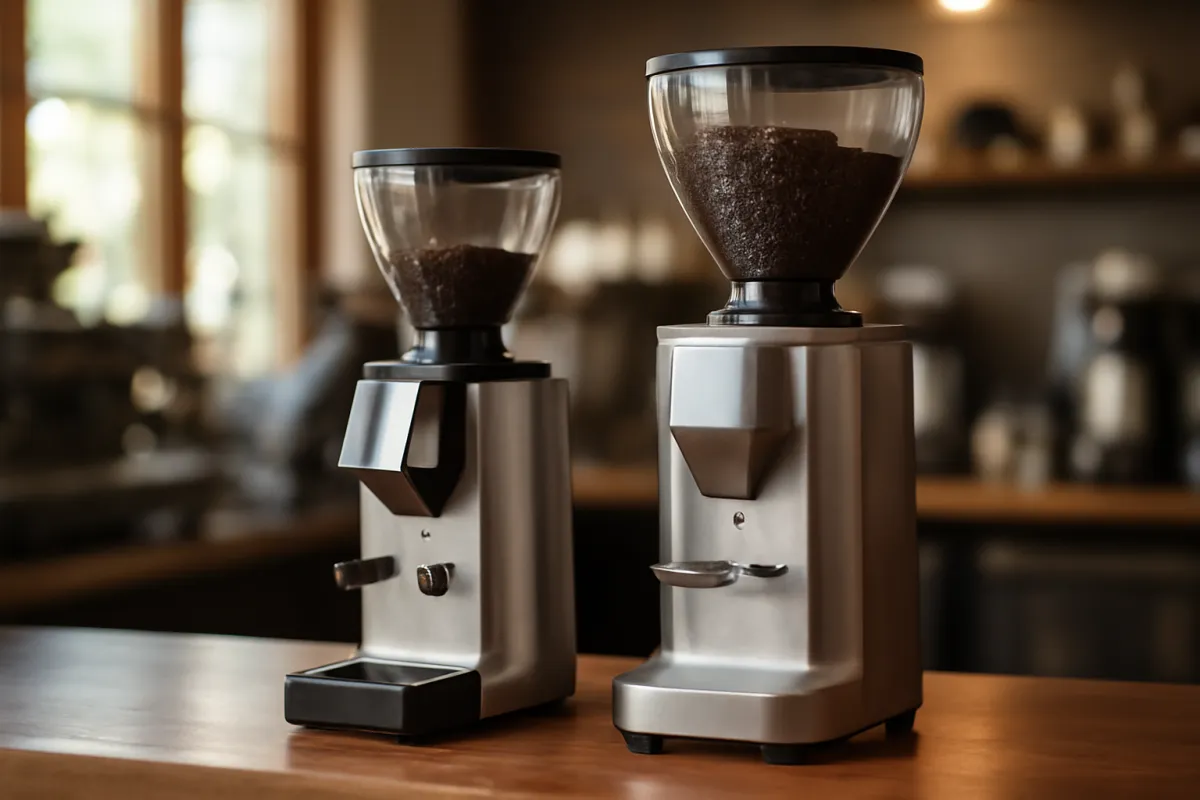
The second is the batch brew grinder, sized to grind a larger dose in one go for a brewer that fills an airpot or a bulk urn. It runs coarser and less frequently than the espresso grinder but in bigger bursts, so it is built around throughput rather than fine adjustment. The third is the bulk or retail grinder, the tall hopper unit that grinds whole-bean bags for customers to take home or feeds high-volume brewing. Each type is a distinct purchase, and a full-service cafe commonly owns one of the first, one of the second, and sometimes the third. The image below shows the two most cafes run side by side.
Sizing the fleet: how many grinders a shop runs
Most cafes need at least two grinders and often three, so budget for a small fleet rather than a single line. The reason is grind separation: espresso needs a very fine, precisely dialed setting that you set once and leave, while batch brew and pour-over need a coarser grind, and one grinder cannot serve both without a wasteful re-dial on every changeover. So the baseline is one grinder locked to espresso and one for batch or bulk brewed coffee.
The third grinder usually appears for decaf. A shop that runs decaf through its main espresso grinder has to purge the hopper and often re-dial for a single decaf order, which wastes coffee and stalls the bar mid-rush. A dedicated decaf grinder, sometimes a smaller or entry unit since decaf volume is lower, pays for itself in flow. High-volume shops and shops with a wide single-origin menu can justify a fourth grinder, while a tiny espresso-only kiosk might run one plus a modest backup. The deciding number is how many distinct grinds you serve at once, because each concurrent grind that cannot share a hopper is another grinder on the counter. Our cost to open a coffee shop case study folds this fleet into the wider opening budget, where the grinder count is an easy line to underestimate.
What drives the cost of a commercial grinder
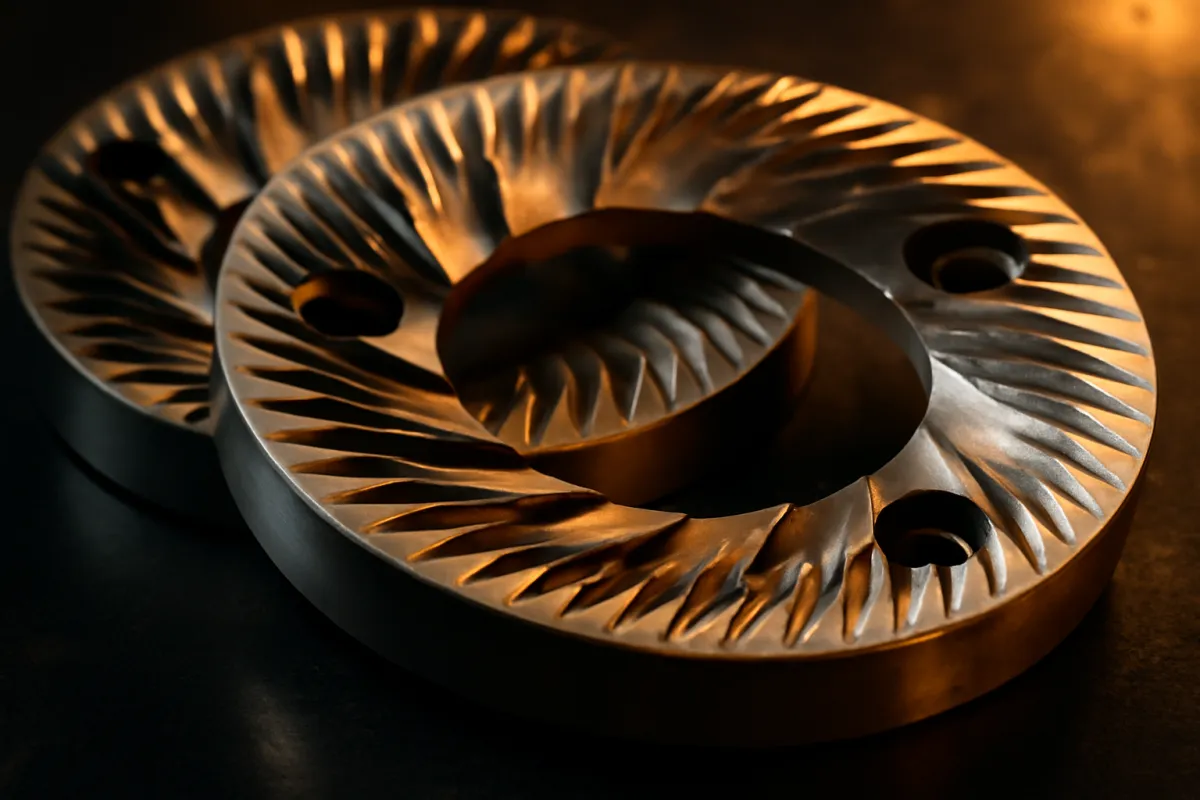
Strip away the branding and four things move a grinder’s price more than anything else. The first is burr size and type. Bigger burrs grind faster and stay cooler under load, which protects flavor during a rush, and they cost more to make. The choice between flat and conical burrs also shifts both the price and the character of the grind, with larger flat burrs common on high-end espresso grinders. The second is the motor: a larger, better-cooled motor sustains a rush without bogging down or overheating, and motor capacity scales directly with price.
The third is dosing technology. A simple timed dose is cheap; grind-by-weight systems with a built-in scale, and precision single-dosing mechanisms, add real cost because they add electronics and accuracy. The fourth is build quality, the least visible driver. A commercial grinder is engineered to run tens of thousands of cycles a year for years, so the housing, the adjustment collar, and the bearings are heavier and better than a prosumer unit. You are paying for a repeatable grind held under continuous load, not for the ability to grind well once. Decide which of these your volume actually needs before paying for the ones it does not.
Entry versus mid versus premium: what you actually gain
Moving up the tiers buys specific, nameable things, not a vague sense of quality, so it helps to know what each step actually adds. An entry commercial grinder gets you a functional, durable-enough unit for a low-volume counter or a backup role: it will grind espresso, but with coarser adjustment steps and smaller burrs that heat up faster, which shows up as more variation when the bar gets busy. For a kiosk pulling a modest number of shots, that can be entirely adequate.
The mid tier is where most working cafes land, and the jump buys the things that matter under load: a stepless or micro-stepped collar for fine dial-in, larger burrs that hold their grind through a rush, and usually a proper on-demand dosing system. This is the workhorse tier, and it is the one to protect in the budget. The premium tier adds refinement on top: precision grind-by-weight, active burr cooling, faster and more repeatable dosing, and build quality that shrugs off years of duty. The honest framing is that the entry-to-mid jump changes the cup noticeably, while the mid-to-premium jump changes it less and buys mostly consistency and speed. Spend where the cup changes, and treat the top of the range as a refinement you buy only if your volume justifies it.
Espresso grinder versus batch and bulk grinder cost
At the same apparent tier, an espresso grinder costs more than a batch brew grinder, and understanding why keeps you from over- or under-buying either. Espresso lives or dies on grind precision: a shift of a fraction of a setting changes the shot from sour to balanced to bitter, so an espresso grinder needs fine, stable adjustment and tight particle consistency, and that engineering costs money. The espresso grinder is the one where paying up genuinely changes the drink.
A batch brew grinder has an easier job. Filter coffee is far more forgiving of grind variation than espresso, so a batch grinder is built around dosing a larger amount quickly and reliably rather than around fine adjustment. It still needs to be a commercial unit built for volume, but the precision premium is smaller, and you can often spend less here than on the espresso grinder without hurting the cup. The bulk or retail grinder, the tall-hopper unit for grinding whole-bean bags, is priced around throughput and hopper capacity. The practical rule: put your grinder money where the grind is fussiest, which is espresso, and buy the batch and bulk grinders to a spec that matches their more forgiving role. Our commercial espresso machine cost case study makes the same point from the machine side, where boiler precision earns its premium only on the drinks that need it.
Commercial grinder versus home grinder cost
A commercial grinder commonly costs several times what a prosumer or home grinder does, and the temptation to close that gap with a home unit is the single most expensive mistake a new cafe can make on the grinder line. The gap does not buy a better single grind. It buys volume capacity and durability. A home grinder is designed to make a few drinks a morning, so its motor, burrs, and housing are not built for the continuous duty of a cafe rush, and running one hard in a commercial setting overheats the burrs, cooks the coffee, and burns out the motor early.
A commercial grinder uses a larger, better-cooled motor, bigger burrs that shed heat and hold their edge, and components rated for tens of thousands of cycles, which is exactly what the higher price reflects. Put a home grinder behind a busy bar and it will fail under load, and it will drag shot quality down with it during the exact hour you can least afford it. This is the same logic our used-vs-new equipment case study applies across the board: the cheapest tool that cannot do the job is not a saving, it is a delayed and larger cost. Buy the grinder for the duty cycle you will actually run, not the one a spec sheet photographs well.
Why espresso needs its own dedicated grinder
Yes, in nearly every cafe the espresso grinder is a dedicated machine, and the reason is operational rather than snobbish. Espresso needs a very fine grind held at a precise, dialed-in setting that you establish at open and adjust only as the coffee ages through the day. Batch brew and pour-over need a coarser grind entirely. A single grinder cannot serve both without being re-dialed on every changeover, which wastes coffee purging the old grind and stalls the bar precisely when orders stack up.
So the espresso grinder gets locked to espresso and nothing else. The moment you also serve brewed coffee, you have added a second grinder, and the moment you serve decaf in any volume you are eyeing a third so a lone decaf order does not force a purge-and-re-dial on the main hopper. This is not gold-plating, it is what keeps a busy bar moving. The dedicated-grinder principle is why the grinder line on a cafe budget is a fleet number, and why the single-unit price that opens this case study understates what you will actually spend. Plan the fleet, then price it, in that order.
When a pricier grinder pays for itself
For a working cafe, a better grinder frequently pays for itself, which is a genuinely different calculation than the one a home buyer faces. The mechanism is waste reduction. A premium grinder holds a repeatable grind shot after shot, keeps its burrs cool so the grind does not drift mid-rush, and dials in faster after a bean change, all of which mean fewer wasted shots, fewer remakes, and fewer drinks poured down the drain. Across thousands of drinks a month, those small savings compound, and the premium over a mediocre grinder is often recovered faster than owners expect.
That is the ROI angle, and it is the same discipline our espresso ROI case study applies to the machine: a modest, consistency-buying spend pays back through drinks that do not get remade or refunded. The honest caveat is that the payback has a ceiling. Past the point where the grind is already consistent under your actual load, extra spend buys refinement your customers may never taste. So the answer is not “buy the most expensive grinder,” it is “buy the grinder whose consistency your volume can actually cash in,” and let expected throughput, not the showroom, set the tier. Run your grinder budget and your daily drink count through the equipment ROI calculator to see where that ceiling sits for your shop.
Burr replacement and the running cost
A grinder is not a one-time purchase, because burrs are a wear item, and budgeting for their replacement from day one separates owners who keep a consistent cup from those who slowly lose one without noticing. Burrs dull with use, and dull burrs grind unevenly, which flattens the cup and forces the barista to chase a dialed-in shot that keeps slipping away. On a busy cafe grinder, replacement is commonly scheduled by weight of coffee ground, which for a high-volume espresso grinder can mean once a year or more.
The cost is modest. Illustratively, a replacement burr set commonly runs from under a hundred dollars into the low hundreds depending on burr size and material, so it is a small recurring maintenance line rather than a major expense. The right way to treat it is exactly how our espresso machine cost case study treats machine service: routine, scheduled, and budgeted, not a surprise. Keep a spare burr set on the shelf so a dull burr never costs you a mid-week service, track roughly how much coffee each grinder has ground, and swap on schedule. The burrs are cheap; the flat, inconsistent cup you serve while pretending they are still sharp is not.
Buying a commercial grinder used
A used commercial grinder can be one of the better bargains on a cafe buildout, because a grinder is mechanically simpler than an espresso machine and the part that wears, the burrs, can be reset with a fresh set. That changes the risk profile: much of what makes a used espresso machine a gamble, hidden scale damage inside a boiler, has no equivalent in a grinder. What you are really buying used is a motor, a housing, and an adjustment mechanism, and those either work or they do not.
So the checklist is short. Confirm the motor runs smoothly under load, check that the adjustment collar holds a setting cleanly rather than drifting, and plan to fit a new burr set on arrival regardless of what the seller claims about the old ones. Fold that burr cost into the purchase price, and a used grinder from a closed cafe or an upgrading shop can deliver most of a new unit’s performance for a fraction of the price. Our used-vs-new equipment case study runs the cost-per-working-year math that makes this call, and grinders sit on the friendly end of that curve: simple, rebuildable, and cheap to refresh. Price the working years, not the sticker, and the used grinder often wins.
Where the grinder fits in the equipment budget
Zoom out from the grinder and it becomes one line in a much larger equipment budget, and keeping it in proportion matters as much as pricing it right. The espresso machine is usually the larger single number, the grinder fleet sits beside it, and then the refrigeration, the water treatment, and the smallwares fill out the bar. Our commercial kitchen equipment cost case study prices that whole picture for a coffee concept, and the grinder fleet is a line buyers routinely fold into “the espresso setup” and then underestimate.
The mistake to avoid is treating the grinders as an accessory to the machine rather than a category of their own. A two-or-three-grinder fleet at mid-tier prices is a four-figure line on its own, and it deserves its own row in the spreadsheet next to the machine, not a footnote under it. Our cost to open a coffee shop case study puts the grinder fleet inside the total opening cost, where it competes for the same dollars as buildout and working capital. The discipline is the same one that runs through every case study on this site: price the whole bar, not the showpiece, and let the total, not any single sticker, drive the decision. Put your fleet into the equipment ROI calculator as part of the machine cost, never as an afterthought.
Dosing technology and what it adds
Dosing is the feature that most often explains why two grinders at the same burr size carry different price tags, so it is worth knowing what you are paying for. The simplest system is a timed dose: the grinder runs for a set number of seconds, which approximates a weight but drifts as the beans age and the hopper empties. It is cheap and it works, and for many shops it is enough with a barista who checks the scale periodically.
The step up is grind-by-weight, a built-in scale that grinds to a target dose rather than a target time, which tightens consistency and speeds the bar because the barista is not weighing and correcting every shot. Precision single-dosing mechanisms, which grind one dose cleanly with minimal retention, add cost again and appeal to shops chasing shot-to-shot accuracy or running frequent bean changes. Each rung adds electronics and accuracy, and each adds price. The rule mirrors the rest of this case study: buy the dosing sophistication your volume and menu actually use. A high-throughput espresso bar cashes in grind-by-weight quickly; a modest counter may never notice it. Match the dosing tech to how the bar actually runs, not to the spec sheet.
Matching the grinder to your volume
The single most useful sizing question is not “which grinder is best” but “how much coffee does this grinder have to move at peak.” A grinder that keeps up with a slow afternoon can bog down and overheat during a morning rush, and an overheated grinder shifts its grind exactly when you most need consistency. So size the espresso grinder to your busiest hour, the same way our espresso machine cost case study sizes group heads to peak throughput rather than daily total.
In practice, a low-volume counter can run a smaller-burr entry or mid grinder comfortably, while a high-volume bar needs larger burrs and a stronger motor to grind continuously through a rush without heat buildup. The batch grinder scales the same way: a shop filling airpots all morning needs one that grinds a large dose fast, while a low-brewed-volume shop can run a smaller unit. Buying above your volume wastes capital on capacity you never use; buying below it costs you consistency and speed at peak, which quietly costs sales. Match the grinder to the rush, add a little headroom, and resist both the urge to over-buy the showpiece and the urge to under-buy the workhorse.
A cafe’s grinder setup, fully costed
Put the whole framework on one bar, illustratively. The cafe is a full-service shop with a morning rush, and it serves espresso drinks, brewed batch coffee, and decaf, so it runs a small fleet. The primary espresso grinder is a mid-tier on-demand unit at $1,600, dialed in and locked to the main espresso roast. The decaf and second-roast grinder is a smaller unit at $900, because decaf volume is lower and it does not need the top of the range. The batch brew grinder, sized for volume rather than fine adjustment, is $1,200. And a first spare burr set, kept on the shelf so a dull burr never costs a service, is $280.
A cafe's grinder setup budget
Illustrative split for a three-grinder full-service fleet, summing to 100 percent.
The grinder line is a fleet, not a box. This illustrative setup totals about $3,980, and no single grinder is more than half of it.
The all-in grinder budget here is $1,600 plus $900 plus $1,200 plus $280, which is $3,980, and that is the number this cafe should carry into its equipment spreadsheet, not the $1,600 sticker on the espresso grinder alone. The lesson lands in the gap between those two figures: a buyer who budgeted for “a grinder” is more than two thousand dollars short before the bar is even complete. Run your own fleet, tier, and new-or-used choice through the companion beside this case study, and the grinder line stops surprising you and starts being a plan.
Mistakes buyers make on grinders
The recurring errors, collected so you can skip them. The first and most expensive is pairing a premium espresso machine with a cheap grinder, spending on the showpiece and starving the component that actually determines the cup. The second is budgeting for one grinder when the shop needs two or three, then discovering the decaf and batch grinders the week before opening. The third is buying a home or prosumer grinder to save money, which fails under the continuous duty of a rush and takes shot quality with it.
The fourth is ignoring burr replacement until the cup goes flat, then blaming the beans or the machine for a problem a cheap burr swap would have fixed. The fifth is over-buying the top of the range past the point where your volume can cash in the consistency, which is capital sitting idle on the counter. The sixth is sizing the grinder to daily total instead of peak-hour throughput, ending up with a unit that overheats and drifts every rush. Under all six sits the same meta-mistake that runs through our commercial espresso machine cost case study: pricing the box instead of the setup. The grinder is a fleet with a running cost, and the buyers who count all of it are the ones whose cups stay consistent long after opening week.
Cleaning, retention, and the daily grinder routine
A grinder’s cost does not end at the purchase and the burrs, because a neglected grinder quietly degrades the cup in ways no spec sheet warns about, and the fix is routine rather than expensive. Ground coffee leaves oils and fines behind in the burr chamber and the chute, and that retention goes stale, so yesterday’s residue flavors today’s first shots. A short daily wipe-down, a periodic brush-out of the chamber, and a scheduled deeper clean keep the grind tasting like the fresh beans you paid for rather than the rancid film of the ones before them.
Retention matters for consistency as much as flavor. A grinder that holds back a few grams between doses throws off grind-by-weight accuracy and wastes coffee on every bean changeover, which is why single-dosing shops obsess over low-retention designs. For most cafes the practical answer is not chasing zero retention but building a cleaning rhythm into the closing routine, the same way the espresso machine gets backflushed at close. Our espresso machine ROI case study makes the same point about the machine: the cheap daily routine is what protects the expensive asset and the cup it produces.
The running-cost lesson is that grinder ownership is a habit, not a transaction. Budget the cleaning supplies and the few minutes a day they take, keep spare burrs on the shelf, and track roughly how much each grinder has ground so replacement lands on schedule rather than by surprise. None of this is costly, and all of it protects the consistency that justified buying a good grinder in the first place. The buyers who skip it are the ones wondering months later why a machine and grinder that started strong now pull a flat, drifting shot the beans do not deserve.
Financing the grinder fleet alongside the machine
Because the grinder line is a fleet and not a single box, it is large enough to belong in the financing conversation rather than being paid out of pocket as an afterthought. A three-grinder setup at mid-tier prices is a four-figure line, and most cafes buy it at the same cash-tight moment they buy the machine, during the open. The practical move is to fold the grinders into the same equipment financing that covers the espresso machine, so the whole bar is funded on one structure matched to its long working life.
The mechanics are the ones our equipment financing case study lays out: a loan secured by the equipment, priced on the borrower and the collateral, repaid over a term that fits how long the gear will earn. Grinders are durable, rebuildable, and long-lived, so they comfortably support financing terms in the same range as the machine, and bundling them keeps the paperwork and the payment simple. If you are buying used grinders to stretch the budget, remember the financing note from our used-vs-new equipment case study: used gear often carries higher rates and shorter terms, so compare the total financed cost of a used fleet against a new one rather than the stickers alone.
Whether you finance or pay cash, the discipline this case study has pressed throughout carries into the funding decision: price the whole fleet, not the showpiece grinder, and make the funding choice on the total. A buyer who finances the machine but forgets the grinders is short the same two-thousand-dollar gap that opened this article, only now it is due in cash on opening week. Put the fleet in the plan and in the financing from the start, and the grinder line stops being the surprise that strains the open.
The bottom line
A commercial coffee grinder costs whatever the single sticker says, from the mid hundreds of dollars for an entry unit into the high single thousands for a high-end or high-volume grinder, and then a cafe buys more than one. The real number is a fleet: an espresso grinder locked to the main roast, a second unit for decaf or another roast, and a separate batch or bulk grinder for brewed coffee, commonly a four-figure line on its own. The grinder deserves as much of your budget attention as the machine, because grind consistency drives the cup more than the brew group does, and a cheap grinder wastes a good machine.
The buyers who get this right do three things in order. They plan the fleet before they price it, counting how many distinct grinds the shop serves at once. They protect the espresso grinder in the budget, because that is where precision changes the drink, and they buy the batch and bulk grinders to their more forgiving role. And they treat burrs and the occasional replacement as routine running cost, not a surprise, so the cup stays consistent for years. Price the whole grinder line, keep it in proportion to the machine and the rest of the bar, and run your fleet through the equipment ROI calculator before the number lands on your equipment budget by surprise.
Written for cafe owners costing a grinder fleet, not for anyone selling one: this case study is educational material, not financial, tax, or purchasing advice, and it recommends no specific grinder, brand, or vendor. Every price, tier, percentage, and split here is an illustrative sketch meant to teach how the grinder line adds up, and real quotes vary widely by burr size, dosing technology, brand, region, and how many grinders your menu actually requires. Burr wear rates, motor life, and used-unit condition differ for every shop and every grinder, so gather local quotes on the actual units in front of you, fit a fresh burr set to anything bought used, and put a trusted technician and your own volume numbers between you and any deposit.
Frequently asked questions
How much does a commercial coffee grinder cost?
Illustratively, a new entry commercial espresso grinder commonly lands in the mid hundreds of dollars, a mid-tier on-demand grinder in the low thousands, and a high-end espresso or high-volume bulk grinder can reach the high single thousands. The spread is wide because burr size, dosing technology, and build quality move the number more than badge or brand. Treat any single figure as a planning shape, not a quote, because a cafe usually buys more than one grinder and the total matters more than the sticker on any single unit. Price the setup, not the box, because a busy shop commonly needs an espresso grinder, a decaf or backup unit, and a separate batch brew grinder.
How much is a commercial espresso grinder specifically?
A commercial espresso grinder, illustratively, commonly runs from several hundred dollars for an entry on-demand model into the low thousands for a mid-tier unit with a stepless collar and larger burrs, and a high-end grinder with precision dosing and heat management can reach the high single thousands. Espresso grinders cost more than batch grinders at the same tier because espresso is unforgiving: tiny changes in grind size change the shot, so the grinder needs finer adjustment and tighter consistency. The number you should budget is not the cheapest espresso grinder you can find, it is the one that holds a repeatable grind under a rush. A cheap espresso grinder feeding an expensive machine is the most common way cafes waste money on the bar.
Do I need a separate grinder for espresso?
Yes, in almost every cafe the espresso grinder is a dedicated machine, and here is why: espresso needs a very fine, very precise grind that is dialed in and left alone, while batch brew and pour-over need a coarser grind. Switching one grinder back and forth between those settings wastes coffee on every changeover and slows the bar down at exactly the wrong moment. A shop that serves both espresso and brewed coffee therefore runs at least two grinders, one locked to espresso and one for batch or bulk. Many shops add a third for decaf so a single decaf order does not force the barista to purge and re-dial the main espresso grinder.
How many grinders does a coffee shop need?
Most cafes need at least two grinders and often three, so budget for a small fleet rather than a single purchase. The typical setup is one on-demand grinder locked to espresso, a second grinder for decaf or a second espresso roast so orders do not interrupt the main hopper, and a batch or bulk grinder for brewed coffee. A high-volume shop or one with a wide menu can justify a fourth, and a tiny kiosk pouring only espresso drinks might survive on one plus a small backup. The deciding factor is how many distinct grinds you serve at once, because each concurrent grind that cannot share a hopper is another grinder on the counter.
Are expensive coffee grinders worth it for a cafe?
For a working cafe, a better grinder frequently pays for itself in consistency and reduced waste, which is a different calculation than a home buyer faces. A premium grinder holds a repeatable grind shot after shot, keeps the burrs cool so the coffee does not shift mid-rush, and dials in faster, which means fewer wasted shots and fewer remakes. Those small savings compound across thousands of drinks a month, so the premium over a mediocre grinder is often recovered faster than owners expect. The honest caveat is that there is a ceiling: past the point where the grind is already consistent under load, extra spend buys refinement your customers may not taste, so match the grinder to your volume rather than chasing the top of the range.
What is the difference in cost between a commercial and a home grinder?
A commercial grinder commonly costs several times what a prosumer or home grinder does, and the gap buys volume capacity and durability rather than a better single grind. A home grinder is built to make a few drinks a morning, so its motor, burrs, and housing are not engineered for the continuous duty of a cafe rush, and running one hard in a commercial setting cooks the burrs and burns out the motor early. A commercial grinder uses a larger motor, bigger burrs that stay cool, and components rated for tens of thousands of cycles, which is exactly what the price reflects. Trying to save money with a home grinder in a cafe is a false economy, because it fails under load and takes shot quality down with it during your busiest hour.
How often do grinder burrs need replacing, and what does it cost?
Burrs are a wear item, and on a busy cafe grinder they are commonly replaced on a schedule measured in hundreds of kilograms of coffee, which for a high-volume shop can mean once a year or more. Illustratively, a replacement burr set commonly runs from under a hundred dollars into the low hundreds depending on burr size and material, so it is a modest recurring line rather than a major expense. The reason it matters is quality, not just cost: worn burrs grind unevenly, which flattens the cup and forces the barista to chase a dialed-in shot that keeps slipping. Budget burr replacement as routine maintenance from day one, the same way you would budget for espresso machine service, and keep a spare set on the shelf so a dull burr never costs you a service.
Should I buy a commercial grinder used to save money?
A used commercial grinder can be a genuine bargain, because a grinder is mechanically simpler than an espresso machine and a fresh set of burrs effectively resets the part that wears. The things to check are the burr condition, the motor, and whether the adjustment mechanism still holds a setting cleanly, since a grinder that drifts off its setting is a daily frustration on the bar. Factor in a new burr set as part of the purchase price on any used unit, because burrs of unknown age are the most likely thing to disappoint. Our used-vs-new case study runs the cost-per-working-year math in full, and for grinders specifically the used route often keeps most of the discount while deleting most of the risk, provided you rebuild the burrs on arrival.