
What's on this page
- The price tiers, from entry single-group to super-automatic
- What actually drives the price
- Heat exchanger versus dual boiler
- New versus used or refurbished
- The grinder is not optional, and it is expensive
- Water treatment, the invisible line item
- Installation, plumbing, and electrical
- The total cost of ownership beyond the sticker
- Lease versus buy for the machine
- Volume matching: drinks per day to group count
- Why the grinder matters more than the machine
- Service contracts and parts
- Energy and water running costs
- Financing options
- Resale value of commercial espresso machines
- Matching the machine to your cafe format
- The ROI tie-in: throughput is the whole game
- A worked example: one two-group setup, fully costed
- Mistakes buyers make on price
- The bottom line
Short answer: Illustratively, a single-group entry commercial espresso machine runs near $4,500, a two-group heat exchanger near $9,000, a two-group dual boiler near $14,000, and a three-group high-volume machine near $20,000 or beyond, sticker only. The machine is a fraction of the real cost: a mandatory commercial grinder, water treatment, and installation turn that sticker into an all-in setup number that is often a quarter higher.
Ask a cafe owner what a commercial espresso machine costs and you will get a shrug and a range so wide it is useless: a few thousand dollars, or twenty, or more. Both answers are true, which is exactly the problem. The sticker on the machine is only one line in a bill that includes a mandatory grinder most first-time buyers forget, water treatment nobody quotes upfront, and an electrician who may need to run a new circuit before the machine can be switched on.
This case study prices the whole thing, honestly and end to end: the price tiers from an entry single-group to a super-automatic, what actually moves the number, the boiler decision that separates two machines with the same number of spouts by thousands of dollars, the grinder that matters more than the machine it feeds, and every ancillary cost between the invoice and the first shot. It sits alongside our espresso ROI case study on whether the machine earns its keep, and you can run your own numbers as you read with the equipment ROI calculator.
Key takeaways
- The machine is a fraction of the real cost. A mandatory commercial grinder, water treatment, and installation turn a sticker into an all-in setup number that is often a quarter higher.
- Group heads set throughput, but boiler type sets price and cup quality. Two machines with two groups can differ by thousands depending on heat exchanger versus dual boiler.
- The grinder matters more than the machine for what ends up in the cup, and pairing a premium machine with a cheap grinder is the most common way buyers waste money.
- Match group count to peak-hour throughput, not daily total, because an undersized machine costs sales through a queue exactly when the cafe is busiest.
- A rebuilt machine from a reputable technician is frequently the best value on the board, and the machine only earns if it matches your throughput, not the other way around.
The price tiers, from entry single-group to super-automatic
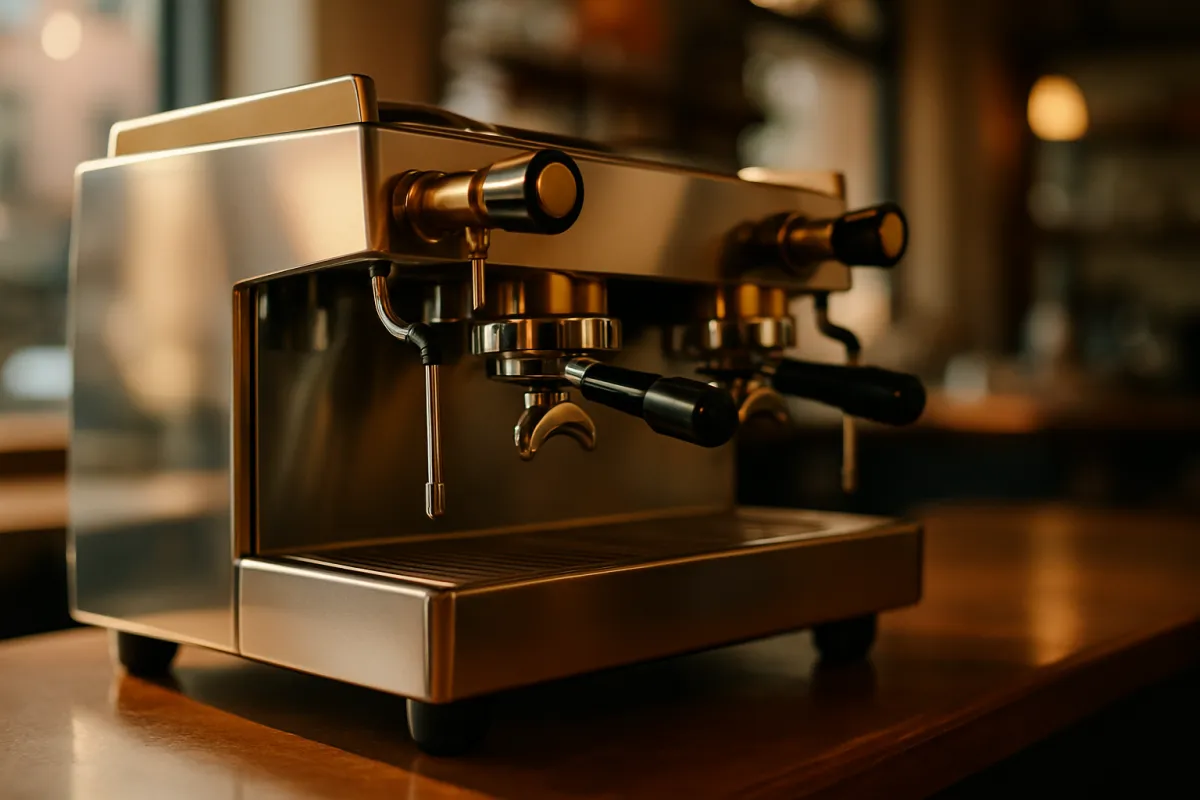
Commercial espresso machines sort into rough tiers, and knowing which one you are shopping stops the sticker shock before it starts. At the bottom sits the entry single-group: one brew head, often a heat exchanger, suited to a kiosk, a cart, or a low-volume counter. Illustratively, a new one commonly lands in the low thousands. Next is the two-group workhorse, the machine most cafes actually buy, with two brew heads that let a barista pull and steam in parallel; new, it commonly runs from the high single digits into the mid teens of thousands depending on boiler type and build.
Above that is the three-group high-volume machine, built for sustained rushes and drive-through pace, commonly reaching the low twenties of thousands or beyond. Off to the side sits the super-automatic, a different animal entirely: it grinds, doses, tamps, and pours at the push of a button, trading barista skill for consistency and labor savings, and its price reflects the built-in automation rather than group count. Each tier is a shape, not a quote, and the boundaries blur, but the tier decides the conversation you are about to have with your budget.
Illustrative machine cost by configuration
New-machine sticker only, before grinder and install. Shape, not a quote.
Note the two two-group bars: same spout count, thousands of dollars apart, and the difference is the boiler. Group heads set throughput; boiler type sets price and cup consistency.
What actually drives the price
Strip away the branding and three things move the number more than anything else. The first is group heads, the brew stations on the front of the machine, because each one is a full set of plumbing, a solenoid, a group, and the boiler capacity to keep it hot under load. Going from one group to two is close to doubling the production hardware, and the price follows. The second is boiler type and capacity, which is why the boiler decision gets its own section below: a bigger, better-controlled boiler holds temperature through a rush, and that stability costs money.
The third is build quality, the least visible and most underrated driver. A commercial machine is engineered to run tens of thousands of cycles a year for years, so the materials, the frame, the valves, and the electronics are heavier and better than a prosumer unit that makes a few shots a morning. You are paying for thermal stability under continuous load, not for the ability to make one good shot at home. Features layer on top: PID temperature control, pre-infusion, pressure profiling, and steam wands with more power each add cost and each buys a specific capability. Decide which capabilities your cup actually needs before you pay for the ones it does not.
Heat exchanger versus dual boiler
Here is the decision that separates two machines with identical group counts by thousands of dollars, and it confuses more first-time buyers than any other spec. A heat exchanger machine runs a single boiler full of steam water, and passes fresh brew water through a coil that sits inside that boiler on its way to the group. It is efficient, reliable, and proven, but the brew temperature is coupled to steam demand, so a machine worked hard through a rush can drift unless the barista manages it. For most busy general cafes, a good heat exchanger machine is the smarter value.
A dual boiler machine runs two separate boilers: one for steam, one for brew, each with its own independent temperature control. That decoupling gives precise, stable brew temperature that holds through the busiest stretch, which is why specialty-focused cafes chasing shot-to-shot consistency pay the premium, illustratively several thousand dollars more on a two-group. The honest framing is not that one is better, it is that they solve different problems. If your menu leans milk-heavy and high-volume, heat exchanger stability is usually enough. If your reputation rides on a precisely extracted single origin, the dual boiler earns its price. Match the boiler to the cup you are trying to serve, and do not pay for dual boiler precision you will never taste.
New versus used or refurbished
The fastest way to cut the sticker is to not buy new, and espresso machines reward that move more than most equipment because they are built to be rebuilt. A machine that got a documented rebuild from a reputable technician, new gaskets, seals, valves, and a descaled boiler, can reset much of its working life at a fraction of new price. That refurbished tier is frequently the best value on the board, and our used-vs-new case study reached exactly that verdict for revenue-critical gear: the rebuilt unit from someone who stands behind it keeps most of the discount while deleting most of the risk.
Raw used from an unknown seller is a different bet. The two killers specific to espresso are scale and neglect: a machine run on hard water without treatment can have a boiler and valves quietly eaten by mineral buildup, and the damage does not show in a quick look. Ask for service history, ask what water it ran on, and if the seller cannot answer, price the machine as a gamble. New earns its premium where warranty coverage on a machine your revenue depends on is worth its price, or where a down morning would cost more than the coverage. The cost-per-remaining-year discipline from the used-vs-new case study applies unchanged: price the working years, not the sticker.
The grinder is not optional, and it is expensive
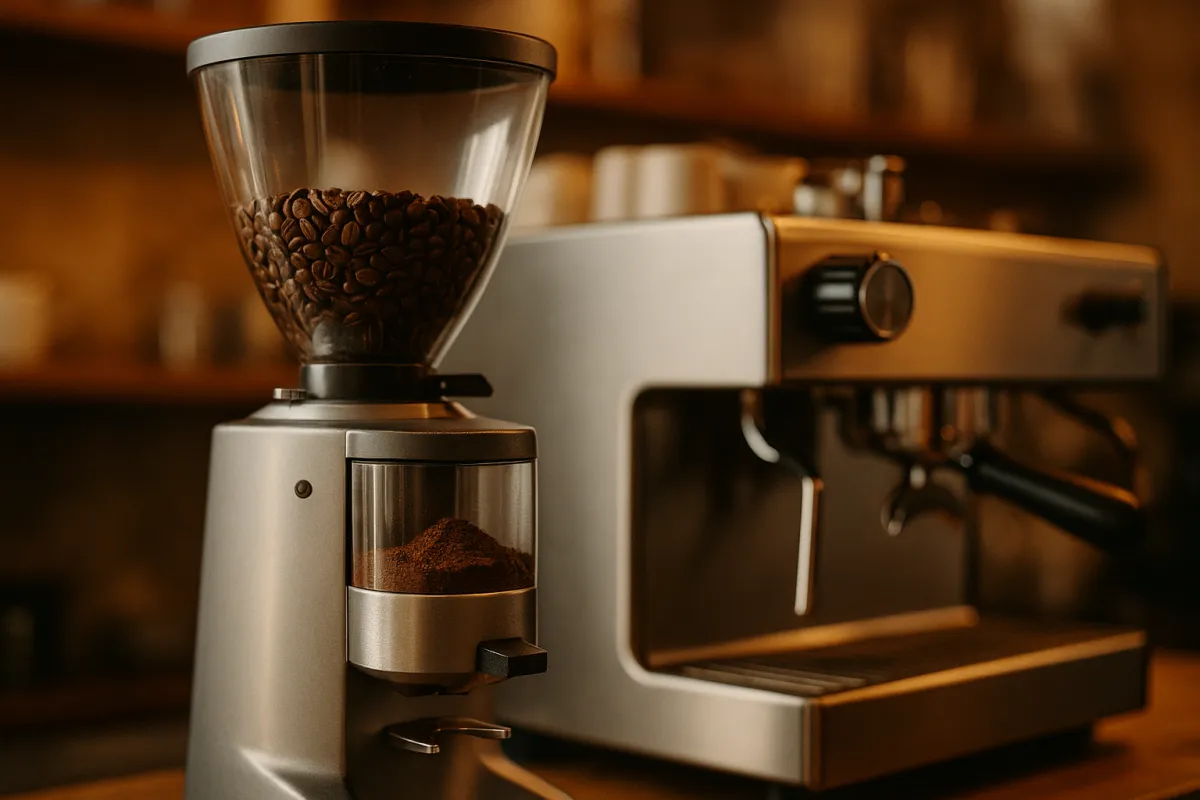
If this case study changes one thing about how you budget, let it be this: the grinder is a mandatory purchase, and it is not a minor one. A commercial espresso grinder, illustratively, commonly runs from several hundred dollars into the low thousands, and a high-volume cafe often needs two, a primary and a backup or a second for a different roast, plus a separate unit for decaf. Buyers who blew their whole budget on the machine discover the grinder line the week before opening, and it is a genuinely large number to find late.
The grinder is expensive for a reason, and the reason connects directly to why it matters so much: grind consistency, particle uniformity, and dose accuracy are what let a barista dial in a repeatable shot, and cheap grinders produce inconsistent grounds that no machine can rescue. A commercial grinder also has to keep up with volume without overheating the burrs, which cooks the coffee and shifts the grind. Treat the grinder as a core purchase alongside the machine, budget for it from the first spreadsheet, and put it into the equipment ROI calculator as part of the machine cost, never as an afterthought.
Water treatment, the invisible line item
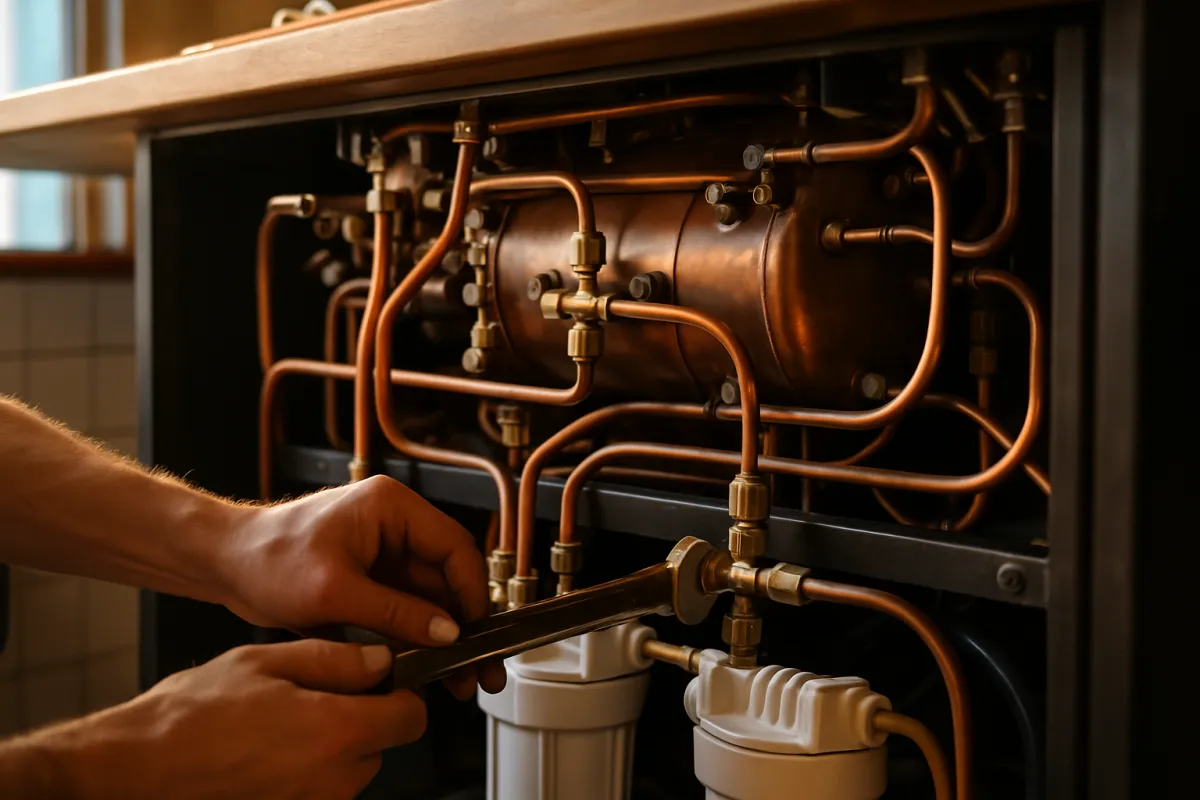
Water is the ingredient nobody quotes and the one that quietly decides how long your machine lives. Espresso is almost entirely water, so its mineral content shapes both the taste in the cup and the scale that accumulates inside the boiler. Run a commercial machine on untreated hard water and you are scheduling its early death: scale insulates heating elements, clogs valves, and forces service visits that a filtration system would have prevented for a fraction of the cost.
A proper water treatment setup, illustratively, is a several-hundred-dollar to low-four-figure line depending on your water and your volume: a filtration or softening system, sometimes reverse osmosis with remineralization for taste, plus the ongoing cost of replacement cartridges. It belongs in the setup budget, not the wish list. This is the same logic our espresso ROI case study applied to maintenance generally: a modest preventive spend pays for itself the first time it stops a machine from going down during a rush. Skipping water treatment to save a few hundred dollars is how cafes turn a fifteen-year machine into a five-year one.
Installation, plumbing, and electrical
A commercial espresso machine does not plug into a wall socket and pour. It needs a dedicated water line feeding it, a drain to carry off waste, and electrical service heavy enough to run heating elements that a domestic circuit cannot support. A single or two-group machine may run on a standard high-amperage circuit, but a three-group machine often needs a dedicated 220-volt supply that an electrician has to run, and that work is not free.
Illustratively, installation plus the associated plumbing and electrical can add anywhere from several hundred dollars to a few thousand, driven almost entirely by how far your utilities sit from the counter. A machine going where plumbing and a suitable circuit already exist installs cheaply; a machine going onto a bare wall in the middle of a room can cost more to connect than a mid-tier grinder. The practical rule: get plumbing and electrical quotes for your specific location before you commit to a machine, because a cheap machine in an expensive spot can cost more all-in than a pricier machine that plugs into existing service. This is exactly where a sticker-only comparison misleads.
The total cost of ownership beyond the sticker
Everything so far points to a single truth: the machine sticker is the beginning of the cost, not the end. The all-in setup number is machine plus grinder plus install plus water treatment, and for a typical two-group it commonly runs a quarter or more above the machine price alone. Beyond setup sits the running cost, which our buy-vs-lease case study showed is usually the larger part of what any equipment truly costs over its life: service, parts, energy, water, and the cost of any downtime.
The all-in setup cost
Illustrative split for a two-group dual boiler setup, summing to 100 percent.
More than a quarter of the setup cost sits outside the machine sticker. Budget the whole bar, not the box, and the number stops surprising you.
The reason this matters is not accounting neatness, it is decisions. A buyer comparing two machines on sticker alone can pick the one that costs more once the grinder, the water system, and the electrician are counted. The buyers who get espresso equipment right build the all-in setup number first and the five-year running cost second, then compare those totals. Run your own version through the equipment ROI calculator so the invisible lines become visible before you sign.
Lease versus buy for the machine
Once you know the all-in number, the next question is how to pay for it, and leasing is a common route for espresso equipment specifically because the setup cost is a meaningful upfront hit for a new cafe. The honest answer is that lease versus buy turns on utilization and cash flow, not on the salesperson’s framing. A cafe espresso machine that runs hard every single open hour is the textbook high-utilization case, and high utilization usually favors owning, because you use the asset fully and keep it at the end rather than paying a lease premium on equipment you never idle.
Leasing earns its place for operators who need to preserve cash for the rest of the buildout, who want a predictable monthly line, or who plan to upgrade the machine as the business grows. Some lease and service bundles fold maintenance in, which has real value for a first-time owner without a technician relationship. Our buy-vs-lease case study runs the full total-cost comparison; the short version is to compare the complete cost of each path over the same term, and to match the term to the machine’s earning life, rather than judging a monthly payment against a sticker. The companion beside this article shows the monthly figure if you finance your specific setup.
Volume matching: drinks per day to group count
The single most expensive sizing mistake is buying group heads by daily total instead of peak-hour throughput. A cafe that serves three hundred drinks spread evenly across a long day has very different needs from one that serves the same three hundred in two brutal morning rushes. The machine has to survive the rush, not the average, because the queue that forms during peak is where an undersized machine costs you sales, one walkout at a time.
As a working map: a single group can sustain a genuinely low-volume location but bottlenecks the instant two orders arrive together, since one barista cannot pull and steam on the same head at once. A two-group is the workhorse for most cafes precisely because it lets a barista extract on one head while steaming milk for the last drink, roughly doubling effective throughput rather than just brew stations. A three-group suits high-volume shops with sustained rushes, drive-throughs, and multi-barista bars where two people work the machine at once. Size to your busiest hour with a little headroom, because the cost of being one group short shows up every single peak, while the cost of one group extra is a one-time premium.
Why the grinder matters more than the machine
It sounds backward, so say it plainly: for what ends up in the cup, the grinder matters more than the espresso machine. Extraction is governed by how the water meets the coffee, and that is set by grind size, particle uniformity, and dose, all of which the grinder controls. A precise grinder feeding a modest machine will out-cup a world-class machine fed by an inconsistent grinder every time, because the machine can only brew the grounds it is given, and it cannot fix grounds that vary shot to shot.
This is why the most common way buyers waste money is pairing a premium machine with a cheap grinder, spending big on the visible showpiece and skimping on the component that actually determines quality. The rule that follows is simple and slightly uncomfortable: if the budget forces a trade, protect the grinder before the machine. A great grinder with a good heat exchanger machine beats a great dual boiler machine with a mediocre grinder, both in the cup and in the consistency your regulars come back for. Spend the marginal dollar where it changes the coffee, which is upstream of the brew group, not on it.
Service contracts and parts
Commercial espresso machines are serviceable by design, which is a feature and a cost. Gaskets, seals, valves, and group components are wear items that need periodic replacement, and a machine run hard will need a technician on some cadence whether or not you have a contract. That is the choice: pay for a service contract that bundles scheduled maintenance and priority response, or self-insure and pay per visit when something fails. Neither is universally right, and the decision mirrors the warranty math in our used-vs-new case study: compare the contract price against your realistic repair exposure, and remember the provider priced it to profit on the average buyer.
Where a contract genuinely earns its cost is response time. A machine down during the morning rush is not a maintenance inconvenience, it is lost revenue by the hour, and a contract that guarantees a technician same-day can be worth more than its price for a cafe with a single machine and no backup. Parts availability matters too: mainstream brands with a deep local service network and stocked parts get you running faster than an exotic import whose one gasket has to ship internationally. Factor serviceability and parts supply into the purchase, because the cheapest machine to buy can be the slowest to fix.
Energy and water running costs
The machine keeps costing money every hour it is switched on, and two utilities carry that cost: electricity and water. A commercial espresso machine holds one or more boilers at temperature all day, which is a continuous draw, and larger multi-boiler machines draw more. Illustratively, the energy line is a modest but real monthly number, and it grows with group count, boiler size, and how many hours the machine sits hot. Simple habits, a timer that heats the machine shortly before open rather than overnight, and switching off at close, trim it without any capital outlay.
Water is the other running cost, and it is two costs in one: the water in the drinks and the water consumed by treatment and backflushing, plus the periodic replacement of filtration cartridges. Neither utility line is large enough to change a purchase decision on its own, but both belong in the five-year running total, because they are the kind of small, steady costs that a sticker-focused buyer ignores and a total-cost buyer counts. The point is not that energy and water will break you; it is that a complete picture includes them, and the complete picture is the only one worth deciding on.
Financing options
Beyond the binary of cash versus lease sits a spectrum of ways to fund the setup, and the right one depends on your balance sheet and your appetite for monthly obligation. Equipment loans finance the purchase directly with the machine as collateral, spreading the all-in cost over a term while you keep the asset; equipment leases trade ownership for lower or bundled monthly payments and an end-of-term choice; and some vendors and roasters offer their own financing or machine-placement arrangements tied to supply agreements. Each carries a different total cost and a different set of strings.
The discipline that keeps financing from becoming a trap is the one from our buy-vs-lease case study: decide on total cost over the term, not on the monthly payment in isolation, and match the term to how long the machine will earn. A low monthly figure stretched over a long term can cost far more in total than a higher payment over a shorter one, and a roaster placement deal that looks free can bind you to coffee pricing that costs more than the machine would have. Price the money the same way you price the machine, as a real, quantifiable line, and let the total decide. The companion on this page shows your monthly figure if you finance rather than pay cash.
Resale value of commercial espresso machines
Commercial espresso machines hold their value better than most cafe equipment, which changes the ownership math in the buyer’s favor. Because they are built to be rebuilt and mainstream models have a deep used and refurbished market, a well-maintained machine from a respected brand can be sold years later for a meaningful share of what you paid, especially if you kept the service records that let the next buyer say yes quickly. That residual value is the mirror image of the refurbished bargain discussed earlier: the same durability that makes a rebuilt machine a smart buy makes your machine a sellable asset when you upgrade or close.
The resale strategy from our used-vs-new case study applies directly. Buy a mainstream brand in a common configuration, maintain it on schedule with treated water, keep the documentation, and you own a machine you can exit rather than a sunk cost you scrap. This is part of why owning tends to beat leasing for a high-utilization cafe machine: you capture the resale value at the end instead of handing the equipment back. Factor a realistic recovery into your five-year math, and the true cost of owning drops below the sticker in a way a lease can never match.
Matching the machine to your cafe format
The right machine is the one that fits your format, and cafe formats span a wide range that maps cleanly onto the tiers above. A coffee cart or mobile setup lives and dies on footprint and power: a compact single-group machine, often on a limited electrical supply, is usually the honest choice, and oversizing it wastes money and counter space you do not have. A kiosk or small counter with steady but modest volume is the natural home for a single group or a compact two-group, sized to a peak that is real but not brutal.
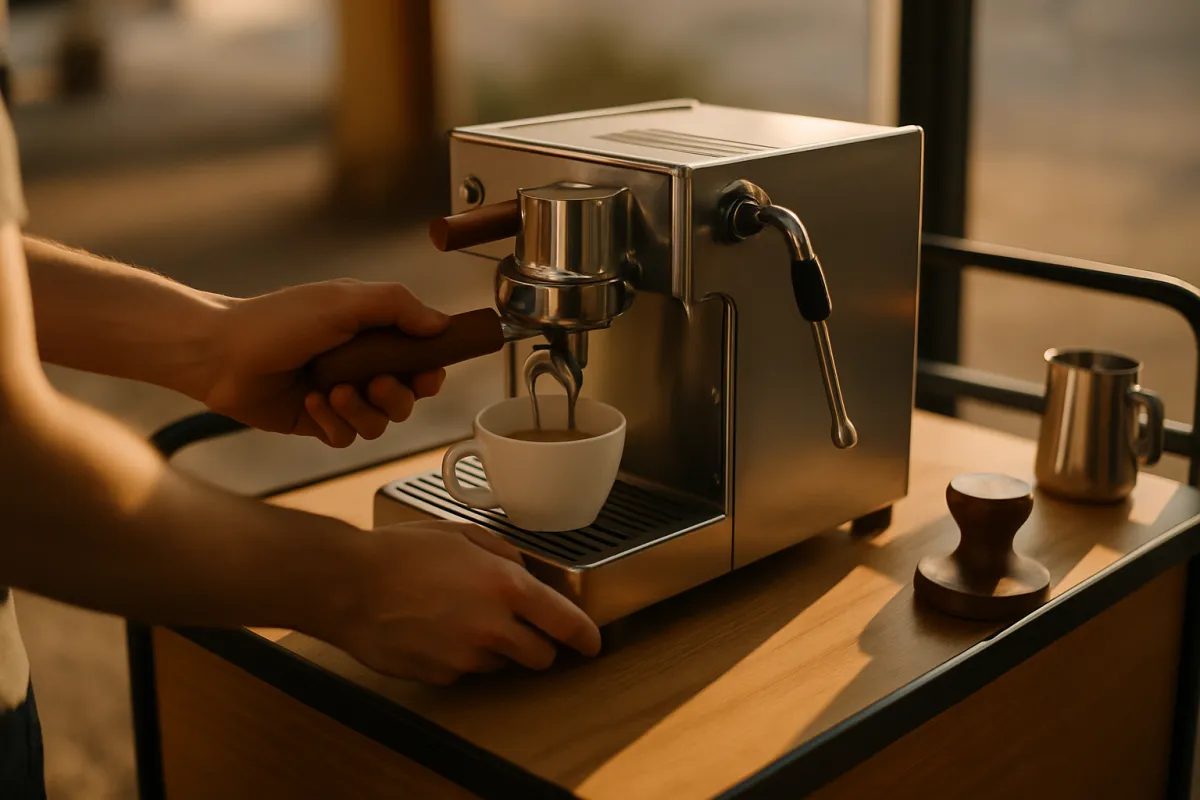
A full-service shop with a defined morning rush is where the two-group workhorse earns its keep, and a high-volume shop or drive-through with sustained lines and multiple baristas is three-group territory. The super-automatic slots in wherever labor is the binding constraint rather than craft: an office, a convenience location, or a self-serve setting where consistency and low staffing beat barista artistry. Buying above your format wastes capital on capacity you never use, and buying below it costs sales through a queue. Match the machine to the format first, then choose the tier, then price the setup.
The ROI tie-in: throughput is the whole game
Every number in this case study serves one purpose: the machine only earns if it matches your throughput. A machine too small for your peak throttles revenue at exactly the busiest moment, and a machine too large for your volume ties up capital that could have gone to staff, marketing, or a better grinder. The cost question and the ROI question are the same question asked from two directions, which is why this case study is a sibling to our espresso ROI case study rather than a rival to it.
That case study made the stakes concrete: lost peak drinks add up to real money over a year, often more than the price gap between the machine you bought and the one that would have cleared the line. The corollary runs the other way too. Overpaying for a three-group machine that serves a single-group volume is capital sitting idle, and idle capital has an opportunity cost even when it never breaks down. The buyers who win treat the machine as a production line sized to a specific rush, price the whole line including the grinder that determines its output quality, and let expected throughput, not the showroom, decide the tier. Run your throughput and your setup cost together through the equipment ROI calculator before you commit.
A worked example: one two-group setup, fully costed
Put the whole framework on one bar, illustratively. The cafe is a full-service shop with a morning rush that peaks around a hundred and forty drinks a day, so a two-group is the right tier, and the owner wants shot consistency for a specialty menu, so a dual boiler earns its premium. The machine is illustratively $14,000. That is the sticker, and the sticker is where most budgets stop and most surprises begin.
Now the rest of the bar. The grinder, a proper commercial unit with a consistent burr set, is $2,800, and it is not optional. Installation, plumbing, and running a suitable circuit to the counter come to $1,800 for this location, because the utilities sit reasonably close. Water treatment, a filtration and softening system sized to the local water, adds $900 plus cartridges over time. The all-in setup cost is $14,000 plus $2,800 plus $1,800 plus $900, which is $19,500, roughly forty percent above the machine sticker alone. That $19,500, not the $14,000, is the number the cafe finances or pays, and the number the ROI calculator should measure payback against.
The lesson lands in the gap between the two figures. A buyer who budgeted $14,000 is $5,500 short before the first shot, and a buyer who compared this machine against a cheaper one on sticker alone might have chosen wrong once the grinder and location costs were counted. Cost per group head on this setup is $7,000 of machine per brew station, a useful sanity check against other configurations. Run your own tier, grinder budget, and financing choice through the companion beside this article, and the all-in number stops being a surprise and starts being a plan.
Mistakes buyers make on price
The recurring errors, collected so you can skip them. The first and most expensive is budgeting the machine and forgetting the grinder, then discovering a four-figure line the week before opening. The second is comparing machines on sticker while ignoring the install cost your specific location imposes, which can flip which machine is actually cheaper all-in. The third is skipping water treatment to save a few hundred dollars, then paying for it many times over in scale damage and early service.
The fourth is buying group heads by daily total instead of peak throughput, ending up with a machine that either bottlenecks every rush or sits half-idle all day. The fifth is pairing a premium machine with a cheap grinder, spending on the showpiece and starving the component that actually determines the cup. The sixth is judging financing by the monthly payment rather than the total cost over the term, the exact trap our buy-vs-lease case study exists to close. Under all six sits the same meta-mistake: pricing the box instead of the bar. The machine is one line in a setup that includes a grinder, water, install, and years of running cost, and the buyers who count all of them are the ones whose cafes earn rather than explain.
The bottom line
A commercial espresso machine costs whatever the sticker says, and then it costs a good deal more. The sticker sorts into tiers, entry single-group, two-group workhorse, three-group high-volume, and super-automatic, and within a tier the boiler decision moves the price by thousands for the same number of spouts. But the sticker is a fraction of the real number. A mandatory grinder that matters more than the machine, water treatment that decides how long the machine lives, and installation that depends entirely on your location turn a machine price into an all-in setup cost that commonly runs a quarter or more higher.
The buyers who get this right do three things in order. They match the machine to their format and their peak-hour throughput, not their daily total, because the machine only earns if it matches the rush. They price the whole bar, machine plus grinder plus water plus install plus five years of running cost, and compare those totals rather than stickers. And they protect the grinder before the machine when the budget is tight, because that is where the marginal dollar changes the coffee. Run your setup and your throughput through the equipment ROI calculator, and let the fully costed number, not the showroom, sign the purchase order.
Written for cafe owners costing a bar, not for anyone selling one: this case study is educational material, not financial, tax, or purchasing advice, and it recommends no specific machine, brand, or vendor. Every price, tier, percentage, and split here is an illustrative sketch meant to teach how the pieces add up, and real quotes vary widely by brand, boiler, region, water, and how far your utilities sit from the counter. Grinder needs, installation requirements, and service terms differ for every location, so gather local quotes on the actual machine and site in front of you, and put a trusted technician and your own numbers between you and any deposit.
Frequently asked questions
How much does a commercial espresso machine cost?
Illustratively, a new entry single-group machine commonly lands in the low thousands, a two-group workhorse in the high single digits to mid teens of thousands, and a three-group high-volume machine can reach the low twenties or beyond. The spread is wide because a two-group heat exchanger and a two-group dual boiler can differ by thousands for the same number of spouts. Treat any single figure as a planning shape, not a quote, because build quality, boiler type, and features move the number more than group count alone. Price the whole setup, not the machine in isolation, because the grinder and install add materially to the sticker.
Why are commercial espresso machines so expensive?
You are paying for thermal stability under continuous load, not for the ability to make one good shot. A commercial machine holds temperature and pressure through a rush that would overwhelm a prosumer unit, using heavier boilers, better materials, and components engineered for tens of thousands of cycles a year. Dual boilers, PID control, saturated group heads, and commercial plumbing all add cost, and each buys stability that translates directly into consistent drinks during peak. The price reflects a production machine built to run all day, every day, for years.
Do I need a separate grinder, and how much does it cost?
Yes, the grinder is mandatory and it is not a minor line. A commercial espresso grinder, illustratively, commonly runs from several hundred dollars into the low thousands, and a high-volume cafe often needs more than one plus a decaf unit. The grinder arguably matters more than the machine for cup quality, because grind consistency and freshness drive extraction more than the brew group does. Budget for it as a core purchase, not an accessory, and resist the urge to pair a premium machine with a cheap grinder, which is the most common and most self-defeating way to overspend.
What is the difference between a heat exchanger and a dual boiler machine?
A heat exchanger machine uses one boiler to make steam and passes brew water through a coil inside it, which is efficient and reliable but couples brew temperature to steam demand. A dual boiler machine runs separate boilers for brew and steam, each independently temperature-controlled, which gives more precise and stable brew temperature at a higher purchase price. For high-volume or specialty-focused cafes chasing shot consistency, dual boiler is often worth the premium, illustratively several thousand dollars on a two-group. For a busy general cafe, a good heat exchanger machine can be the smarter value, so match the boiler to the cup you are trying to serve.
Should I buy new or used to save money?
A refurbished machine from a reputable technician is frequently the best value on the board, because commercial espresso machines are built to be rebuilt and a documented rebuild can reset much of the working life at a fraction of new price. Raw used from an unknown seller carries the usual risks: unknown history, hidden scale damage, and zero recourse. New wins where warranty coverage on a revenue-critical machine is worth its price or where downtime would be expensive. Our used-vs-new case study runs this math in full, and for espresso specifically the rebuilt route often keeps most of the discount while deleting most of the risk.
What does it cost to install a commercial espresso machine?
Installation, plumbing, and electrical are real line items that buyers routinely forget until the invoice arrives. A commercial machine typically needs a dedicated water line, a drain, water treatment, and often a dedicated high-amperage circuit, and a three-group machine may require a 220-volt supply that an electrician has to run. Illustratively, install and the associated plumbing and electrical work can add anywhere from several hundred dollars to a few thousand depending on how far your utilities sit from the counter. Get quotes before you buy the machine, because a cheap machine in an expensive location can cost more all-in than a pricier machine that plugs into existing service.
Is it better to lease or buy a commercial espresso machine?
It depends on utilization and cash flow, not on the pitch. A machine that runs hard every open hour is the textbook high-utilization case that usually favors owning, because you keep the asset and avoid paying a lease premium on equipment you use fully. Leasing preserves cash, bundles service in some contracts, and suits operators who want predictable monthly costs or plan to upgrade quickly. Our buy-vs-lease case study runs the total-cost comparison; the short version is to compare the full cost of each path over the term, not the monthly payment against the sticker.
How many group heads does my cafe need?
Match group count to peak throughput, not daily total. A single group can sustain a low-volume location but bottlenecks the moment two orders land together, a two-group is the workhorse for most cafes because it lets a barista pull and steam in parallel, and a three-group suits high-volume shops with sustained rushes. The deciding number is drinks during your busiest hour, because that is when an undersized machine costs you sales through a queue. Our espresso ROI case study shows that lost peak drinks add up to real money over a year, often more than the price gap to the machine that clears the line.