
What's on this page
- The one-machine factory
- What the machine actually costs to put on the bar
- The revenue side: drinks, margin, and the daily compounding
- Sizing: groups, boilers, and the rush-hour truth
- Throughput arithmetic: what a rush hour is worth
- Downtime: the number that dwarfs everything
- Water: the unglamorous variable that decides machine lifespan
- Maintenance: the schedule that keeps the factory running
- Buy, lease, or the roaster’s machine: applying the framework
- The used-machine route, café edition
- The grinder gets its own section, because it earns it
- A worked example: one café, machine to payback
- Baristas are capacity too: the staffing side of throughput
- When the answer is a second machine, not a bigger one
- Common espresso machine buying mistakes
- Menu and pricing: the margin lever behind every shot
- Seasonality and the cafe’s uneven year
- Financing the machine without straining the open
- Insurance, warranty, and the risks around the machine
- The bottom line
Short answer: An espresso machine's ROI comes from three levers: the drinks it enables at rush hour, the margin per drink, and the uptime that keeps both flowing. Size to peak-hour throughput rather than daily totals, because a third group head earns only if a real queue demands it. Cafes are the textbook high-utilization case, so ownership usually beats leasing, and water treatment and service contracts are the highest-ROI accessories in the shop.
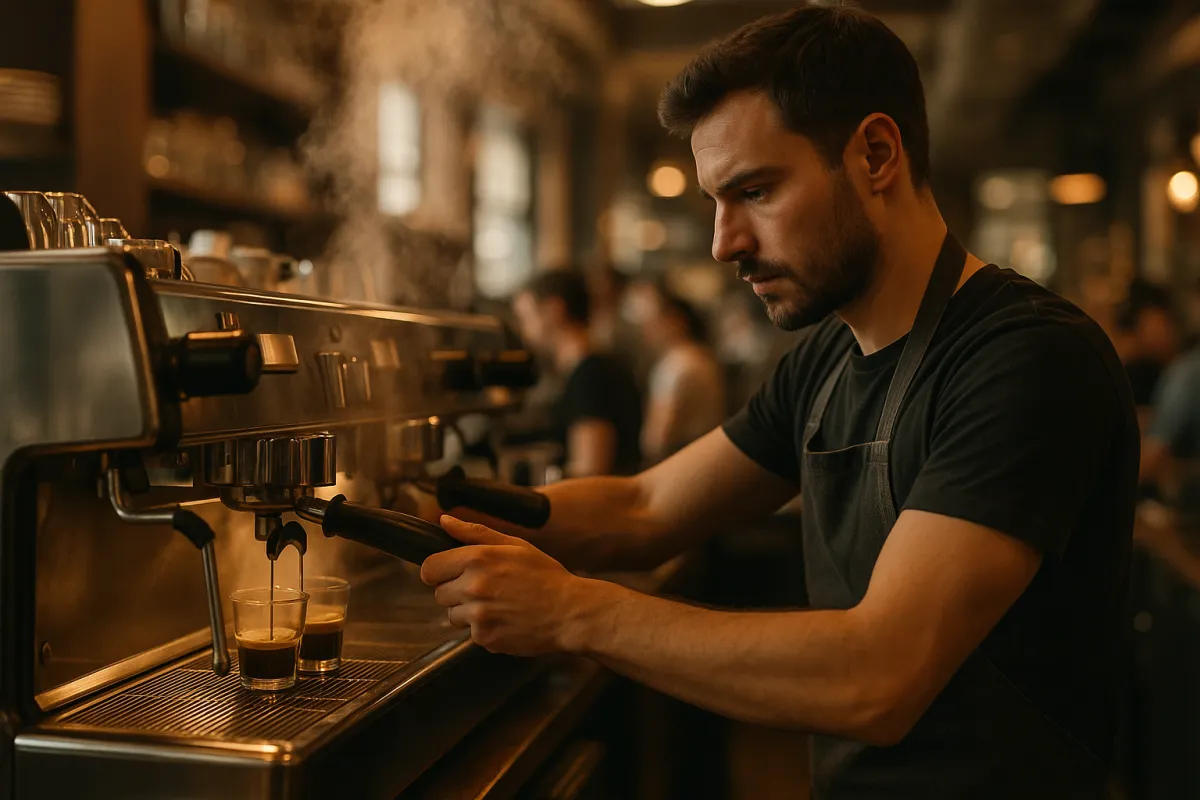
Walk into any café at seven in the morning and you are looking at a small factory with exactly one production line: the espresso machine. Every drink in the queue routes through it, every rush hour tests it, and every day it fails is a day the business mostly stops. That makes it the purest ROI purchase in the building, and also the one most often bought on chrome and brand mythology instead of arithmetic.
This case study applies the framework from our buy-vs-lease equipment analysis to the specific machine that defines café economics: how to size capacity to your actual rush, what the machine really costs to own, why downtime and water quality dominate the risk math, and a worked payback example that shows why the right machine funds itself faster than almost any equipment a small business can buy. Run your own numbers alongside with the equipment ROI calculator.
Key takeaways
- An espresso machine's ROI comes from three levers: the drinks it enables at rush hour, the margin per drink, and the uptime that keeps both flowing.
- Size to peak-hour throughput, not daily totals: the third group head earns money only if a real queue demands it.
- Downtime is the dominant risk: one dead morning can outcost a year of maintenance, which makes water treatment and service contracts the highest-ROI accessories in the shop.
- Cafés are the textbook high-utilization case, so ownership usually beats leasing, with roaster machine programs as the fine-print exception to read carefully.
- Budget the system, machine, grinder, water, installation, and training, because the cup quality that retains customers comes from the chain, not the chrome.
The one-machine factory
Most equipment decisions involve a machine among machines; a café’s espresso machine is the machine. It is the throughput ceiling at rush hour, the quality floor in every cup, and, uniquely in the building, the single point of failure for the majority of revenue. The oven matters to a bakery-café, the fridges matter to everyone, but when the espresso machine stops, the line stops, and the line is the business.
That concentration changes how the ROI math should be run. For most equipment, our buy-vs-lease case study weighs cost against contribution at realistic utilization; for the espresso machine, utilization is a given, every open hour, every day, and the analysis tilts toward the variables that actually vary: capacity fit, reliability, and the cost chain around the machine. It also reframes the budget conversation. Owners agonize over a two-thousand-dollar gap between machines while treating water filtration as an accessory and the service contract as an upsell, which is precisely backwards: the gap between machines is a rounding error against the revenue the machine protects, and the “accessories” are what keep it protecting revenue. Buy the factory, not the sculpture.
What the machine actually costs to put on the bar
Sticker prices mislead here the way they mislead everywhere in equipment, so build the real entry number. Illustratively: capable two-group commercial machines commonly run somewhere around $4,000 to $9,000, three-groups from roughly $7,000 well into five figures, with premium marques above that. Now the rest of the bar: a commercial grinder worthy of the machine adds a meaningful fraction of the machine’s price again, water treatment sized to your chemistry adds hundreds to low four figures, professional installation with proper plumbing and electrical runs real money, and a small parts kit, spare gaskets, screens, baskets, cleaning supplies, belongs on day one.
Where the bar system budget goes
Illustrative split of a complete espresso bar setup.
The machine dominates the invoice but the smaller slices carry outsized ROI: the grinder sets the cup, and the water line prevents the failures that cost whole days.
The total system commonly lands at 1.5 to 2 times the machine’s sticker, which is the honest number for the ROI math, and exactly the pattern our buy-vs-lease breakdown warns about: purchase price is never total cost. One more line owners forget: training time. A machine is only as fast and consistent as the hands on it, and budgeting real hours to dial in workflow before opening pays back in every rush that follows. The good news, developed through the rest of this article, is that against café drink economics even the honest doubled number is small; the discipline is simply to plan for the system rather than discovering it invoice by invoice.
The revenue side: drinks, margin, and the daily compounding
Here is why espresso machines enjoy some of the friendliest ROI math in small business: the unit economics of the drinks. An espresso-based drink sells for several dollars while its marginal ingredients, coffee, milk, cup, cost a modest fraction of that, leaving a contribution margin per drink that most manufacturing would envy. Multiply that margin by a realistic daily drink count and the machine’s contribution compounds every single open day.
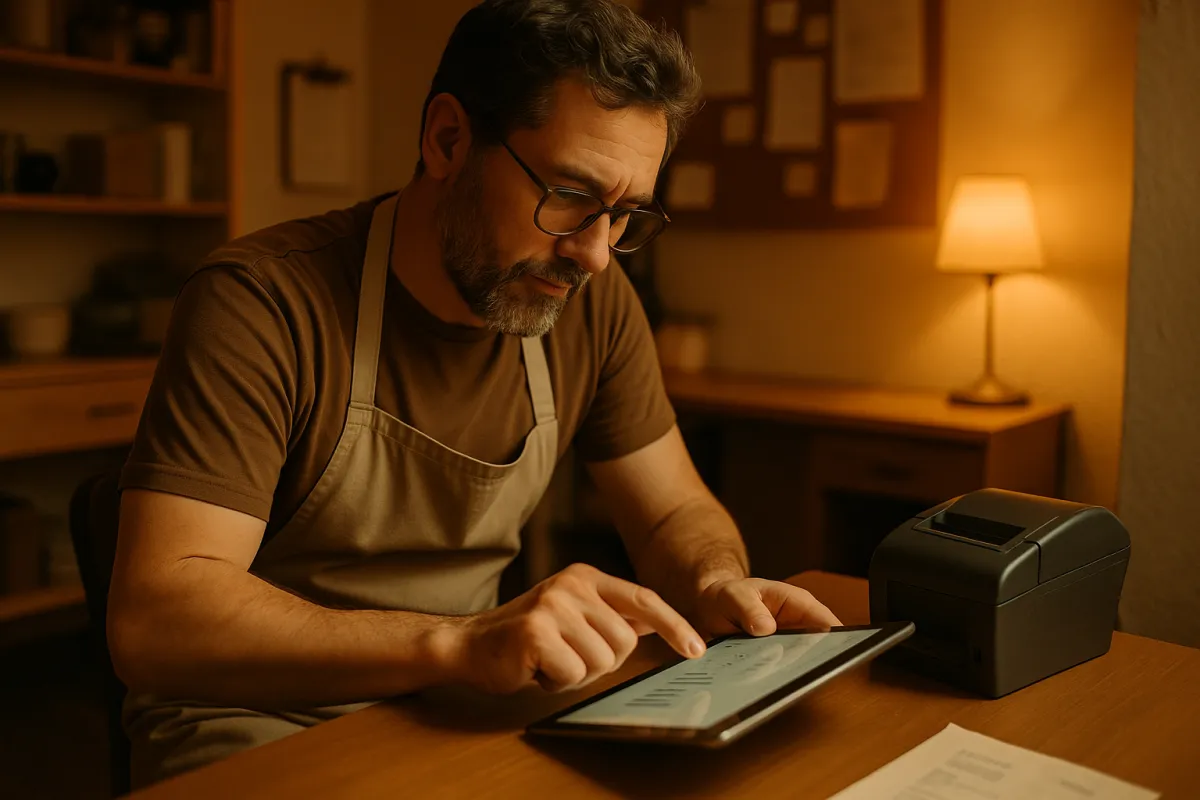
Illustrative shape, not a promise: a café serving 150 espresso drinks a day at a contribution of a few dollars each generates hundreds of dollars of daily contribution through the machine, which annualizes into six figures flowing across a five-figure asset. Framed that way, the machine’s purchase price is recovered not in years but often in weeks-to-months of the drinks it enables, and the genuinely scarce commodity is not capital recovery but the customers themselves. That is the pivot the rest of this case study turns on: because payback on a functioning machine is fast, the real ROI questions are the ones that threaten the flow, capacity at rush, uptime, and cup quality, rather than the sticker delta between two candidate machines.
Sizing: groups, boilers, and the rush-hour truth
Machine capacity is sold in group heads, the stations where shots pull, and the sizing mistake runs in both directions. The truth that should govern: you are not sizing for your daily total, you are sizing for your worst hour, because the morning rush is where capacity converts directly into revenue or walkouts. A two-group machine in practiced hands sustains a strong drinks-per-hour pace, enough for most small and mid-volume cafés; the third group earns its premium only when a real, recurring queue outruns two groups, typically alongside a second barista working the bar at peak.
Overbuying is the quieter loss: the third group on a bar that never queues is pure capital and counter space spent on nothing, the exact utilization failure the flagship case study’s chart illustrates. Underbuying is the louder one: a machine that caps your rush caps your best revenue hour every day, and the queue you turn away at 8 a.m. does not come back at 2 p.m.
Alongside groups, boiler architecture matters for rush stability, dual-boiler and multi-boiler designs hold shot and steam performance steady under sustained load, which is precisely when single-circuit machines sag. The sizing method, then: count your realistic peak-hour drinks honestly, from comparable local cafés if you are pre-opening, add growth headroom of a season or two, and buy the smallest configuration that clears that bar with margin. Capacity you use is revenue; capacity you display is sculpture.
Throughput arithmetic: what a rush hour is worth
Make the rush concrete, because it is where the machine’s ROI concentrates. Illustratively: if your peak hour brings 60 drink orders and your bar can produce 50, you lose 10 drinks an hour at peak, some to walkouts, some to regulars who quietly reroute their mornings. Ten drinks a day at café margins is thousands of dollars a year, lost to a capacity gap of one group head or one under-specified boiler, an annual loss in the same range as the entire price gap between the machine you bought and the one you should have.
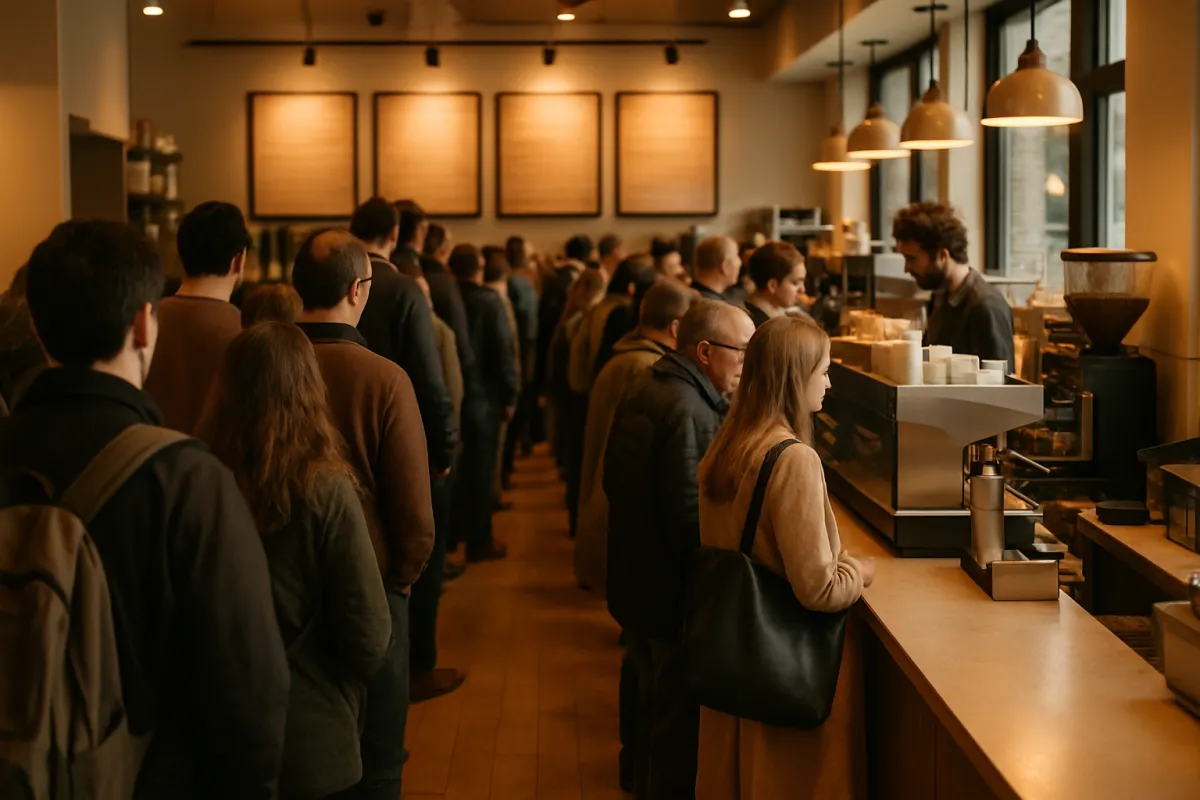
The same arithmetic runs in reverse to keep you honest about overbuying: if two groups clear your rush with headroom, the third group’s contribution is zero drinks, and its cost is pure drag on payback. This is also where workflow earns its mention: bar layout, grinder speed, and barista technique move real drinks-per-hour numbers as much as hardware does, which means some capacity problems are training and layout problems wearing a hardware costume. Before paying for a group head, it is worth asking whether the bottleneck is actually the machine, the answer at many bars is the grinder or the milk station, and the fix costs a fraction of the upgrade.
Downtime: the number that dwarfs everything
Now the risk that dominates the whole analysis. When the espresso machine dies, the café does not lose the machine’s value, it loses the day’s drink revenue, the labor already scheduled, and a slice of the routine-driven loyalty that morning coffee runs on. Our flagship analysis calls downtime the cost nobody puts in the spreadsheet; for cafés, it belongs at the top of the spreadsheet, because there is no workaround, no manual process, no second line. Illustratively, a café clearing several hundred dollars of daily drink contribution loses that entire figure per down day, meaning two or three dead days can exceed a full year of preventive maintenance spending.
That ratio prices everything else on this page. It is why the service contract with guaranteed response time is not an upsell but core equipment. It is why water treatment, next section, is the highest-ROI purchase on the bar. It is why reliability reputation should outweigh feature lists in machine selection, and why the used-machine discount must be weighed against unknown failure odds. And it is why smart cafés keep a minimal fallback, even a modest batch-brew setup that keeps caffeine and goodwill flowing while the bar is down, converting a catastrophic day into a merely bad one. Buy uptime first; everything else is decoration on top of it.
Water: the unglamorous variable that decides machine lifespan
Ask any espresso technician what kills machines and the answer is monotonous: water. Scale from hard water chokes boilers and valves, corrosive water eats them from the other direction, and either path leads through degraded shot quality to the expensive failures that create the downtime section above. Water chemistry also sits directly in the cup, the espresso itself is mostly water, which makes treatment a quality investment and a reliability investment in one line item.
The program is not complicated: test your actual water, fit filtration and treatment matched to what the test shows, and replace cartridges on schedule rather than on memory. The spend is hundreds to low four figures a year, illustratively, against which it prevents the four-and-five-figure boiler and valve failures that bad water guarantees eventually. Treat it as part of the machine’s purchase, not an accessory decision: the same machine lives a long, rebuildable life on treated water and dies young on neglect, which means water treatment quietly carries more ROI weight than any feature on the spec sheet. It is the least photogenic purchase in the café and the one your technician will thank you for at every service visit.
Maintenance: the schedule that keeps the factory running
Espresso machines are long-haul industrial equipment wearing nice paint, and they reward the maintenance rhythm every factory machine gets. Daily: backflushing and cleaning, non-negotiable, baked into closing routines. Periodic consumables: group gaskets, shower screens, steam-wand parts, cheap, scheduled, and transformative for consistency. Professional service: an annual or semi-annual technician visit that inspects, descales as needed, and catches the failing part before it becomes the failed morning.
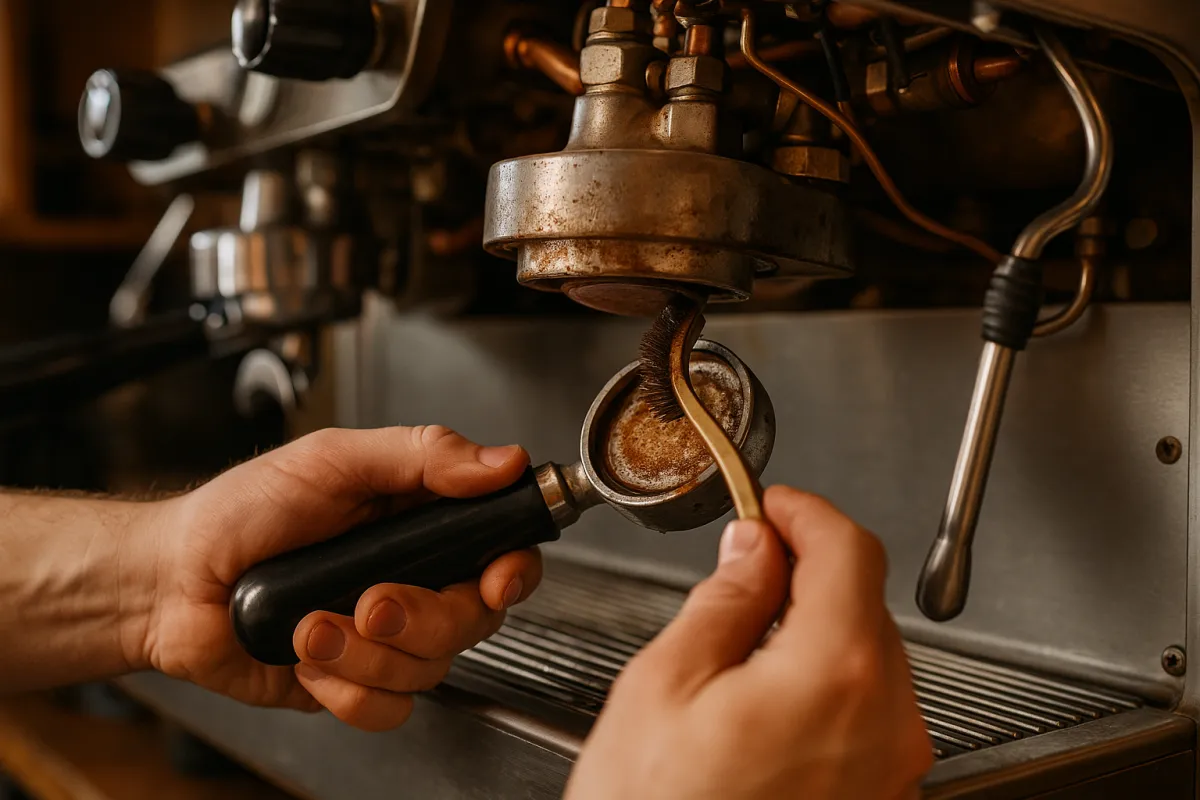
Budget the whole rhythm at a few hundred to low four figures annually, volume and service arrangements depending, and read it against the downtime math: preventive maintenance is priced at a fraction of the failures it prevents, the most asymmetric trade in the building. Two practical notes sharpen it further. First, a machine from a manufacturer with strong local parts and technician coverage is worth a premium over an exotic marque nobody in your city services, exactly the ecosystem logic that applies to any fleet purchase. Second, log the maintenance: a documented service history protects resale value, machines from good homes sell like cars from good owners, and turns your eventual upgrade into a partial recovery rather than a disposal.
Buy, lease, or the roaster’s machine: applying the framework
The flagship decision framework lands cleanly here because a café answers its central question, how hard will you use it, at the maximum: every open hour, forever. High utilization plus long machine lifespans, quality machines run for a decade-plus and rebuild beyond that, is the textbook ownership case: buying costs less across the life, builds an asset with real resale value, and frees you from perpetual payments on equipment you were always going to keep.
Leasing keeps its classic niches: preserving cash at opening, when every dollar is fighting for buildout and working capital, and bundled-service arrangements whose guaranteed fast replacement effectively purchases the uptime this case study keeps pricing. And cafés meet a third path most equipment buyers never see: roaster machine programs, where a coffee roaster supplies the machine in exchange for a beans contract. The machine arrives cheap or free; the coffee arrives priced and exclusive, for a term.
Read these with the flagship case study’s eyes: the machine subsidy is real, and it is being repaid through your coffee margin and your lost flexibility, so total the contract, beans premium times volume times years, against the machine you could have owned outright. Sometimes the program genuinely wins, especially for cash-strapped openings; it should just win on arithmetic, not on the showroom shine of a free machine.
The used-machine route, café edition
The used market deserves its own café-specific verdict, because the general rule, used equipment can be superb value, collides here with the single-point-of-failure reality. Commercial espresso machines are rebuildable almost indefinitely, which floods the market with legitimate value: a professionally rebuilt two-group from a reputable technician can deliver most of a new machine’s decade at a substantial discount. That is the good path, and for budget-conscious openings it is often the right one.
The bad path is the auction mystery: a machine with unknown water history, whose scale damage, worn groups, and tired electronics are invisible until they schedule your first dead morning. The screen is simple and strict: buy used only from technicians or dealers who have rebuilt and pressure-tested the unit and will stand behind it, budget an immediate service and full gasket refresh regardless, and prefer models with abundant local parts. Then run the honest comparison: the rebuilt machine’s price plus its slightly higher failure odds against the new machine’s warranty and financing options. For the one asset your revenue cannot route around, the used discount must clear a reliability bar that a spare fridge never faces, and the sleep-at-night value of warranty coverage on the revenue engine is a legitimate line in the math.
The grinder gets its own section, because it earns it
The espresso machine gets the glory, but ask what actually determines the shot and the honest answer is the grinder. Grind quality and consistency set extraction; grind speed sets bar pace; and grinder wear degrades both so gradually that cafés drift into mediocrity without a single dramatic failure. A mediocre grinder throttles a great machine; a great grinder makes a modest machine punch above its class. In the cup, the grinder is at least the machine’s equal partner.
The budget consequence: plan a serious commercial grinder, often a meaningful fraction of the machine’s own price, into the system from the start, and resist the classic mistake of pairing a five-figure machine with a leftover grinder because the machine budget swallowed everything. The maintenance consequence: burrs are consumables, wearing over tonnage ground, and scheduled burr replacement belongs in the same calendar as gaskets and filters, because dull burrs quietly cost you shot quality, dose consistency, and drinks-per-hour all at once. And the ROI framing carries over intact: the grinder’s contribution rides the same drink-margin economics, its downtime hurts almost as much, and reliability-plus-parts-ecosystem beats badge here too. Two workhorses, one system, one arithmetic.
A worked example: one café, machine to payback
Pull the threads into one illustrative café. Opening bar: a quality two-group machine at $7,000, commercial grinder $2,000, water treatment and installation $1,500, training and parts kit $500, system total $11,000. Volume ramps to 140 espresso drinks a day at a contribution of $3.50 each after ingredients, roughly $490 of daily contribution, call it $14,000 a month across a full month of trading.
Even attributing only a share of that contribution to the machine itself, the system’s payback lands within the first months of steady trading, after which the bar is a contribution engine for a decade of useful life.
Now the sensitivities, which is where this case study’s priorities came from: one down day costs about $490 plus goodwill, so the $800-a-year service-and-water program pays for itself by preventing fewer than two dead days a year, an easy hurdle for any machine that runs every open hour. A capacity shortfall of ten drinks at peak costs about $12,000 a year, dwarfing the $2,500 gap to the next machine tier, and justifying the third group the moment a real queue demands it, and not a day before.
Annual cost of small daily shortfalls
Ten lost peak drinks a day at illustrative café margins, versus prevention costs.
The quiet losses dwarf the visible costs: a small daily rush-hour shortfall outweighs the machine-tier price gap within months, and prevention spending is a rounding error against either.
Every number is illustrative; the shape is the lesson: the machine pays back fast, and the fortune is made or lost in uptime and rush-hour fit, exactly where this article told you to spend your attention. Run your own café’s version in the ROI calculator before you sign anything.
Baristas are capacity too: the staffing side of throughput
The sizing arithmetic treats the machine as the bottleneck, but half the time the true constraint wears an apron. A two-group machine’s theoretical pace assumes hands that can keep both groups loaded while steaming milk in parallel, and the gap between a trained bar and an untrained one, measured in drinks per hour, routinely exceeds the gap between machine tiers. Which yields the cheapest capacity upgrade in the industry: training. Structured barista training, a deliberately arranged bar where grinder, machine, and milk station form a tight triangle, and standardized drink builds together add real peak throughput for a fraction of a group head’s price.
The staffing math also gates the three-group decision properly: a third group only produces drinks if a second barista works it at rush, so its true cost is hardware plus peak-hour labor, and its true test is whether the queue’s lost revenue covers both. Conversely, a café whose rush is staffed by one person has a hard ceiling no machine spec can move, and should spend on workflow before chrome. The ROI habit to keep: whenever the bar feels slow, diagnose in order, workflow, grinder, training, and only then machine, because the fixes are priced in exactly that order, and the expensive one is rarely the guilty one.
When the answer is a second machine, not a bigger one
Growth eventually poses a fork the spec sheets never mention: upgrade the machine, or add one? For a single busy location, a compact second machine, even a one-group unit dedicated to milk-heavy drinks or overflow, can outperform a bigger single machine on one decisive axis: redundancy. Two machines mean the death of one no longer kills the bar, converting the downtime section’s catastrophe into an inconvenience, and that insurance alone can justify the second unit in a high-volume shop where a dead day costs four figures.
The same logic scales to the second location, where the flagship case study’s worked example returns: the proven café’s numbers, drinks, margins, rush profile, become the template for sizing the new bar, and the first location’s maintenance log becomes the shopping list. The trap at this stage is trophy escalation, replacing a healthy two-group with a statement machine because revenue allows it, which spends real money on the sculpture problem this article opened with. The upgrade that earns its price is always traceable to a named constraint: a queue outrunning capacity, a reliability record aging out, or a redundancy gap a second unit closes. If you cannot name the constraint, the current machine is not the bottleneck, and the budget has better jobs, starting with the marketing that lengthens the queue the machine already clears.
Common espresso machine buying mistakes
The recurring ways café owners spend badly, collected.
- Badge shopping. Paying for marque prestige while skipping water treatment and the service contract, buying the sculpture instead of the uptime.
- Sizing to the dream, not the queue. The third group on a bar that never queues is capital spent on countertop theater.
- Starving the grinder. A flagship machine behind a tired grinder produces tired espresso at flagship prices.
- Skipping the water test. The single cheapest prevention in the building, against the single most common cause of death.
- Signing the roaster program unread. The free machine is being repaid through the beans contract; total it before celebrating.
- Buying auction mysteries. The used discount never covers an unknown water history on the one machine revenue cannot route around.
Each mistake trades a visible saving for an invisible cost, and the invisible costs in this category compound daily, which is the defining hazard of equipment that runs every open hour: nothing about a slightly wrong purchase announces itself, it just quietly taxes every morning rush for a decade. The audit habit that catches it all is one question asked quarterly: what did the bar cost us this quarter in downtime, walkouts, and slow drinks, and which line of this case study would have prevented it?
Menu and pricing: the margin lever behind every shot
Every ROI number in this case study rests on one figure that owners often set casually: the contribution margin per drink. That margin is not fixed by the market; it is a decision, and it is the most powerful lever on how fast the machine pays for itself. Raise the price of a latte by a modest amount and the extra flows almost entirely to contribution, because the coffee, milk, and cup costs have not changed. Across the thousands of drinks a busy bar pours in a month, small pricing moves compound into real money against the machine’s fixed cost.
The discipline is to price from cost and value rather than from what the shop down the street charges. Know the true ingredient cost of each drink, including the milk that makes lattes and cappuccinos more expensive to serve than a straight espresso, and set prices that hold a healthy margin after those costs. The same method that runs a restaurant’s plate costing applies to the bar, and our restaurant menu pricing case study walks the calculation that carries straight over to drinks.
Menu mix matters as much as headline price. A bar that sells mostly high-margin milk drinks and pastries earns more per transaction than one selling mostly straight espresso, and steering the menu toward the drinks that carry both good margin and genuine customer demand lifts the contribution the machine converts every hour. The machine sets the throughput ceiling; the menu and its prices set how much each unit of that throughput is worth. Work on both, because a fast bar selling underpriced drinks leaves money on the counter that no amount of extra capacity will recover.
Seasonality and the cafe’s uneven year
The worked example above runs on a steady daily average, but no cafe actually trades on a flat line, and the peaks and troughs change how you should think about the machine. A campus cafe empties out over the summer, a beach-town shop lives and dies by the season, and even a steady neighborhood bar sees mornings, weekends, and holidays swing its volume widely. The machine’s fixed costs, financing, insurance, and much of the maintenance, roll on through the quiet stretches regardless, which is why the annual average, not the busy-week peak, is the honest basis for payback math.
Seasonality also sharpens the sizing question. A machine sized to clear the summer festival rush may sit half-idle through a slow winter, so the right size is the one that handles the peak you actually face often enough to matter, not the single busiest hour of the busiest week of the year. For a genuinely seasonal spike that comes once and leaves, renting a second machine for those weeks can beat owning capacity that gathers dust the other ten months, the same rent-for-the-peak logic our buy-vs-lease analysis applies across equipment.
The cash-flow side deserves a plan too. A cafe that banks its strong season has to carry the machine’s fixed costs through the lean months, so the payback that looks fast on an annual average can feel slow when revenue dips. Building the quiet season into the projection, rather than annualizing the good months, keeps the ROI honest and the cash flow survivable. The machine that pays for itself across a realistic year, troughs included, is a sound buy; the one that only pays for itself if every week looks like the peak is a machine sized to a fantasy.
Financing the machine without straining the open
Most cafes buy the espresso machine at the exact moment cash is tightest, during the buildout, when every dollar is being pulled toward the lease, the fit-out, and the working capital that carries the first slow months. That timing, not the machine’s merits, is what pushes many owners toward financing or a lease, and handled well it is a reasonable move. Spreading the machine’s cost across the years it will earn keeps opening capital free for the buildout and the runway, which is often the difference between opening comfortably and opening on fumes.
The mechanics are the ones our case-study walkthrough lays out in full: a loan secured by the machine, priced on your credit and the equipment, repaid over a term that should match the machine’s long working life. Because quality machines run for a decade or more, they comfortably support financing terms that let the bar’s own contribution cover the payments, so the asset helps fund itself out of the drinks it pulls. Our restaurant-specific note on the same question, our restaurant equipment financing case study, covers the vendor and lender options a food business actually meets.
The caution is to keep the total cost in view, not just the monthly payment. A low monthly figure stretched over a long term quietly adds interest, and a roaster machine program that arrives cheap or free is repaid through the coffee contract, as this case study noted earlier. Whichever path funds the machine, run the total against paying cash if cash is available, and finance because it preserves the working capital an opening genuinely needs, not because the monthly number looked painless. The machine is the one asset your revenue cannot route around, so fund it in a way that leaves the rest of the open standing. For the full arithmetic of such a deal, payment, total interest, and break-even included, our worked case study of an equipment loan runs a complete kitchen package through every option.
Insurance, warranty, and the risks around the machine
Beyond purchase and maintenance sits a quieter layer of cost and protection that belongs in the machine’s real number: the risk coverage around it. A commercial espresso machine is a plumbed, pressurized, high-heat appliance, and the policies that sit behind it, general liability, property coverage on the equipment, and any extended warranty or service plan, are part of owning it responsibly. These lines are modest against the machine’s contribution, but leaving them out understates the true cost and, worse, leaves the revenue engine exposed.
Warranty deserves specific thought because it interacts directly with the downtime math this case study keeps returning to. A machine under warranty, or on a service contract with guaranteed response, converts a catastrophic failure into a covered repair with a known turnaround, which is exactly the protection a single-point-of-failure asset warrants. That is a real part of the case for buying new over an uncertain used unit, and for choosing a manufacturer with strong local service: the coverage is only as good as the technician who can actually show up. Price the coverage in, keep it current, and treat it as what it is, insurance on the one machine the whole shop depends on, rather than an optional line to trim when the budget gets tight.
The bottom line
An espresso machine is the rare purchase where the ROI question is nearly rigged in your favor: drink margins are strong, utilization is total, and a functioning machine in a functioning café pays for itself with almost embarrassing speed. Which is exactly why the buying discipline lives elsewhere: size to your true rush hour and not a group head beyond it, spend on the reliability chain, water, service, parts ecosystem, before the chrome, give the grinder equal billing, and run the buy-lease-roaster decision on the flagship framework’s honest totals. Do that, and the machine disappears into what it should be: a decade of quiet mornings where the line moves, the cups are consistent, and the only queue in the café is the one out the door.
One operator’s math to another: this case study is educational, not business or financial advice. The prices, margins, drink counts, and payback figures are illustrative examples built for planning, not quotes or promises, and your market, your machine, and your morning rush will write different numbers. Pull your own figures, run the arithmetic on your own bar, and verify current equipment pricing, service terms, and every line of contract fine print before money changes hands.
Frequently asked questions
How much does a commercial espresso machine cost for a café?
Illustrative ranges: capable two-group machines commonly run somewhere around $4,000 to $9,000, three-group machines from roughly $7,000 into five figures, and premium or custom builds beyond that. Installation, water treatment, and a commercial grinder add meaningfully to the entry price. The machine is rarely the biggest number in a café buildout, but it is the asset every revenue hour depends on, which is why it deserves ROI math rather than badge shopping.
How do you calculate ROI on an espresso machine?
Through contribution: estimate the espresso drinks the machine enables per day, multiply by the margin per drink after coffee, milk, and cup costs, and set that annual contribution against the machine's total cost of ownership, purchase, installation, water treatment, maintenance, and expected downtime. Because drink margins are strong and volumes compound daily, a correctly sized machine in a functioning café typically recovers its cost quickly, and the real ROI risk lives in overbuying capacity or underbuying reliability.
Two-group or three-group espresso machine, which should a café buy?
Size to your rush hour, not your daily total. A two-group machine with a skilled barista covers most small and mid-volume cafés; the third group earns its cost only when peak-hour demand genuinely outruns two groups, or when a second barista works the bar at rush. Buying the third group for a queue that never comes is classic capacity waste, while under-buying for a real morning rush costs you the queue's walkouts every single day.
What does espresso machine downtime actually cost a café?
Nearly everything, for as long as it lasts: in most cafés the espresso machine is the revenue engine with no backup, so a dead machine converts every would-be drink sale into a walkout, plus the reputational damage of turned-away regulars. A single down day can cost more than a year of preventive maintenance, which is the entire argument for service contracts, quality water treatment, and buying reliability over ornament.
How much does espresso machine maintenance cost?
Plan for routine consumables, gaskets, screens, cleaning supplies, plus periodic professional service, with water treatment as the quiet hero: filtration appropriate to your water chemistry prevents the scale that causes most major failures. An illustrative annual budget of a few hundred to low four figures, depending on volume and service arrangements, is realistic, and it is cheap insurance measured against the downtime it prevents.
Should a café buy or lease its espresso machine?
The framework from our buy-vs-lease guide applies directly: a café is the definition of high utilization, running the machine hard every open hour, which favors buying for the long-run economics. Leasing earns its premium when cash is scarce at opening, when bundled service and fast replacement matter more than ownership, or via roaster-supplied machine programs, which trade equipment for coffee-contract commitments worth reading closely.
Is a used commercial espresso machine a good idea?
It can be excellent value, machines from reputable manufacturers are long-lived and rebuildable, but the risks concentrate in what you cannot see: scale damage from bad water history, worn groups, and tired electronics. Buy used from a reputable technician or dealer who has rebuilt and pressure-tested the machine, budget for immediate service and new gaskets, and avoid auction mysteries for the one asset your revenue cannot function without.
Does the grinder matter as much as the machine?
In the cup, often more. A mediocre grinder throttles a great machine, while a great grinder flatters a modest one, and grinders wear in ways that quietly degrade consistency and speed. Budget for a serious commercial grinder, often a meaningful fraction of the machine's price, and treat burr replacement as scheduled maintenance. The espresso machine gets the glory; the grinder does the physics.