
What's on this page
- Before you start
- Step 1: Nail the concept and menu
- Step 2: Research local laws, permits, and commissary rules
- Step 3: Write the business plan and budget
- Step 4: Secure funding
- Step 5: Buy or build the truck and equipment
- Step 6: Get licenses, permits, and food-safety approvals
- Step 7: Find your spots and build a following
- Step 8: Launch and manage daily operations
- Startup cost by build: truck, equipment, permits, and capital
- Where food truck startup money goes
- A worked example: launching a food truck from concept to first service
- Common mistakes when starting a food truck
- Troubleshooting: permit hurdles, slow spots, breakdowns, and seasonality
- Your food truck startup checklist
- The bottom line
Short answer: Start a food truck by working eight steps in order: concept, local laws and commissary rules, plan, funding, the build, permits, spots, and daily operations. The truck choice sets the scale: a basic used rig can get serving in the low-to-mid five figures, a built-out used truck higher, and a new custom build past $150,000 all in, illustratively. Fund several months of working-capital runway before anything else.
Starting a food truck is a project you complete by working a sequence, not a single leap you make on the day you buy the rig. Most first-timers picture the truck and the wrap, then discover that the truck is one line among many and the wrap is the easy part. The hard parts, the ones that decide whether you serve on time and survive your first season, are the concept, the local permit and commissary rules, the budget, the funding, the build, and the cash cushion that carries the truck until customers find you in numbers. Do those in order and the launch becomes a plan; skip around and it becomes a scramble that runs out of money on a slow week.
This rundown lays the whole thing out as eight steps you can follow start to finish, each one feeding the next: nail the concept and menu, research the local laws and commissary rules, write the plan, fund it, buy or build the truck, clear the permits, find your spots, then launch and run the daily operation. For the full cost picture underneath these steps, read our cost to start a food truck rundown, and for the way the same discipline scales to a bigger food business, our walkthrough on opening a restaurant. You can size your own launch budget as you read with the equipment ROI calculator.
Key takeaways
- Work the eight steps in order: concept, laws and commissary, plan, funding, the build, permits, spots, and daily operations. The order protects your cash because the cheap research comes first and the expensive commitments come only after the plan is set.
- The truck choice decides the scale. A basic used rig can get serving in the low-to-mid five figures, a built-out used truck higher, and a new custom build past $150,000 all in, illustratively.
- Fund the working-capital runway first. Several months of operating cash beyond the truck and the build is the line first-timers underfund most, and running out of it is the leading cause of early closure.
- The permits and the commissary rent, not the wrap or the POS, are the lines a plan most often forgets. In most places the commissary is a legal requirement and a fixed monthly bill.
- A used truck with a sound engine and a working kitchen is the far cheaper way in, and the mechanical inspection matters more than the sticker price.
Before you start
Before you touch step one, gather three things and set honest expectations, because the walkthrough below assumes you arrive with them. The point of this short checklist is to make sure the expensive steps later rest on a real foundation rather than enthusiasm.
- A concept you can say in one sentence. Who the truck feeds, what it sells, and where it serves: "fast, handheld tacos for lunch crowds at office parks and breweries," not "a food truck." The concept drives every later decision, from the menu to the equipment to the spots you chase.
- A realistic budget range. Know roughly which build you are starting, a basic used truck, a built-out used rig, a bare-shell retrofit, or a new custom build, and what it costs, so the plan and the funding are sized correctly. Those are four different businesses with four different balance sheets.
- A read on your local market and rules. Some evidence that the customers you are picturing gather where you can legally park, plus a first look at whether your city requires a commissary, gathered before you buy anything.
Set expectations too. On an illustrative timeline, plan for several months from serious planning to first service, commonly in the range of three to six months and longer if you order a new build or permits stall. Difficulty is moderate to high: none of the individual steps is hard, but there are many of them, they depend on each other, and the money at stake grows as you go. The single most important mindset is patience with the cash, because the truck that funds its runway and serves a month late beats the one that serves on time and parks broke. Run your truck choice, menu complexity, and runway through the companion beside this rundown to turn these ranges into a single planning number.
Step 1: Nail the concept and menu
Start with the concept and the menu because they are cheap to get right and expensive to get wrong, and together they drive every later step. Write the concept as one specific sentence naming the customer, the food, and the setting: handheld tacos for lunch crowds, wood-fired pizza for breweries and events, loaded fries and shakes for late-night bar districts. Vague concepts produce vague trucks that stand for nothing, while a sharp concept tells you what to cook, what equipment to buy, and which spots to chase. Resist the urge to be everything to everyone, because a tight concept is cheaper to build and easier to be known for.
Then design the menu to the truck, not the truck to the menu, because a food truck kitchen is a few dozen square feet and every dish adds equipment, prep, and slow tickets. The strongest menu for a truck is simple, fast, and mobile-friendly: a short list of items that share ingredients, cook quickly, and hand cleanly out a window to someone standing on a sidewalk. Each additional cooking method, a fryer here, a griddle there, a smoker on top, adds an appliance, more power draw, and a bigger build, so a menu that reads well on paper can be the reason the kitchen does not fit or the line backs up. Price the menu around ingredients you can prep at the commissary and finish fast on the truck.
Watch out for the trap of the sprawling menu that tries to win every customer and ends up slow at every service. A truck lives on throughput, meaning how many good tickets it can turn during a lunch rush or an event window, and a long menu strangles throughput while inflating the build and the food cost. The output of this step is a one-sentence concept plus a short, fast menu you can actually cook in a moving kitchen, and that pair is the foundation every later number rests on. Do not price a single piece of equipment until this one holds up.
Step 2: Research local laws, permits, and commissary rules
Before you spend a dollar on a truck, learn the rules of the places you intend to serve, because mobile-food regulation is intensely local and it shapes the entire build. Requirements vary not just by state but by city and even by the specific event or district you want to work, so a truck permitted in one jurisdiction may need a fresh permit to cross into the next. The research is free and it is the cheapest insurance in the whole project: a morning with your local health department and city clerk tells you what the truck has to be before you buy one that cannot legally serve where you planned.
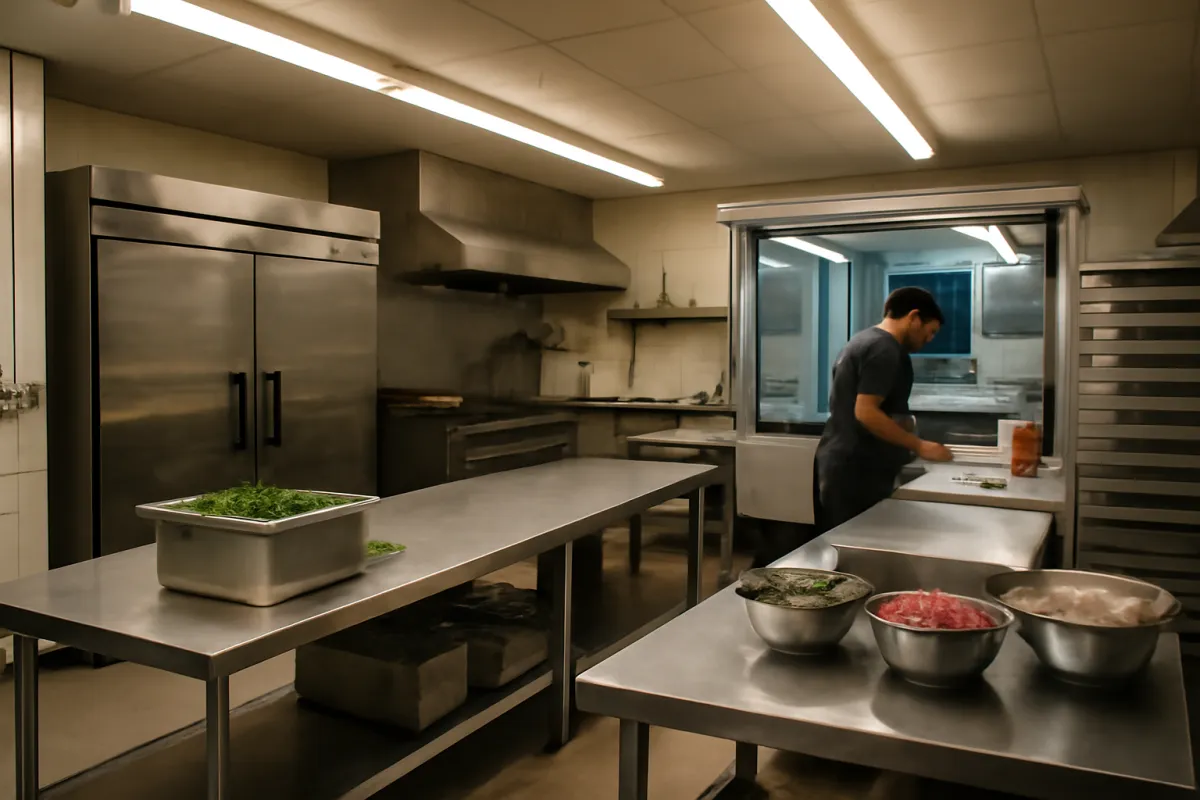
The line to confirm first is the commissary, because in most jurisdictions health code requires a licensed commercial kitchen where you prep food, store inventory, fill and empty water tanks, and often clean the truck. A truck alone is frequently not considered a complete food operation, so the commissary is not optional and it is not a one-time cost, it is a recurring monthly rent that belongs in your operating burn from day one. Illustratively it runs from a few hundred to well over a thousand dollars a month depending on your city and how much access you need, and it is the line first-timers most reliably forget. Confirm your local requirement before you build a plan that assumes the truck is self-contained.
Watch out for treating the rules as a formality you will sort out after buying the truck. The permit stack, the commissary requirement, and the parking and vending rules for your target spots decide what truck to buy and how to build it, which is exactly why they come before the purchase, not after. Map the full requirement for the places you actually intend to operate, involve the health and fire authorities early, and treat their list as the spec the build has to satisfy. This step turns a truck from a guess into a rig designed to pass inspection the first time.
Step 3: Write the business plan and budget
Turn the concept, the menu, and the rules into a written plan and a line-item budget, because this is where optimism gets corrected on paper instead of in the bank account. The plan does not need to be long, but it does need to be honest: a description of the concept and customer, the menu, the spots and events you will chase, a staffing sketch, and above all the numbers, meaning projected revenue per serving day, the cost of goods, the fixed monthly burn, and the timeline to break even. Writing it forces the questions you would otherwise discover the expensive way, like whether the good serving days you can realistically string together cover the commissary rent and the loan.
The budget is the part that matters most for survival, so price every line rather than guessing a total. List the truck, the kitchen equipment and build-out, the ventilation hood and fire suppression, the generator and propane, the permits, the commissary deposit, the wrap, the point-of-sale, opening inventory, insurance, and the working-capital runway. Our cost to start a food truck rundown prices each of these end to end and is the piece to read before you fill in the numbers, and our restaurant business plan walkthrough is the frame for the plan itself. Illustratively, a used-truck launch might land around $113,000 all in, with the truck and its kitchen the largest lines and a funded runway a close second.
The watch-out here is treating the plan as a formality to satisfy a lender rather than a tool for yourself. A plan that pencils only if every event is packed and every lunch sells out is a warning, not a green light. Build the budget so it survives a slow ramp, add a contingency line for the overruns that always appear, and make sure the working-capital runway is a real number, not whatever is left over. Run your own truck choice, menu, and runway through the equipment ROI calculator as you build the budget, so the total to start is a figure you chose rather than one you discovered too late.
Step 4: Secure funding
With a budget in hand, line up the money to cover it, and cover it with margin rather than to the dollar. Food trucks are rarely started on cash alone, and the common sources each carry a different cost and a different set of strings: personal savings, a small business loan (the SBA’s loan programs page covers the government-guaranteed kind), an equipment or vehicle loan secured by the truck itself, a line of credit for working capital, contributions from friends and family, and sometimes an outside investor or a crowdfunding campaign. Most launches blend several of these, and the right mix depends on how much cash you bring, how much risk you can carry, and what a lender will extend to a business with no operating history.
The discipline that keeps funding from becoming a trap is to borrow enough to reach break-even with a cushion, not just enough to buy and build the truck. A truck funded only to hit the road is one slow month from parking, so the loan or raise has to cover several months of runway past your first service. Match the term of any borrowing to the life of what it funds, financing the truck over its useful life and never financing a few months of propane and food on a long-term loan. Our rundown on getting a small business loan walks through the application, the rate, and the total cost of borrowing so the payment fits a realistic sales ramp rather than an optimistic one.
Watch out for two opposite errors. The first is under-borrowing, raising just enough to build and opening with an empty cushion, which is the most common way a survivable truck folds early. The second is over-borrowing, taking on a debt payment so heavy that the monthly service becomes a burn the young truck cannot carry through a slow start or a quiet winter. The target is between them: enough to launch and survive the ramp, on terms whose payment a realistic sales projection can cover. Confirm current rates with lenders directly, because the rate you actually qualify for moves the math more than any other input, and a food truck with seasonal revenue needs a payment it can carry in the slow months, not just the busy ones.
Step 5: Buy or build the truck and equipment
Now spend the money knowledge from steps three and four on the single most consequential purchase: the truck and the kitchen bolted inside it. The sharpest cost lever is whether you buy new or used, and for most first-time operators the used truck is the far cheaper and lower-risk way in. A new custom build carries a steep premium for a rig with no operating history to justify it, and a first launch is exactly the moment to preserve cash and prove the concept before committing six figures. The same cost-per-working-year logic our used-versus-new equipment rundown applies to machines applies to the truck itself: a rig a few years old delivers most of the working life at a fraction of the new price.
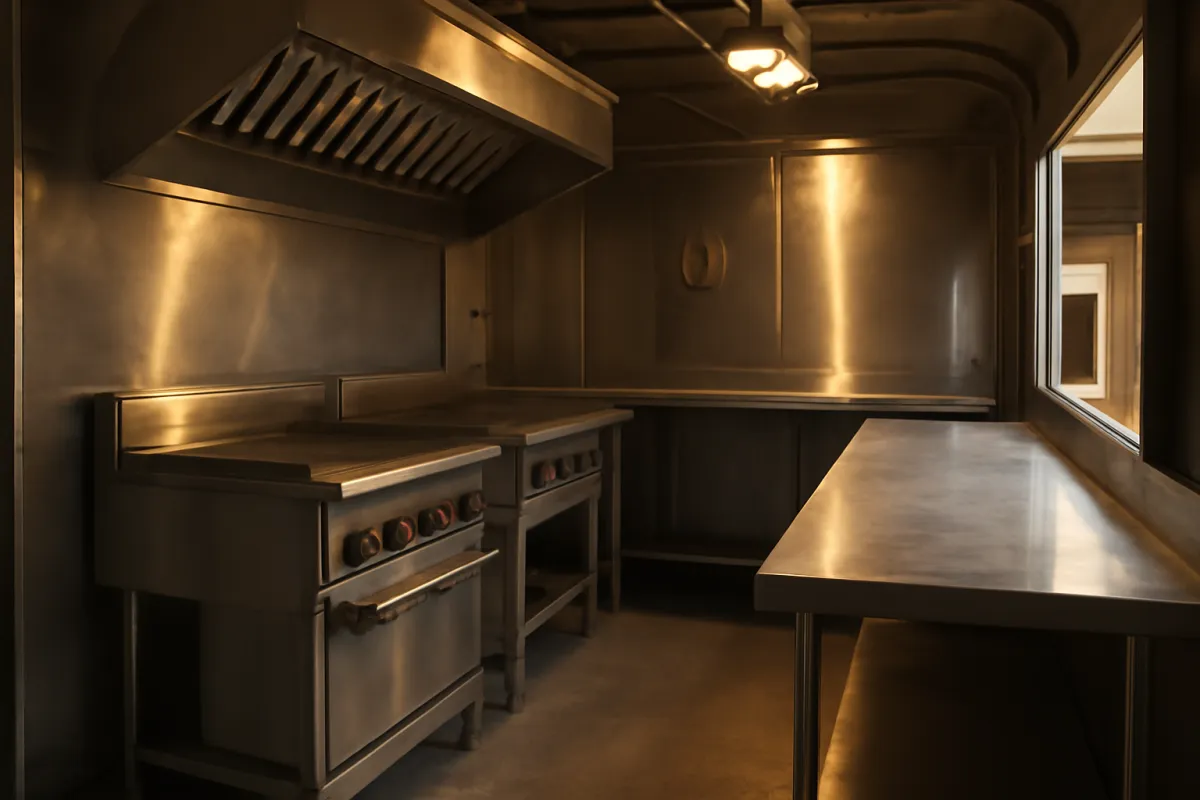
The catch with used is mechanical, and it is a real one. A truck is a vehicle before it is a kitchen, and an engine or transmission failure does not just cost money to fix, it takes you off the road entirely and kills revenue while it is down. That is why the inspection matters more than the sticker: a pre-purchase check of the drivetrain, the generator, the propane system, and the kitchen equipment by someone who knows trucks is cheap insurance against a rig that looks fine and is not. Inside the truck sits a dense stack of commercial equipment, and the lines first-timers miss are the ones the fire code cares about, the ventilation hood, the fire-suppression system, and the power to run everything, so budget those together with the cooking line. Our buy-versus-lease equipment rundown frames how to pay for the kitchen so financing preserves the runway.
The watch-out here is buying the cheapest truck on the listing or over-building a kitchen the menu does not need. A cheap rig with a kitchen you have to rip out and rebuild is not the bargain the sticker suggests, and a showpiece build with a fryer, a griddle, a smoker, and a flat-top for a menu that needs two of them drains the budget and the power system alike. Size the kitchen to the short menu from step one, own the durable core if cash allows and finance the rest, and treat a clean mechanical inspection as the price of entry. Run the truck and equipment number through the calculator to see how it fits the whole launch.
Step 6: Get licenses, permits, and food-safety approvals
Before the truck can legally serve a single plate, it needs the stack of approvals you researched in step two, and now the process costs time as much as money, so start it early and in parallel with the build. The common list includes a business license, a food handler or food manager certification, a mobile food vendor permit, a health department permit tied to an inspection, a fire safety permit for the cooking and suppression system, and parking or vending permits for the spots where you operate, plus the commissary agreement in many places. The SBA’s licenses and permits page covers which licenses come from federal agencies and which from your state or locality. The exact requirements and fees vary widely by city and state, so confirm your local list with the authorities rather than assuming, because a missed permit is a truck that cannot serve.
The health and fire inspections deserve specific attention because they can force build changes, which is why the research in step two shapes the build in step five. Inspectors check the ventilation hood, the fire-suppression system, food-safe surfaces, proper refrigeration, water tanks, and the propane setup, and a truck that does not meet the standard has to be brought up to it before it opens, looping straight back into the build budget and the timeline. Involve the health and fire authorities and a builder who knows local mobile-food code early, so the truck is designed to pass the first time rather than reworked to pass the second. The FDA’s Food Code adoption page lists the state and territorial agencies that oversee food service, which is a quick way to find the authority you answer to. Get your food-safety certification handled well before your first service, since the course and exam take scheduling.
Watch out for treating permits as a last-minute formality. The bigger cost of a permit is rarely the fee, it is the delay, because a permit or inspection that slips by weeks is weeks of a financed truck sitting idle while the loan payment comes due anyway. Apply for everything as early as the process allows, track each application’s status, and build slack into the launch timeline for the ones that stall. Compliance is not a place to cut corners, because a failed inspection costs far more in delay and rework than doing it right the first time, and it is the kind of self-inflicted wound a little early paperwork prevents.
Step 7: Find your spots and build a following
A food truck is a location business that moves, so the work that most decides whether it makes money is finding reliable spots and building a crowd that follows the truck to them. Unlike a fixed cafe that waits for foot traffic, a truck goes to where people already gather at the hours they are hungry: office parks and business districts at lunch, breweries and taprooms that lack a kitchen in the evening, farmers markets, festivals, sporting events, and private catering. The strongest schedule mixes dependable weekday lunch spots that pay the fixed burn with higher-revenue weekend events that build the crowd, and locking in a few recurring spots is worth more than chasing a different corner every day.
Building the following is the other half, because a truck that moves has to tell people where it will be. The cheap, effective moves are local and digital: a simple social presence that posts the week’s schedule and locations, a listing on the maps and food-truck-finder apps people search, and the relationships with venue and event organizers that get you invited back. A brewery that likes your truck becomes a standing Friday night, an office park that fills up becomes a Tuesday lunch, and a festival that sold well becomes next year’s booking. The wrap does real work here too, because at a curb a customer decides in seconds whether the rig looks like food they want, so a clean, coherent look earns the first sale.
Watch out for the two failure modes. The first is a truck with no standing spots, wandering to a new location every day and starting from zero each time, which burns fuel and never compounds a crowd. The second is depending on a single big event or a single lunch spot, so one cancellation or one lost permit empties the calendar. Build a schedule of recurring spots plus a pipeline of events, keep the social feed current so regulars can find you, and treat every good service as a chance to book the next one. The spots and the following are the revenue engine the whole build exists to feed.
Step 8: Launch and manage daily operations
The last step is to serve, and then to run the truck as the tight daily operation it has to be, because a food truck lives or dies on the rhythm of prep, service, and turnaround. A useful launch is a soft one: work a few lower-pressure services, a quiet lunch or a smaller event, before a busy festival, and treat them as live rehearsals where the crew, the kitchen workflow, and the point-of-sale get exercised where a jam costs you little. A slow window, a station that backs up, a menu item that takes too long, all of these are far cheaper to fix in front of a forgiving early crowd than in a festival line a hundred people deep.
The daily operation is a loop that repeats every serving day: prep at the commissary, load and drive to the spot, set up and serve the rush, break down, drive back, clean, and restock. Each link has to run on time or the whole day slips, and the constraints a fixed restaurant never faces, limited water and propane, a generator that has to carry the kitchen, a few dozen square feet to work in, and a drive between prep and service, all make discipline the difference between a smooth day and a scramble. Track the numbers that matter, plates per service, food cost, and the fixed monthly burn of commissary, insurance, fuel, and propane, so you know which spots and events actually pay and which quietly lose money.
Watch out for treating the launch as the finish line rather than the start of the real work. The most visible first weeks are when reviews and word of mouth lock in, and a rocky launch produces the slow, wrong service that sticks to a new truck, so rehearse before you scale up to the big events. Then manage the operation as a business: keep the menu tight so the line moves, keep the good spots and drop the ones that do not pay, and protect the working capital until the schedule of recurring spots and events reliably covers the burn. Run the numbers on your own launch one more time in the calculator as you plan the first month.

Startup cost by build: truck, equipment, permits, and capital
Before the worked example, see how a single launch budget divides across its four big categories, because the split surprises most first-timers. The stacked bar below places the four categories of a used-truck launch on one scale, sized by their illustrative share of the total. The point is proportion: the truck and the equipment inside it are the bulk, but the working capital is a larger slice than the wrap-and-POS crowd expects, and the permits-and-commissary line that people forget is right there in plain sight.
Startup cost: truck vs equipment vs permits vs capital
Illustrative split of a used-truck launch, four categories summing to 100 percent.
Drawn from a roughly $113,000 used-truck launch: about $50k truck, $25k runway, $20k equipment, and $18k permits and finish, which sum to the total. The truck leads, but the runway is nearly a quarter and the permits line is the one first-timers most often leave out.
The split reframes where your attention belongs across the eight steps. The truck is the part buyers obsess over, but the working capital and the permits are where the plan is won or lost, which is why steps three and four spend so long on the budget, the funding, and the runway. The wrap and the POS everyone remembers to budget are inside the smallest slice, while the commissary and the cash cushion that keep the truck serving until it finds its spots are the lines that decide survival. Get the truck, the build, and the runway right and the smaller lines fall into place inside a sound plan.
Where food truck startup money goes
It also helps to see the same launch as its individual dollar lines rather than categories, because the ranking is the lesson. The bars below show an illustrative breakdown of the roughly $113,000 used-truck launch, ordered largest to smallest, and each bar is drawn from its share of the largest line so the proportions read at a glance. The truck leads by a wide margin, the runway sits second ahead of the equipment build, and the permits-and-finish line that first-timers forget rounds it out.
Where food truck startup money goes
Illustrative dollar split of a roughly $113,000 used-truck launch.
Each bar is drawn from its share of the largest line, the $50k truck. The truck and equipment together are about six of every ten dollars, but the runway alone is nearly a quarter. The four lines, $50k, $25k, $20k, and $18k, sum to the $113k total.
That split reframes the attention across the steps once more. The equipment and the truck are the visible purchases, but the working-capital runway is the quiet line that decides whether the truck reaches the day its spots and events cover the burn. Buy a proven used truck in step five, keep the kitchen sized to a tight menu, and protect the runway as the line that keeps you serving through the slow first months and the first quiet winter. The truck everyone pictures is one line in a budget where the cash cushion matters more.
A worked example: launching a food truck from concept to first service
Run one realistic launch through all eight steps so the pieces connect. Imagine a first-time operator starting a taco truck aimed at weekday office-park lunches and weekend brewery and event service. Step one: the concept is “fast, handheld tacos and a short list of sides for lunch crowds and breweries,” with a tight menu of a few proteins, two or three taco builds, chips, and drinks, all cooked on a griddle and a small fryer so the kitchen stays simple. Step two: the operator confirms the city requires a commissary and a mobile vendor permit, prices a shared commissary at a monthly rent, and maps the parking rules for the lunch spots and the vendor rules for the events.
Step three: the business plan projects a several-month climb to break-even, and the budget lands at an illustrative $113,000 all in, with the truck the largest line and a funded runway a close second. Step four: funding comes from owner savings covering a meaningful slice, a small business loan for the bulk, and a vehicle loan against the truck so cash stays free for the runway, with the total sized to cover several months past the first service. Step five: the operator buys a sound used truck with a working kitchen for an illustrative $50,000, spends about $20,000 upgrading the griddle, fryer, and refrigeration and refreshing the hood and suppression, and passes a pre-purchase mechanical inspection before committing.
Step six: the business, mobile vendor, health, and fire permits go in early, the food-safety certification is scheduled, and the health and fire inspections follow the equipment refresh, with slack built into the timeline. Step seven: the operator locks two recurring weekday lunch spots at office parks and a standing Friday night at a brewery, then fills weekends with markets and festivals, and keeps a social feed posting the week’s schedule. Step eight: a few quiet lunch services rehearse the crew and the window before the first festival, a slow taco build gets re-sequenced, and the truck settles into the daily loop of commissary prep, drive, serve, break down, and clean. Split roughly, that $113,000 is about $50,000 truck, $20,000 equipment build-out, an $18,000 line across permits, the commissary deposit, the wrap, the POS, and opening inventory, and a $25,000 runway of roughly four months at about a $6,250 monthly burn. Run your own version of these numbers in the calculator, and remember every figure here is illustrative.
Common mistakes when starting a food truck
The failures cluster into a short list of avoidable errors, and knowing them in advance is half the defense:
- Ignoring the commissary and permit rules. Pricing the truck as a complete business and discovering after the purchase that the law requires a commissary rent and a stack of permits nobody budgeted. In most places the commissary is mandatory and monthly, so research it in step two, before you buy.
- An over-complex menu. A long menu that needs a fryer, a griddle, a smoker, and a flat-top strangles throughput, inflates the build and the power system, and raises food cost and waste. A short, fast, mobile-friendly menu is one of the safest ways to control both cost and speed.
- Underestimating working capital. The single most fatal mistake: spending the whole budget on the truck and the build and opening with no cash cushion to survive the slow first months. Fund several months of full operating burn as a real line, not whatever is left over.
- Bad or unreliable spots. Wandering to a new corner every day so a crowd never compounds, or depending on one event or one lunch spot so a single cancellation empties the calendar. Build a schedule of recurring spots plus a pipeline of events.
- No marketing. A truck that moves and never tells people where it will be starts from zero at every location. A current social feed, the finder apps, and venue relationships are what let regulars follow the truck.
The through-line across all five is optimism about how fast and how smoothly the truck will fill. A funded runway, a tight menu, a legal commissary, a schedule of reliable spots, and an active following are all defenses against the same assumption, that a new truck gets busy and profitable faster than trucks actually do. Build the plan for a slow ramp and a seasonal calendar, and treat a fast start as upside rather than the plan.
Troubleshooting: permit hurdles, slow spots, breakdowns, and seasonality
What if the permits stall or an inspection fails? Expect delay and fund for it, because the permit stack is the step most likely to slip. Apply as early as the process allows, involve the health and fire authorities before the build is finished so the truck is designed to pass, and build slack into the timeline for the applications outside your control. If an inspection fails, it usually points at a specific fix, the hood, the suppression system, a sink, the propane setup, so treat it as a punch list rather than a verdict, and remember that a truck built to code the first time avoids the weeks of a financed rig sitting idle that a second inspection costs.
What if a spot is slow or does not pay? Read the numbers and cut it. Not every lunch corner or event covers the fuel, the propane, and the labor to work it, so track plates per service against the cost of being there and drop the spots that lose money quietly. A truck’s advantage over a fixed cafe is that it can move, so use it: shift a dead weekday spot for a better one, test new office parks and breweries, and lean harder on the recurring spots and events that reliably fill. The goal is a schedule where the dependable spots pay the fixed burn and the events build the crowd, not a calendar full of corners that each start from zero.
What if the truck breaks down? Plan for it, because a truck is a vehicle and a vehicle fails. A mechanical failure does not just cost the repair, it costs every service you miss while the rig is off the road, which is why the pre-purchase inspection in step five and a maintenance habit matter so much, and why the runway has to absorb a bad week. Keep a relationship with a mechanic who knows commercial trucks, service the generator and the propane system on a schedule, and treat the cash cushion as partly a breakdown fund, because the truck that has no reserve when the transmission goes is the truck that parks for good.
What if business is seasonal? Model it into the plan rather than being surprised by it. Many trucks earn far more in warm months and at outdoor events than in a cold, wet off-season, so a budget built on peak-month revenue will run short in the slow ones. Fund a runway long enough to carry the quiet season, chase indoor events, catering, and private bookings when the streets empty, and size any loan payment so a slow winter can carry it. For the way this same discipline scales to a larger food business, our walkthrough on opening a restaurant covers the fixed-location version, and our cost to start a food truck rundown prices the burn the runway has to cover.
Your food truck startup checklist
Save this compact list and work it in order:
- Concept written in one sentence, naming the customer, the food, and the setting.
- Menu designed short, fast, and mobile-friendly, sized to a kitchen a few dozen square feet across.
- Local laws researched: commissary requirement confirmed, permit stack mapped, parking and vending rules checked for your spots.
- Business plan and full line-item budget written, with the working-capital runway included as a real line.
- Funding secured with margin, across savings, a loan, and truck financing, enough to survive the ramp and a slow season.
- Truck chosen new or used on the numbers; used rig passed a pre-purchase mechanical inspection before purchase.
- Kitchen sized to the menu; hood, fire suppression, generator, and propane budgeted with the cooking line.
- Permits started early: business, mobile vendor, health, fire, and parking, plus food-safety certification and the commissary agreement.
- Spots lined up: a few recurring lunch and evening locations plus a pipeline of events, with a current social feed.
- Soft launch run at lower-pressure services; the daily loop of prep, drive, serve, break down, and clean rehearsed before the big events.
The bottom line
Starting a food truck is not one decision, it is eight, worked in order so that each cheap early step earns the right to the expensive later one. Nail the concept and the menu, research the local laws and the commissary rule, write the plan and the budget, fund it with margin, buy or build the truck on the numbers, clear the permits early, line up reliable spots and a following, then launch quietly and run the daily operation as the tight business it has to be. Do them in that sequence and the launch is a plan; skip around and it is a scramble that runs out of money on a slow week.
The operators who launch successfully keep their attention on the lines that decide survival rather than the ones that decide bragging rights. They pick the truck honestly and inspect a used rig hard, they treat the commissary and the permits as the legal requirements they are, and above all they fund the working-capital runway to reach break-even with a cushion, because a truck that runs out of cash a month early parks anyway. Price the whole launch with our cost to start a food truck rundown, frame the plan itself with our restaurant business plan walkthrough, see how the same discipline scales in our walkthrough on opening a restaurant, and run your own truck choice, menu, and runway through the equipment ROI calculator so the total to start is a plan, not a surprise.
Written for the person planning a launch, not for anyone selling the dream of one: this rundown is educational material, not financial, tax, legal, or business advice, and it endorses no specific truck, builder, vendor, lender, or location. Every dollar figure, build range, and percentage split here is an illustrative sketch built to teach how the steps connect, and a real launch is priced by its own truck, its own menu, its own city, and the health and fire code it has to satisfy. Permit lists, commissary rules, license fees, insurance minimums, and the time to reach break-even vary enormously by jurisdiction and by site and change over time, so confirm the current mobile-food requirements in every place you intend to operate and gather quotes on the actual truck and equipment in front of you. Put an accountant, a mechanic, and your own honest numbers between you and any purchase or loan you sign.
Frequently asked questions
How do you start a food truck step by step?
The clean sequence is: nail the concept and menu, research the local laws and commissary rules, write the business plan and budget, secure the funding, buy or build the truck and equipment, get the licenses and food-safety approvals, find your spots and build a following, then launch and manage daily operations. Each step feeds the next, so skipping ahead usually means redoing work later, for example buying a truck before you know your city requires a commissary, or building a kitchen before the menu is settled. The order also protects your cash, because the early steps are cheap research and the expensive commitments come only after the plan and the funding are in place. Follow it top to bottom and the launch becomes a plan rather than a scramble.
How much money do you need to start a food truck?
Illustratively, a bare-bones used truck can get on the road for the low tens of thousands, a solid used and built-out rig commonly lands in the mid five figures, and a new custom build with a full kitchen can run past $150,000 once you add equipment, permits, and a cash cushion. The truck choice decides the scale more than any single purchase, because the rig and the kitchen bolted inside it are the two biggest levers and both swing enormously between a hand-me-down truck and a purpose-built one. Whatever the build, the number has to include a working-capital runway, meaning several months of operating cash beyond everything spent to buy and build the truck. Price the build you are actually starting, then stack the line items underneath it rather than starting from a headline average. For the full cost picture, our cost-to-start-a-food-truck rundown prices every line end to end.
Do I need a commissary kitchen for a food truck?
In most jurisdictions, yes: a commissary kitchen, meaning a licensed commercial kitchen where you prep, store, and often clean the truck, is required by health code, and it is the line first-timers most reliably forget to budget. Illustratively, commissary rent is a recurring monthly cost from a few hundred to well over a thousand dollars depending on your city and how much space and access you need, and because it is a fixed monthly bill it belongs in your operating burn, not just the startup budget. Some operators share a commissary to split the cost, and some restaurants rent out off-hours kitchen time. The requirement is local, so confirm what your health department expects before you build a plan that assumes the truck alone is a complete food operation.
What permits and licenses does a food truck need?
A food truck typically needs a stack that includes a business license, a food handler or food manager certification, a mobile food vendor permit, a health department permit tied to an inspection, a fire safety permit for the cooking and suppression system, and parking or vending permits for where you operate, plus a commissary agreement in many jurisdictions. Fees vary widely by city and state, and illustratively they add up to a real four-figure line, though the bigger cost is often the time and the complexity, because a truck cannot legally serve until the stack is complete. The regulatory maze is a leading reason food truck launches slip, since a permit or inspection that stalls is weeks of a financed truck sitting idle. Involve your local health and fire authorities early so the build is designed to pass the first time.
How long does it take to start a food truck?
On an illustrative timeline, several months from serious planning to first service is common, and a range of roughly three to six months is a reasonable planning shape, longer if you order a new custom build or permits stall. Buying a used truck that already passes inspection can move faster than a bare-shell retrofit or a new build that has to be manufactured. The two things most likely to stretch the timeline are the build and the permits, both of which sit partly outside your direct control once they are underway. Build slack into the schedule, apply for permits early, and remember that every extra month before you serve is another month of holding costs and, on a financed truck, loan payments to fund from cash.
Should I buy a new or used food truck?
For most first-time operators, a used truck with a sound engine and a working kitchen is the far cheaper and lower-risk way in, because a new custom build carries a steep premium for a rig with no operating history behind it. A used truck lets you test the concept and the locations before committing six figures, and the same cost-per-working-year logic our used-versus-new equipment rundown applies to machines applies to the truck itself. The real risk with used is mechanical: an engine or transmission failure takes you off the road entirely and kills revenue while it is down, so the pre-purchase inspection matters more than the sticker price. Many successful operators start on a proven used rig, learn the business, and only order a custom build once the cash flow and the menu are settled.
Is owning a food truck profitable?
It can be, but the margin is earned through the operating levers rather than handed over by the format, and the path runs through finding reliable spots and a repeat crowd. A truck lives on the fixed burn of commissary rent and insurance, the margin per plate, and how many good serving days a month you can string together, which is why location and consistency matter as much as the food. Many trucks take several months to a year or more to reach the point where monthly sales cover monthly costs, and some take longer, which is exactly why the working-capital runway has to be long enough to reach that point with room to spare. Profitable, yes, for operators who run the levers well and fund the ramp honestly, but a food truck is a demanding small business, not a passive one.
What is the most common mistake when starting a food truck?
Underbudgeting the permits and the commissary, then underfunding the working-capital runway, are the two most common and most fatal, and they compound. A first-timer prices the truck as if it were a complete business, discovers the legal stack adds fees and a fixed monthly rent nobody planned for, and then opens with no cash cushion to survive the slow first months. A new truck builds a following spot by spot over months, and every one of those months the commissary rent, insurance, fuel, propane, and food come due whether or not sales cover them. Operators who run out of cash before the truck finds its regular spots close anyway, which is why the eight steps fund the runway as a real line and treat the commissary as the legal requirement it is.