
What's on this page
- How to start a coffee shop: the eight steps at a glance
- Before you start
- Step 1: Nail the concept and check local demand
- Step 2: Write the business plan and budget
- Step 3: Secure funding
- Step 4: Pick and lease the location
- Step 5: Get licenses, permits, and food-safety approvals
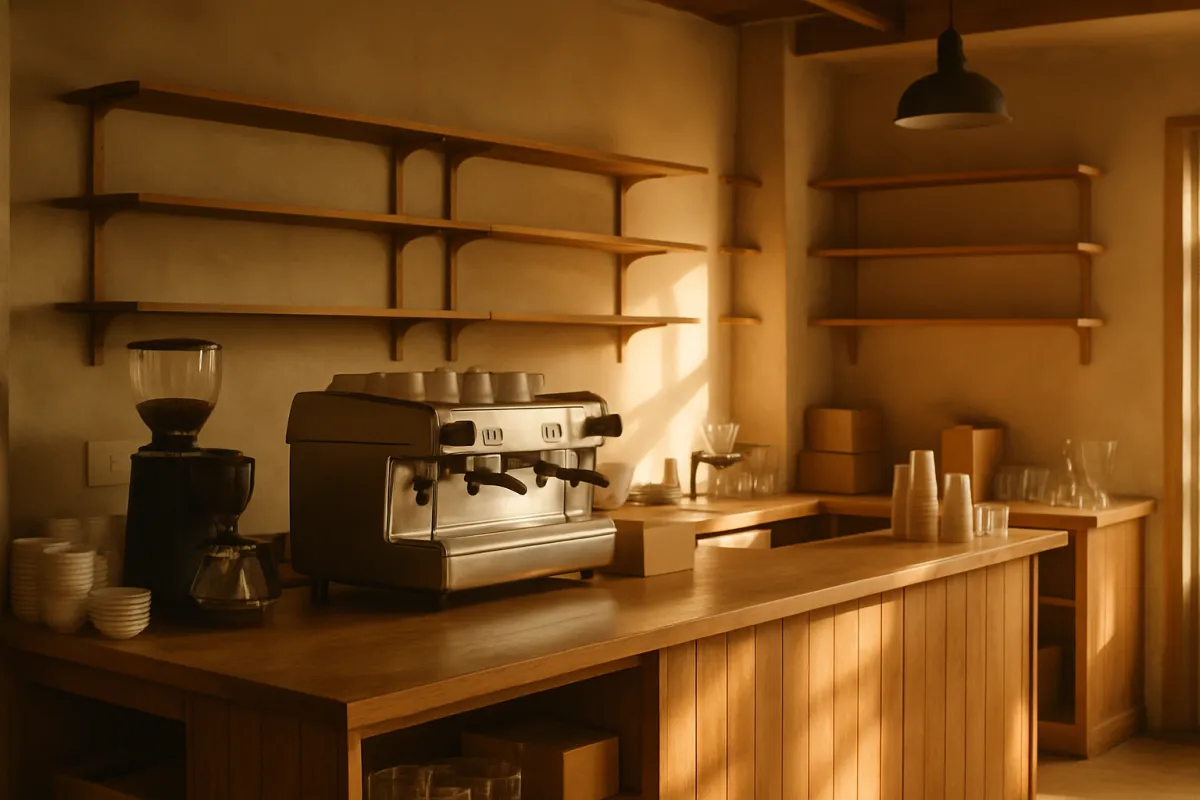
- Step 6: Buy or lease the equipment
- Step 7: Hire and train baristas
- Step 8: Market and run a soft opening
- How to open a coffee shop: the opening sequence
- What drives your coffee shop startup number up or down
- Starting a coffee shop on a cart or kiosk budget
- A worked example: opening a small cafe from concept to soft open
- How to run a coffee shop: the first two weeks of trading
- Opening inventory and par levels for a new cafe
- Your first profit and loss review, around day 90
- Common mistakes when starting a coffee shop
- Troubleshooting: tight budget, no experience, high rent, and a slow start
- How to start a cafe when food is on the menu
- Buying an existing coffee shop instead of starting one
- Is starting a coffee shop right for you?
- Your coffee shop startup checklist
- The bottom line
Short answer: How to start a coffee shop, in one line: work eight steps in order, concept, plan, funding, location, permits, equipment, hiring, then a soft opening. The cheap steps come first and the expensive commitments follow only once the plan is set. As a single illustrative summary, a small counter-service cafe lands near $180,000 all in, and several months of working-capital runway beyond the buildout is the line first-timers underfund most.
How to start a coffee shop is really a question about order, because the opening is a project you complete by working a sequence rather than a single leap you make on the day you sign a lease. Most first-timers picture the espresso machine and the logo, then discover that the machine is one line among many and the logo is the easy part. The hard parts, the ones that decide whether the shop opens on time and survives its first year, are the concept, the budget, the funding, the lease, the permits, and the cash cushion that carries the business until customers show up in numbers. Do those in order and the opening becomes a plan; skip around and it becomes a scramble that runs out of money.
This rundown lays the whole thing out as eight steps you can follow start to finish, each one feeding the next: nail the concept, write the plan, fund it, lease the space, clear the permits, equip the bar, hire and train, then market and soft-open. It then carries on past opening day into the first 90 days of trading, because the rota, the inventory par levels, and the first profit and loss review are where an opening either settles or unravels. For the full cost picture underneath these steps, read our coffee shop opening cost case study, and for the profit side once the doors are open, our rundown on how much a coffee shop makes. Every dollar figure below is an illustrative sketch built to show how the lines relate, never a quote, and you can size your own opening budget as you read with the equipment ROI calculator.
Key takeaways
- Work the eight steps in order: concept, plan, funding, location, permits, equipment, hiring, soft opening. The order protects your cash because the cheap steps come first and the expensive commitments come only after the plan is set.
- The format decides the scale, and the pricing work belongs on the cost page rather than here. As a single illustrative summary, a small counter-service cafe lands near $180,000 all in, and our coffee shop opening cost case study prices every line underneath that figure.
- The sequence does not stop on opening day. The first two weeks set the rota against the real rush, the first fortnight of usage sets the inventory par levels, and a profit and loss review around day 90 is where the plan meets the trading.
- Fund the working-capital runway first. Several months of operating cash beyond the buildout and equipment is the line first-timers underfund most, and running out of it is the most common way a shop that would otherwise have survived closes early.
- Run a soft opening before you launch loud, so a slow bar or a mispriced menu gets fixed in private rather than in public reviews.
How to start a coffee shop: the eight steps at a glance
If you want the whole path in one view before the detail, this is it. How to start a coffee shop breaks into eight steps, worked in order: first, nail the concept and check local demand, writing the shop as one specific sentence and proving customers exist where you can afford to be. Second, write the business plan and the line-item budget, including the working-capital runway as a real line. Third, secure the funding with margin, blending savings, a loan, and equipment financing so the money covers several months past opening. Fourth, pick and lease the location on traffic and fit, pricing the buildout before you sign anything.
Fifth, get the licenses, permits, and food-safety approvals moving early, because the delay costs more than the fees. Sixth, buy or lease the equipment in proportion to the menu, with the espresso machine and grinder chosen as a pair. Seventh, hire and train the baristas, lead barista first, with a full mock service before opening day. Eighth, market locally for a few weeks and then run a soft opening, so the problems surface in private before the public reviews arrive.
The order is the strategy. The early steps are cheap and correct the later ones on paper, while the expensive commitments, the lease, the buildout, the equipment, and the payroll, come only after the plan and the funding are set. Read the eight full sections below for the how of each step, the two charts to see how the opening tracks overlap and where the monthly burn goes, the worked example to see the steps connect on one real-shaped opening, and the checklist at the end to track your own progress. The rest of this rundown assumes nothing beyond a serious intent to open and a willingness to work the sequence top to bottom.
Before you start
Before you touch step one, gather three things and set honest expectations, because the walkthrough below assumes you arrive with them. The point of this short checklist is to make sure the expensive steps later rest on a real foundation rather than enthusiasm.
- A concept you can say in one sentence. Who the shop is for, what it sells, and where it sits: "a fast, friendly espresso bar for commuters near the transit stop," not "a coffee shop." The concept drives every later decision, from the menu to the equipment to the location.
- A realistic budget range. Know roughly which format you are opening and what it plausibly costs, so the plan and the funding are sized correctly. A cart, a kiosk, a counter-service cafe, and a full sit-down cafe are four different businesses with four different balance sheets.
- A read on local demand. Some evidence that the customers you are picturing actually walk past the kind of location you can afford, gathered before you sign anything.
Set expectations too. On an illustrative timeline, plan for several months from serious planning to opening day, commonly in the range of three to six months for a fixed cafe and longer if the buildout is heavy or permits stall. Difficulty is moderate to high: none of the individual steps is hard, but there are many of them, they depend on each other, and the money at stake grows as you go. The single most important mindset is patience with the cash, because the shop that funds its runway and opens a month late beats the one that opens on time and closes broke. Run your format, buildout, and runway through the companion beside this rundown to turn these ranges into a single planning number of your own.
Step 1: Nail the concept and check local demand
Start with the concept because it is free to get right and expensive to get wrong, and it drives every later step. Write it as one specific sentence naming the customer, the offer, and the setting: a grab-and-go espresso bar for morning commuters, a slow neighborhood cafe where people linger over laptops, a drive-thru serving a car-dependent suburb. Vague concepts produce vague shops that stand for nothing, while a sharp concept tells you what to sell, how much space you need, what equipment to buy, and which location fits. Resist the urge to be everything to everyone, because a tight concept is cheaper to build and easier to be known for.
Then check that real demand exists for that concept in a location you can actually afford. You do not need a market research firm; you need to watch and count. Stand on the streets you are considering at the hours your shop would be busiest and count the foot or car traffic. Study the competitors already there, what they charge, when they are full, and what they do poorly that you could do well. If you can, run a small test: a weekend pop-up, a stall at a market, or a cart shift, and see whether people at your planned prices actually buy. That evidence is worth more than any assumption, and it costs almost nothing.
Watch out for the trap of falling in love with the concept and ignoring the demand, or the reverse, chasing a hot location with no concept to fill it. A great idea in a street with no traffic fails, and a busy street with a muddled shop fails too. Both have to line up. The output of this step is a one-sentence concept plus honest evidence that the customers exist where you can afford to be, and that pair is the foundation every later number rests on. Do not spend a dollar on the later steps until this one holds up, and if the concept includes food, decide that now, because it changes the space you need.

Step 2: Write the business plan and budget
Turn the concept into a written plan and a line-item budget, because this is where optimism gets corrected on paper instead of in the bank account. The plan does not need to be long, but it does need to be honest: a description of the concept and customer, a look at the local competition, a simple menu, a staffing sketch, and above all the numbers, meaning projected revenue, the cost of goods, labor, rent, and the timeline to break even. Our walkthrough on writing a restaurant business plan covers the document section by section, and a cafe plan follows the same shape on a smaller scale. Writing it forces the questions you would otherwise discover the expensive way, like whether the rent you can afford leaves any margin once coffee and labor are paid.
The budget is the part that matters most for survival, so price every line rather than guessing a total. List the buildout, the equipment, the deposits and first rent, the permits, the point-of-sale system, furniture, opening inventory, signage, pre-opening labor, and the working-capital runway. Our coffee shop opening cost case study prices each of these end to end and is the piece to read before you fill in the numbers, because the lines first-timers forget, especially the runway, are the ones that sink budgets. As an illustrative sketch used throughout this rundown, a small counter-service cafe might land near $180,000 all in, with the buildout as the largest line and a funded runway a close second. That is a teaching figure, not a quote for your space.
The watch-out here is treating the plan as a formality to satisfy a lender rather than a tool for yourself. A plan that pencils only if everything goes right is a warning, not a green light. Build the budget so it survives a slow ramp, add a contingency line for the overruns that always appear, and make sure the working-capital runway is a real number, not whatever is left over. Run your own size, buildout, and runway through the equipment ROI calculator as you build the budget, so the total to open is a figure you chose rather than one you discovered too late.
Step 3: Secure funding
With a budget in hand, line up the money to cover it, and cover it with margin rather than to the dollar. Coffee shops are rarely opened on cash alone, and the common sources each carry a different cost and a different set of strings: personal savings, a small business loan from a bank or backed by the SBA (see the SBA’s loan programs page), an equipment loan secured by the machines themselves, a line of credit for working capital, contributions from friends and family, and sometimes an outside investor. Most openings blend several of these, and the right mix depends on how much cash you bring, how much risk you can carry, and what a lender will extend to a business with no operating history.
The discipline that keeps funding from becoming a trap is to borrow enough to reach break-even with a cushion, not just enough to build the shop. A cafe funded only to open its doors is one slow month from closing them, so the loan or raise has to cover several months of runway past opening day. Match the term of any borrowing to the life of what it funds, financing durable equipment over its useful life and never financing a few months of rent on a long-term loan. Our rundown on getting a small business loan walks through the application, the rate, and the total cost of borrowing so the payment fits a realistic revenue ramp.
Watch out for two opposite errors. The first is under-borrowing, raising just enough to build and opening with an empty cushion, which is the most common way a survivable shop closes early. The second is over-borrowing, taking on a debt payment so heavy that the monthly service becomes a burn the young cafe cannot carry through its slow start. The target is between them: enough to open and survive the ramp, on terms whose payment a realistic, not optimistic, sales projection can cover. Rates and terms move constantly and depend on your own credit and collateral, so confirm what you actually qualify for with lenders directly rather than planning around any published figure.
Step 4: Pick and lease the location
Now spend the money knowledge from steps two and three on the single most consequential physical decision: the location and the lease you sign. Choose the space on the numbers, not the charm. Foot or car traffic, visibility, the fit between who walks past and who your concept serves, and the condition of the space all matter more than a pretty storefront, and our walkthrough on choosing a restaurant location works through the same trade-offs for a food business. A cheaper rent in a dead location can cost far more than a higher rent where your customers already walk by, because traffic is what fills the shop, and an empty shop in a bargain space still burns rent every month.
Before you sign, check the practical constraints that can kill a deal or blow a budget. Confirm the zoning allows a food business and, if you plan a drive-thru, that it is permitted. Look hard at the condition of the space, because a former cafe or restaurant with existing plumbing, electrical, and a hood can be opened for a fraction of what converting a bare retail box or a former office costs. The lease itself is a negotiation, not a form: push for a tenant-improvement allowance toward the buildout, a rent-free period while you build, and terms your sales projection can carry, and read the triple-net charges for common area maintenance, taxes, and insurance that ride on top of the base rent. Our rundown on negotiating a restaurant lease covers the clauses worth pushing on.
The watch-out is signing under time pressure before the buildout is priced. The condition of the space and the buildout budget are the same conversation, so walk the space with a contractor who knows local food code before you commit, and price the conversion the space demands rather than the rent alone. Rents are set street by street and change constantly, so gather real quotes on the actual spaces in front of you rather than planning around a per-square-foot figure you read somewhere. A low rent on a space that needs a huge buildout is not a bargain, and discovering that after signing is one of the most expensive mistakes a first-timer makes.
Step 5: Get licenses, permits, and food-safety approvals
Before the shop can legally serve a single cup, it needs a stack of approvals, and the process costs time as much as money, so start it early and in parallel with the buildout. The list commonly includes a business license, a food service or food establishment permit tied to a health department inspection, a seller’s permit for sales tax, a sign permit for the exterior signage, and often a certificate of occupancy once the buildout passes inspection. The SBA’s licenses and permits page covers which licenses come from federal agencies and which from your state or locality. Many jurisdictions also require a food-safety manager certification for at least one person on the team. Which of these apply to you, what each costs, and how long each takes are decided locally and change over time, so use that list as a set of questions to ask your city, county, and state authorities, and confirm the current requirements and fees with them rather than assuming.
The health inspection deserves specific attention because it can force buildout changes, which is why it belongs in step five thinking during step four planning. Inspectors commonly look at sinks, food-safe surfaces, refrigeration, and plumbing, and a space that does not meet the local standard has to be brought up to it before it opens, looping straight back into the buildout budget and timeline. Our walkthrough on passing a health inspection covers the preparation, though the code you are actually inspected against is your jurisdiction’s own; the FDA publishes the FDA Food Code as the model local jurisdictions adopt, and its Food Code adoption page lists each state’s overseeing agency. Involve the health department and a contractor who knows the local food code early, so the space is designed to pass the first time rather than rebuilt to pass the second.
Watch out for treating permits as a last-minute formality. The bigger cost of a permit is rarely the fee; it is the delay, because a permit or inspection that slips by weeks is weeks of rent paid on a shop that cannot yet open. Apply for everything as early as each process allows, track each application’s status, and build slack into the opening timeline for the ones that stall. Compliance is not a place to cut corners, because a failed inspection costs far more in delay and rework than doing it right the first time, and it is the kind of self-inflicted wound a little early paperwork prevents.

Step 6: Buy or lease the equipment
With the space secured and the permits moving, equip the bar to your concept and menu, keeping the equipment in proportion to everything else. The core of a coffee shop is the espresso machine and the grinder, and the two are a pair: a great machine fed by a cheap grinder makes mediocre coffee, because grind consistency drives the cup more than the brew group does. Around that core sit refrigeration, a water filtration system, an ice machine, a batch brewer, blenders, small wares, and any kitchen equipment your food menu requires. Our commercial espresso machine cost case study and our commercial coffee grinder cost rundown work through that core so the equipment budget rests on line items you have priced rather than a single sticker, and our espresso machine ROI case study shows how the volume you actually expect justifies the machine you actually buy.
How you pay for the equipment matters as much as what you buy, because for a young business cash preservation often outweighs the total cost of the gear. Buying outright is usually cheaper over the life of a machine you run hard, but it drains cash exactly when a new cafe is most fragile, consuming the working capital that keeps the doors open. Leasing or financing spreads the cost into monthly payments and protects the runway, and the premium can be worth far more than its dollar cost when the alternative is opening with an empty cushion. Our buy-versus-lease equipment case study, our equipment financing rundown and our restaurant equipment financing case study each take a different cut at that decision, from the mechanics to a worked comparison.
The watch-out here is over-buying, pouring the budget into a showpiece machine and a long equipment list while the buildout and runway go thin. A tight opening menu keeps the equipment list short, which is one of the safest ways to control startup cost, and many successful cafes open deliberately narrow and add equipment once they know what sells. Used gear can cut the equipment line hard on the durable, mechanically simple pieces, and our used versus new equipment case study shows where the saving is real and where it is borrowed from the maintenance budget. Size the bar to the volume you realistically expect, own the durable core if cash allows and finance the rest, and run the equipment number through the calculator to see how it fits the whole opening.
Step 7: Hire and train baristas
A coffee shop is a service business, and the crew on the bar is most of what the customer actually experiences, so hire and train deliberately rather than filling shifts at the last minute. Start with the leadership if your format needs it, a lead barista or manager who already knows the craft and can train others, because experience at the top raises the whole team and covers the gaps in a first-time owner’s own knowledge. Then staff to a sustainable volume for your expected traffic, neither so thin that lines back up on opening day nor so heavy that payroll sinks the thin margin before revenue arrives. Our rundown on hiring restaurant staff covers the sourcing and interview mechanics, and the right number of people is the one your sales projection can carry while still serving customers well.
Training is where opening day is won or lost, and it is a real pre-opening cost that budgets built around ongoing payroll routinely miss. Before you open, you hire, then you pay those hires through training: menu practice, dialing in the espresso, learning the point-of-sale system, and the rhythm of a rush. Budget that paid training time honestly, because a crew that is not fluent on the machine and the register on opening day turns first impressions into slow lines and mistakes exactly when word of mouth is forming. Wages are set by your local market and your own scheduling, so build this line from real local rates rather than a national average, and our rundown on restaurant labor cost percentage shows how to test whether the crew you have sketched fits the sales you have projected.
Watch out for underinvesting in training to save a week of wages, which is a false economy that shows up immediately in the cup and the queue. The parts of the job that punish a weak crew most, speed under pressure, consistency shot to shot, and warmth with customers, are exactly the parts that build or break the early reputation. It is cheaper to over-train before opening than to recover from a rocky first month of reviews. A confident, well-drilled team on opening day is one of the highest-return investments in the whole plan, and it is the natural bridge into the soft opening that follows.
Step 8: Market and run a soft opening
The last step is to build awareness and then test the whole operation quietly before you launch loud. Start marketing a few weeks before opening, not on opening day, so a base of local awareness exists when the doors open rather than an empty room you have to fill from scratch. The cheap, effective moves for a neighborhood cafe are local: a simple social presence showing the space coming together, a listing on the maps and review platforms people search, a sign in the window announcing the opening date, and word of mouth through the neighborhood. You are selling a place people walk past, so the marketing that matters most is local and visible, not a large ad budget.
Then run a soft opening before the public grand opening, which is the single cheapest insurance on the whole launch. Invite friends, neighbors, and a limited crowd for a day or a few days at reduced capacity, and treat it as a live rehearsal: the crew works real service, the machine and the point-of-sale get exercised under pressure, and the problems surface where they cost you nothing. A slow bar, a mispriced item, a workflow that jams at the espresso station, a menu that confuses people, all of these are far cheaper to fix in front of a forgiving soft-opening crowd than in front of paying customers writing public reviews. Fix what the soft opening reveals, then open loud.
The watch-out is skipping the soft opening to save a few days and launching straight into a grand opening with an untested team and bar. The most visible first weeks are when reviews and word of mouth lock in, and a rocky launch produces the slow, wrong service that sticks to a new shop permanently. A soft opening turns those inevitable first-week problems into private lessons instead of public damage. Run the numbers on your own opening one more time in the calculator as you plan the launch, and treat the soft opening as the last step that protects everything the first seven built.

How to open a coffee shop: the opening sequence
The eight steps above answer how to open a coffee shop from a standing start, but once the lease is signed, opening a coffee shop changes shape as a question: it stops being a strategy problem and becomes a scheduling one. From that point the work is three tracks running in parallel, and the reason people ask how to start up a coffee shop and then stall is almost always that they ran the tracks one after another instead of together.
Track one is paperwork, and it starts the day the lease is signed because it is the slowest and the least under your control. The business license, the food service or food establishment permit, the seller’s permit, the sign permit, and the health department plan review all go in as early as each process allows, and the certificate of occupancy waits at the end of the buildout to gate everything else. Track two is the buildout, which begins as soon as the drawings clear review: plumbing and the required sinks, electrical for the bar, refrigeration, surfaces the inspector will check, and the counter layout that decides how the bar flows during a rush. Track three is equipment, and the espresso machine and grinder are ordered early precisely so a lead time never becomes the thing holding up an opening you are already paying rent on.
How long each opening track runs
Illustrative weeks per track for a counter-service cafe, with the tracks running alongside each other rather than end to end.
Each bar is drawn from its share of the longest track, the 12 week permit and plan review. Because the four run in parallel, the elapsed calendar is nearer 14 to 16 weeks than the 33 the bars add up to, which is the whole reason this section is about overlap rather than speed. Permit and inspection timelines are set by your own jurisdiction and are the least under your control, so confirm yours rather than planning on these. Illustrative only.
The consumables come last and move fast, but they are not an afterthought. Line up the roaster relationship and the first coffee order before the crew starts training, because the team needs real beans to dial in on and the roaster needs to know your volume before they can quote you. Milk, pastry, cups, and small wares follow in the final week or two. Hiring is timed backward from the soft opening date rather than forward from the lease, so the crew is on payroll for training and a full mock service rather than idle while the inspector reschedules.
The order that keeps this from going wrong is simple: permits first because they are slow, buildout second because it depends on the permits, equipment ordered in parallel because of lead times, people last because payroll starts the moment they do. Build slack between the certificate of occupancy and the soft opening date, because the single most common way an opening slips is treating an inspection date as a certainty.
What drives your coffee shop startup number up or down
The reason no honest walkthrough can hand you a single figure is that four inputs move the total far more than anything you buy, and all four are decided by you rather than by the market. Knowing which lever you are pulling is more useful than any average.
The first driver is the condition of the space. Taking over a former cafe or restaurant that already has the plumbing, the electrical capacity, the drains, and a hood is the single largest saving available to a new owner, because those are the expensive, permitted, hard-to-move parts of a buildout. Converting a bare retail box or an office means installing all of it from scratch, and the same square footage can carry a small fit-out or a large construction project depending purely on what was there before. That is why step four insists on walking the space with a contractor before you sign.
The second driver is the breadth of the menu, which sets the equipment list and the space you need behind the counter. A short espresso-and-drip menu with bought-in pastry needs a bar. Add blended drinks and you add blenders and an ice machine; add cooked food and you add a kitchen, refrigeration, prep space, and quite possibly ventilation. Every menu line you add early is equipment, space, staff training and inspection scope you pay for before you know whether it sells.
The third driver is the number of months of operating cash you fund. This is the line most under your control and the one most often cut, because it buys nothing visible. Fund two months instead of four on the same shop and the headline total drops sharply while the survival odds drop with it. The fourth driver is how you pay for the equipment: buying outright raises the cash you need on day one and lowers the monthly obligation, while financing or leasing does the reverse. The companion beside this rundown is built on exactly these levers, with the format input carrying the equipment and the other opening lines, the buildout input carrying the conversion the space demands, and the months input setting the runway, so you can watch each one move the total. For the priced version of each of these lines, our coffee shop opening cost case study is the page that carries the numbers, while this rundown keeps to the sequence.
Starting a coffee shop on a cart or kiosk budget
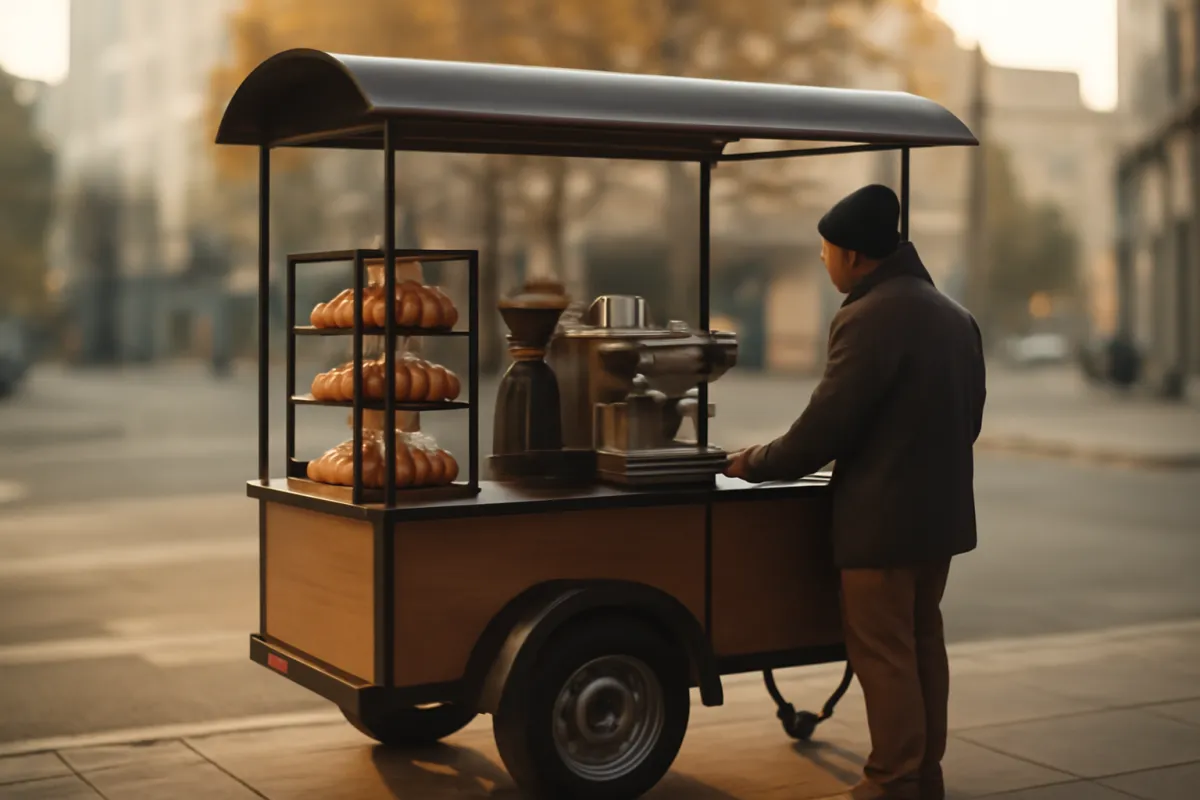
If the six-figure sketch above is out of reach, the honest answer is not to shrink a cafe, it is to open a different format. A cart or a mobile trailer carries a compact equipment package, almost no construction, a pitch fee or a commissary arrangement instead of a lease, and a crew of one or two. A fixed kiosk sits a rung above it: a small permanent footprint inside a lobby, a station, a mall, or a parking lot, with a modest fit-out and utilities but still nothing like a full conversion. Both are real businesses that sell the same drinks, not practice runs.
The arithmetic follows the same three-part shape as every other format: an equipment and fixtures package, a setup cost standing in place of a buildout, and a runway sized to a burn far below a fixed shop’s. Because a cart pays little or no rent and carries one or two people, the runway line that dominates a cafe budget shrinks to a few thousand dollars, which is why the whole opening lands at a small fraction of the counter-service figure rather than at a discount on it. Our coffee shop opening cost case study prices the cart and the kiosk line by line and is the page to plan against, because what belongs here is the decision rather than the price list. Whatever any sketch says, your pitch fees, commissary rates, and equipment quotes decide your real number.
What the lean formats actually buy you is information at low cost. Running a cart for a season tells you which drinks sell in your area, at what price, at which hours, and how fast you can serve a queue, and it does so while the downside is measured in thousands rather than in a personal guarantee on a five-year lease. It also builds a customer list and a local reputation that walk with you into a fixed location. The trade-offs are real: weather, limited menu, licensing that treats mobile food differently in many jurisdictions, and a ceiling on how much you can sell from one window. Confirm the mobile-vending and commissary rules with your local authorities before you buy anything, because those rules vary more between cities than almost any other requirement in this rundown.
A worked example: opening a small cafe from concept to soft open
Run one illustrative opening through all eight steps so the pieces connect. Imagine a first-time owner opening a small counter-service neighborhood cafe, about 1,000 square feet with a compact bar and a dozen seats, serving a short espresso-and-drip menu with a few pastries. Step one: the concept is “a fast, friendly espresso bar for morning commuters and remote workers near a busy transit corner,” validated by counting weekday morning foot traffic at the corner and running two weekend market shifts that sold out at the planned prices. Step two: the business plan projects a several-month climb to break-even, and the budget lands on the illustrative $180,000 sketch used throughout, with the buildout the largest line and a funded runway a close second.
Step three: funding comes from owner savings covering a meaningful slice, a small business loan for the bulk, and equipment financing for the espresso bar so cash stays free for the runway, with the total sized to cover several months past opening rather than just the build. Step four: the owner leases a former sandwich shop with existing plumbing and some usable refrigeration, which trims the buildout sharply against what a bare retail box would have demanded, negotiates a modest tenant-improvement allowance and a short rent-free build period, and signs at a rent the sales projection can carry. Step five: business, food service, and health applications go in early against the local authority’s own list, the food-safety certification is scheduled, and the certificate of occupancy follows the buildout, with slack built into the timeline for the inspection.
Step six: the bar is built around a two-group espresso machine and a quality grinder, with refrigeration, a water system, and a batch brewer around it, the durable core financed and the small wares bought outright, all sized to the short menu. Step seven: a lead barista who knows the craft comes on first, two part-time baristas are hired and trained for a week before opening, and the team works a full mock service to drill the rush. Step eight: local social posts and a window sign build a base for a few weeks, then a two-day soft opening for friends and neighbors catches a slow pastry-warming step and a confusing size naming, both fixed before the grand opening.
Split on an illustrative basis, that $180,000 is about $70,000 of buildout, $43,000 of equipment, a $40,000 runway covering roughly four months at a burn near $10,000 a month, and $27,000 across deposits, permits, point-of-sale, furniture, inventory, signage, and pre-opening labor, and our coffee shop opening cost case study prices each of those lines against the same $180,000 sketch so the two pages agree line for line. Notice how the drivers show up: the former sandwich shop is why the buildout is a conversion rather than a construction project, the short menu is why the equipment line stays where it is, and the four funded months are a choice the owner made rather than a rule. Change any of the three and the total changes with it, so run your own version in the calculator and remember every figure here is an illustrative sketch.
How to run a coffee shop: the first two weeks of trading
Opening day starts the operating problem rather than ending the opening one, and the first two weeks are when a rota built in a spreadsheet meets the rush the street actually delivers. Plan those weeks deliberately instead of letting them happen. Staff the first three or four days heavier than the projection says, because a new crew is slow, a queue is unforgiving, and the cost of one extra shift is trivial against the cost of a bad first week. Then start cutting, because carrying opening-week cover into month two is one of the fastest ways to drain a runway that was funded for something else.
The instrument that tells you where to cut is your own till. A point-of-sale system records what sold and when, so by the end of week one you hold an hourly transaction count for every day you traded, which is the first real demand data your shop has ever produced. Read it by hour and by day rather than as a weekly total. Most cafes find a sharp morning peak, a long flat middle, and a smaller afternoon lift, and the rota should put two people on the bar through the peak and one through the trough rather than the same two all day. Our rundown on choosing a restaurant point-of-sale system covers what to look for in that reporting, because a till that cannot show you an hourly breakdown turns this step back into guesswork.
Write the rota a week ahead from the previous week’s hourly counts, and expect to change it every week for the first two months. Two habits make that sustainable: give people fixed anchor shifts so the schedule is not chaos to plan a life around, and keep at least one person cross-trained on every station so a single absence does not close the bar. Watch labor as a share of sales rather than as a dollar total, since the dollar total should rise as sales rise, and our rundown on restaurant labor cost percentage sets out how to read that ratio honestly. Our rundown on hiring restaurant staff covers replacing the people who, quite normally, do not stay past the first months.
The owner should be on the bar for most of those two weeks, and not for the romance of it. Working service is how you learn which drinks jam the workflow, which prices customers hesitate at, how long a queue gets before people walk away, and which of your crew can hold a rush. None of that is visible from an office, and all of it feeds the changes you make at the first review. Once the pattern is stable, step back onto the floor deliberately rather than by default, because an owner permanently trapped behind the machine has no hours left to run the business.
Opening inventory and par levels for a new cafe
A par level is the quantity of an item you keep on hand so you never run out before the next delivery arrives, and setting them is the difference between a shop that runs smoothly and one that sends a barista to a supermarket at eight in the morning. The arithmetic is ordinary: average daily usage, multiplied by the days between deliveries, plus a safety margin for the days that surprise you. The hard part in opening week is that you have no usage history at all, so the first order is a guess and should be a deliberately small one that you correct fast rather than a full store cupboard you throw away.
Work it on milk, the item most new cafes get wrong first. Say the shop sells about 90 milk drinks a day and a standard drink uses roughly 8 ounces of milk. That is about 720 ounces a day, or a little under 6 gallons. With deliveries every two days, two days of usage is about 11 gallons, and a 25 percent safety margin brings the par to about 14 gallons. Order up to that number, count what is left before each delivery, and order the gap rather than repeating last week’s order. The same three-step calculation sets the par for beans, syrups, cups, and lids, with only the numbers changed.
The split that matters is perishable against not. Milk and pastry spoil in days, so hold them tight and accept the occasional sell-out rather than a daily bin, particularly in the first fortnight when sales are still climbing and yesterday is a poor guide to today. Roasted coffee has a real freshness window measured in weeks rather than days, so order beans often enough that you are never brewing stale stock, and agree a delivery rhythm with your roaster rather than buying deep to chase a discount. Cups, lids, sleeves, napkins, and cleaning supplies do not spoil, so buy those deeper and stop spending attention on them.
After two weeks of trading you can replace every guess with a measured number, which is the point of counting from day one. Our rundown on doing restaurant inventory sets out the counting routine, and our rundown on cutting restaurant food waste covers what to do when the count keeps showing the same item going in the bin. Waste is the honest tell: repeated milk waste means the par is too high or the forecast too optimistic, repeated sell-outs mean the reverse, and both are cheap to correct once you are counting. Feed the settled numbers into your cost of goods with our walkthrough on calculating food cost percentage, because a par level you can defend is also a food cost you can control.
Your first profit and loss review, around day 90
Around day 90 you have enough weeks of trading to see a trend rather than noise, and that is the moment to sit down with a profit and loss statement instead of a bank balance. Pull four numbers for each of the first three months: sales, the cost of goods sold, labor, and the fixed costs that arrive whether or not anyone walks in. Line them up month by month and read the direction of travel, because at this stage the shape matters far more than any single month’s result. A shop losing less each month is on the right track. A shop losing the same amount each month has a demand problem no rota change will fix.
Set those numbers against the burn you funded, which is where the runway from step three stops being an abstraction. The worked example above funds a $40,000 cushion against a burn near $10,000 a month, and the tempting reading is that it buys four months. It does not. It buys four months of zero sales, a case that will never happen. Month one might draw close to a full $10,000 because sales are a trickle, leaving $30,000. If by month three sales cover $7,000 of the $10,000, the shortfall is $3,000, and $30,000 against a $3,000 monthly gap is roughly ten more months on paper rather than three. That arithmetic is why a funded runway changes the odds so sharply, and it is also why the shortfall, not the burn, is the number to track from here on.
Where a new cafe's monthly burn goes
Illustrative split of the roughly $10,000 monthly burn in the worked example, summing to 100.
The four lines, $4,000, $3,000, $1,500, and $1,500, sum to the $10,000 monthly burn used in the worked example above, so each segment is that line's share of it. Payroll and rent together are 70 cents of every dollar the runway pays out, which is why the rota is the lever you actually hold. This is the cost side of a month; the revenue side is a different split on a different page. Illustrative only.
The split tells you where a review can and cannot move the number. Rent is fixed by the lease you signed and is settled until renewal. The supply line moves with volume and responds only to waste and pricing. Payroll is the one large line you reset every single week, which is why the first two weeks of rota work matter so much, and why an owner covering shifts personally is holding down the largest controllable cost while the ramp climbs. Our rundown on restaurant profit margin frames what these lines look like once a shop is past its ramp and earning.
Then make the changes the numbers ask for, and make few of them. Cut the trading hours that reliably lose money and extend the ones that reliably do not, drop the menu items the till says nobody buys, and reprice deliberately rather than apologetically using our walkthrough on pricing a menu. Finish the review with two figures written down: how many months of cushion remain at the current shortfall, and what monthly sales number would close the gap entirely. Our rundown on how much a coffee shop makes works the revenue side of that second figure in detail, and the equipment ROI calculator beside this rundown lets you re-run the opening on what you now know rather than on what you guessed. Then book the next review a month out, because a shop reviewed on a schedule is steering by a map rather than by whatever went wrong last.
Common mistakes when starting a coffee shop
The failures cluster into a short list of avoidable errors, and knowing them in advance is half the defense:
- Underestimating working capital. The single most fatal mistake: spending the whole budget on the buildout and equipment and opening with no cash cushion to survive the slow first months. Fund several months of full operating costs as a real line, not whatever is left over.
- A weak location. Choosing a cheap or convenient space that lacks the foot traffic, visibility, or customer fit the concept needs. Rent you can afford in a spot you cannot fill is still a bad deal, because traffic is what fills the shop.
- A fuzzy concept. Opening a shop that tries to be everything and stands for nothing, so no customer has a clear reason to choose it. A sharp, specific concept is cheaper to build and easier to be known for.
- Over-buying equipment. Pouring the budget into a showpiece machine and a long equipment list while the buildout and runway go thin. Size the bar to realistic volume, keep the menu tight, and add equipment once you know what sells.
- No soft opening. Launching loud with an untested team and bar, so the most visible first weeks produce the slow, wrong service that public reviews lock in permanently. A quiet rehearsal turns those problems into private lessons.
The through-line across all five is optimism about how fast and how smoothly the shop will fill. A funded runway, a real location, a sharp concept, a right-sized bar, and a soft opening are all defenses against the same assumption, that a new cafe gets busy and profitable faster than cafes actually do. Build the plan for a slow ramp and treat a fast one as upside rather than the plan.
Troubleshooting: tight budget, no experience, high rent, and a slow start
What if the budget is too tight for a fixed cafe? Start smaller and climb, as the cart and kiosk section above sets out. A coffee cart or a mobile kiosk carries little or no buildout, a fraction of the rent, and a compact equipment package, which lets you enter the business for a small share of what a fixed cafe costs and prove your concept before committing to a lease. Our coffee shop opening cost case study prices that lower rung, and the lean format is not a failure, it is the realistic on-ramp to the larger room. Many owners begin on a cart, prove demand, and graduate to a fixed location on the cash flow and the confidence the cart earns them.
What if you have no coffee experience? Buy it or borrow it. Hire a lead barista who already knows the craft, work a season behind a busy bar before you open, or bring on a partner who has run a cafe, and budget a larger cash cushion because the learning curve costs money while you climb it. The parts that punish inexperience most, labor scheduling, waste control, and cash flow, are the least visible from the customer side, so put experienced people on exactly those. The visible skills are learnable fast; the hidden ones are where new owners lose money.
What if the rent is high? Let the sales projection cap it, not the other way around. A common planning heuristic is to test the rent as a share of projected sales and treat a share that leaves no margin after coffee and labor as a warning, whatever the street is asking, so either negotiate a tenant-improvement allowance and a lower rate, find a former food space that cuts the buildout, or walk. A great location you cannot afford to fill is worse than a good one you can. The rent you sign for sets the monthly burn the working capital has to cover, so it is a survival number, not just a monthly bill.
What if the shop opens to a slow start? Expect it and fund for it, because that is exactly what the runway is for. A new cafe opens to a trickle that builds over months as word spreads, so a slow first few weeks is normal, not a verdict. Use the runway to buy the time the ramp needs, lean on local marketing and the soft-opening crowd to seed word of mouth, and adjust the menu and hours to what customers actually buy. The shops that survive a slow start are the ones that funded enough months to reach break-even with a cushion, which loops back to the working capital in step three. For the profit side of that ramp, our rundown on how much a coffee shop makes frames what break-even looks like, and for a broader take our walkthrough on opening a restaurant covers the same discipline for a larger food business.
How to start a cafe when food is on the menu
People search for how to start a cafe, how to open a cafe, and how to start a coffee shop interchangeably, and for the first five steps the answer is the same. The two part company at the kitchen. A coffee shop in the narrow sense sells drinks plus pastry it buys in, which means the bar is the entire production line: an espresso machine, a grinder, a batch brewer, refrigeration for milk, a display case, and a warming step at most. A cafe that cooks is a food business with a coffee bar attached, and that is a different balance sheet rather than a bigger one.
What changes concretely is the back of house. Cooking usually means a kitchen line, more refrigeration and freezer capacity, dry storage, prep surfaces, a dish area sized to plates rather than cups, and in many cases mechanical ventilation over the cook line, which is one of the most expensive single items in any food buildout. Our rundown on what a commercial kitchen requires covers the elements, and our commercial kitchen hood case study explains why ventilation is the line that most often decides whether a space is viable at all. If baked goods are the point rather than a sideline, our walkthrough on opening a bakery is the closer fit, because production baking has its own equipment and its own overnight rhythm.
The staffing and the approvals change too. A drinks-only bar can run a busy morning on two people; a kitchen adds prep hours before service, cooks during it, and a longer clean-down after it, which lifts the labor line at the same time as it lifts the average ticket. The inspection scope widens with the cooking, the storage, and the temperature controls you now have to demonstrate, and the specific requirements are set by your local health authority rather than by any general rule, so confirm what your menu triggers before you design the space.
The practical decision is which business you want to run. Food can raise the average ticket and fill the flat hours between the morning rush and the afternoon, which is the strongest argument for it, but it does so by adding equipment, space, staff and complexity to a business that was already demanding. A middle path many owners take is to open drinks-first with a bought-in food offer, hold the space and the electrical capacity for a kitchen in the buildout, and add the cooking once the shop knows its own traffic. That sequencing keeps the opening budget nearer the coffee shop shape while leaving the cafe option open.
Buying an existing coffee shop instead of starting one
Starting from scratch is not the only route, and it is worth pricing the alternative before you commit. Buying an existing shop means paying for something a new build cannot give you: a fitted-out space that already passed inspection, equipment already in place, a trading history you can examine, a trained crew, and customers who already come through the door. The buildout risk and much of the ramp risk come off the table, and in exchange you pay for goodwill and inherit whatever the previous owner built, good and bad.
The trade-offs are real on both sides. A purchase price for a going concern is usually anchored to the shop’s earnings rather than to the cost of its equipment, so a profitable shop costs more than the sum of its parts and a struggling one is cheap for a reason you have to find. You inherit the lease, including its remaining term and its rent, which may be better or far worse than what you could negotiate yourself. You inherit the equipment’s age and maintenance history, the staff’s habits, the supplier arrangements, and the reputation, which is harder to change than the paint. Our walkthrough on buying an existing restaurant covers the diligence in detail and applies almost line for line to a cafe.
A third route sits between the two: taking over a closed or closing food space as a lease rather than a business purchase. You pay nothing for goodwill and inherit no customers, but you get the plumbing, the electrical, the drains, and sometimes the ventilation, which is exactly the saving the buildout driver above describes. That is often the best value available to a first-time owner with a strong concept and a modest budget, because it cuts the buildout, the largest single line in the worked example above, without paying for someone else’s trading history.
Whichever route you take, the working-capital discipline does not change. A purchased shop still needs a cash cushion, because transitions cost customers, refits cost trading days, and the first months under new ownership rarely match the seller’s numbers. Fund the months, then buy the business.
Is starting a coffee shop right for you?
Before you commit to the sequence, it is worth asking honestly whether you want the business the steps produce, because a coffee shop is a demanding operating company, not a lifestyle purchase. The hours run early and long: the bar opens before commuters wake and someone has to receive deliveries, dial in the grinder, and close the till after the last customer leaves. In the first year that someone is usually the owner, and most new owners work well beyond a standard week across the bar, the books, the scheduling, and the hundred small repairs a shop generates. If the picture in your head is sitting by the window with a laptop while the shop runs itself, the reality will be a shock; if it is running a busy small operation you are proud of, the fit is better.
The income shape matters as much as the hours. A new cafe climbs toward break-even over months, and the profit that eventually arrives is a thin slice of revenue earned through daily discipline on waste, labor, and pricing, as our rundown on how much a coffee shop makes lays out. Many owner-operators effectively pay themselves a modest wage inside the labor line for the first year and treat any profit above it as the return on the risk. That is a fine trade for someone who wants to own their work and their room; it is a poor one for someone comparing it to a salaried job on dollars alone.
The people who thrive tend to share three traits: they like repetitive craft done well, they can hold standards with a small team without burning it out, and they can watch numbers weekly without flinching. None of that requires prior coffee experience, which can be hired, but all of it requires showing up. If that sounds like you, the eight steps above are the path; if it does not, discovering it now costs nothing, while discovering it a year into a lease costs a great deal.
Your coffee shop startup checklist
Save this compact list and work it in order:
- Concept written in one sentence, naming the customer, the offer, and the setting.
- Format decided: cart, kiosk, counter-service, or full cafe, and drinks-only or with a kitchen.
- Local demand checked: foot or car traffic counted, competitors studied, a pop-up or market shift tested.
- Business plan and full line-item budget written, with the working-capital runway included as a real line.
- Funding secured with margin, across savings, a loan or SBA, and equipment financing, enough to survive the ramp.
- Location chosen on traffic and fit; lease negotiated with an improvement allowance and a build period.
- Space checked for plumbing, electrical, refrigeration, ventilation if needed, and zoning before signing.
- Permit list confirmed with your local authorities and applications started early, plus food-safety certification.
- Equipment sized to a tight menu; espresso machine and grinder chosen together, durable core owned, rest financed.
- Lead barista hired first; team hired and fully trained, with a mock service run before opening.
- Local marketing live a few weeks out; soft opening run and its problems fixed before the grand opening.
- First rota rewritten weekly from the till's hourly counts rather than from the plan's projection.
- Opening inventory ordered small, then par levels reset from two weeks of measured usage.
- First profit and loss review booked for around day 90, with sales, cost of goods, labor, and fixed costs pulled together.
The bottom line
Starting a coffee shop is not one decision, it is eight, worked in order so that each cheap early step earns the right to the expensive later one. Nail the concept and check the demand, write the plan and the budget, fund it with margin, lease the right space on the numbers, clear the permits early with your local authorities, equip the bar in proportion, hire and train a crew that is ready on day one, and rehearse the whole thing in a soft opening before you launch loud. Do them in that sequence and the opening is a plan; skip around and it is a scramble that runs out of money before the customers arrive. Then keep working the sequence past opening day, because the rota, the par levels, and the first profit and loss review are the steps that turn an opening into a business.
The owners who open successfully keep their attention on the lines that decide survival rather than the ones that decide bragging rights. They pick the format honestly, they choose the space for its traffic and its buildout, and above all they fund the working-capital runway to reach break-even with a cushion, because a cafe that runs out of cash two months early closes anyway. Price the whole opening with our coffee shop opening cost case study, understand the profit you are climbing toward with our rundown on how much a coffee shop makes, and run your own size, buildout, and runway through the equipment ROI calculator so the total to open is a plan you built rather than a surprise you discover.
Written for the person planning an opening, not for anyone selling the dream of one: this rundown is educational material, not financial, tax, legal, or business advice, and it endorses no specific format, vendor, lender, or location. Every dollar figure, format total, and percentage split here is an illustrative sketch built to teach how the lines relate, never a price, a quote, or a market survey, and a real opening is priced by its own lease, its own space, its own market, and how much construction the shop needs. Permit lists, licence requirements and fees, buildout costs, rents, wages, and the time to reach break-even vary enormously by city and by site and change over time, so confirm what applies to you with your local authorities and gather quotes on the actual space and equipment in front of you. Put an accountant, a contractor, and your own honest numbers between you and any lease or purchase you sign.
Frequently asked questions
How do you start a coffee shop step by step?
The clean sequence is: nail the concept and check local demand, write the business plan and budget, secure the funding, pick and lease the location, get the licenses and food-safety approvals, buy or lease the equipment, hire and train baristas, then market and run a soft opening. Each step feeds the next, so skipping ahead usually means redoing work later, for example signing a lease before the budget is written, or ordering equipment before the space is confirmed. The order also protects your cash, because the early steps are cheap and the expensive commitments come only after the plan and the funding are in place. Follow it top to bottom and the opening becomes a plan rather than a scramble.
How much money do you need to start a coffee shop?
Every figure here is an illustrative sketch rather than a quote, and the format you choose moves the total more than any single purchase does. On that basis a coffee cart might open near the low tens of thousands, a fixed kiosk somewhat above it, a small counter-service cafe in the low-to-mid six figures, and a full sit-down cafe higher again, because a cart carries almost no buildout and little rent while a full cafe pays for construction, a large room, and a bigger crew. Three things drive whichever number applies to you: the condition of the space you take on, the breadth of the menu that sets the equipment list, and the number of months of operating cash you fund beyond opening day. Price the format you are actually opening, then build the line items underneath it and gather quotes on your own space rather than starting from a headline average.
What is the difference between starting a cafe and starting a coffee shop?
In everyday use the words overlap, but in a budget they part company at the kitchen. A coffee shop in the narrow sense sells drinks and bought-in pastry, so the bar is the whole production line and the equipment list stays short. A cafe in the fuller sense cooks, which usually pulls in a kitchen, a ventilation hood if there is cooking equipment that needs one, more refrigeration, more prep space, a wider inspection scope, and a kitchen crew alongside the baristas. That is a different business with a different balance sheet, not a bigger version of the same one. If you are weighing the two, price the food side separately before you decide, because the kitchen commonly lands as a second buildout on top of the bar and it changes the space, the staffing, and the approvals you have to clear.
What licenses and permits does a coffee shop need?
The list commonly includes a business license, a food service or food establishment permit tied to a health department inspection, a seller's permit, a sign permit, and often a certificate of occupancy after the buildout passes inspection. Many jurisdictions also require a food-safety certification for at least one manager. Which of these apply to you, what they cost, and how long each takes are set locally and change over time, so treat the list as a prompt for questions and confirm the actual requirements and fees with your city, county, and state authorities before you budget them. The bigger cost is often the delay rather than the fee, because a permit or inspection that slips by weeks is weeks of rent paid on a shop that cannot yet open. Apply early, build to code the first time, and involve the health department before the buildout is finished.
How long does it take to open a coffee shop?
On an illustrative timeline, several months from serious planning to opening day is common, and a range of roughly three to six months is a reasonable planning shape for a fixed cafe, longer if the buildout is heavy or permits stall. A cart or kiosk can move faster because it skips most of the construction, while a full sit-down cafe with a large buildout takes longer. The two things most likely to stretch the timeline are the buildout and the permit reviews, both of which are outside your direct control once they are underway. Build slack into the schedule, apply for permits as early as each process allows, and remember that every extra month before opening is another month of rent and holding costs to fund.
Can I start a coffee shop with no money?
Not truly with zero, but you can start far cheaper than a full cafe by choosing a lean format and financing the rest. A coffee cart or mobile kiosk carries little or no buildout, a fraction of the rent, and a compact equipment package, which lets you enter the business for a small share of what a fixed cafe costs and prove your concept before committing to a lease. Financing or leasing the equipment, rather than buying it outright, preserves the working capital a young business needs to survive its first months. The honest framing is that the cart is the realistic on-ramp, not a smaller version of the same shop, and many owners graduate to a fixed location on the cash flow and confidence the cart earns them.
What is the first step to start a coffee shop?
The first step is the concept, written as one specific sentence naming the customer, the offer, and the setting, then checked against real local demand before any money moves. That order matters because the concept is free to get right and expensive to get wrong: it decides the menu, the equipment, the space you need, and the location that fits, so every later dollar is spent inside the frame it sets. The demand check is equally cheap, counting foot traffic at your planned busiest hours, studying the competitors, and running a pop-up or market shift to see whether people actually buy at your prices. Resist the urge to start with the lease or the espresso machine, because both are expensive commitments that only make sense once the concept and the demand line up.
How do you open a coffee shop once the lease is signed?
Once the lease is signed, how to open a coffee shop becomes a scheduling problem rather than a strategy one, and three things run in parallel from day one: the permit applications, the buildout, and the equipment order. Permits and the health plan review go in first because they are the slowest and the least under your control, the buildout starts as soon as the drawings clear, and the espresso machine and grinder are ordered early enough that a lead time cannot become the thing holding up the opening. Coffee, milk, and pastry supply come last and are quick to arrange, but the roaster relationship and the first dial-in session should be booked before the crew starts training. Hiring is timed backward from the soft opening date so the team is paid for training rather than idle, and the certificate of occupancy typically gates everything, which is why slack in the schedule matters more than speed.
What is the most common mistake when opening a coffee shop?
Underfunding the working-capital runway is the most common and most fatal, meaning spending the whole budget to build and equip the shop and opening with no cash cushion to survive the slow first months. A new cafe opens to a trickle that builds over months, and every one of those months the rent, payroll, and supplies come due whether or not revenue covers them. Owners who run out of cash two months before they would have turned the corner close anyway, which is why the plan funds several months of burn as a real line rather than an afterthought. Close behind it sit a weak location, a fuzzy concept, over-buying equipment, and skipping the soft opening, all of which the eight steps are designed to prevent.