
What's on this page
- Before you start
- Step 1: Choose the bar concept and the license class it needs
- Step 2: Map the liquor license path in your state
- Step 3: Build the opening budget and fund it
- Step 4: Secure premises, zoning, and occupancy
- Step 5: Design the bar build-out and the draft system
- Step 6: Buy opening inventory and set par levels
- Step 7: Hire, certify, and train the bar team
- Step 8: Install the POS, set inventory control, and open soft
- What it costs to open a bar by format
- Where a bar opening budget goes
- The liquor license as the gating item
- Pour cost and why bar margins differ from food
- Building the drink menu and pricing the pour
- The draft system and what it really costs to run
- Staffing a bar and what the labor line costs
- A worked example: an illustrative neighborhood bar opening
- What the first operating year looks like
- Insurance, liability, and the risks unique to alcohol
- Common mistakes when opening a bar
- Troubleshooting: license delays, cost overruns, and a slow open
- Your bar opening checklist
- The bottom line
Short answer: Open a bar in eight steps: fix the concept and license class, map the license path in your state, build and fund the budget, secure premises that can be licensed, design the build-out and draft system, buy opening inventory and set pars, hire and certify the team, then install POS and controls and open quietly. The illustrative example opens a 2,200 square foot neighborhood bar for about $530,760.
Opening a bar comes down to eight steps in a rough order: fix the concept and the license class it needs, map the license path in your state, build and fund the opening budget, secure premises that can actually be licensed, design the build-out and the draft system, buy opening inventory and set par levels, hire and certify the team, then install the POS and controls and open quietly. Run that chain in order and an illustrative neighborhood bar opens for something in the region of half a million dollars. Run it out of order and the license refusal arrives after the lease is signed.
There is no single average cost to open a bar, because the license, the space, and the format you pick move the total more than any equipment line does, but the worked example in this walkthrough gives that range a concrete shape rather than leaving it abstract. That risk is what makes a bar different from every other venue our launch walkthroughs cover. A restaurant, a coffee shop, a food truck, a bakery, a ghost kitchen and a catering company all need permits, but none of them need a permit that a state can simply decline to issue because the local quota is full. A bar does. The upside is on the other side of that gate: liquid costs less as a share of price than food does, so the gross margin is friendlier and a well-run room can hold a net margin that most restaurants would envy. This walkthrough works each step with an illustrative number and a watch-out, prices a full opening budget end to end, and sits alongside our rundowns on how to get a liquor license and restaurant startup costs. Size your own version as you read with the calculator.
Key takeaways
- Opening a bar is an eight-step chain: concept and license class, the license path, the budget, premises, build-out and draft system, opening inventory, staffing, then POS, controls and a soft open.
- The liquor license is the gating item, not the build-out. Fee levels, quota rules and timelines are set locally and vary enormously, so confirm the class, the cost and the queue with your state alcohol authority before you budget or sign.
- The illustrative worked example opens a 2,200 square foot neighborhood bar for about $530,760, roughly half of it build-out, with a three-month working-capital reserve funded on purpose.
- Bar margins differ from food margins at the gross line, not the net one. An illustrative 21% pour cost leaves more room than a 30% food cost, but heavy fixed costs and a narrow trading window claw much of it back.
- The illustrative operating month runs $72,000 of sales to about $7,560 of profit, a 10.5% net margin, with break-even near 79 guests a day. Free-pouring without a standard is what usually erases that line.
Before you start
Three things need to be roughly settled before you spend money, because every later step leans on them. The first is the concept, stated in one sentence, because the concept decides the license class and the license class decides your timeline. The second is an honest read on your local licensing regime, which you can get in an afternoon by calling the state alcohol authority and asking two questions: which class covers what I want to serve, and is the number of those licenses capped in my area. The third is capital, including a reserve you have decided in advance not to spend on fixtures.
Here is what you want lined up before step one:
- A one-sentence concept naming what you pour, who drinks it, and at what hours, specific enough that a licensing officer would recognise the class from your description.
- A call already made to your state alcohol authority, so you know the license class, whether the count is capped, and roughly how long applications are taking right now.
- Capital with a reserve inside it, sized to carry fixed costs through a slow ramp rather than to the day the doors open.
- Time: many bar openings run the better part of a year from decision to first pour, and the license, not the contractor, is usually what sets the pace.
Difficulty is high relative to the other food-service launches. The capital is heavy, the licensing is discretionary rather than mechanical, the liability is real, and the trading window is narrow. Nothing here is legal, financial or licensing advice, and every figure is an illustrative planning shape to test against your own market and your own state’s rules.
Step 1: Choose the bar concept and the license class it needs
Start with the concept, because in a bar the concept is not marketing, it is a regulatory category. A taproom pouring beer and wine, a cocktail bar pouring spirits, a bar with a real kitchen, a brewpub producing on site and a late-night venue with amplified music are five different things to your state alcohol authority, and often five different license classes with different fees, different conditions and different odds of approval. Decide which one you are before you fall in love with a space, because changing your mind afterwards can mean restarting the application.
Then decide the operating shape underneath the concept. How many hours a week do you actually trade, and which ones carry the revenue? A neighborhood bar earning most of its money between Thursday and Saturday evening has a very different staffing and rent tolerance than a sports bar trading every afternoon or a hotel-adjacent cocktail room trading seven nights. Write down the target average spend per guest and the guests per day you think the room can hold, because those two numbers drive every projection later. In the worked example that follows, they are 100 guests a day at an illustrative $24 average spend.
Watch out for the concept that quietly needs the hardest license. Adding spirits, adding late hours, adding amplified music or adding on-site production each tends to move you up a class, add conditions, or attract objections at the public notice stage. If the tap house version of your idea can be licensed in three months and the full cocktail version in eighteen, that difference is worth more than the extra margin on a spirits program, at least for version one. Our companion piece on how to open a restaurant walks the same logic for a food-led venue, where the licensing gate is softer and the equipment gate is harder.
Step 2: Map the liquor license path in your state
This is the step that decides whether your project takes six months or three years, and it is the one where a confident number from the internet is worth less than a five-minute phone call. Alcohol licensing in the United States is set state by state, with a local layer on top, and the differences are not cosmetic. Some states issue licenses to anyone who meets the criteria and pays the published fee. Others cap the number of licenses in a county or city, usually by population, which means no new license exists to be issued and the only route is acquiring one from a current holder on a private market. Between those two poles sit states with hybrid rules, class-specific caps, and local option provisions where individual municipalities set their own limits.
What that means practically is that the same license can cost a modest four-figure fee in one state and a large five-figure or six-figure transfer price in another, for exactly the same right to pour. We are not going to quote either number, because any figure printed here would be wrong for most readers and stale for the rest. Instead, ask your state alcohol authority for three things in writing: the class that covers your concept, the current fee schedule for that class, and whether the class is subject to a quota in your county or city. If it is quota-limited, ask how transfers work, whether they need approval, and whether a license can move between premises or is tied to a location.
Then budget for the parts nobody warns you about. Applications typically require personal disclosure from every owner above a threshold ownership stake, fingerprinting or background checks, proof of the premises, and a public notice period during which neighbors and sometimes competitors can object. Many jurisdictions add a local approval on top of the state one, from a council, a licensing board or a zoning body, each with its own calendar. Build the queue into your project plan rather than assuming it runs in parallel with construction, and keep the lease exit conditional on the license until you are told otherwise. Our dedicated walkthrough on how to get a liquor license works the application itself step by step.
Step 3: Build the opening budget and fund it
Now put numbers on paper, and build them from the space rather than from a wish. A bar opening budget has five buckets, and the first one dominates: the build-out, which is what it costs to turn the space you found into the bar you described. The other four are the fit-out (bar equipment, the draft system, furniture, glassware, POS and opening stock), the soft costs (design, permits, professional fees and pre-opening payroll), the license, and the working-capital reserve.
Build-out is priced per square foot and the range is enormous, because it depends entirely on what you inherit. Taking over a second-generation bar whose layout roughly suits you is the cheap end. A second-generation restaurant with the bar in the wrong place is the middle. Retail space that has never held a bar, or a bare shell with no plumbing, no grease-capable drainage and no adequate electrical service, is the expensive end. In the worked example this walkthrough uses an illustrative $120 per square foot on 2,200 square feet, the middle case, for a build-out of $264,000. Our piece on choosing a restaurant location works the same starting-condition math for a food venue.
Fund the whole thing before you start, not in stages you hope to cover from revenue. The financing routes are the usual ones: owner capital, an SBA-backed or conventional business loan, equipment financing on the refrigeration and the draft system, a landlord tenant improvement allowance negotiated into the lease, and investor equity. Each has a cost, and the one that costs most is the one you did not arrange, because a half-built bar generates nothing while it waits. Whatever the mix, ring-fence the reserve. In the worked model it is three months of fixed costs, about $83,160, and it is the line that survives the ramp.
Step 4: Secure premises, zoning, and occupancy
A bar lease is a bet on three approvals, not one. The space has to be zoned for on-premises alcohol service, it has to satisfy whatever local distance or proximity provisions apply, and it has to carry the occupancy your concept needs once the fire marshal and building department have had their say. Any of the three can kill a site that looks perfect, so structure the lease so that failing them costs you a deposit rather than a decade.
Zoning first. Many municipalities treat a bar as a distinct use from a restaurant, sometimes requiring a conditional use permit, a special exception or a public hearing even where a restaurant would be permitted by right. Ask the planning department what the space is zoned for and what a bar specifically would need, and get the answer from the department rather than the landlord’s broker. Distance provisions are the second trap: a number of jurisdictions restrict alcohol licenses within a set distance of schools, places of worship, parks or other licensed premises. Whether such a rule exists near your site, how the distance is measured, and whether waivers are available are all local questions with local answers, so ask them before you offer.
Occupancy is the third, and it is the one that sets your revenue ceiling. Occupant load is calculated from the building code against floor area, exits and fixtures, and it decides how many people can legally be in the room at the same time. Restroom fixture counts often bind before floor area does, which is why an otherwise fine space sometimes needs a second restroom to reach the occupancy your model assumed. Confirm the number before you sign, because a bar sized in your spreadsheet for 90 people and permitted for 55 is a different business.
Step 5: Design the bar build-out and the draft system
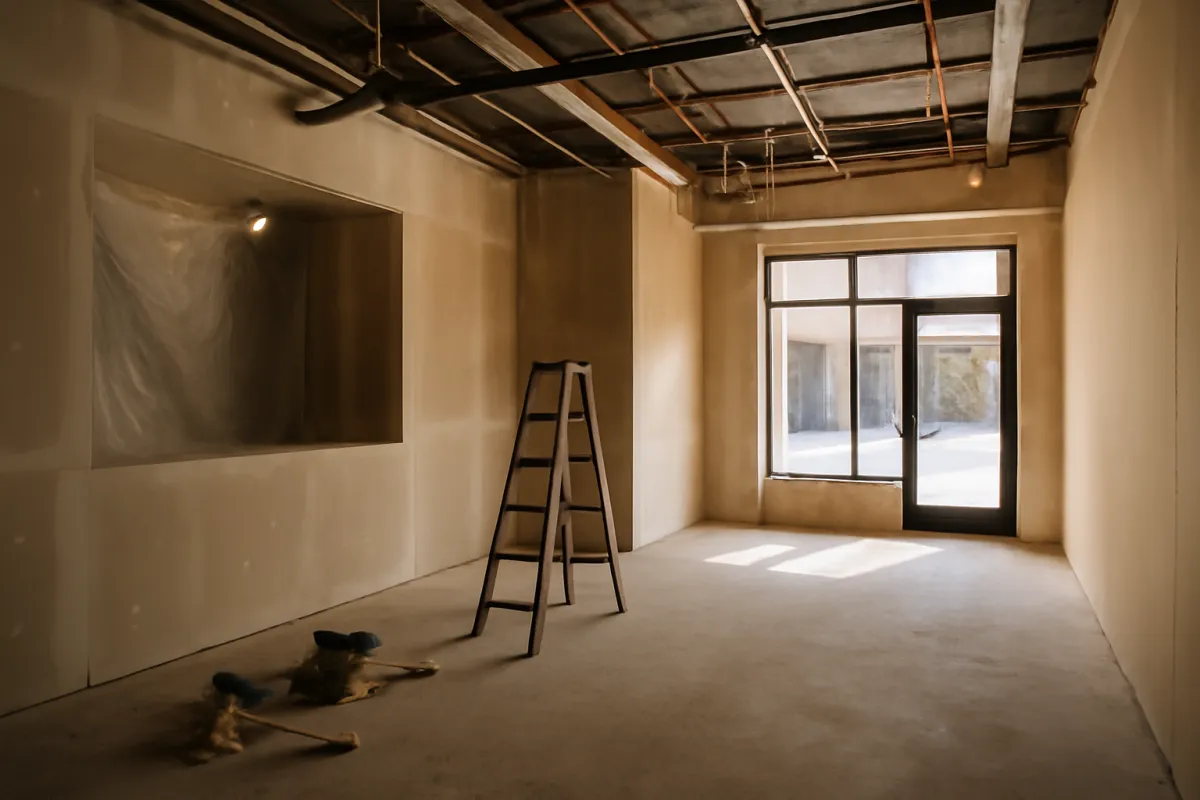
The bar itself is a production line, and it should be designed like one. The workable pattern is a bartender who can reach ice, speed rail, garnish, glassware and the POS without taking more than a step, with a station roughly every six to eight feet of service bar so two people can work without colliding. Under-bar equipment does the heavy lifting: ice bins, bottle coolers, glass-froster or back-bar refrigeration, a glasswasher or a three-compartment sink to whatever the local health code specifies, plus a dedicated handwashing sink. Speed matters more than it sounds. Every extra second per drink at peak multiplies by hundreds of drinks and shows up as a shorter queue or a longer one.
Behind that sits the plumbing and electrical work that makes a bar expensive. Drainage for the bar sinks and the ice wells, water and drain lines for glasswashing, dedicated circuits for refrigeration, and enough electrical capacity for the whole load are the lines that turn a retail shell into a licensed bar. Our rundown on what makes a commercial kitchen covers the same infrastructure question for the food side, and the answer is similar: services, not appliances, are what cost real money.
The draft system deserves its own decision. A direct-draw setup with kegs in a cooler directly beneath the tower is the cheapest and simplest, and it works when you can put the cooler right there. A remote or long-draw system runs glycol-chilled trunk lines from a walk-in keg cooler to the tower, which is what you need when the beer is stored away from the bar, and it costs meaningfully more to install and to maintain. Size the tap count to the turnover you can support, not to the wall space you want to fill: a tap that pours slowly is a tap pouring stale beer.
Step 6: Buy opening inventory and set par levels
Opening inventory is where new operators overspend most predictably, because a full back bar looks like the point of a bar. It is not. The point is the twenty or so products that carry most of your sales, plus enough depth to say yes to the reasonable request. Start by writing the drink menu, then buy backwards from it: the well spirits you pour by default, the call and premium bottles your menu actually uses, the taps you have committed to, the bottled and canned beer, the wines by the glass, and the modifiers, mixers and garnishes that the recipes require. In the illustrative model, opening liquid inventory runs about $16,000 for a full bar, inside a $99,000 total fit-out.
Then set par levels before the first order rather than after the first stockout. A par is simply the quantity of each item you want on hand at the start of each order cycle, set from expected usage plus a safety margin plus the lead time from your distributor. Alcohol distribution is regulated at state level and in many places is a three-tier system, which means your practical supplier list may be shorter than you expect and delivery days may be fixed rather than flexible. Find out your delivery schedule first, because a Tuesday-only delivery makes your par levels bigger, not smaller.
Watch out for buying breadth instead of depth. Forty dusty bottles that sell twice a year are working capital sitting on a shelf, plus a slower count, plus more places for variance to hide. The same money in deeper stock of your top movers keeps the bar from running dry on the busiest night of the month, which is the only stockout customers actually notice. Our walkthrough on restaurant inventory works the counting method that keeps those pars honest once you are trading.
Step 7: Hire, certify, and train the bar team
A bar runs on fewer people than a restaurant and depends on each of them more. The illustrative neighborhood bar in this walkthrough opens with two full-time bartenders, a part-time bartender bench for weekend peaks, one or two barbacks for the busy shifts, a couple of servers for the table seats, and an owner or general manager working the floor. That team carries a labor line near 30% of sales in the model, which is the planning band our piece on restaurant labor cost percentage works through in more detail.
Certification is not optional and it is not uniform. Many states require alcohol server or seller training for anyone who pours or serves, some require a separate manager-level certification, and some leave it to the employer while making the consequences of overservice extremely expensive. Ask your state alcohol authority which training is mandatory, which is merely recommended, and whether completing a recognised program affects your liability position or your insurance. Then require it of everyone regardless of the answer, because the training covers refusal of service, identification checks and intoxication signs, which are the three situations that actually generate incidents.
Train the pour before you train anything else. A house standard, written down, with jiggers on the bar and a recipe card for every menu cocktail, is what keeps the pour cost you modeled from becoming the pour cost you got. Free-pouring feels faster and generous, and both are true, which is exactly the problem: an extra quarter ounce on every spirits drink is a rounding error per drink and a serious number per year. Our hiring walkthrough covers the recruiting and onboarding mechanics that apply equally here.
Step 8: Install the POS, set inventory control, and open soft
Install the POS early enough to build the menu, the modifiers and the pour sizes into it before opening week rather than during it. In a bar the POS is not a cash register, it is the measurement instrument for your entire margin: it is what lets you compare what was sold against what was poured, and without that comparison your pour cost is a guess. Build the button layout for speed at peak, set up tab management the way your room actually works, and decide in advance how comps, spills and staff drinks get rung so they show up as a category rather than as unexplained shrinkage. Our rundown on choosing a POS covers the selection criteria.
Then set the inventory control loop before the doors open. Count everything on the night before opening, count the same way every week, price the sheet with one consistent method, and compare actual usage against what the POS says you sold. The gap between those two numbers is your variance, and in a bar it is made of overpouring, spillage, unrung drinks, breakage and theft, in roughly that order of size. Weekly counting on your top movers plus a monthly full count is a workable rhythm for a room of this size, and the inventory walkthrough works the arithmetic.
Open soft, and mean it. A friends-and-family night, then a few quiet trading days at limited hours, then normal service is how you find out that your ice well is too small, your glasswasher cycle is too slow and your two busiest cocktails take ninety seconds each. Every one of those is cheap to fix in front of forty forgiving people and expensive to discover in front of two hundred paying ones. Hold the grand opening until the bar can execute at volume, and let the soft weeks generate the reviews and photographs that the loud opening will spend.
What it costs to open a bar by format
Before the worked example, it helps to see how far the total moves with the format, because the concept you chose in step one sets the scale of everything after it. The chart below sketches an illustrative all-in cost to open, working capital included, across four common shapes. These are planning ranges, not quotes, and your own number depends on the condition of your space, your local license market and how much of the build you inherit.
Illustrative all-in cost to open a bar, by format
Format sets the scale before any line is priced. Illustrative planning figures including working capital, not quotes.
Each bar is drawn from its illustrative figure as a share of the highest, about $900k. The tap house line assumes a space that already held a licensed bar and needs cosmetic work rather than new services. The nightclub line carries the sound, the sightlines, the restroom counts and the egress work that the smaller formats avoid. None of these include the license itself, which is the line that varies most between states.
The spread is the point, and so is what causes it. Two of the four bars in that chart pour broadly similar drinks; the difference is the condition of the space and the ambition of the room. That is why step four matters more than any equipment decision: inheriting a licensed bar with usable services can halve your capital requirement without changing a single thing your customers taste. Compare the far bar against the mid six figures a full-service restaurant commonly needs, per our restaurant startup cost rundown, and the shape is familiar: the venue is the expensive part, not the trade.
Where a bar opening budget goes
It also helps to see how a single budget divides, because the split surprises most first-timers. The stacked bar below shows the illustrative $530,760 opening from the worked example, broken into its five buckets. The equipment everyone shops for is under a fifth of it, while construction is roughly half and the reserve you were tempted to skip is the third-largest line.
Where an illustrative $530,760 bar opening budget goes
The worked example split: a 2,200 sq ft second-generation space at an illustrative $120 per sq ft. Shares sum to 100.
Shares are rounded to whole numbers and sum to 100. The license slice is the least transferable figure in this walkthrough: in a state that issues on demand it might be a fraction of this, and in a tightly capped market it can exceed the build-out. Replace it with a number from your own state alcohol authority before you use this split for anything.
That split reframes where your attention belongs. Shopping for back-bar refrigeration is enjoyable and it is 19% of the problem. The 50% is a construction project, which means the contractor, the drawings and the change-order discipline decide most of your capital outcome. The 16% is the line that decides whether you are still trading in month seven. Our comparison of used versus new equipment can trim the fit-out slice honestly, and a tenant improvement allowance negotiated into the lease is the only lever that meaningfully moves the build-out one.
The liquor license as the gating item
Everything above treats the license as a line item. In practice it is a gate, and it behaves differently from every other approval in the project. A building permit is granted when the drawings comply. An alcohol license is often granted at the discretion of a board, subject to a quota you cannot influence, after a public process in which other people get to object. That difference should change your sequencing, your lease negotiation and your cash plan.
Sequence it first. Start the license conversation before the lease, keep the lease conditional on approval where you can, and treat any landlord who refuses that condition as telling you something about the site. Where licenses are capped, add the acquisition timeline to your plan as a separate project with its own broker, its own attorney and its own diligence, because you are buying a regulated asset from a private party and the transfer itself usually needs approval. Where licenses are issued on demand, the timeline is mostly the processing and notice period, which is still measured in months rather than weeks.
Plan the objection stage rather than hoping it does not happen. Public notice exists so that neighbors, community boards and sometimes nearby licensees can raise concerns, and the common ones are predictable: noise, hours, parking, and the density of licensed premises on a street. Meeting the neighbors before the notice goes up, arriving at the hearing with a noise plan and a security plan, and being willing to accept reasonable conditions on hours or outdoor use costs far less than an adjourned decision. And keep the license current once you have it: renewals, changes of ownership, changes of premises and even changes to the internal layout can require notification or fresh approval in many jurisdictions. Ask your state alcohol authority what triggers a filing, and calendar the renewal the day the license arrives.
Pour cost and why bar margins differ from food
Pour cost is the bar’s version of food cost: the cost of the liquid divided by the price you sold it for, expressed as a percentage. The reason bars are attractive is that the number is usually lower than a kitchen’s. A commonly used planning band for a full bar runs from the high teens to the mid twenties, against the roughly 28% to 35% band our food cost walkthrough works through for restaurants. On the same revenue, a lower pour cost leaves more gross profit to cover the fixed lines.
The blend is what sets the number, and it is worth building explicitly. On the illustrative sales mix used here, beer is 40% of sales at about a 21% pour cost, spirits are 35% at about 17%, wine by the glass is 15% at about 22%, and food and non-alcoholic drinks are 10% at about 32%. Multiply and add and the blended pour cost lands at 20.9%, which is where the 21% in the worked example comes from. Change the mix and the number moves without any price changing: a spirits-led cocktail room blends lower, a food-heavy bar blends higher.
The arithmetic per drink is worth doing once so the percentages stop being abstract. A half-barrel keg holds 15.5 gallons, which is 1,984 fluid ounces, and after foam and line loss an illustrative 1,885 ounces reach a glass. That is about 117 sixteen-ounce pours, so a keg costing an illustrative $160 puts roughly $1.37 of beer into a $7 pint, a 19.6% pour cost. A 750ml spirits bottle holds about 25.4 ounces, which is roughly 16 pours of an ounce and a half after spillage, so a $14 bottle puts about $0.88 into a $9 well drink. Those two lines explain the whole margin story, and they also explain why an extra quarter ounce per pour matters so much: it does not cost you a quarter ounce, it costs you a pour every six drinks.
Building the drink menu and pricing the pour
Price the menu from the recipe, not from the bar down the street. Cost every drink at its actual build: the spirit at its per-ounce cost, the modifiers at theirs, the mixer, the garnish, and an allowance for ice dilution and spill. Then set the price so the drink lands inside the pour cost band you want, and check the resulting price against your market rather than deriving the price from it. A drink that has to be underpriced to sell in your neighborhood is telling you something about the drink or the neighborhood, and the honest response is to change the build rather than absorb the cost.
Then engineer the menu the way a kitchen engineers a plate list. Every drink sits somewhere on two axes, how popular it is and how much cash margin it contributes, and the four quadrants suggest four different actions: promote the popular high-margin ones, reprice or rebuild the popular low-margin ones, reposition the unpopular high-margin ones, and cut the rest. Cash margin matters more than percentage here. A $14 cocktail at a 19% pour cost contributes more dollars than a $7 pint at 20%, and dollars are what pay the rent. Our menu pricing walkthrough works the same method in a food setting.
Keep the list short enough to execute. Every additional cocktail adds a modifier, a garnish, a glassware type and a training burden, and it slows the bar at exactly the moment speed is worth most. A tight menu of well-built drinks that a new bartender can learn in a week beats a long one that only the owner can make, and it counts faster at inventory. Whatever the list, run the pricing math yourself in the calculator rather than inheriting someone else’s assumptions.
The draft system and what it really costs to run
Draft beer looks like the cheapest thing behind the bar and quietly is not, because the system has running costs that bottles do not. Line cleaning is the first: beer lines need regular cleaning on a schedule, either by your staff or a service, and skipped cleaning shows up as off flavours, then as poured-out kegs, then as customers who stop ordering the tap. Gas is the second: carbon dioxide, or a nitrogen blend on long-draw systems, is a consumable you keep buying. Refrigeration is the third, and on a remote system so is the glycol chiller, which is a compressor running continuously and consuming power.
Then there is yield, which is where the money actually leaks. The gap between the 1,984 ounces in a keg and the ounces that reach a paying glass is foam, line pull-through after a keg change, tasters, and pours that go down the drain because the temperature or pressure is wrong. The illustrative 5% loss used in the pour cost math above is a reasonable planning figure for a well-set system; a badly balanced one can waste several times that, and nothing about it appears on any invoice. Balancing the system, keeping the cooler at the right temperature and training staff on keg changes are the three cheapest margin improvements in the building.
Size the tap wall to the turnover you can support. The rule of thumb worth applying is that every tap should move a keg within its freshness window, which means a slow twenty-tap wall serves worse beer than a fast eight-tap one. If you want variety, get it from rotating a few lines rather than from adding permanent ones. The equipment side of that decision, including keg coolers and the ice machine and refrigeration sitting beside it, is where our equipment cost rundowns can price your specific list.
Staffing a bar and what the labor line costs
The labor line in the illustrative model runs at 30% of sales, which is $21,600 a month on $72,000 of revenue. That number is built from a small team working concentrated hours, not from a large one working spread ones, and the difference between those two schedules is most of the variance between bars that make money and bars that do not. Write the schedule against the hourly sales curve you actually observe, not against opening hours. A bar that takes 60% of its weekly revenue in nine hours across Friday and Saturday should have most of its labor in those nine hours.
Compensation structure is genuinely local. Minimum wage, tipped minimum wage, tip credit rules, tip pooling rules and overtime thresholds are set by a mix of federal, state and sometimes city law, they change, and they differ enough that any figure printed here would mislead most readers. Confirm the current rules with your state labor department and take advice before you design a tip pool, because pooling arrangements are one of the more commonly litigated areas in hospitality. What is safe to say is structural: your scheduled hours are the lever you control weekly, and your wage rates are the lever you control at hiring.
Retention is the underrated cost. Recruiting, training and the productivity gap of a new bartender are expensive, and in a bar the regulars often follow the person, not the room. Consistent schedules, a fair tip arrangement, a written pour standard that removes arguments, and a bench of part-timers who genuinely get shifts are what keep a team together through a first year that will include some very quiet Tuesdays.
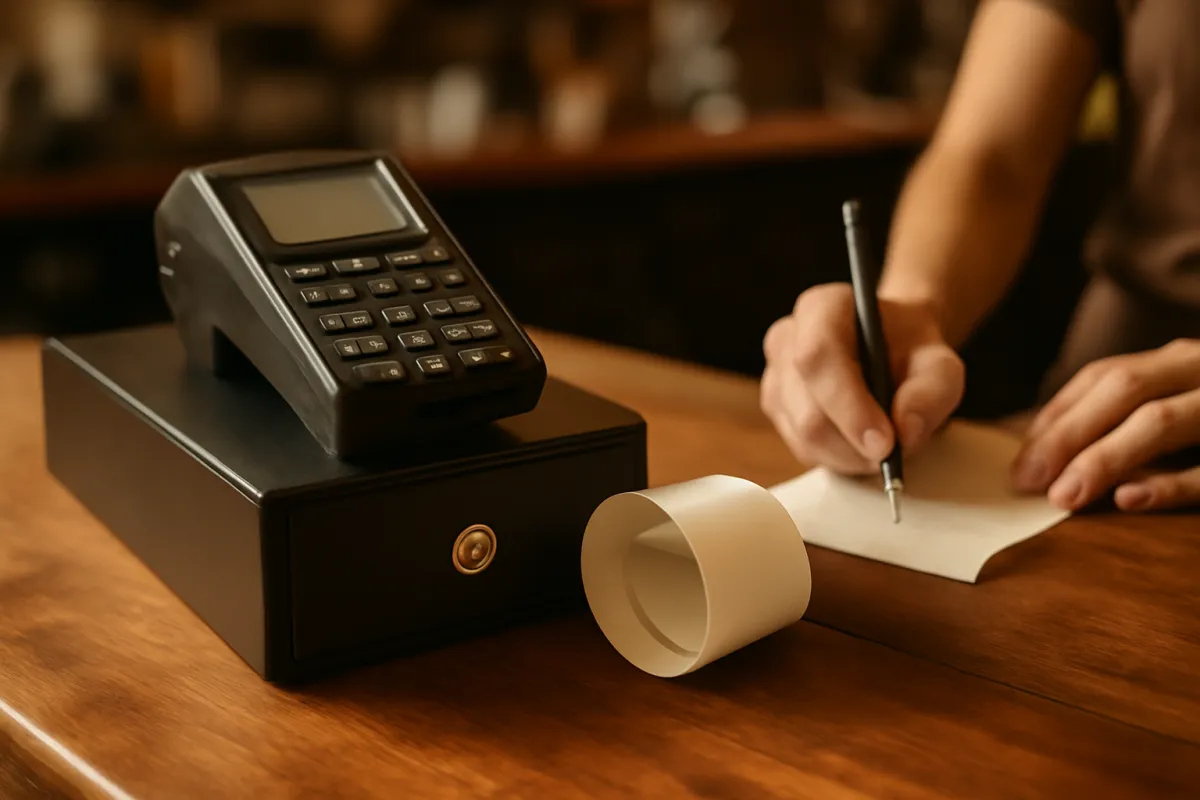
A worked example: an illustrative neighborhood bar opening
Take a 2,200 square foot second-generation space, previously a restaurant, in a neighborhood where an illustrative all-in occupancy cost of $42 per square foot a year applies. The bar seats 24 at the rail and 36 at tables, 60 in total, and the concept is a full bar with a small kitchen, trading seven evenings with the revenue concentrated Thursday through Saturday. The layout is wrong for a bar, so the build-out prices at an illustrative $120 per square foot: $264,000.
The fit-out prices at an illustrative $45 per square foot, or $99,000, and it divides into a $22,000 draft system, $18,000 of bar refrigeration and ice, $25,000 of furniture and seating, $16,000 of opening liquid inventory, $8,000 of glassware and smallwares, a $6,000 POS install and $4,000 of sound and audiovisual. Soft costs run at an illustrative 15% of the build-out, or $39,600, covering design, permit fees, professional fees and the payroll spent training before revenue starts. The license is entered at an illustrative $45,000, which is a placeholder for a capped-market transfer and would be a fraction of that in an on-demand state. Three months of fixed costs, $83,160, funds the reserve. Total opening capital: $530,760.
Now the operating month. At 100 guests a day spending an illustrative $24 each, sales run $2,400 a day and $72,000 a month, about $864,000 a year. Pour cost at the blended 21% is $15,120. Labor at 30% is $21,600. Occupancy is $7,700 a month. Other fixed and overhead adds $20,020: an illustrative $2,900 utilities, $1,600 insurance, $2,300 repairs and glassware replacement, $2,500 marketing and music licensing, $1,950 card processing, $1,600 POS and accounting, $1,170 bar supplies, $3,000 debt service and $3,000 of manager salary above the hourly line. Total fixed is $27,720, and the month clears $7,560 of profit, a 10.5% net margin.
Two numbers finish the picture. With pour cost and labor taking 51 cents of every dollar, each dollar of sales contributes 49 cents toward fixed costs, so break-even sits at $56,571 of monthly sales, about $1,886 a day, or roughly 79 guests. And at $7,560 a month, the $530,760 of opening capital pays back in about 70 months on these assumptions, close to six years, which is the honest shape of a bar that is doing fine. Run your own version in the calculator and treat every figure here as illustrative.
What the first operating year looks like
The model above is a steady-state month, and nothing about a first year is steady. Expect a curiosity spike in the opening weeks that flatters the numbers, a trough after it that frightens you, and a slow build from there as regulars form. Word of mouth is the primary growth channel for a neighborhood bar and it compounds slowly, which is exactly why the reserve is sized in months rather than weeks. A bar sitting at 79 guests a day is at break-even, and the distance between 79 and 100 is a year of small operational improvements rather than one big idea.
Seasonality lands harder on bars than on most food businesses, and its shape is local. Patio-led rooms peak in warm months, sports bars peak with their leagues, downtown bars follow office and event calendars, and college-town bars empty out on a schedule you can look up. Build the annual plan on your own trading pattern, keep the fixed costs low enough that the worst quarter survives, and use the slow season for the things you cannot do at volume, which is menu work, staff training and deferred maintenance.
Watch three ratios monthly and you will see problems early. Pour cost against your target catches overpouring and shrinkage. Labor as a percentage of sales catches scheduling drift. Occupancy as a percentage of sales catches the slow squeeze when rent escalates faster than revenue. All three are in our rundown on restaurant profit margin, and all three move quietly, which is why the monthly discipline beats the annual review.
Insurance, liability, and the risks unique to alcohol
Serving alcohol carries an exposure that no other food-service format shares, and it deserves its own step in your planning. Many states have laws creating liability for licensed premises in connection with harm caused by an intoxicated patron, commonly discussed under the heading of dram shop liability. The scope of those laws, who can bring a claim, and what defences exist are set state by state and change, so the specifics belong with a licensed attorney in your state rather than in a walkthrough. What is safe to say is that the exposure exists in much of the country and that operators manage it with a combination of insurance and documented practice.
On the insurance side, a bar typically carries general liability, property coverage on the build-out and contents, workers compensation where required, and liquor liability as a distinct coverage that general liability alone usually excludes. Talk to a broker who writes bars specifically, because underwriting for a late-night venue with amplified music differs from underwriting a wine bar. Our restaurant insurance rundown covers the coverage types in more detail, and as with every other number here, premiums are quoted rather than published.
On the practice side, the controls are unglamorous and they work. Certified staff, a written and trained refusal-of-service policy, consistent identification checking, an incident log, cameras covering the bar and entrances, and a house policy on last call and taxis. Keep the records, because a documented practice is worth more than a remembered one, and review the whole package annually with your broker and your attorney.
Common mistakes when opening a bar
Most bar failures trace back to a short list of decisions made early. These are the ones worth writing on the wall:
- Signing the lease before confirming the license. The license attaches to the premises as much as to you. A space that cannot be licensed is worthless at any rent, and the deposit is cheaper than the term.
- Budgeting the license from an article instead of the authority. Fees, quotas and transfer prices are local and volatile. Get the class, the fee schedule and the queue from your state alcohol authority in writing.
- Underfunding the reserve to afford better fixtures. The fixtures do not carry you through month seven. Three months of fixed costs, ring-fenced, is the difference between a slow start and a closed door.
- Free-pouring with no standard. A quarter ounce of drift per spirits drink is invisible per pour and enormous per year. Jiggers, recipe cards and a written house pour are the cheapest margin protection available.
- Buying breadth of inventory instead of depth. Forty slow bottles is working capital on a shelf. Depth in your top twenty products is what prevents the only stockout customers notice.
- Designing the bar for looks instead of steps. Every extra step per drink multiplies at peak. Ice, rail, garnish, glass and POS within reach is worth more than any back-bar feature.
- Skipping the soft open. Discovering your ice well is undersized in front of two hundred people costs reviews you will spend a year replacing.
- Ignoring the neighbors before the public notice. Objections are cheaper to prevent than to answer, and a noise and security plan presented early usually is the prevention.
Troubleshooting: license delays, cost overruns, and a slow open
If the license is stuck, find out which stage it is stuck at before you do anything else, because the fixes are different. A queue delay at the state level is usually just time, and the right response is to slow the construction spend rather than accelerate it. A local approval that has been objected to needs a meeting, a concession on hours or noise, and often a licensing attorney. A quota problem is not a delay at all, it is a different project, and the honest options are acquiring a license, changing the class you are applying for, or changing the location. In all three cases, stop signing new commitments until you know which one you are in.
If the build-out is running over, the cause is almost always either an unknown discovered behind a wall or a change order you approved without pricing it. Both are managed the same way: a contingency line funded before you start, a written change-order process where nothing proceeds without a price, and a weekly walk of the site with the contractor against the schedule. If the overrun is already real, protect the reserve rather than the finish schedule. Opening two weeks later with cash in the bank beats opening on time with none.
If the doors are open and it is quiet, resist the two instincts that make it worse. Do not cut prices, because the drinkers a discount attracts leave when it ends and the margin does not come back. Do not add hours, because opening at four on a Tuesday to serve six people costs more in labor than it earns. Instead, cut the hours nobody uses, concentrate the labor into the hours that work, and spend the saved cost on the things that build regulars: a reason to come on a specific night, a relationship with a nearby employer or team, and consistency good enough to be worth repeating. Then watch the guest count against the 79-a-day break-even in the model and let that number, rather than the mood on a Wednesday, tell you how you are doing.
Your bar opening checklist
Save this compact list and work it in order:
- Concept written in one sentence, with the license class it implies identified.
- State alcohol authority contacted: class confirmed, fee schedule obtained, quota status and current queue understood.
- Opening budget built bottom-up in five buckets, with a contingency line and a ring-fenced reserve funded.
- Financing arranged in full before construction starts, including any equipment finance and tenant improvement allowance.
- Premises checked for zoning, any distance provisions and occupant load, with the lease conditional on license approval.
- Entity registered, EIN obtained, and general liability, property, workers compensation and liquor liability quoted.
- Bar designed around stations and steps, with the draft system type chosen and services sized before drawings are final.
- Drink menu costed per recipe, prices set to a target pour cost, and par levels written against the delivery schedule.
- Team hired, alcohol server certification completed where required, house pour standard written and trained.
- POS built with pour sizes, modifiers and comp categories, opening inventory counted, and a soft open run before the grand opening.
The bottom line
Opening a bar is the most gated of the venue launches, and the gate is the license rather than the build. Fix the concept so you know which class you need, ask the state alcohol authority what that class costs and how long it takes before you commit to anything, then build the budget from the condition of the space rather than from the equipment catalogue. On the illustrative numbers worked through here, a 2,200 square foot neighborhood bar opens for about $530,760, half of it construction, with a three-month reserve deliberately protected.
What you get for that capital is a margin structure most food businesses would envy at the gross line and a genuinely narrow one at the net. An illustrative 21% pour cost leaves 79 cents of every dollar before labor, and heavy fixed costs plus a concentrated trading week take most of it back, landing near a 10.5% net margin and break-even at about 79 guests a day. The operators who hold that line do three things consistently: they measure pour cost monthly against a written standard, they schedule labor against the sales curve instead of the clock, and they keep enough cash to be patient while regulars form. Do those, and the room compounds. Size your own version in the calculator, and treat every number here as an illustrative starting point rather than a promise.
This walkthrough is educational material for prospective bar owners, not legal, licensing, financial, tax or insurance advice, and it recommends no specific license consultant, attorney, insurer, lender or supplier. Every cost, percentage and timeline in it is an illustrative planning shape chosen to show how the steps and the money connect; your real numbers depend on your state, your market and your own quotes. Alcohol licensing, quota rules, fee schedules, server certification requirements, tipped wage law and liability statutes differ sharply between states and municipalities and are revised often, so verify every requirement with your state alcohol authority, your local planning and building departments and a licensed attorney before you sign a lease, buy a license or pour for a paying customer.
Frequently asked questions
What are the steps to open a bar?
Opening a bar runs as a dependency chain rather than a checklist. First fix the concept, because a beer-and-wine tap house, a cocktail bar and a late-night music venue need different license classes, different build-outs and different capital. Second, find out how your state issues the license class you need, since in some states the quota is capped and a license has to be bought from an existing holder. Third, build the opening budget and fund it. Fourth, secure premises that zoning, occupancy and any distance rules will actually allow to serve alcohol. Fifth, design the bar build-out and the draft system. Sixth, buy opening inventory and set par levels. Seventh, hire and certify the team. Eighth, install the POS and inventory controls and open quietly before you open loudly. The license usually gates everything, so start it earliest and sign nothing you cannot exit if it is refused.
How much does it cost to open a bar?
Illustratively, a small beer-and-wine tap house dropped into a second-generation space can open in the low-to-mid six figures, a full cocktail bar with a proper back bar and a serious build-out commonly runs several hundred thousand dollars, and a high-volume music venue or nightclub built from a shell can pass a million. The worked example in this walkthrough opens a 2,200 square foot neighborhood bar for an illustrative $530,760 all in, of which the build-out is about half. What moves the number most is not the equipment but the condition of the space, the license, and whether you funded a real working-capital reserve. Every figure here is a planning shape to test against quotes in your own market, not a price.
Do I need a liquor license, and how long does it take?
Yes. Serving alcohol for money requires a license or permit from your state alcohol authority, usually alongside a local approval, and the class you need depends on what you pour and how you serve it. Timelines and costs are set locally and vary enormously, so no honest figure exists for all readers. In states that cap the number of licenses in an area, the practical route is buying or leasing one from an existing holder at whatever the local market charges, which can dwarf the state fee itself. In states that issue on demand, the cost is closer to the published fee schedule and the wait is closer to the processing and public-notice period. Ask your state alcohol authority directly for the class, the fee schedule and the current queue before you budget a number or sign a lease.
What is a good pour cost for a bar?
Pour cost is the cost of the liquid divided by what you sold it for, and a commonly used planning band for a full bar sits in the high teens to the mid twenties as a percentage. The blend matters more than any single number: spirits typically pour cheapest as a share of price, draft beer and wine by the glass sit higher, and any food or non-alcoholic program pulls the blend up. The worked example here lands near 21% on a beer-led mix. Your own figure depends on your prices, your mix, your free-pour discipline and your shrinkage, which is exactly why the number is worth measuring monthly rather than assuming once.
How profitable is a bar?
Bars usually carry a friendlier gross margin than restaurants because liquid costs less as a share of price than food does, but the fixed costs are heavy and the revenue is concentrated into a few hours of a few nights. On the illustrative numbers in this walkthrough, a bar doing $72,000 a month keeps about $7,560 after pour cost, labor, occupancy and overhead, roughly a 10.5% net margin, which is better than the low single digits commonly quoted for full-service restaurants. That margin is fragile: it assumes the pour cost holds, the labor line stays near 30%, and the room fills. Treat these as illustrative planning shapes and build your own version on local rent, local wages and a realistic count of who walks in on a Tuesday.
Can I open a bar without buying a liquor license outright?
Sometimes, and it depends entirely on your state. Where licenses are capped, some holders lease or transfer them rather than sell, and some operators start under a beer-and-wine class that is easier to obtain while a full-liquor class is pursued. Other routes people use include buying an existing licensed business rather than a bare space, or opening a concept that does not need a full license at all. None of these are universally available, and some states prohibit arrangements that look like renting a license to a non-owner. This is one of the few decisions where paying a local alcohol-licensing attorney before you commit is almost always cheaper than the alternative.
How many staff does a bar need to open?
Fewer than most first-timers plan for, and better trained. A neighborhood bar of the size worked through here commonly opens with two full-time bartenders, a small part-time bartender bench for weekends, a barback or two for the busy shifts, a couple of servers if there are tables, and an owner or general manager who works the floor. What matters more than the headcount is the certification and the discipline: alcohol server training where your state requires it, a written refusal-of-service policy, and a pour standard that every bartender actually follows. The labor line in the illustrative model runs near 30% of sales, and it is the number that moves most when the schedule is written badly.
What is the biggest mistake people make opening a bar?
Signing a lease before confirming the license. The alcohol license is the gating item in a bar opening, it is granted on the premises as much as on the person, and a space that cannot be licensed is worthless to you at any rent. The second biggest is opening with no working-capital reserve, because bars ramp on word of mouth and the first quiet months arrive whether you funded them or not. The third is free-pouring without a standard, which quietly turns a 21% pour cost into a 28% one and takes the entire net margin with it. All three are avoidable, and all three are cheaper to avoid than to survive.