

What's on this page
- What a health inspection actually is
- Who inspects, and what governs them
- The inspection types you will meet
- Before you start
- Step 1: Get your jurisdiction’s own inspection form
- Step 2: Learn the route an inspector actually walks
- Step 3: Run a full self-audit the week before
- Step 4: Fix the risk factors before the cosmetics
- Step 5: Brief the crew on the questions they will be asked
- Step 6: Work the inspection day itself
- Step 7: Handle the report and the re-inspection
- Where findings cluster on a routine inspection
- Where the prep week actually goes
- Time and temperature control, explained by mechanism
- Cross contamination and the flow of food
- Handwashing, employee health and the reporting duty
- Cleaning, sanitizing and why they are two jobs
- Pest control and the building envelope
- The violation classes that can close a kitchen
- How scoring and grading systems generally work
- Findings that trace back to what you bought
- The paperwork an inspector asks to see
- A worked example: an illustrative pre-inspection week
- Common mistakes that fail an otherwise clean kitchen
- Troubleshooting and edge cases
- Your pre-inspection checklist
- The bottom line
Short answer: Pass a health inspection in seven steps: get your jurisdiction's own inspection form, learn the route an inspector walks, run a full self-audit the week before, fix the risk factors such as temperature control before the cosmetics, brief the crew on the questions they will be asked, work the inspection day itself, then treat the report as a work order. Every temperature, time, and scoring threshold is set locally.
How to pass a health inspection starts with one distinction: it is one of the few events in a restaurant where an outsider walks in, looks at your habits rather than your food, and writes down what they find. That distinction is the whole thing. Inspectors are not grading dinner. They are sampling whether the practices that keep people from getting sick are running when nobody is watching, and a kitchen that scrubs hard the night before a visit tends to reveal exactly that in the first ten minutes.
This walkthrough takes the process in seven steps, in the order that actually reduces risk rather than the order that looks tidiest. It covers getting your own jurisdiction’s form, learning the route an inspector walks, running a real self audit, fixing the risk related findings first, briefing the crew, handling the day itself, and working the report and re-inspection. Food codes differ by state, county and city, so no temperature, time, point total, fee or scoring threshold is asserted anywhere below. The room itself is covered in our commercial kitchen requirements explainer, and the wider opening sequence sits in our restaurant opening walkthrough.
Key takeaways
- Inspection forms weight risk related findings far above cosmetic ones, so a spotless kitchen that cannot demonstrate temperature control still scores badly.
- The single highest value preparation is a full self audit run against your own health department's actual form, not against a generic checklist copied from anywhere.
- Every specific number in food safety, holding temperatures, cooling times, cooking end points, scoring thresholds and fees, is set locally and revised periodically. Get them from your health department's current code.
- The person in charge being able to describe the operation's own procedures is itself a scored item on many forms, which makes briefing the crew as valuable as cleaning.
- Treat the report as a work order with a deadline. Re-inspections check whether the correction is durable, not whether it existed on the day.
What a health inspection actually is
A health inspection is a regulatory visit in which an authorised officer observes your operation against a written standard and records findings on a form. The standard is a food code adopted by your jurisdiction. The form is that code turned into observable items. The findings are what the officer saw or could verify at the time, which is why an inspection is a sample rather than an audit of your whole year.
Three consequences follow from that structure, and they explain most of what confuses owners. First, an inspection is time bounded, so an inspector who arrives during a slammed service sees your worst controlled hour, and one who arrives at ten in the morning sees your setup. Second, it is observational, so a practice you follow perfectly but cannot show evidence of may still be recorded as unverified. Third, it is standardised, which means the officer is working through categories in a fixed order and your job is to be ready in that same order rather than in the order your own worries run.
The permit sitting behind your counter is the thing an inspection ultimately protects. It is issued on the basis that the operation meets the code, and it can be conditioned, suspended or revoked when it does not. Everything below is really about keeping that permit uneventful.
Who inspects, and what governs them
The people who inspect restaurants are usually environmental health specialists employed by a local health department, which may be organised at city, county, district or state level depending on where you are. Some states inspect directly, some delegate to counties, and a few split responsibility by facility type so that, for example, a school kitchen or a mobile unit is handled by a different programme than a sit down restaurant.
The written standard they apply is a food code. Many jurisdictions base theirs on a model code published at national level, but adoption is a choice made locally, editions differ, and local amendments are common. That is why two restaurants an hour apart can face different requirements for the same menu, and why a checklist from a blog in another state is a poor substitute for your own form.
The practical implication is a phone call, not a search. Ask your local health department three things: which code edition and amendments apply to you, which inspection form they use, and what risk category they have assigned your operation. Those three answers determine almost everything else in this walkthrough. Any figure or rule you read here, or anywhere else, is a description of how these systems generally work, and your department’s current code is the only authority on what applies at your address.
The inspection types you will meet
Not every visit is the same event, and knowing which one you are in changes how you should behave. A pre opening or plan review inspection happens before you trade, focuses on construction, equipment, finishes, plumbing and layout, and is usually the one where changes are cheapest to make. If you are still specifying equipment, our kitchen equipment list covers the choices that show up here later.
A routine inspection is the unannounced periodic visit most operators mean by the term. A follow up or re-inspection is the narrower return visit triggered by findings from a previous report. A complaint inspection follows a report from the public and tends to focus hard on whatever was alleged. An illness investigation is the most serious version of that, where the department is tracing a possible outbreak and will ask for records, product and staff information well beyond a routine scope.
There are also change of ownership inspections, temporary event inspections, and separate regimes for mobile units, which is why a food truck faces a different form and often a commissary requirement on top. Ask your department which types apply to your operation and what triggers each. Knowing that a complaint visit exists, and that it can arrive on your worst day, is itself an argument for running the standard rather than performing it.
Before you start
Preparation for an inspection is not a cleaning project. It is a systems project that happens to include cleaning, and the difference shows up in whether your score holds the second time.
- Time: plan a working week of preparation the first time, spread across a few days rather than crammed into one. In the illustrative example below, roughly twenty five labour hours cover reading the form, walking the kitchen, fixing what the walk found and briefing the team. After the first cycle, maintenance is a fraction of that.
- Difficulty: low technically, high organisationally. Nothing here is hard to understand. The difficulty is getting a busy kitchen to keep doing it on a Saturday.
- Cost: mostly labour, plus whatever repairs your walk uncovers. The costs worth modelling are the ones on the other side, meaning lost trading and management time if a visit goes badly.
- What you need to hand: your jurisdiction's current inspection form, your last report if you have one, calibrated thermometers, your cleaning and sanitizing procedures, your employee illness policy, and the certificates your jurisdiction requires.
- Who to call first: your local health department, before you spend anything on consultants or equipment. Most publish their form, their code reference and often their past inspection reports, and most will answer a specific question about your operation.
One framing helps more than any checklist. Prepare for the inspection you would get on your busiest Friday, not the one you would get on a slow Tuesday morning. Everything that only works when the kitchen is quiet is a finding waiting to happen.
Step 1: Get your jurisdiction’s own inspection form
Start here because everything downstream is organised by it. Health departments almost universally publish the form their officers carry, usually as a PDF, often with an accompanying guide explaining each line item. That document is the exam. Preparing without it is guesswork.
Read it twice. The first pass is for structure: how many items, how they are grouped, which group is marked as risk related or critical, and where the observation and correction columns sit. The second pass is line by line, and for each line you write down one thing, which is how you would demonstrate compliance to a stranger in under a minute. Not whether you comply. How you would show it.
That second pass is where most of the value is. Owners routinely discover that they do control cooling, but the only evidence is one cook’s memory. They do sanitize, but nobody can produce a test strip. They do have an employee illness policy, but it is in an email from two years ago. None of those are cleaning problems, and none of them get fixed by a deep clean.
Pull your previous reports too. Most departments publish inspection history, including yours and your neighbours’, and a pattern across your own past reports is the most reliable predictor of what will be written next time. Repeat findings are treated more seriously in most systems than first time ones, so a line item that has appeared twice deserves a permanent fix rather than another correction.

Step 2: Learn the route an inspector actually walks
An inspection is not random. Most officers follow a repeatable route that moves from the least contaminated areas toward the most, so that they do not carry contamination forward, and that route is close to predictable.
The typical sequence starts at the front door with a handwash and an introduction to the person in charge, moves through the front of house and any self service area, then to the food preparation and cooking line while service is running, then to cold and dry storage, then to warewashing, then to the mop sink, chemical storage, waste area and the back door, with restrooms and staff areas somewhere in the middle. Along the way they will take temperatures, look under and behind things, open a few containers, watch a handwash happen or fail to happen, and ask three or four questions.
Two habits matter more than the order. Inspectors look at junctions, meaning where two things meet: the gap under a shelf, the seam behind a prep table, the drain below the ice machine, the underside of a can opener blade. And they watch behaviour rather than surfaces whenever a person is working, because a glove change or a handwash observed live outranks any amount of stainless steel.
Walk the same route yourself, in the same order, with the form in your hand. Doing it in the order the officer will do it surfaces the transitions you would otherwise skip, which is where a surprising share of findings live.
Step 3: Run a full self-audit the week before
The self audit is the highest value hour in this whole sequence, and it only works if it is honest. Two rules make it honest. Somebody other than the person responsible for a station audits that station, and every finding gets written down even when it is fixed on the spot.
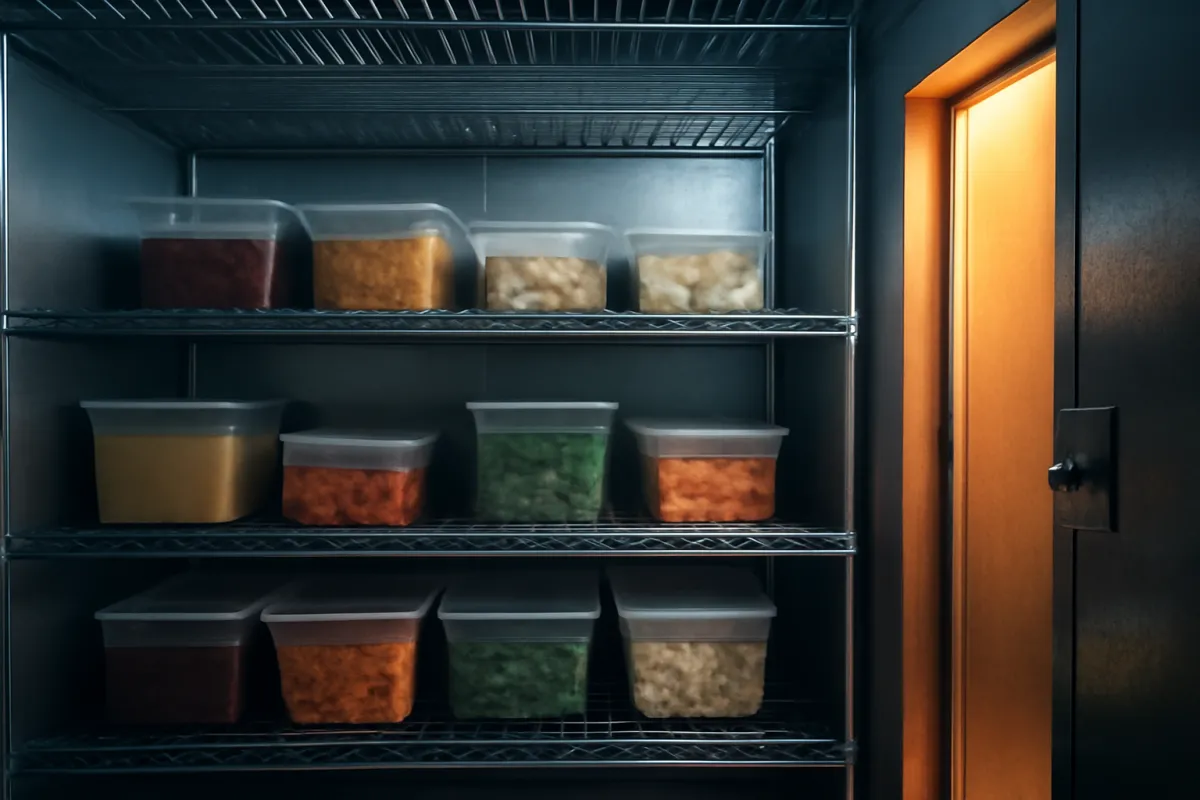
Break the kitchen into discrete areas and audit them one at a time. A typical layout gives you something like eight: the cook line, the cold prep station, the walk in cooler, the freezer, dry storage, warewashing, the bar or beverage station, and the back of house service areas including mop sink and waste. Budget around half an hour for each. Take temperatures with a calibrated thermometer, open containers, move things, look behind and under, and check dates on anything that carries one.
Record each finding with four fields: what you saw, which line item on the form it maps to, who owns the fix, and by when. That mapping step is what turns a cleaning list into an inspection readiness list, because it forces you to see that a stack of wet nested pans is a warewashing item and a missing sanitizer bucket is a food contact surface item.
Expect the count to be uncomfortable the first time. In the illustrative example below, a moderate risk menu across eight stations produces around twelve findings on a first honest walk. That number is not a failure. A first walk that produces two findings almost always means the walk was not honest.
Step 4: Fix the risk factors before the cosmetics
This is the step where most preparation goes wrong, because dirty is visible and risk is not. Inspection forms in most jurisdictions separate items into tiers, commonly something like priority items, priority foundation items and core items, or under older naming, critical and non critical violations. The names differ. The logic does not. Items with a direct link to foodborne illness sit at the top and carry the most weight.
So order your fix list by tier, not by how bad it looks. A cooling process that nobody can describe outranks a scuffed wall. A hand sink blocked by a stack of sheet pans outranks a dusty vent grille. A sanitizer bucket mixed by eye outranks a chipped floor tile. If you have a day of labour, spend it on the top of that list and let the wall wait.
Fix durably where you can. The distinction inspectors care about is between a correction and a control. Wiping a surface is a correction. Putting a labelled sanitizer bucket with test strips on a station and making it part of the opening routine is a control. Corrections come back on the next report. Controls do not.
Some findings will trace to a purchase rather than a practice, meaning a cooler that cannot hold temperature during service, a gasket that no longer seals, a work surface that can no longer be cleaned. Price those honestly against a repair, using our refrigeration cost and dishwasher cost breakdowns, because a piece of equipment that generates the same finding every cycle is usually cheaper to replace than to keep explaining.
Step 5: Brief the crew on the questions they will be asked
Inspectors talk to staff, and on many forms the ability of the person in charge to demonstrate knowledge is itself a scored line. That makes a briefing worth as much as a scrub, and it takes under an hour per person if you keep it concrete.
Cover six things. Who the person in charge is on every shift and what that role means. What to do if you feel unwell or have specific symptoms, and who to tell. When to wash hands and where the designated hand sinks are. How to mix, test and change sanitizer. How the cooling and reheating processes work in this kitchen specifically. And where the thermometers are, how to calibrate them and where readings get logged.
Then rehearse. Ask each person the same short set of questions you expect an officer to ask, and listen for the answer nobody has. The most common gap is not ignorance of the rule but ignorance of this kitchen’s version of it, meaning a cook who knows food should be cooled quickly but has never been told which method this kitchen uses.
Say plainly that “I do not know, let me get the chef” is an acceptable answer and inventing one is not. A confident wrong answer from a line cook has cost more restaurants a clean report than silence ever has. Building that habit belongs in onboarding, which is why it sits alongside the rest of hiring and training rather than in a pre-inspection panic.
Step 6: Work the inspection day itself
When the officer arrives, three things happen in the first two minutes that set the tone: somebody greets them promptly, the person in charge is produced, and nobody starts frantically cleaning. That last one matters more than owners expect. Visible panic cleaning is read as evidence that the standard was not being kept, and it is remembered.
Assign the person in charge to walk with the inspector for the whole visit and to do nothing else. Their job is to answer questions, produce records, unlock what needs unlocking and, crucially, to write down every observation as it is made. Keeping your own parallel notes is the single most useful habit on the day, because it means you start correcting before the report is written and you can query anything you did not understand at the time rather than a week later.
Correct on the spot whenever it is possible and safe. Many forms have a corrected on site column, and using it is straightforward: if a hand sink is blocked, unblock it now; if a sanitizer bucket is weak, remake it now. Do not argue about a finding in the moment. Ask what the officer observed and which item it maps to, note it, and take the disagreement to the department afterwards through whatever process they publish.
Be honest about anything you know is broken. Volunteering a fault, with the repair already scheduled, reads very differently from having it discovered.
Step 7: Handle the report and the re-inspection
You will be asked to sign the report. Signing generally acknowledges receipt rather than agreement, but ask the officer to confirm what your signature means in their jurisdiction before you sign, and ask three further questions while they are still in the building: which items require correction by a deadline, when they intend to return, and what happens if an item is not corrected.
Then convert the report into a work order the same day. Every finding gets an owner, a due date and a durable fix, not a wipe. Photograph the corrected state, keep receipts for parts or service calls, and file the whole package with the report. At a re-inspection the officer is checking whether the correction holds, and a dated photograph plus an invoice is a far stronger answer than a verbal assurance.
Understand what a re-inspection actually checks. It is narrower in scope but deeper on the listed items, and officers commonly look for the same class of problem elsewhere, because a repeat pattern says the practice never changed. Fixing the one shelf that was cited while leaving three identical shelves alone is the classic way to fail a follow up visit.
If you disagree with a finding, use the department’s published appeal or review process, in writing, within whatever window they specify. Doing it politely and on paper works. Doing it loudly on the day does not, and it makes the next visit harder than it needed to be.
Where findings cluster on a routine inspection
Findings are not evenly spread, and knowing where they concentrate tells you where to spend the preparation week. The breakdown below is an illustrative distribution used throughout this walkthrough, not measured data from any jurisdiction.
Illustrative distribution of findings by category, routine inspection
Placeholder shares across an illustrative 100 findings at a full service restaurant. Real distributions vary by menu, jurisdiction and form.
Illustrative only, summing to 100 findings. The top three bars, meaning temperature control, sanitizing and hygiene, account for roughly sixty four of the hundred and are also the categories most forms weight most heavily. The bottom two, at twenty two between them, are the ones owners tend to prepare for first.
The reading is the inversion. Facility and equipment findings are the most visible to a walking owner and the least weighted on the form, while the top three bars are largely invisible from the door and carry the heaviest scoring in most systems. That is why a preparation week spent painting scores worse than one spent on thermometers and sanitizer. Run your own version of the labour arithmetic through the companion calculator before you decide where the week goes.
Where the prep week actually goes
Owners tend to picture preparation as cleaning time. In practice, a preparation week that works is mostly reading, walking, fixing and talking, and the cleaning is a by-product of the fixing.
Where the labour goes in an illustrative preparation week
Illustrative shares of about twenty five labour hours for a first full cycle at an eight station kitchen. Shares sum to 100.
Illustrative shares, not a schedule. Just under three quarters of the hours sit in fixing and briefing, and the briefing share is the one owners cut first. On the illustrative twenty five hour week that is three hours on the form, four on the walk, nine on fixes and nine on the crew.
Two readings matter. The walk is the cheapest block on the chart and it determines the content of the two expensive blocks, so shortening it to save time reliably costs more later. And briefing ties with fixing for the largest share, which is the arithmetic argument for treating staff knowledge as infrastructure rather than as an extra. A second cycle is far smaller, because the reading is done and the fix list is shorter, but the briefing block never goes away while you keep hiring.
Time and temperature control, explained by mechanism
This is the heaviest weighted area on most forms, and it is where this walkthrough deliberately gives you no numbers. Holding temperatures, cooling times, cooking end points and reheating requirements are all set by the food code your jurisdiction has adopted, those codes are revised, and a confident but out of date figure is worse than none.
The mechanism generalises cleanly. Bacteria that cause foodborne illness multiply fastest in a middle band of temperatures, roughly the range between refrigeration and hot holding. Foods that support that growth, generally moist, protein rich or otherwise low acid items, are the ones codes single out. Cold holding keeps product below the band so growth is slow. Hot holding keeps it above the band so growth effectively stops. Cooking drives product through the band quickly and to a point that reduces the bacterial population. Cooling is the dangerous reverse trip, because a large hot mass passes slowly through the band unless you force it, which is why codes specify staged cooling and why depth, volume and container choice matter so much.
Your job is to get the exact figures from your health department’s current code or published fact sheets, print them on a card at every station, buy enough calibrated thermometers that checking is easy, and log readings in a way that survives a busy service. Reducing what gets cooled in the first place, which is partly a food waste and partly a prep planning question, removes risk rather than managing it.
Cross contamination and the flow of food
The second heavy category is contamination between items, and the mental model that fixes it is flow. Trace every ingredient from the back door to the plate and ask what it touches on the way. Contamination happens where paths cross, so the fix is almost always to separate paths rather than to clean harder.
Storage order is the classic example. Codes generally require raw items to be stored so that they cannot drip onto ready to eat items, with the usual arrangement placing ready to eat product highest and raw items ordered below by their cooking requirement. The exact ordering is set by your code, but the principle, that gravity is a contamination path, is universal.
Equipment and utensils are the other crossing point. Separate boards, knives and containers for raw proteins and ready to eat items, a defined route for dirty items back to warewashing that does not cross clean prep, and glove changes at the moment a task changes rather than at the moment a glove looks dirty. Chemicals belong in a dedicated store away from and below food, and a chemical stored on a food shelf is a finding in every jurisdiction I have ever seen a form from.
Allergen separation follows the same flow logic even where it is handled under a different part of the code. Whatever your jurisdiction requires there, ask specifically, because allergen provisions have been an area of active change in many codes.
Handwashing, employee health and the reporting duty
Hygiene findings are frequent and heavily weighted, and they are the ones most improved by fixing the building rather than by lecturing the staff. A hand sink that is inconvenient, blocked, out of soap or out of towels will not be used, and no amount of training beats that. Walk your kitchen and ask, from each station, how many steps to a dedicated hand sink and is anything stacked in front of it. Then fix the answers.
Codes universally distinguish hand sinks from other sinks. A hand sink is for hands only, and using it to rinse a container or fill a bucket is a finding. Equally, washing hands in a prep sink is a finding. Signage, supplies and accessibility are all typically scored, and all are cheap to keep right.
Employee health is the part owners handle worst. Most codes require some form of employee reporting agreement covering specified symptoms and diagnoses, and require the person in charge to exclude or restrict staff in defined circumstances. The exact symptom list, the exclusion rules and the return to work conditions are jurisdiction specific and you must get them from your department. What is not jurisdiction specific is the incentive problem. If a cook loses a shift’s pay by reporting illness, they will not report it, and your written policy becomes decorative. That is a scheduling and pay design question long before it is a compliance one.
Cleaning, sanitizing and why they are two jobs
Cleaning and sanitizing are separate operations and conflating them is one of the most common underlying causes of findings. Cleaning removes soil so that a surface is physically clean. Sanitizing reduces the microbial population on an already clean surface. A sanitizer applied to a dirty surface is largely wasted, which is why the sequence is wash, rinse, sanitize, then air dry.
The controllable variables in sanitizing are concentration, contact time, temperature and the condition of the water. Chemical sanitizers work within a concentration window, and more is not better, because too strong is both a chemical hazard and often less effective in practice. That is what test strips are for, and a sanitizer bucket without a way to test it is a control you cannot demonstrate.
Warewashing is the same logic at machine scale. A machine sanitizing by heat depends on reaching and holding a final rinse temperature, and one sanitizing chemically depends on dispensing correctly. Either way, the machine needs a verification method, whether a gauge, a temperature indicator or test strips, plus somebody who checks it on a defined schedule. Machines that cannot hold their cycle generate the same finding forever, so if yours is marginal, weigh a repair against replacement using our commercial dishwasher cost breakdown.
Wiping cloths deserve a specific mention, because a damp cloth left on a bench between uses is a bacterial culture and a recurring finding. Store them submerged in tested sanitizer solution.
Pest control and the building envelope
Pest findings are among the few that can escalate to a closure on their own, and they are mostly a building problem rather than a hygiene one. Pests need three things: a way in, something to eat and somewhere to hide. Remove any one and the population collapses.
Entry points are doors that do not seal, gaps around pipe penetrations, floor drains without covers, damaged screens and deliveries that arrive already infested. Walk the perimeter with a torch during daylight and look for light coming through, then seal what you find. Check incoming cardboard, and break it down and remove it rather than storing it, because corrugate is both harbourage and a common way in.
Food sources are the obvious ones plus the ones nobody sees, meaning grease under the line, spillage behind the ice machine, waste bins without lids and a bin store that is not cleaned. Harbourage is clutter, dead space and anything stored directly on the floor. Elevating storage on legs or shelving, and keeping a clear inspectable gap along walls, does more than any treatment.
Keep a professional pest control programme with written service reports and a monitoring log, because inspectors routinely ask for it. The programme is evidence, not just treatment, and the reports show a pattern being managed rather than a problem being discovered.
The violation classes that can close a kitchen
Almost no jurisdiction closes a restaurant for a low score by itself. Closures follow from conditions described in codes as imminent health hazards, meaning circumstances where the risk cannot be controlled while the operation continues. The categories that recur across codes are worth knowing precisely because they are not about tidiness.
Loss of potable water or loss of hot water. A sewage backup or waste water discharge into the facility. An extended power failure that leaves refrigeration or warewashing inoperable. A fire or a structural event affecting the food areas. A severe pest infestation. A confirmed disease outbreak associated with the premises. A missing or suspended permit. Some codes also allow closure where serious violations remain uncorrected across repeated visits.
The pattern is that each one removes a control rather than merely violating a rule. No hot water removes handwashing and warewashing at once. Sewage backup contaminates the whole environment. A refrigeration failure removes cold holding across everything at the same time. That is why these are treated differently from a hundred small findings.
Two operational conclusions follow. Have written contingency plans for water loss, power loss and refrigeration failure, including who decides to stop service and where product goes. And know your department’s reinstatement process before you need it, meaning who to call, what they will require and how quickly they can return. Your insurance cover may respond to some closure scenarios, so read what your policy actually says about spoilage and business interruption rather than assuming.
How scoring and grading systems generally work
Scoring varies enormously and this walkthrough gives you no thresholds, because a point total or grade cutoff from another jurisdiction is meaningless at your address. The structures, though, fall into a few recognisable patterns.
Some systems are numeric and deduction based, starting from a maximum and subtracting weighted points per finding, with risk related items carrying much larger deductions than cosmetic ones. Some are pass or fail against defined criteria. Some are categorical, producing a rating or a letter grade, sometimes posted publicly at the entrance. Many combine these, for example producing a numeric score that maps onto a posted grade.
Three mechanics recur regardless of the shape. Weighting, where risk related items count far more, meaning a handful of them can outweigh a long list of minor ones. Repeat escalation, where the same finding on consecutive visits is penalised more heavily than a first occurrence. And correction credit, where an item corrected during the visit may be recorded differently from one that is not, which is the practical argument for fixing what you can while the officer is present.
Publication changes the stakes. Where scores or grades are posted publicly or published online, the commercial cost of a poor result runs well past any fee. Ask your department how results are published in your area, how long a result stays visible and whether a re-inspection result replaces or supplements the original.
Findings that trace back to what you bought
A meaningful share of inspection findings are not behavioural at all. They are consequences of purchasing decisions made months or years earlier, and no amount of staff training resolves them.
Surfaces that cannot be cleaned are the biggest category. Codes generally require food contact surfaces to be smooth, non absorbent, durable and cleanable, and equipment to be constructed so it can actually be taken apart and washed. A wooden shelf in a wet area, a chipped cutting board, a domestic appliance in a commercial kitchen, or a bench with an unsealed seam will keep generating findings until it is replaced.
Refrigeration that cannot hold temperature during service is the second. Units sized for a quiet day, or with tired gaskets and dirty condensers, drift when doors open constantly, and that shows up as a temperature finding rather than an equipment one. Our freezer and refrigeration breakdowns cover the sizing questions behind that.
Ventilation and grease are the third. A hood that does not capture, or a filter and duct that are not on a cleaning schedule, produces both a health finding and a fire risk, and the cleaning schedule is often evidenced by a service report. If you are still specifying, our hood cost breakdown covers the capture questions. And if you rent rather than own your production space, be clear who is responsible for each of these, because a shared commercial kitchen arrangement can put the permit in one party’s name and the maintenance duty in another’s.
The paperwork an inspector asks to see
Records turn a claim into a demonstration, and on many forms an unverifiable practice is treated as an uncontrolled one. The list below is the set most commonly requested. Which of these your jurisdiction actually requires is a question for your department, and some require none of them while others require several.
Your permit, displayed as required. Certified food protection manager and food handler certificates. The employee health reporting agreement, signed. Temperature logs for cold holding, hot holding, cooking and cooling. Sanitizer test records or a schedule showing checks. Warewashing machine verification. Cleaning schedules with sign off. Pest control service reports. Grease trap and hood cleaning service records. Supplier records showing where product came from, plus any specific documentation your code requires for particular items. Equipment maintenance and calibration records.
Two habits make this painless. Keep it in one place, ideally a single binder or one folder in a shared drive, organised in the same order as your inspection form. And make the logs short enough that a busy cook actually completes them, because a beautifully designed log filled in retrospectively once a week is worse than a crude one filled in honestly. The same discipline that makes inventory counts reliable applies here, meaning a fixed time, a named owner and a form that takes under five minutes.
A worked example: an illustrative pre-inspection week
Take an illustrative full service restaurant with eight defined areas to audit, twelve kitchen and service staff to brief, a loaded average labour cost of $22 an hour, average daily revenue of $4,200, and a moderate risk menu involving cook chill, holding and raw proteins. Every figure here is a placeholder chosen to show relative scale.
The reading. The owner spends 3 hours with the health department’s inspection form, the code reference and the last two published reports for the site. Cost, $66.
The walk. Half an hour per area across 8 areas gives 4 audit hours, at $88. The moderate risk multiplier applied to eight stations produces about 12 findings. Distributed against the chart above, that is roughly 3 in time and temperature control, 3 in cleaning and sanitizing, 2 in hygiene and handwashing, 2 in storage and cross contamination, 1 in equipment and 1 in facility and pests.
The fixes. At an illustrative three quarters of an hour per finding, 12 findings take 9 hours, at $198. Three are durable controls rather than corrections, meaning a sanitizer bucket and strips added to the opening routine, a hand sink cleared and marked, and a cooling method written down and posted.
The briefing. Three quarters of an hour per person across 12 people is 9 hours, at $198.
The total. 25 labour hours, about $550. Set that against a single illustrative day and a half of lost trading at $4,200 a day, which is $6,300, roughly eleven times the preparation cost. That ratio, not the absolute numbers, is the point. Put your own revenue, headcount and wage into the companion calculator to see where your version of it lands.
Common mistakes that fail an otherwise clean kitchen
Preparing for the wrong exam. Using a generic online checklist instead of your jurisdiction’s actual form. The categories will be similar and the weightings will not, and the weightings are what decide the score.
Cleaning instead of controlling. A deep clean the night before improves the bottom two bars of the chart and does nothing to the top three. It is the most common way to spend a week and change nothing.
Blocked hand sinks. Almost always accidental, almost always found, and almost always in the same three places: beside the dish pit, at the end of the cook line, and by the back door.
Untrained answers. A cook confidently stating a wrong procedure. Silence plus a fetch of the person in charge scores better every time.
Retrospective logs. Temperature logs filled in at the end of the week in one pen. Inspectors recognise this instantly, and it converts a paperwork item into a credibility problem across the whole visit.
Treating the report as a grade. Filing it rather than working it. The re-inspection is checking durability, and an unworked report guarantees a repeat finding at a higher penalty.
Fixing only the cited instance. One shelf corrected, three identical shelves untouched. This is the single most reliable way to fail a follow up visit.
Panic cleaning on arrival. It signals that the standard is not normally kept, and it is remembered on the next visit.
Troubleshooting and edge cases
You have just taken over an existing site. Pull the previous operator’s published inspection history before you rely on anything the seller told you, and ask the department whether a change of ownership inspection is required and whether any outstanding orders transfer with the premises.
You operate from a shared or rented production kitchen. Get in writing whose permit covers the space, who is responsible for which findings, and how a finding against the facility affects your ability to trade. Our kitchen rental breakdown covers the commercial side of that arrangement.
You run a delivery only operation. The production requirements are the same, but packaging, holding for courier collection and delivery temperature control add items a dining room does not have. That is worth checking against your form specifically if you run a ghost kitchen.
You are mobile or seasonal. Mobile units, carts and temporary event stalls usually fall under a distinct set of requirements, often including a commissary or base of operations, and the inspection form may be different from the fixed premises one.
You serve alcohol. A health inspection and a licensing inspection are separate events with separate authorities and separate consequences, and satisfying one says nothing about the other. Our liquor licensing walkthrough covers that track.
You genuinely disagree with a finding. Use the written process the department publishes, inside their window, with your own dated notes and photographs from the day. This is exactly why keeping parallel notes during the visit matters.
You are pre opening. Your first inspection is about construction, finishes, equipment and plumbing, and it is the cheapest moment in the life of the business to fix a layout problem. Sequence it against the rest of the opening plan rather than at the end.
Your pre-inspection checklist
- Download your own health department's inspection form and the code reference it cites, and read both twice.
- Pull your site's published inspection history and list every finding that has appeared more than once.
- Ask the department which risk category your operation is in and what that implies for frequency.
- Split the kitchen into defined areas and audit each one against the form, with somebody other than its usual owner.
- Log every finding with the line item it maps to, an owner and a due date, even when it is fixed on the spot.
- Order the fix list by the form's own tiers, doing risk related items before cosmetic ones.
- Convert repeat findings into durable controls, meaning a routine, a location and a check, rather than another correction.
- Print your jurisdiction's actual temperature and time figures on a card at every station and calibrate the thermometers.
- Confirm every hand sink is reachable, unblocked, stocked and signed, from each working position.
- Put tested sanitizer buckets with test strips into the opening routine and store wiping cloths submerged.
- Check storage order, labelling and date marking in every cold and dry storage area.
- Walk the perimeter for pest entry points and confirm your pest control service reports are on file.
- Assemble the records folder in the same order as the inspection form.
- Brief and rehearse every person on shift, including what to say when they do not know.
- Write contingency plans for water loss, power loss and refrigeration failure, with a named decision maker.
- On the day, greet promptly, produce the person in charge, walk along, take your own notes and correct what you can on site.
- Work the report as a dated work order, photograph the corrected state and keep the receipts.
The bottom line
Passing a health inspection is not a cleaning achievement. It is evidence that a set of controls was running before anybody asked, and the forms are built to detect exactly that difference. The kitchens that score well consistently are not the ones that scrub hardest the night before. They are the ones where a sanitizer bucket gets tested at open because that is simply what happens at open, where the cooling method is written on a card because somebody printed it, and where a cook who does not know an answer says so.
Everything specific in food safety belongs to your jurisdiction. Holding temperatures, cooling times, cooking end points, symptom lists, scoring thresholds, re-inspection fees and closure authority are all set by the code your health department has adopted, and they change. That is why this walkthrough spent its numbers on labour arithmetic and its words on mechanism, and why the first step is a phone call and a PDF rather than a mop. Get the form, walk your own kitchen in the order the officer will, fix the risk items before the visible ones, teach the crew the answers, and treat the report as work rather than as a verdict. The preparation is cheap. The alternative, on any honest reading of the numbers, is not.
This walkthrough is general educational information about how food safety inspections work as a process, and it is not legal, health, insurance or business advice. Food codes are adopted, amended and enforced by state, county and city authorities, editions differ between neighbouring jurisdictions and are revised over time, so nothing written here states what applies at your address. No holding temperature, cooling time, cooking end point, symptom list, inspection frequency, violation point value, scoring threshold, grade cutoff or fee is asserted as fact anywhere above, and that omission is deliberate rather than an oversight: a confidently wrong figure in this subject is more dangerous than no figure. Every dollar amount, labour hour and finding count in the charts, the worked example and the companion is an illustrative placeholder chosen to show relative scale. Take your actual requirements, your risk category, your inspection form, your record keeping duties and your enforcement and appeal procedures directly from your local health department, and take questions about employee illness, exclusion and return to work to that department alongside a qualified occupational or public health professional.
Frequently asked questions
How do I pass a health inspection?
Get the actual inspection form your own health department uses, learn the route an inspector walks through a kitchen, run a full self audit against that form about a week before you expect a visit, fix the findings that touch illness risk before the ones that only look untidy, brief every person on shift on the handful of questions they will be asked, behave on the day like a host rather than an obstacle, and treat the report as a work order with a deadline rather than a grade. The reason that sequence works is that inspection scoring in almost every jurisdiction weights risk related findings far more heavily than cosmetic ones, so a kitchen that is spotless but cannot show temperature control still scores badly. Which form applies to you, which findings count as serious, and how they are scored are all set by your local health department, and their current code is the only authority on any of it.
What do health inspectors look for first?
In broad terms an inspector is looking for the conditions that actually cause foodborne illness rather than for dust, and most modern inspection forms are organised to make that priority explicit. The recurring themes are control of time and temperature for foods that support bacterial growth, prevention of contamination between raw and ready to eat items, personal hygiene including handwashing and whether sick staff are working, cleaning and sanitizing of food contact surfaces, safe water and waste handling, and whether the person in charge can demonstrate knowledge of their own procedures. Facility condition, pests and equipment repair matter too, but usually in a second tier. The exact categories, their wording and their weighting come from the code your jurisdiction has adopted, which may differ from a neighbouring county, so read your own form rather than a generic list.
How often are restaurants inspected?
There is no single national frequency, and any specific number is unreliable outside the jurisdiction it came from. Most health departments set a routine inspection frequency based on risk category, so a place doing extensive cooking, cooling and reheating of foods that support bacterial growth is normally visited more often than one that only reheats packaged items or serves prepackaged goods. On top of routine visits there are pre opening inspections, follow up or re-inspections after significant findings, complaint driven visits and inspections triggered by a reported illness. Frequency also changes when your menu or process changes, because that can move your risk category. Ask your local health department what category they have assigned your operation and how often that category is inspected, then plan as if a visit could happen on any operating day.
Can a restaurant be closed after a health inspection?
Yes. Health departments generally hold authority to suspend a permit or order an immediate closure when conditions present an imminent hazard, and the usual triggers described in codes are things like loss of potable water, sewage backup into the facility, no hot water, a power failure that leaves refrigeration off, severe pest infestation, a confirmed disease outbreak traced to the premises, or a pattern of serious uncorrected violations. Closure is not usually a punishment for a low score by itself. It is a response to a hazard that cannot be corrected while the operation continues. What counts as an imminent hazard, who may order a closure, and how the permit is reinstated are defined by your own jurisdiction's code and enforcement policy, so ask your health department for their written enforcement procedure before you need it.
What happens at a re-inspection?
In most systems a re-inspection is a narrower visit focused on the specific findings from the previous report, verifying that each one has been corrected and that the correction is durable rather than staged for the visit. Inspectors commonly look beyond the listed items too, because a repeat of the same class of problem somewhere else in the kitchen tells them the underlying practice has not changed. Timing, whether a fee applies, whether the original score is replaced or the re-inspection is recorded separately, and what happens if findings remain uncorrected all vary by jurisdiction, and some charge for follow up visits while others do not. Ask the inspector, at the time you sign the report, exactly what they will return to check, by when, and what the consequence of an uncorrected item is.
What temperature should food be held at?
This walkthrough deliberately does not give you numbers, because holding temperatures, cooling times and cooking end points are set by the food code your jurisdiction has adopted, those codes are revised periodically, and an out of date figure repeated confidently is worse than no figure at all. The mechanism is what generalises. Bacteria multiply fastest in a middle band of temperatures, so cold holding keeps product below that band, hot holding keeps it above, cooking drives it through the band quickly enough to reduce the population, and cooling is the risky reverse trip that has to be made fast enough that growth stays limited. Get the actual figures from your health department's current code or their published fact sheets, put them on a printed card at each station, and calibrate the thermometers you check them with.
Do I need a food safety manager certification?
Many jurisdictions require at least one certified food protection manager, and many also require some level of food handler training for other staff, but the requirement, the accepted certifications and the renewal period are all local. What is close to universal in practice is that an inspector will ask to speak to the person in charge and will assess whether that person can describe the operation's own procedures for cooking, cooling, holding, sanitizing and employee illness. That demonstration of knowledge is itself a scored item on many forms. Treat the certificate as the floor rather than the goal. Confirm the specific requirement with your local health department, and check it again if you change ownership, add a location or change what you cook.
How much does a failed health inspection cost a restaurant?
The direct costs are usually small next to the indirect ones, which is why the arithmetic tends to surprise owners. A re-inspection fee where one exists, some labour to correct findings and perhaps a repair or a replacement part are the visible items. The expensive part is any interruption to trading, plus the reputational effect where scores or grades are published, plus the management time consumed. In the illustrative example used in this walkthrough, a week of genuine preparation costs a few hundred dollars of labour while a single day and a half of lost trading costs roughly eleven times that, and every figure there is a placeholder chosen to show relative scale rather than a quote. Your own numbers depend on your revenue, your wage rates and your jurisdiction's fee schedule, which only your health department can give you.