
What's on this page
- Commercial kitchen for rent: what it means and how it works
- What is a commissary, shared, or ghost kitchen
- Who rents a commercial kitchen
- The rental models: hourly, monthly membership, and dedicated
- Hourly and shared kitchen rental
- Monthly membership kitchen rental
- Dedicated and private kitchen rental
- Illustrative commercial kitchen rental cost
- Commercial kitchen equipment rental cost: what the rent includes
- What drives the rental price
- What to look for: equipment and stations
- What to look for: storage and space
- Licensing, permits, and the health department
- Hours, access, and scheduling
- How to find a commercial kitchen for rent
- Questions to ask before you sign
- Rent versus build your own kitchen
- When renting makes sense
- When building your own makes sense
- A worked example: pricing a rental
- Hidden costs beyond the hourly rate
- Insurance and liability
- The bottom line
Short answer: A commercial kitchen rental, or commissary, is a licensed and inspected kitchen that food businesses share by the hour, by monthly membership, or as a dedicated private unit. Illustratively, hourly rental runs in the twenties to forties of dollars per hour, monthly memberships often land in the four figures, and dedicated units run several thousand a month plus utilities, varying widely by market. Renting wins for low-hour and early-stage businesses.
Commercial kitchen for rent is the phrase a food business types the day it outgrows a home kitchen and realizes a licensed commercial space is the only legal way forward, and the honest first answer is another question: rent how? A food truck that needs a health-department base, a caterer chasing a weekend of events, a baker running one overnight production block, and a delivery-only brand cooking a full shift most days are four very different renters, and they should not be shopping for the same plan. The shared stainless room everyone pictures is real, but the model underneath it, hourly, monthly, or dedicated, is what decides the bill and whether the kitchen actually fits how the business runs.
This case study prices the commercial kitchen rental market the way an operator has to think about it: what a commissary, shared, or ghost kitchen actually is; who rents one and why; the hourly, monthly-membership, and dedicated models and their illustrative costs; what to check on equipment, storage, licensing, and hours before you sign; how to find a space near you; and the rent-versus-build decision that eventually faces every growing food brand. It prices renting rather than owning, so it does not break down what a kitchen costs to build and equip: that category-by-category breakdown, including the install price, lives in our commercial kitchen equipment cost case study, and our how to open a restaurant guide, which walks the fuller path to a bricks-and-mortar concept. Run your own rental hours and a build-out comparison through the companion and the rental cost calculator as you read.
Key takeaways
- A commissary is a licensed, inspected commercial kitchen that food businesses share by the hour, by a monthly membership, or as a dedicated private unit, so nobody has to build a kitchen to cook legally.
- The usual renters are food trucks, caterers, bakers and packaged-food makers, delivery-only ghost brands, meal-prep businesses, and startups testing a concept before they commit.
- Illustratively, hourly rental runs in the twenties to forties of dollars per hour, monthly memberships often land in the four figures, and dedicated units run several thousand a month plus utilities, all varying widely by market.
- Renting wins for low-hour and early-stage businesses because it turns a large capital cost into a monthly bill; building your own pays off once your required hours climb high enough.
- Match the equipment, storage, hours, and licensing support to how your business really runs, and confirm local health-department rules directly, because they vary by jurisdiction.
Commercial kitchen for rent: what it means and how it works
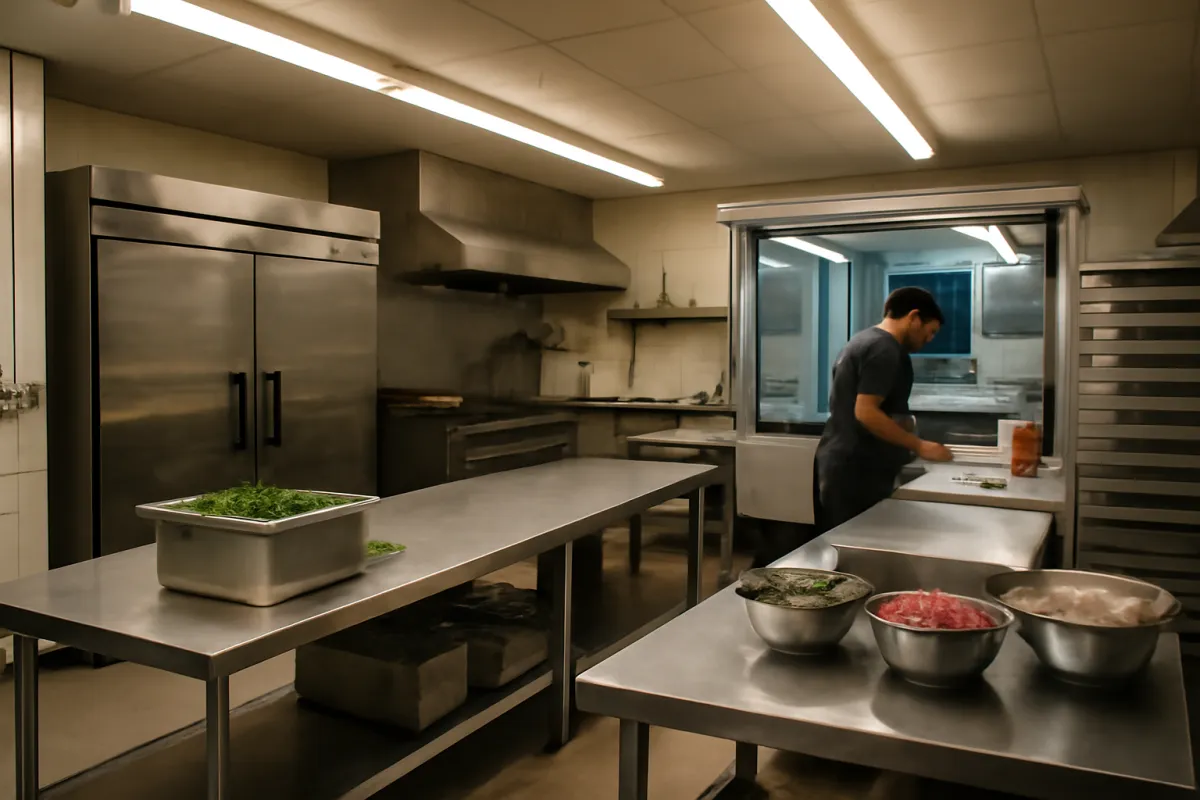
A commercial kitchen for rent is exactly what it sounds like: a fully equipped, licensed, health-department-approved kitchen that you pay to use rather than own. Instead of signing a multi-year lease, building out a space, installing a hood, and buying a full equipment package, you rent access to a kitchen that already has all of that in place and passes inspection. You bring your ingredients, your staff, and your recipes, book your time, and cook, then clean down and hand the space to the next operator. The facility carries the fixed costs of the building, the equipment, and the code compliance, and spreads them across many renters.
The mechanics vary by facility, but the shape is consistent. You apply, show proof of your business license and food safety certification, sign an agreement, and choose a plan: hourly blocks, a monthly membership with a set allotment of time, or a dedicated private space that is yours around the clock. Storage, dry, refrigerated, and frozen, is usually arranged separately, sometimes bundled and sometimes billed on top. Because the kitchen is already licensed as a facility, you inherit its compliant infrastructure, but you remain responsible for your own permits and for cooking safely inside it. That trade, capital cost and compliance burden for a monthly bill and shared access, is the entire appeal.
What is a commissary, shared, or ghost kitchen
These three terms overlap, and it helps to separate them. A commissary kitchen is the classic version: a licensed commercial kitchen shared by many food businesses, historically the required base of operations for mobile food vendors, where trucks park, refill water, dump waste, store food, and do prep. A shared or shared-use kitchen is the broader modern term for the same idea, a single licensed space many small food businesses rent by the hour or month, often with a coworking-style feel and a mix of bakers, caterers, and packaged-food makers cycling through.
A ghost kitchen, sometimes called a cloud or dark kitchen, is a newer twist aimed at delivery. It is a kitchen, or a cluster of small kitchen units, built to produce food for delivery apps and pickup only, with no dining room and no walk-up counter. Some ghost-kitchen operators rent you a dedicated small unit inside a larger facility, closer to a private lease than a shared room. The practical point is that all three are commercial kitchen space you rent instead of build, and the differences are about layout, exclusivity, and who the space is designed for. When you shop, look past the label and read the actual plan: how much is shared, how much is yours, and what the equipment and storage include.

Who rents a commercial kitchen
The renters cluster into a handful of familiar types, and knowing which one you are points you at the right plan. Food trucks and mobile vendors are the original commissary users, and in many jurisdictions they are required to operate from a licensed commissary base, using it for prep, storage, water, and waste even when the cooking happens on the truck. Caterers rent to get surge capacity: a kitchen big enough for a weekend of events without paying for that capacity the rest of the week. Bakers and packaged-food makers, the people selling at farmers markets, wholesaling to cafes, or shipping direct, rent licensed space because selling food made in a home kitchen is illegal in most places beyond narrow cottage-food limits.
Then come the newer entrants. Delivery-only ghost brands rent kitchen space to produce for the apps without the cost of a storefront. Meal-prep and subscription-food businesses rent production time to assemble and package. And early-stage startups of every kind rent to test a concept, prove demand, and build revenue before they sign a lease and build a kitchen of their own, exactly the leap our how to open a restaurant guide walks through. What unites all of them is a need for licensed commercial capacity without the capital and commitment of ownership, and a plan sized to the hours the business truly needs.
The rental models: hourly, monthly membership, and dedicated
Almost every commercial kitchen rental falls into one of three models, and the choice among them is really a choice about how many hours you need and how much control you want. The hourly model is pay-as-you-go: you book blocks of time in a shared kitchen and pay per hour, ideal for low or irregular use. The monthly membership sits in the middle: a flat monthly fee for a set allotment of hours or for unlimited access to shared stations, better once your usage is steady enough that hourly booking gets expensive. The dedicated or private model is a space that is yours alone, rented monthly like a small lease, for high-volume operators who need the kitchen available on their own schedule.
The models scale cleanly with the business. A baker running one overnight block a week belongs on hourly. A caterer or packaged-food maker cooking a few shifts a week usually crosses into membership territory. A delivery brand or growing production business running most days needs dedicated space, because at that volume hourly and membership plans both get costlier than a private unit and the scheduling friction of a shared room becomes a real constraint. The rest of this case study prices each model in turn, but the through-line is simple: the more hours you need, the further up this ladder you climb, and the calculator beside this article helps you see which rung fits your hours.
Illustrative monthly cost by rental model
Rough monthly cost for a small operator under each model. Shape, not a quote; varies by market.
Notice that heavy hourly use costs more than a membership, and approaches a dedicated unit. The crossover points, not the exact figures, are the reason to pick your model by hours.
Hourly and shared kitchen rental
Hourly rental is the entry point and the most common way a new food business starts. You book time in a shared commercial kitchen, often through an online scheduling system, and pay per hour for access to the stations and equipment. Illustratively, hourly rates commonly run somewhere in the twenties to the forties of dollars per hour, higher in expensive metros and for better-equipped or specialty kitchens, and lower for basic space in cheaper markets. Many facilities set a minimum booking, such as a two-hour or four-hour block, and some charge different rates for peak versus overnight hours, which is why the effective rate can differ from the headline number.
The appeal of hourly is that you pay only for what you use, with no fixed commitment, which makes it perfect for a baker with one weekly production run, a caterer with an occasional event, or anyone testing a concept. The catch is that the math turns against you as hours climb: at heavy weekly use, the hourly bill can exceed what a membership or even a modest dedicated space would cost, as the chart above shows. Booking friction is the other cost, because popular kitchens fill their prime blocks, and a cheap hourly rate is worth little if you cannot get the hours your schedule needs. Price hourly on the hours you will really book, including any minimums, and watch for the point where a flat plan becomes cheaper.
Monthly membership kitchen rental
The monthly membership is the middle rung, and for many steady operators it is the sweet spot. You pay a flat monthly fee, and in return you get either a set allotment of hours or unlimited access to shared stations, often with member perks like priority booking, discounted storage, or access to specialty equipment. Illustratively, memberships commonly land in the four figures per month, with tiers that scale by the hours or access included, and cheaper limited plans for light users sitting below that. The value proposition is predictability and a lower effective hourly cost: once your usage is regular, a membership almost always beats booking the same hours one at a time.
Memberships suit the operator who has moved past testing and into steady production: a packaged-food maker with weekly runs, a growing caterer, a meal-prep business, or a small wholesale baker. The judgment is honest usage. A membership priced for twenty hours a week is a poor deal for someone who cooks eight, and a great deal for someone who cooks thirty. Storage is frequently bundled or discounted at the membership level, which matters because a food business that rents a kitchen almost always needs dedicated cold and dry storage too. Compare the membership tiers against your real monthly hours, count the storage you need, and the right tier usually reveals itself, a comparison the companion beside this case study runs on your own numbers.
Dedicated and private kitchen rental
At the top of the ladder is the dedicated or private kitchen: a space that is yours alone, rented monthly the way you would rent a small commercial unit. Instead of sharing stations on a schedule, you get a private kitchen, or a private suite inside a larger licensed facility, available whenever you need it. Illustratively, dedicated units run several thousand dollars a month and up, plus utilities and sometimes a share of common-area costs, scaling with the size of the space, the equipment included, and the market. Ghost-kitchen operators frequently rent dedicated small units built for delivery production, which is one of the fastest-growing versions of this model.
Dedicated space makes sense once your volume is high enough that shared access constrains you: a delivery brand cooking most days, a production business running long shifts, or any operator who needs to leave equipment set up, control the schedule, and treat the kitchen as their own. The cost is higher and the commitment longer, closer to a lease than a booking, but you gain control that no shared plan offers. This is also the rung just below building your own kitchen, and the two deserve a direct comparison, because a dedicated rental with a long commitment and a real monthly bill starts to resemble the economics of operating your own space, minus the up-front build-out our commercial kitchen equipment cost case study prices in full.
Illustrative commercial kitchen rental cost
Pull the models together and the cost picture, while wide, has a clear structure. Hourly rental commonly sits in the twenties to forties of dollars per hour with booking minimums, monthly memberships commonly land in the four figures per month by tier, and dedicated private units run several thousand a month plus utilities. On top of the base plan sit the near-universal extras: storage billed separately, a security deposit, mandatory liability insurance, and sometimes utility or cleaning charges. The all-in monthly cost, not the advertised rate, is the number to compare across facilities.
These figures are planning shapes, not quotes, and they vary enormously by market: a shared kitchen in a high-cost coastal city can cost double a comparable space in a cheaper metro, and specialty kitchens (certified for specific processes, or carrying unusual equipment) command a premium. Confirm the current rate with each facility directly, because pricing changes and published rates are often starting points. The useful way to read the range is by model and by hours: a low-hour user lives cheaply on hourly, a steady user saves with a membership, and a high-volume user eventually finds a dedicated unit cheaper per hour than either. Run your own hours through the rental cost calculator to turn this range into a single monthly number for your business.
Commercial kitchen equipment rental cost: what the rent includes
Commercial kitchen equipment rental cost is a phrase that covers two different purchases, and separating them saves a lot of confused shopping. The first is the one this case study prices: renting time in a licensed kitchen whose equipment is already installed, inspected and maintained. In that arrangement there is no separate equipment line to find. The hourly rate, the membership tier or the dedicated monthly fee is the equipment cost, bundled with the room, the hood, the warewashing and the compliance, which is exactly why the rate looks expensive beside a bare room and cheap beside a build-out of your own.
The second reading is renting equipment on its own, without the kitchen: a caterer hiring a mobile oven, a chafing set or a refrigerated trailer for a single event, or an operator taking one machine for a short season. That is a separate short-term market with its own suppliers, priced by the item and the day rather than by the hour of kitchen time, and it is the expensive way to hold anything you intend to use every week. For steady use, a lease or a purchase is the cheaper structure, and our how to lease restaurant equipment walkthrough and our buy-versus-lease case study run that comparison line by line.
When you compare facilities, the practical question is which equipment your rate actually buys access to. A kitchen carrying a full hot line, a combi oven, a mixer sized to your batch and enough refrigerated storage is renting you a far larger equipment package than one with a range and a rack, and that difference belongs in the comparison rather than in the surprise. Price the equipment you will really use, confirm you can reach it during your booked hours, and read the all-in monthly figure from the rental cost calculator as the equipment-included number it is.
What drives the rental price
Several levers move a rental quote, and knowing them helps you read why two kitchens differ. Location is the biggest: rent tracks local commercial real estate, so the same space costs far more in an expensive metro than a cheaper one. The equipment and specialization come next, because a kitchen with a full hot line, specialty ovens, or process certifications costs more than a basic shared room, and you pay for capability whether or not you use all of it. The hours and access model matters, since peak, daytime blocks usually cost more than overnight ones, and unlimited or dedicated access costs more than pay-as-you-go.
Storage is a real driver that renters routinely forget: dedicated refrigerated and frozen space, and secure dry storage, are often billed on top of the kitchen time, and a business with significant inventory can spend a meaningful share of its monthly bill on storage alone. Demand and availability tighten prices in hot markets where good commissaries fill up. And the plan structure itself, minimum bookings, deposits, insurance requirements, and add-on fees, changes the effective cost above the headline rate. The practical move is to price the total plan for how you actually operate, storage and extras included, rather than comparing headline hourly rates that leave out half the bill.
What to look for: equipment and stations
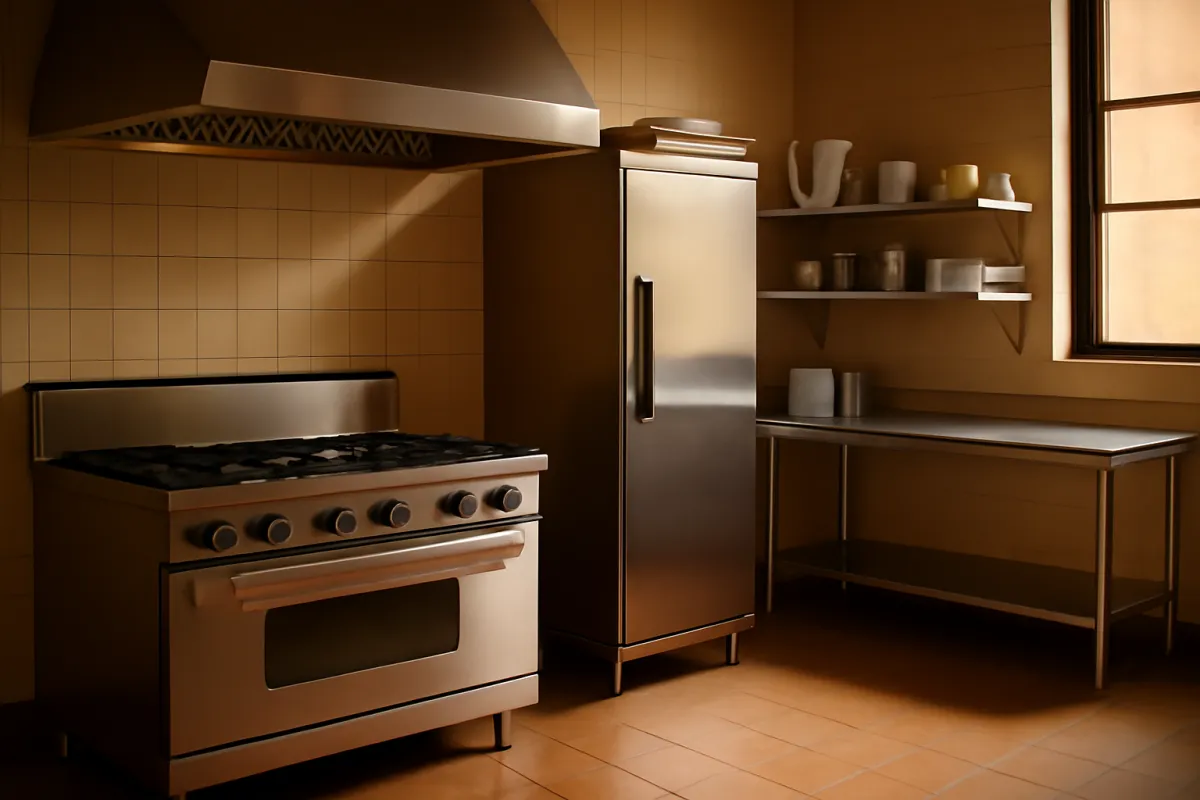
The first thing to check in any rental is whether the equipment matches what your menu actually cooks. A shared kitchen might have a strong hot line but limited oven capacity, plenty of range burners but no specialty gear, or the reverse. Walk the space with your production list in hand: the ranges, ovens, fryers, griddles, mixers, and any specialty equipment your recipes need, and confirm you can actually access them during your booked hours rather than competing for the one combi oven with three other renters. Our commercial kitchen equipment list is a useful reference for the categories to check off against your menu.
Just as important is whether the equipment is well maintained and whether you can rely on it. Ask what happens when something breaks mid-shift, who is responsible for repairs, and how quickly issues get fixed, because a dead fryer or a failed walk-in in a shared kitchen is your production problem too. Check the condition, the cleanliness, and whether the facility enforces clean-down standards between users, since you inherit whatever the last operator left. The best-equipped kitchen on paper is worth little if the gear you need is unavailable, unreliable, or occupied when you cook. Match the equipment to your menu, confirm access at your hours, and treat maintenance and cleanliness as part of the equipment you are renting.
What to look for: storage and space
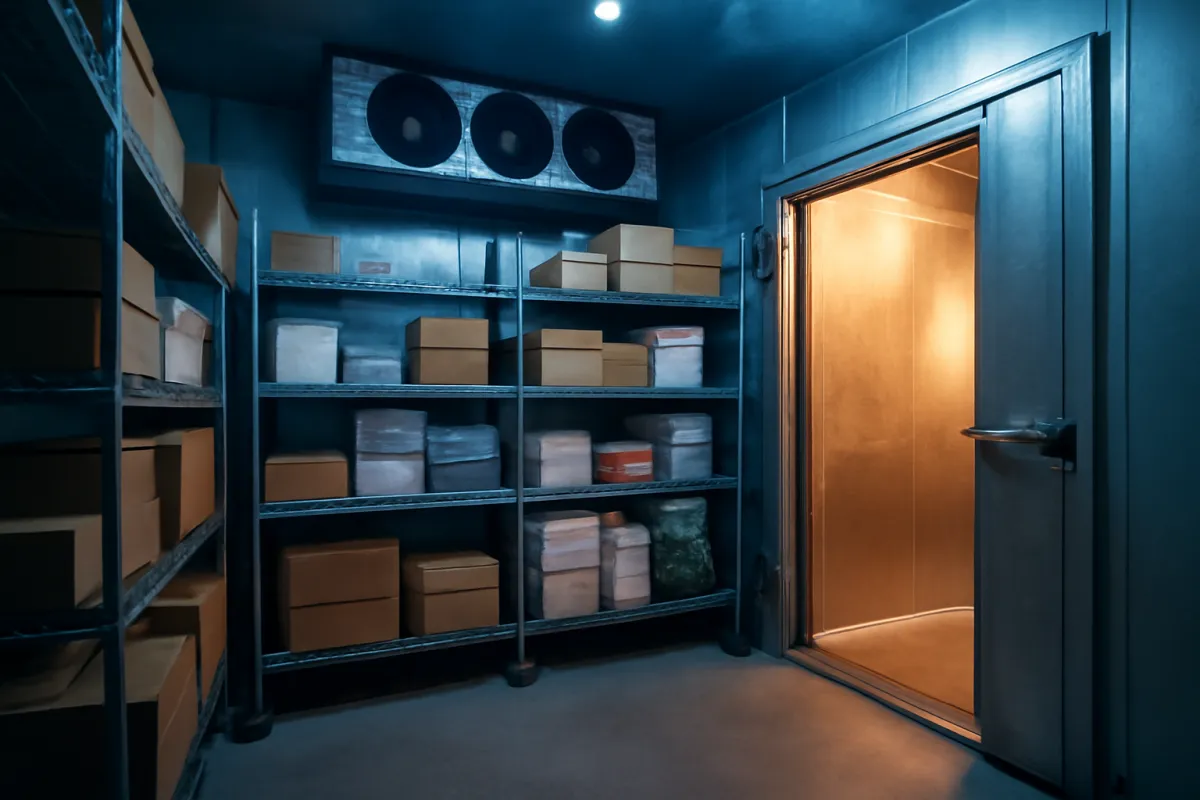
Storage is where rental math quietly breaks for food businesses that forget it. A kitchen you cook in for a few hours a week still needs a place to keep ingredients, finished product, and packaging the rest of the time, and that means dry storage, refrigerated space, and often freezer space. Ask whether storage is included or billed separately, whether it is dedicated to you or shared, and whether it is secure, because unsecured shared storage invites loss and cross-contamination. A caterer or packaged-food maker with real inventory can find storage rivals the kitchen time in cost, so price it as a first-class line, not an afterthought.
Beyond cold and dry storage, think about the working space you get during a shift: enough prep-table surface, landing space, and station room to run your production without tripping over other renters. Consider whether you need parking or a loading area (a food truck needs somewhere to park and service the vehicle, and a caterer needs to load out), and whether the facility handles waste, grease disposal, and water in the way a mobile operator requires. The right amount and type of storage, and the right working footprint, are as much a part of the fit as the stove. A cheap kitchen with no room to store your inventory or stage your production is not actually cheap.
Licensing, permits, and the health department
This is the part to get right, and the part where general advice ends and local rules begin. A commissary is licensed and inspected as a facility, which gives you compliant infrastructure to cook in, but you almost always still need your own credentials: a business license, a food handler or food safety manager certification, and frequently a permit specific to your food business or mobile unit (the SBA’s licenses and permits page explains which are federal and which are state or local). In many jurisdictions, a mobile vendor is legally required to operate from a licensed commissary in the first place, and the health department wants to see that base on file. A reputable kitchen will ask for your paperwork and may help you understand local requirements, but being properly permitted is your responsibility.
Because health-department rules vary by city, county, and state, and because they change, confirm the current requirements with your local health department rather than relying on any general description here. The FDA’s Food Code adoption page lists the state and territorial agencies that oversee food service, and the FDA publishes the FDA Food Code as the model those agencies adopt. Ask the facility whether it is currently licensed and in good inspection standing, whether its license covers the kind of production you plan (some processes, like acidified or shelf-stable foods, carry extra requirements), and whether it will support your own permit application. Verify that renting there actually satisfies your locality’s commissary or base-of-operations rule if you are mobile. Getting the licensing right before you sign protects you from cooking out of a space that cannot legally support your business, which is a failure no low rate can offset.
Hours, access, and scheduling
A kitchen you cannot get into when you need it is not a kitchen you can build a business on, so access and scheduling deserve real scrutiny. Ask how booking works: is it first-come online scheduling, assigned blocks, or unlimited access, and how far ahead do you have to reserve? Find out whether the hours you need, which for many food businesses are overnight or early morning to fit around events and delivery windows, are actually available, or whether everyone wants the same blocks and the good times are always taken. A membership that looks generous on paper is worth little if you can never book the shift your production requires.
Twenty-four-hour access is a real advantage for bakers, caterers, and delivery brands whose work does not fit a nine-to-five, and dedicated space solves the scheduling problem entirely by making the kitchen always yours. Ask about the rules around access: whether you can leave equipment set up, whether you can store work in progress, how entry and security work off-hours, and what the cancellation and no-show policies cost. Visit during a busy block to see the real contention for stations firsthand. The right access model is the one that reliably gives you the hours your business runs on, and confirming that before you commit is worth more than shaving a few dollars off the rate.
How to find a commercial kitchen for rent
Finding a good commissary is part search and part networking. Start with the online commissary and shared-kitchen directories and marketplaces that list facilities by city, which are the fastest way to build a shortlist. Search local business listings and maps for commissary, shared kitchen, commercial kitchen rental, and ghost kitchen in your area, and check whether any large commissary or ghost-kitchen chains operate near you, since several list availability and rates online. Restaurant supply dealers and your local health department can often point you to known licensed facilities, and the health department can confirm which ones are properly licensed.
The most reliable leads, though, come from the community. Food-truck operators, caterers, and market vendors know which local commissaries are good, which are overcrowded, and which to avoid, and a few conversations at a market or a food-truck gathering can save weeks of searching. Once you have a shortlist, visit each in person, confirm the licensing, meet the operator, see the equipment and storage, and price the plan against your real hours before you commit. Availability and rates change constantly, so treat any directory as a source of leads rather than a guarantee, and confirm current openings and prices directly with the facility. The right kitchen is usually found by combining a directory search with a few honest conversations.

Questions to ask before you sign
Before you commit to any commercial kitchen, run a short list of questions that surface the real cost and fit. What is the all-in monthly cost once storage, deposit, insurance, and add-ons are counted, not just the headline rate? Is the facility currently licensed and in good inspection standing, and will renting here satisfy my local commissary or permit requirement? What equipment do I get access to, and is it available during the hours I would actually book? How does scheduling work, and can I reliably get the shifts my production needs? What storage is included, what is extra, and is it secure and dedicated?
Keep going into the operational details that bite later. What insurance do I need to carry, and what does the facility require? What are the cleaning expectations between users, and what fees apply for damage or overruns? What happens if equipment breaks during my shift, and who fixes it? Is there a minimum commitment, a deposit, or a cancellation penalty, and how much notice to leave? Can I tour during a busy block to see the real contention for stations? Asking these before signing turns a glossy pitch into a clear-eyed decision, and the answers, especially on the all-in cost and the licensing, are what separate a kitchen that fits from one that looks cheap and costs you later.
Rent versus build your own kitchen
Every growing food business eventually faces the question renting is meant to defer: at what point does building your own kitchen make more sense than renting one? The answer is a function of hours and control. Renting converts a large capital cost, the build-out, the hood, the full equipment package our commercial kitchen equipment cost case study prices, into a monthly bill with no long lease, which is why it wins decisively for low-hour and early-stage businesses. Building your own kitchen makes sense once your required hours are high enough that the rent you pay approaches the cost of operating a space of your own, and once you need the control over schedule, equipment, and brand space that a shared kitchen cannot provide.
The break-even is worth doing on paper, using a build figure taken from the breakdown rather than from this case study. Put your own monthly rent beside the total our commercial kitchen equipment cost case study reaches for your concept, and the months of rent it takes to equal that capital cost is the crossover. During those months the rental keeps your capital free and your commitment short. But as your hours climb and your rent rises, that payback shortens, and at high volume, ownership can become the cheaper and more controllable choice. Run your own monthly rental cost against an illustrative build-out figure through the companion beside this case study to see roughly where the two lines cross for your business, and treat that crossover, not a gut feeling, as the signal to consider building.
Where a monthly commissary budget goes
Illustrative split of a monthly membership operator's kitchen spend, summing to 100 percent.
Storage and the extras together are nearly half the bill in this illustrative split. Pricing only the kitchen access understates the true monthly cost.
When renting makes sense
Renting is the right call more often than first-timers expect, and it is almost always right at the start. If you are testing a concept, proving demand, or building early revenue, renting lets you cook legally and sell without sinking six figures into a space you might change or leave, and that optionality is worth a great deal when the concept is not yet proven. If your hours are low or irregular, a baker with a weekly run, a caterer with occasional events, a market vendor, the pay-as-you-go or membership models match your usage far better than the fixed cost of your own kitchen. And if capital is tight, renting preserves the cash a young food business needs to survive, the same logic our cost to open a restaurant guide applies to the whole opening.
Renting also makes sense when you value flexibility over control: when you would rather keep your commitment short, avoid the maintenance and compliance burden of running a facility, and let someone else own the risk of the building and the equipment. Seasonal businesses, side hustles, and operators who simply do not need the kitchen most of the week all fit this profile. The honest test is your hours and your stage: if you are early, low-hour, or capital-constrained, renting is very likely the smarter and cheaper path, and the day to reconsider is the day your hours and your need for control both climb.
When building your own makes sense
The case for building your own kitchen strengthens as the business grows into it. Once your required hours are high, running long production shifts most days, the rent you pay for a dedicated space or heavy membership starts to rival what operating your own kitchen would cost, and the payback on a build-out shortens. Once you need control that a shared space cannot give, leaving equipment set up, running on your own schedule, customizing the layout to your production, or protecting proprietary processes and brand space, ownership stops being a luxury and becomes a requirement. And once you have the capital and the proven demand to justify the commitment, the optionality that made renting attractive matters less.
Building your own also makes sense when the shared model constrains growth: when you cannot get the hours you need, when the available equipment does not fit your menu, or when scheduling around other renters caps your output. At that point the question shifts from cost to capability, and a kitchen of your own is what lets the business scale. The move is rarely sudden; many operators run a dedicated rental as the bridge, then build once the numbers and the demand are clear. Price the build honestly with our commercial kitchen equipment cost case study, compare it against your real rental bill, and let the crossover in hours and control, not ambition alone, decide when to make the leap.
A worked example: pricing a rental
Put the framework on an illustrative operator. A packaged-food maker needs about twenty hours a week of licensed kitchen time for weekly production runs. At an illustrative hourly-equivalent rate of around $35 an hour, twenty hours a week works out to roughly eighty-six hours a month, and about $3,000 a month in kitchen time, or near $36,000 a year. That is before storage, which for a business carrying real inventory might add several hundred dollars a month, plus liability insurance and any deposit. The all-in monthly bill, kitchen plus storage plus extras, is the number that belongs in the business plan, and it lands meaningfully above the raw hourly rate.
Now weigh that against building. If a modest kitchen build-out of the operator’s own would run an illustrative $160,000 to equip and fit out, the roughly $3,000 a month in rent would take on the order of four years to equal that capital cost, and that is before the lease, the utilities, and the maintenance a private kitchen adds. For a business at this stage and these hours, renting is clearly the cheaper and lower-risk path, and the calculus only flips toward building as the required hours, and therefore the monthly rent, climb well above this level. Change the hours, the rate, and the build-out figure in the companion beside this case study, and the crossover point moves to fit your own business rather than this illustration.
Hidden costs beyond the hourly rate
The advertised rate is the start of the bill, not the whole of it, and the operators who budget well count the extras from day one. Storage is the big one, dry, refrigerated, and frozen, often billed separately and easy to underestimate. A security deposit is common, tying up cash at the start. Liability insurance is usually mandatory, an ongoing line you carry whether or not you ever file a claim. Cleaning and damage fees apply if you leave a station below standard or break something, and some facilities bill utilities, or a share of them, on top of the base rate. Add-on charges for extra equipment access, specialty stations, or peak-hour bookings stack up too.
Minimum-hour commitments are a subtler cost: an hourly plan with a four-hour minimum can cost more per useful hour than the rate implies if you only need two, and a membership sized above your real usage means paying for hours you never cook. Booking friction is a genuine cost as well, because if you cannot reliably get your hours, you may end up buying a larger plan than you use just to secure access. The discipline is to total the plan you will actually run, storage, insurance, deposit, minimums, and add-ons included, and compare that all-in figure across facilities rather than the headline rate. The rental cost calculator is built to turn your real hours into that fuller monthly number.
Insurance and liability
Insurance is easy to skip past and expensive to ignore. Most commercial kitchens require renters to carry their own general liability insurance, and often to name the facility as an additional insured, before they let you cook. This protects both you and the facility if something goes wrong, and it is a real recurring line to budget, not an optional extra. Beyond general liability, a food business typically needs product liability coverage, because you are selling food to the public, and if you have employees you will need workers compensation as your locality requires. A mobile operator has vehicle coverage on top of all of it.
The reason this matters in a rental context is shared risk. You are cooking in a space others use, on equipment others touch, so the lines of responsibility, for injury, for foodborne illness, for property damage, need to be clear before you start. Read the rental agreement for what it makes you liable for, what the facility covers, and what insurance it demands, and get coverage that actually matches your food business rather than a generic minimum. Because requirements vary by facility and by locality, confirm the specifics with both the kitchen and a qualified insurance professional. Treating insurance as a core part of the rental decision, not paperwork to rush through at signing, is what keeps a single bad incident from ending the business.
The bottom line
A commercial kitchen for rent is the answer to a simple problem: cooking and selling food legally requires a licensed commercial kitchen, and renting one lets a food business do that without the capital, the build-out, and the long commitment of building its own. The model scales from an hourly block for a weekly baker to a dedicated private unit for a delivery brand running most days, and the single most important decision is matching that model to the hours your business actually needs. Illustratively, hourly runs in the twenties to forties per hour, memberships land in the four figures a month, and dedicated units run several thousand and up, but the all-in cost, storage, insurance, and extras included, is what you actually compare.
The operators who rent well do a few things in order. They price the plan on their real hours and true all-in cost, not the headline rate. They check the equipment, storage, access, and licensing against how the business really runs, and they confirm local health-department rules directly rather than assuming. And they watch the crossover: renting is the smarter, cheaper path while hours are low and the concept is unproven, and the day to consider building their own kitchen is the day their hours and their need for control both climb. Compare the build-out side with our commercial kitchen equipment cost case study, walk the fuller path in our how to open a restaurant guide, and run your own hours and a build comparison through the rental cost calculator so the choice between renting and building is a number, not a guess.
Written for the operator deciding whether to rent a kitchen or build one, not for anyone leasing space: this case study is educational material, not financial, tax, legal, or business advice, and it endorses no specific facility, commissary, chain, or provider. Every rate, monthly figure, and percentage split here is an illustrative sketch meant to teach how commercial kitchen rental is priced and structured, and a real plan is set by your own hours, your local market, and the specific facility you choose. Licensing, permitting, and food-safety rules are governed by local and state health-department regulations that vary widely by jurisdiction and change over time, so confirm the current requirements with your local health department and the facility directly, and put a qualified professional between you and any rental agreement or insurance policy you sign.
Frequently asked questions
How much does it cost to rent a commercial kitchen?
Illustratively, hourly rental of a shared commercial kitchen commonly runs in the twenties to the forties of dollars per hour, a monthly membership at a commissary often lands somewhere in the four figures, and a dedicated private unit can run several thousand dollars a month plus utilities. The spread is wide because it depends on the market, the equipment you get access to, the storage included, and how much time you actually book. Treat any single figure as a planning shape rather than a quote, because rates vary enormously by city and by the kind of space, and confirm the current price with the facility directly. Price the hours or the plan you will really use, not the headline rate.
What is a commissary or shared commercial kitchen?
A commissary kitchen is a licensed, health-department-approved commercial kitchen that multiple food businesses share, renting it by the hour, by a monthly plan, or as a dedicated private space. It gives food trucks, caterers, bakers, and delivery-only brands access to code-compliant cooking, refrigeration, and storage without building a kitchen of their own. Many jurisdictions require mobile food vendors to operate from a licensed commissary in the first place, which is one reason the model exists. In practice a commissary can look like a single large room with shared stations, a warren of private rented suites, or a hybrid, and the details of access, storage, and licensing vary by facility.
Who rents commercial kitchens?
The typical renters are food trucks and mobile vendors, caterers who need surge capacity for events, packaged-food makers and bakers who sell wholesale or at markets, delivery-only ghost brands with no dining room, meal-prep businesses, and early-stage startups testing a concept before they commit to a lease. What they share is a need for licensed commercial kitchen capacity without the capital cost and multi-year commitment of building one. Some rent a few hours a week, others run a full production shift most days. The model scales from a baker renting one overnight block to a growing brand holding a dedicated unit, and the right plan depends entirely on how many hours the business actually needs.
Do I need a license to rent a commercial kitchen?
Almost always yes, and the rules vary by jurisdiction, so confirm the current requirements with your local health department before you sign anything. The kitchen itself is licensed and inspected as a facility, but you typically still need your own business license, a food handler or food safety manager certification, and often a separate permit tied to your food business or mobile unit. A reputable commissary will ask for proof of these and may help you understand what your locality requires, but the responsibility to be properly permitted is yours. Because health-department rules differ from city to city and change over time, treat any general description here as a starting point and verify the specifics locally.
Is it cheaper to rent a commercial kitchen or build your own?
For most low-hour and early-stage food businesses, renting is far cheaper up front, because it converts a large capital cost into a manageable monthly bill and adds no build-out, no hood installation, and no long lease. Building your own kitchen makes financial sense once your required hours are high enough that the monthly rent approaches what a space of your own would cost to operate, and once you need control over the schedule, the equipment, and the brand space that a shared kitchen cannot give. The break-even is a function of hours: the more time you need, the more renting costs and the sooner ownership pays back. Run your own hours and an illustrative build-out cost through the companion beside this case study to see where the lines cross for you.
What should I look for in a commercial kitchen to rent?
Check the equipment against what your menu actually cooks, the storage you get (dry, refrigerated, and frozen, and whether it is dedicated or shared), the access hours and how scheduling works, the licensing status and whether the facility will support your permitting, and the true monthly cost once storage, add-ons, and any deposit are counted. Visit during a busy block to see whether the stations you need are available when you would use them, because a cheap kitchen you cannot get into at your hours is not cheap. Ask about cleaning expectations, insurance requirements, and what happens if equipment breaks mid-shift. The best fit is rarely the lowest hourly rate; it is the space whose equipment, storage, and hours match how your business really runs.
How do I find a commercial kitchen for rent near me?
Start with commissary and shared-kitchen directories and marketplaces, search local listings, ask your local restaurant supply dealers and health department for known licensed facilities, and tap the food-truck and catering community, which almost always knows where the good commissaries are. Ghost-kitchen operators and some large commissary chains list availability online, and coworking-style culinary spaces have grown in most metros. Once you have a shortlist, visit in person, confirm the licensing, and price the plan against your real hours. Availability and rates change constantly, so treat any list as a lead rather than a guarantee and confirm current openings and prices directly.
What does commercial kitchen equipment rental cost cover?
It depends which of two things you are renting, and the phrase is used for both. Renting a commercial kitchen means renting time in a licensed facility whose equipment is already installed, inspected and maintained, so there is no separate equipment charge to look for: the hourly rate, the membership tier or the dedicated monthly fee is the equipment cost, bundled with the room, the hood, the warewashing and the compliance. Renting equipment on its own, without a kitchen, is a different and much shorter-term market, priced by the item and the day, and it suits a one-off event far better than steady weekly use. If you need a machine every week, compare a lease or a purchase instead, and when you compare facilities, compare which equipment the rate actually gives you access to during your booked hours rather than the rate alone.
What hidden costs come with renting a commercial kitchen?
Beyond the headline hourly rate or membership fee, budget for storage that is often billed separately (dry shelving, refrigerated, and freezer space), a security deposit, mandatory liability insurance, cleaning or damage fees, and charges for add-ons like extra equipment access or specialty stations. Some facilities bill utilities or a portion of them on top of the base rate, and minimum-hour commitments can make an hourly plan cost more than the raw rate suggests. Booking friction is a real cost too: if you cannot get the hours you need, you may pay for a bigger plan than you use. Total the plan you will actually run, storage and insurance included, rather than the advertised rate alone.