
What's on this page
- What a commercial refrigerator actually costs
- Illustrative cost by refrigeration type
- Reach-in vs walk-in cost, and when you need each
- The types of commercial refrigeration
- Undercounter and prep-table refrigeration
- Reach-in refrigerators and freezers
- Walk-in cooler pricing, from box to install
- Walk-in freezers and blast chillers
- Display and merchandiser refrigeration
- What drives the cost of a commercial refrigerator
- Running cost of a commercial refrigerator
- Where refrigeration sits in the equipment budget
- New versus used commercial refrigeration
- Sizing refrigeration to your concept
- Energy efficiency and ENERGY STAR
- Warranty, service, and the compressor
- Installation and setup
- A worked example: a small cafe and a full restaurant
- The bottom line
Short answer: Illustratively, an undercounter commercial refrigerator runs in the low four figures, a reach-in in the low-to-mid four figures, and a walk-in cooler or freezer from the low into the mid five figures installed. Size, door count, the compressor, build quality, and energy efficiency drive the cost far more than the brand name, and the compressor's running cost over a ten-year life can rival the purchase price.
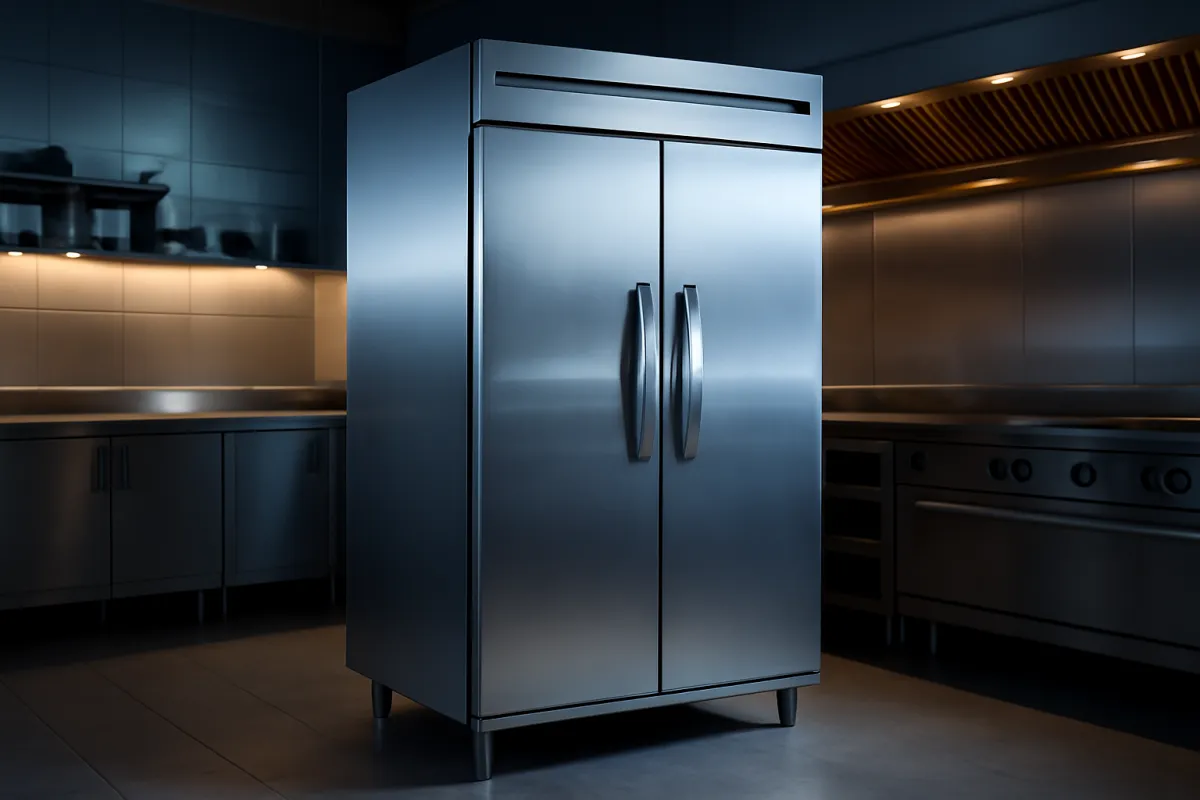
Ask what a commercial refrigerator costs and the honest first answer is a question back: which refrigerator? A countertop undercounter unit that tucks below a prep station, a stainless reach-in that anchors the cook line, a refrigerated prep table with a cutting board on top, a glass-door merchandiser that faces the customer, and a walk-in cooler you step inside are all “commercial refrigeration,” and they span a price range as wide as almost any category in a professional kitchen. The stainless reach-in that most people picture is real, and it matters, but it is rarely the line that leads the refrigeration budget once a walk-in enters the plan.
This case study prices commercial refrigeration type by type and size by size: the undercounter and prep-table units, the reach-in refrigerators and freezers, the display and merchandiser cases, the blast chiller, and the walk-in cooler and freezer that carry the most storage and the most risk. It also prices the second number that refrigeration quietly carries, the running cost of a compressor that never sleeps, and where the whole category fits inside a kitchen budget. It sits alongside our commercial kitchen equipment case study, which prices the whole kitchen end to end, and it leans on our used-versus-new equipment case study for the honest compressor tradeoff. Run your own refrigeration number as you read with the equipment ROI calculator.
Key takeaways
- Commercial refrigeration spans a huge range. An undercounter unit runs in the low four figures, a reach-in in the low-to-mid four figures, and a walk-in cooler or freezer from the low into the mid five figures installed, illustratively.
- The reach-in wins on price and simplicity, but the walk-in wins on cost per cubic foot of storage once your volume is large enough to fill it.
- Size, door count, the compressor, build quality, and energy efficiency drive the cost far more than the brand name.
- The running cost of the compressor over a ten-year life can rival the purchase price, so an efficient unit that costs more up front is often the cheaper unit overall.
- Refrigeration is the category where used carries the most risk, because a tired compressor is an expensive, food-spoiling failure. Buy the cabinet cheap, but price the compressor.
What a commercial refrigerator actually costs
How much does a commercial refrigerator cost? Illustratively, a small undercounter unit commonly runs in the low four figures, a single-door reach-in lands in the low-to-mid four figures, a three-door reach-in reaches the mid four figures, and a walk-in cooler or freezer runs from the low into the mid five figures once it is built and installed. That single sentence covers a fortyfold spread, from a countertop cooler to a refrigerated room, which is exactly why an average price is close to useless and the type you actually need is the whole conversation.
The reason the range is so wide is that “commercial refrigerator” is a category, not a product. It includes the undercounter and worktop units that hide beneath a prep line, the reach-in cabinets that store the day’s product at the cook’s elbow, the refrigerated prep tables that combine cold storage with a work surface, the display cases that sell cold drinks and grab-and-go food to customers, the blast chillers that pull hot food through the danger zone fast, and the walk-in coolers and freezers that hold bulk inventory. Each serves a different job, carries a different compressor load, and lands at a different price. Price the job first, then the unit, and the range collapses into a number you can plan around, the same discipline our commercial kitchen equipment case study applies to the whole kitchen.
Illustrative cost by refrigeration type
Put the types on one axis and the point makes itself: the total to buy spans a range so wide that quoting an average price hides more than it reveals. The chart below sketches illustrative purchase figures across the common refrigeration types, from the undercounter unit at the low end to the walk-in freezer at the top. These are planning shapes, not quotes, and a specific unit can land well outside them depending on size, door count, and build quality.
Illustrative cost by refrigeration type
Typical purchase cost for a standard-size unit of each type. Shape, not a quote.
The walk-in freezer costs roughly ten times a standard undercounter unit, and the gap is storage volume and compressor load, not a fancier version of the same box. Pick the type first, then size it.
The takeaway is the shape, not the exact figures. A spread this wide tells you that the refrigeration budget is a function of the type and size you need, not a fixed cost of “a fridge,” and that the smartest lever you hold is buying the right storage for your actual volume rather than the biggest unit on the showroom floor. Run your own type and size through the companion beside this case study, and the range collapses into a single planning number for the refrigeration you are actually buying.
Reach-in vs walk-in cost, and when you need each
The most common refrigeration decision a growing kitchen faces is reach-in versus walk-in, and the two are priced on completely different logic. A reach-in is a self-contained cabinet: a stainless box with a compressor on top or bottom, doors on the front, and shelves inside, and it commonly costs from the low four figures for a single-door unit into the mid four figures for a three-door. A walk-in is a refrigerated room assembled from insulated panels with a separate refrigeration system, and it commonly runs from the low into the mid five figures once the box is built and the system installed. On sticker price alone the reach-in wins easily.
But sticker price is the wrong comparison, because the two units do different jobs. The right comparison is cost per cubic foot of usable cold storage, and on that measure the walk-in pulls ahead once your volume is large enough to fill it. A single walk-in cooler can hold more product than a row of reach-ins at a lower cost per cubic foot and a lower energy cost per cubic foot, which is why high-volume kitchens graduate to a walk-in as they grow. The reach-in still earns its place on the line, where a cook needs product within arm’s reach during service, so most full kitchens run both: a walk-in for bulk storage and reach-ins for the line. The deciding question is not which is cheaper but how much cold storage your menu and your delivery schedule actually demand.
The types of commercial refrigeration
Before pricing any single unit, it helps to see the whole family, because each type maps to a job and buying the wrong type is a more expensive mistake than buying the wrong brand. The undercounter and worktop units tuck refrigeration beneath a prep surface where space is tight. The reach-in cabinet is the general-purpose cold storage of the cook line. The refrigerated prep table combines a reach-in base with a rail of chilled pans and a cutting board, built for sandwich, salad, and pizza assembly. The display case or merchandiser puts product behind glass for the customer to see and grab. The walk-in cooler and freezer hold bulk inventory in a room. And the blast chiller is a specialized unit that pulls hot food through the temperature danger zone quickly for safe storage.
Each type carries a different compressor load and a different price, and the menu decides which ones you need. A sandwich shop lives on a refrigerated prep table; a bar lives on undercounter bottle coolers and a glass-door merchandiser; a catering kitchen may need a blast chiller to cool large batches safely; a full restaurant needs the walk-in, the reach-ins, and the prep tables together. Match the type to the job first, and the price sorts itself out, because you are no longer comparing a countertop cooler to a walk-in as if they were the same purchase.
Undercounter and prep-table refrigeration
At the small end of the category sit the undercounter and prep-table units, and they are where many small operations start. An undercounter refrigerator or freezer is a compact box built to sit beneath a counter or prep station, commonly running in the low four figures, and it is the workhorse of a bar, a coffee shop, or any station where floor space is precious. A worktop unit adds a stainless top you can work on, and a refrigerated prep table extends the idea with a rail of chilled pans across the top for assembly, commonly running from the mid three figures for a compact model into the mid four figures for a long, multi-pan table.
The value of these units is space efficiency: they put cold storage exactly where the work happens without eating floor area, which is why a tight footprint often leans on them heavily. The tradeoff is capacity, since an undercounter unit holds a fraction of what a reach-in or walk-in does, so they supplement bulk storage rather than replace it. For a very small concept, though, a couple of undercounter units and a prep table can be the entire refrigeration package, which is exactly the shape our cost to open a coffee shop case study sketches for a beverage-led kitchen. Price them to the stations that need cold storage at the point of work, and treat them as the efficient, low-cost entry to commercial refrigeration.
Reach-in refrigerators and freezers
The reach-in is the general-purpose refrigerator of a commercial kitchen, the unit that stores the day’s product where the cooks can reach it. Reach-ins come in one, two, and three-door configurations, in refrigerator and freezer versions, and with solid or glass doors, and the price scales roughly with the door count and the capacity: illustratively, a single-door reach-in runs in the low-to-mid four figures, a two-door in the mid four figures, and a three-door toward the high four figures, with freezers costing more than coolers of the same size. Build quality and compressor placement, top-mount versus bottom-mount, also move the number.
The reach-in earns its place because it puts cold storage at the point of use during service, something a walk-in across the kitchen cannot do. A line cook cannot run to the walk-in every time a ticket lands, so reach-ins and prep tables hold the product the line burns through in a shift, while the walk-in holds the bulk behind it. That division of labor is why a full kitchen runs both, and why the reach-in count scales with the length and speed of the line rather than with total storage. Size the reach-ins to what the line consumes at peak, not to total inventory, and let the walk-in carry the bulk that only needs restocking between services.
Walk-in cooler pricing, from box to install
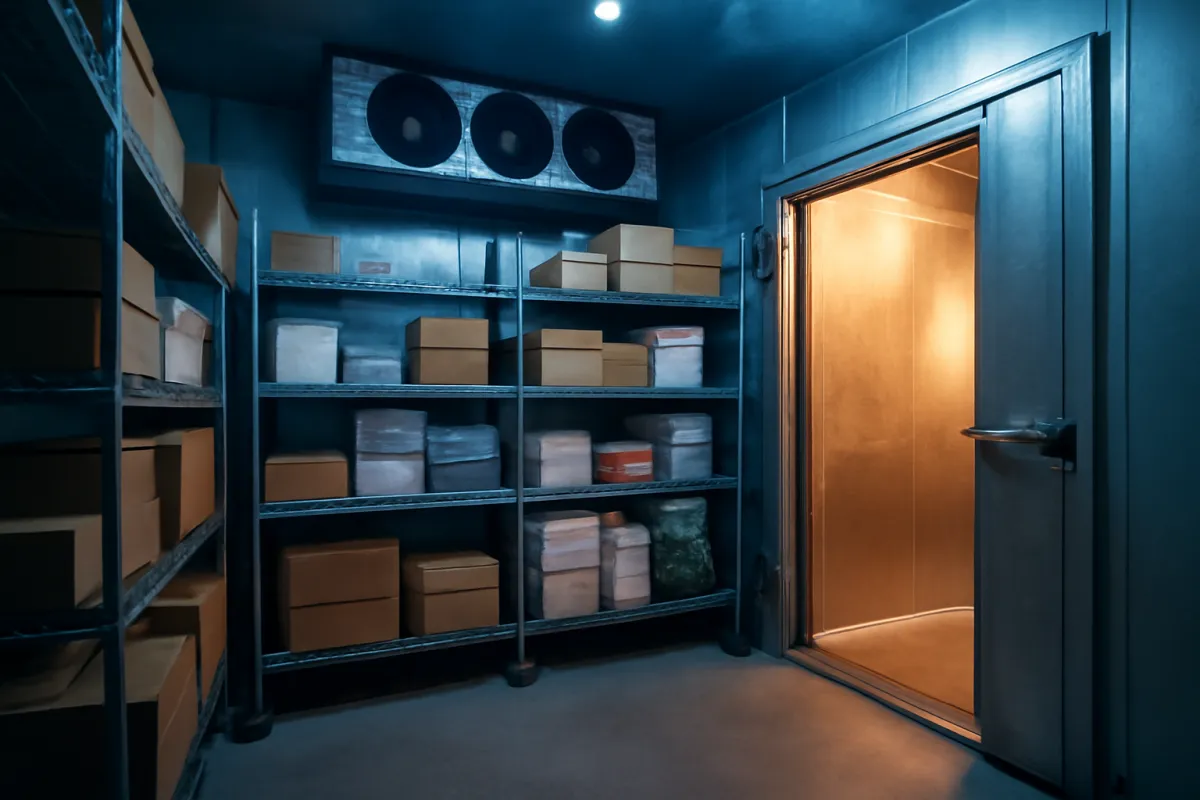
How much is a commercial walk-in cooler? Illustratively, a small walk-in cooler commonly runs from the low five figures for a compact prefabricated box into the mid five figures for a larger unit, and a walk-in freezer of the same size costs more because it holds a lower temperature and works its compressor harder. The walk-in is priced on completely different logic from a reach-in, because you are buying a room: insulated panels that bolt together, a door with a heated frame and closer, a floor or floorless design, and a refrigeration system that is either self-contained on top or a remote condensing unit mounted outside or on the roof.
The cost drivers for a walk-in are size in cubic feet, cooler versus freezer, indoor versus outdoor installation, and the length of the refrigerant lines between the box and the condensing unit. A larger box needs more panels and a bigger refrigeration system; a freezer needs heavier insulation and a lower-temperature system; an outdoor unit needs weatherproofing; and a long line run between the box and a rooftop condenser adds material and labor. Because so much of the cost is site-specific, a walk-in is quoted on the actual space rather than a catalog price, and a former food space that already has a walk-in shell or the drainage in place can be dramatically cheaper than a bare room. The illustrative walk-in figures below show how size moves the number.
Walk-in freezers and blast chillers
Two colder cousins of the standard walk-in deserve their own line, because they carry heavier compressor loads and heavier prices. A walk-in freezer holds a far lower temperature than a cooler, which means thicker insulation, a more powerful low-temperature refrigeration system, a heated door frame and floor to prevent icing, and more energy to run, so a freezer of a given size costs meaningfully more than a cooler of the same size to both buy and operate. A kitchen that freezes bulk product, holds frozen inventory, or runs a menu heavy on frozen goods needs one, and it is one of the more expensive single refrigeration lines in the budget.
The blast chiller is a different specialized tool: rather than holding a temperature, it rapidly pulls hot food down through the temperature danger zone into safe cold storage, which matters for food safety and for batch cooking. Illustratively, a commercial blast chiller commonly runs from the mid four figures for a countertop or undercounter model into five figures for a large roll-in unit, because it needs a powerful refrigeration system to move a lot of heat fast. Not every kitchen needs one, but a catering operation, a commissary, or any kitchen that cooks in large batches and cools them for later service often does, and it is worth pricing separately rather than folding into general refrigeration.
Display and merchandiser refrigeration
Not all commercial refrigeration hides in the back. Display cases and merchandisers put product in front of the customer: the glass-door coolers that sell bottled drinks, the open-air grab-and-go cases that hold packaged sandwiches and salads, the deli and bakery cases that show product at eye level, and the back-bar coolers that face a bar’s guests. Illustratively, a glass-door merchandiser commonly runs from the mid three figures for a single-door model into the mid four figures for a multi-door unit, and a specialized deli or bakery display case with curved glass and lighting runs higher because it is built to sell as much as to cool.
The logic of display refrigeration is that it does double duty: it stores product and it merchandises it, which means the cost buys visibility and impulse sales, not just cold storage. That changes how you evaluate it, because a display case that lifts grab-and-go revenue earns its keep on the top line, not only on storage cost, the same payback lens our espresso ROI case study applies to equipment that drives sales. The tradeoff is efficiency: glass doors and open-air designs leak more cold than a solid-door reach-in, so a merchandiser costs more to run per cubic foot. Price it as a sales tool with a running cost, and put it where it earns its energy bill in impulse purchases.
What drives the cost of a commercial refrigerator
Once the type is chosen, a handful of factors decide where a unit lands inside its range, and knowing them lets you read a price rather than just accept it. Size and capacity come first: more cubic feet of cold storage means more steel, more insulation, and a bigger compressor, so cost scales with volume. Door count follows, since each door adds capacity and cost and each opening leaks cold, so a three-door reach-in costs more than a single both to buy and to run. The compressor and its horsepower matter because the refrigeration system is the heart of the unit and the part that fails, and a larger or lower-temperature system costs more.
Build quality is the factor buyers most often underrate. A well-built cabinet with thick insulation, tight door gaskets, and quality hinges holds temperature with less compressor work, which shows up as both a longer life and a lower energy bill, while a cheap cabinet with thin insulation and loose gaskets makes its compressor run harder and die sooner. Energy efficiency ties all of this together, because the same cold can be delivered with very different amounts of electricity depending on the compressor, the insulation, and the controls. A certified high-efficiency unit costs more up front and less over its life, which is why the sticker is a poor guide to the true cost. Read the size, the doors, the compressor, the build, and the efficiency together, and the price makes sense.
Running cost of a commercial refrigerator
Here is the number that separates the sticker price from the true cost: a commercial refrigerator runs twenty-four hours a day, every day, for its entire life, and the electricity it draws is a real and recurring line. Illustratively, a single reach-in commonly costs a few hundred dollars a year in electricity, an undercounter unit somewhat less, and a walk-in cooler or freezer can run well into four figures a year because it cools a far larger space around the clock. Multiply any of these by the ten or fifteen years the unit will run and the lifetime energy bill can add up to a meaningful share of the purchase price, sometimes rivaling or exceeding it for a walk-in.
The running cost depends on the local electricity rate, the unit’s efficiency, the ambient temperature of the kitchen, and how often the doors open during a busy service. A refrigerator in a hot kitchen with doors that open constantly works far harder than the same unit in a cool, disciplined one, which is why gasket condition, door habits, and placement all show up on the utility bill. This is exactly why total cost of ownership, not the purchase price, is the right way to judge refrigeration, and why the equipment ROI calculator is built to weigh a higher purchase price against a lower running cost. The efficient unit that costs more today is frequently the cheaper unit by year five, and refrigeration, running constantly, is the category where that math bites hardest.
Where refrigeration sits in the equipment budget
Zoom out from the individual units and refrigeration takes its place as one of the largest equipment categories in a cooking kitchen, second usually only to the cooking line, and the one that carries the most operational risk because a failure spoils inventory and closes the kitchen. But the purchase price is only part of the refrigeration cost, because the installation and the first years of energy ride alongside it. The stacked bar below sketches an illustrative split of what a refrigeration line actually costs over its early life: the unit itself, the installation and setup, and the first year of energy to run it.
Where a refrigeration dollar goes
Illustrative split of the unit, its install, and its first-year energy, summing to 100 percent.
The energy slice is only the first year. Over a ten-year life the cumulative energy bill can rival the unit price, which is why efficiency belongs in the purchase decision.
The lesson from the split is that the sticker is not the whole cost. Installation is a real line, especially for a walk-in with its panels, refrigerant lines, and drainage, and energy is a recurring line that compounds year after year. An operator who optimizes only the purchase price is looking at part of the picture while installation and a decade of energy go unpriced. Run your own refrigeration line through the equipment ROI calculator to see how the running cost stacks against the sticker, and read this category as part of the whole kitchen with our commercial kitchen equipment case study.
New versus used commercial refrigeration
Once the type and size are set, the next question is whether to buy new, used, or refurbished, and refrigeration is the category where that question carries the most weight. Much of a refrigerator is durable and cheap to service: the stainless cabinet lasts decades, the shelves and racks are simple, and the door gaskets are a low-cost wear part anyone can replace. If that were the whole unit, used would win easily. But the compressor is the heart of the machine, it is a wear item with a finite life, and a tired compressor is an expensive, food-spoiling failure at the worst possible moment, which is what makes used refrigeration riskier than used prep tables or shelving.
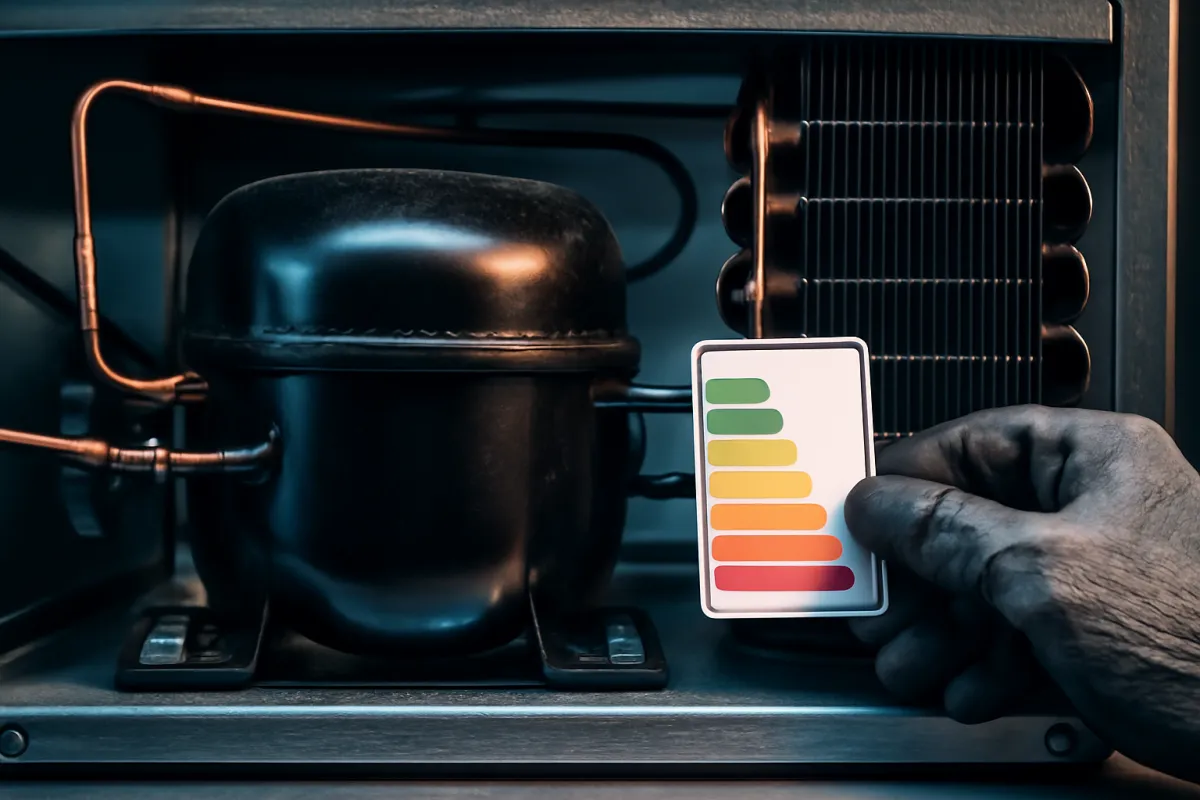
The honest answer, then, is that used refrigeration can be a bargain when the compressor history is known and recent, and a trap when it is not. A serviced unit from a reputable dealer, or a professionally refurbished unit with a rebuilt compressor and a short warranty, captures much of the discount without all of the risk, while an old, unbranded cooler with an unknown compressor is a gamble whose downside is spoiled inventory and an emergency replacement. Our used-versus-new equipment case study runs the cost-per-working-year math that decides these calls, and refrigeration is the textbook example where paying more for reliability, or buying new, frequently earns its keep. Buy the cabinet cheap if you like, but always price the compressor.
Sizing refrigeration to your concept
The single most common refrigeration mistake is buying to the wrong size, in either direction, and the fix is to size to the concept rather than to the budget or the showroom. Under-buying leaves a kitchen without the cold storage to hold inventory between deliveries, forcing more frequent orders and risking stockouts during a rush. Over-buying wastes capital on units you do not fill and then wastes energy cooling empty space, since a half-full walk-in costs nearly as much to run as a full one. The right size holds your inventory between deliveries with headroom for prep and air circulation, and no more.
The concept sets the list. A small cafe may need only an undercounter unit and a single reach-in, which is the refrigeration shape behind our cost to open a coffee shop case study. A food truck compresses refrigeration into a few undercounter and reach-in units sized to a day’s service and a tight footprint, exactly the constraint our cost to start a food truck case study prices into the build. A full-service restaurant needs reach-ins on the line, prep tables at assembly stations, a walk-in cooler for bulk, and often a walk-in freezer. Start from what the menu holds and how often you take delivery, and the refrigeration list writes itself. The companion beside this case study turns your type and size into a planning number, and the equipment ROI calculator checks it against the volume it supports.
Energy efficiency and ENERGY STAR
Because refrigeration runs constantly, energy efficiency is not a nice-to-have on the spec sheet, it is one of the largest levers on the lifetime cost of the unit. Certified high-efficiency models, including those that carry an ENERGY STAR rating, use meaningfully less electricity than conventional units to deliver the same cold, through better compressors, thicker insulation, tighter door seals, and smarter controls such as anti-condensate heaters that run only when needed. The premium on an efficient unit is real, but it is paid back over the years in a lower utility bill, and for a refrigerator that runs every hour of every day, that payback arrives faster than for almost any other appliance.
The practical move is to compare refrigeration on lifetime cost, meaning purchase plus energy plus maintenance over the years you will run it, not on the price tag alone. A unit that costs more up front but draws less power can be the cheaper unit by year three or four, and over a full ten-year life the efficient choice often wins decisively. Some utilities offer rebates on certified high-efficiency commercial refrigeration, which sharpens the case further, though the availability varies by location and program. Weigh the higher sticker against the lower running cost with the equipment ROI calculator, and let the lifetime number, not the purchase price, choose the unit. Efficiency is where the total-cost-of-ownership lens that runs through all of our coverage pays for itself most clearly.
Warranty, service, and the compressor
A commercial refrigerator is a machine that runs hard and never rests, so how you handle its eventual failure is a budget decision in its own right. Most new refrigeration carries a manufacturer warranty, and the important detail is that the compressor usually carries a longer warranty than the rest of the unit, which tells you exactly where the manufacturer expects the risk to sit. Beyond the factory warranty sit extended warranties and service contracts that convert the variable risk of a breakdown into a predictable annual line, and for business-critical refrigeration, a service contract that guarantees fast response can be worth far more than its cost, because a dead walk-in during service is spoiled inventory and a closed kitchen, not just a repair bill.
The judgment is where to spend on coverage and where to self-insure. A simple undercounter unit that is cheap to replace may be better run to failure than covered, while a walk-in or a bank of reach-ins holding a kitchen’s inventory is exactly where a warranty or a service contract earns its keep. This is also the natural companion to the used-versus-new decision, because a used unit without warranty carries a compressor risk you should price rather than ignore, the same exposure our used-versus-new equipment case study folds into its cost-per-year math. A little routine maintenance, cleaning the condenser coils, checking the gaskets, keeping the airflow clear, also extends compressor life and trims the energy bill, so the cheapest warranty is often the maintenance you actually do.
Installation and setup
The number on the invoice is not the number running in the kitchen, because commercial refrigeration has to be installed, and installation ranges from trivial to substantial depending on the type. A reach-in or undercounter unit is close to plug-and-play: it needs a dedicated electrical circuit, clearance for airflow around the compressor, and a level spot, and then it runs. A walk-in is a different project entirely, requiring the panels to be assembled, the refrigeration system charged and connected, the drainage plumbed, and often a remote condensing unit mounted outside or on the roof with refrigerant lines run between them, which is why walk-in installation is a real and site-specific line.
The biggest lever on the installation cost is the condition of the space. A former food space that already has the electrical capacity, the floor drains, or an existing walk-in shell lets a new operator inherit the expensive infrastructure instead of building it, while a bare retail box needs all of it added from scratch, a point our commercial kitchen equipment case study makes about the whole kitchen. Airflow and placement also matter beyond the install day, because a refrigerator crammed into a hot corner with no clearance works harder, runs up the energy bill, and shortens the compressor’s life. Price the install against the actual space, give every unit the clearance its compressor needs, and treat a former food space as the refrigeration discount it usually is.
A worked example: a small cafe and a full restaurant
Put the whole framework on two illustrative refrigeration budgets at opposite ends of the spectrum. First the small cafe. A beverage-led concept needs modest cold storage: an undercounter unit beneath the espresso station for milk and an illustrative $1,400, a single-door reach-in for backup storage at $3,500, a refrigerated back-bar or display cooler for bottled drinks and grab-and-go at $2,800, and a small chest freezer for $1,300. The refrigeration package lands around $9,000, no walk-in required, and the running cost is modest because the units are small and few. This is the shape behind our cost to open a coffee shop case study, where refrigeration is a real but contained line.
Now the full-service restaurant. A cooking kitchen needs cold storage at scale: a walk-in cooler for bulk produce, dairy, and prepped product at an illustrative $14,000 installed, a walk-in freezer for frozen inventory at $18,000 installed, three reach-ins on the line at $4,500 each for $13,500, two refrigerated prep tables at assembly stations for $7,000, and a small display case for desserts at $3,000. The refrigeration package lands around $55,000, the walk-ins lead the line, and the annual energy bill runs into four figures because the walk-ins cool large spaces around the clock. The gap between the two examples is the whole point: same category, same purpose, a sixfold difference in cost, and the difference is storage volume, not a fancier version of the same box. Run your own type and size through the companion beside this case study, and the plan stops being a guess.
The bottom line
How much does a commercial refrigerator cost? Whatever the type and size your concept demands, and those two choices are the answer to almost everything. An undercounter unit runs in the low four figures, a reach-in in the low-to-mid four figures, and a walk-in cooler or freezer from the low into the mid five figures installed, illustratively, and the gap between them is storage volume and compressor load, not a premium badge. The reach-in wins on price and simplicity; the walk-in wins on cost per cubic foot once your volume fills it; and the running cost of a compressor that never sleeps is a second number that can rival the sticker over a ten-year life.
The operators who buy refrigeration well do three things in order. They size the units to the menu and the delivery schedule rather than to the budget or the showroom, buying the cold storage they will actually fill. They judge each unit on total cost of ownership, weighing a higher sticker against a lower running cost, because refrigeration runs every hour of every day and efficiency compounds. And they treat the compressor as the risk it is, buying new or carefully-vetted used and covering the units whose failure would spoil inventory and close the kitchen. Choose new or used with our used-versus-new equipment case study, place refrigeration inside the whole kitchen with our commercial kitchen equipment case study, size it to your concept with our coffee shop and food truck case studies, and run your own refrigeration cost and its running bill through the equipment ROI calculator so the number is a plan, not a surprise.
Written for the operator costing a cold chain, not for anyone moving one cooler off a showroom floor: this case study is educational material, not financial, tax, legal, or business advice, and it endorses no specific brand, dealer, model, or lender. Every purchase figure, size band, and running-cost estimate here is an illustrative sketch meant to teach how refrigeration is priced and operated, and a real unit is quoted by its own type, size, efficiency, and installation site. Energy costs turn on local electricity rates and usage that vary widely, refrigeration and installation are governed by local electrical, mechanical, and health codes, and refrigerant and efficiency rules change over time, so gather quotes from licensed suppliers and installers on the actual equipment and space in front of you, and put a qualified professional between you and any purchase, financing, or installation you commit to.
Frequently asked questions
How much does a commercial refrigerator cost?
Illustratively, a small undercounter unit commonly runs in the low four figures, a single-door reach-in lands in the low-to-mid four figures, a three-door reach-in reaches the mid four figures, and a walk-in cooler or freezer runs from the low five figures into the mid five figures once it is built and installed. The range is wide because the word covers everything from a countertop cooler to a room you walk into, and the size, the door count, the compressor, and the build quality move the number more than the brand name. Treat any single figure as a planning shape rather than a quote, and price the specific unit and size your concept actually needs. The running cost of the compressor over the years is a second number that often rivals the sticker, so weigh both before you buy.
How much is a commercial walk-in cooler?
Illustratively, a small walk-in cooler commonly runs from the low five figures for a compact prefabricated box into the mid five figures for a larger unit or a walk-in freezer, once the panels, the refrigeration system, and the installation are all counted. A walk-in freezer costs more than a cooler of the same size because it holds a lower temperature, needs heavier insulation, and works its compressor harder. The total is site-specific because it depends on the size in cubic feet, whether the box sits indoors or outdoors, the length of the refrigerant lines, and whether the floor and drainage are already in place. A remote condensing unit on the roof, rather than a self-contained top-mount, also shifts the cost, so gather a quote on the actual space rather than a catalog price.
What is the difference between reach-in and walk-in refrigerator cost?
A reach-in refrigerator is a self-contained cabinet you open from the front, and it commonly costs from the low four figures for a single door into the mid four figures for a three-door unit. A walk-in is a refrigerated room built from insulated panels with a separate refrigeration system, and it commonly runs from the low into the mid five figures once installed. The reach-in wins on price and simplicity for a small operation, while the walk-in wins on cost per cubic foot of storage once your volume is large enough to fill it. The deciding question is not price alone but how much cold storage your menu and your delivery schedule actually demand, because an oversized walk-in that runs half empty wastes both capital and energy.
How much does it cost to run a commercial refrigerator?
Illustratively, a single reach-in commonly costs a few hundred dollars a year in electricity, an undercounter unit somewhat less, and a walk-in cooler or freezer can run well into four figures a year because it cools a far larger space around the clock. The exact figure depends on the local electricity rate, the unit's efficiency, the kitchen's ambient temperature, and how often the doors open during service. Over a ten-year life the energy bill can add up to a meaningful share of the purchase price, sometimes rivaling it, which is why an efficient unit that costs more up front can be the cheaper unit over its life. Budget the running cost alongside the sticker, because total cost of ownership, not the purchase price, is what refrigeration actually costs.
Are used commercial refrigerators worth it?
Used refrigeration can be a genuine bargain, but it carries more risk than almost any other used equipment category because the compressor is a wear item with a finite life, and a tired compressor is an expensive, food-spoiling failure waiting to happen. The stainless cabinet, the shelves, and the door gaskets last a long time and are cheap to service, so a used unit from a reputable dealer with a serviced or recent compressor can make sense. The units to be cautious with are old, unbranded, or heavily used coolers where the compressor history is unknown, because replacing a compressor can cost a large fraction of a new unit. Our used-versus-new equipment case study runs the cost-per-working-year math that decides these calls, and refrigeration is the classic place where paying more for reliability earns its keep.
What size commercial refrigerator do I need?
Size your refrigeration to your menu, your delivery frequency, and your peak covers, not to the biggest unit you can afford, because refrigeration you do not fill costs money to buy and money to cool. A rough starting frame is to count how much cold and frozen product you hold between deliveries, add room for prep and par levels, and leave headroom for air to circulate around the shelves. A small cafe may need only an undercounter unit and a single reach-in, while a full-service restaurant needs multiple reach-ins on the line plus a walk-in cooler and often a walk-in freezer. Our coffee shop and food truck case studies show how the concept sets the refrigeration list, and the companion beside this case study turns your type and size into a planning number.
What drives the cost of a commercial refrigerator the most?
After the basic choice of type, the biggest cost drivers are size and capacity, the number of doors, the compressor and its horsepower, the build quality of the cabinet and gaskets, and the energy efficiency of the whole unit. A larger box with more doors needs more refrigeration and more steel, so it costs more to buy and more to run. Build quality matters because a well-insulated cabinet with tight gaskets holds temperature with less compressor work, which shows up as both a longer life and a lower energy bill. Certified high-efficiency models cost more up front and less over their life, which is why the sticker alone is a poor guide to the true cost of a refrigerator.
Should I buy or lease commercial refrigeration?
For an operator short on cash, financing or leasing refrigeration spreads the cost into monthly payments and preserves the working capital a young business needs to survive its opening months, which is often the deciding factor rather than the total cost of the gear. Buying outright is usually cheaper over the life of equipment you run hard, because you avoid the financing premium and keep the asset, but it drains cash exactly when a new kitchen is most fragile. Our buy-versus-lease equipment case study runs the total-cost comparison, and our equipment financing case study walks through the payment math. Because a walk-in or a bank of reach-ins is long-lived, essential gear, it is a natural candidate for financing over its useful life, provided the payment fits the cash the kitchen can realistically produce.