
What's on this page
- What a commercial griddle costs
- Illustrative cost by griddle type
- Countertop griddles and the small-batch case
- Floor griddles by width
- Gas versus electric griddles
- Chrome plate versus steel plate
- Griddle plate thickness and heat recovery
- Thermostats and temperature zones
- The gas line, electrical, and hookup work
- Ventilation and why a griddle needs a hood
- Griddle accessories and the small extras
- What drives the cost of a commercial griddle
- Where the first griddle dollar goes
- New versus used commercial griddles
- Maintenance items that actually fail
- Sizing a griddle to your menu
- Cost of ownership per cover
- Warranty, service, and the parts that fail
- Lease versus buy on a griddle purchase
- Common mistakes that inflate the number
- A worked example: a diner and a food truck
- The bottom line
Short answer: Illustratively, a 24-inch countertop electric griddle runs near $650, a 24-inch countertop gas griddle near $900, a 36-inch floor gas griddle near $2,400, a 48-inch floor gas griddle near $3,200, a 36-inch chrome plate floor griddle near $3,600, a 60-inch floor gas griddle near $4,100, a 48-inch griddle-charbroiler combo near $4,400, and a 72-inch floor gas griddle near $4,900. The gas or electrical hookup, delivery, and the first year of service add a further 20 to 30 percent on top of the machine.
A griddle is one flat plate over a heat source, and that simplicity is exactly why its price spread is so wide once width, plate material, and heat source enter the picture. A 24-inch countertop unit that handles a cafe’s morning eggs and a 72-inch floor model that runs a diner’s entire breakfast rush are both called a griddle, and they sit roughly seven to one apart in price for reasons that come down to plate size, plate material, and how the heat gets to the surface.
This case study prices commercial griddles by width, plate material, and heat source, explains what actually separates a chrome plate from a steel plate and a gas unit from an electric one, and then prices what a griddle purchase drags along with it: the gas or electrical hookup, delivery, and the first year of service. Every figure here is an illustrative planning shape rather than a quote. If you want the same arithmetic run on your own width and cover count, the equipment ROI calculator and the companion beside this case study run it live.
Key takeaways
- Griddles span roughly seven to one. Illustratively a 24-inch countertop electric unit runs near $650, a 24-inch countertop gas unit near $900, a 36-inch floor gas griddle near $2,400, a 48-inch floor gas griddle near $3,200, a 36-inch chrome plate floor griddle near $3,600, a 60-inch floor gas griddle near $4,100, a 48-inch griddle-charbroiler combo near $4,400, and a 72-inch floor gas griddle near $4,900.
- Width, not brand, sets most of the price. Size the griddle to how many items you need cooking on the plate at your single busiest moment, not to your daily total.
- A griddle always needs a Type I hood over it. The hood is engineered to the whole cooking line, so price it separately rather than folding it into the griddle's own budget.
- Chrome plate costs more than steel but cleans faster and resists sticking longer, which a high-turnover breakfast or sandwich concept often recovers in labor hours alone.
- Judge a griddle on cost per cover, not on sticker. On the worked 48-inch example in this case study the installed package works out to a little over a penny per cover once a real rush volume runs across it.
What a commercial griddle costs
How much does a commercial griddle cost? Illustratively, a 24-inch countertop electric griddle runs near $650, a 24-inch countertop gas griddle near $900, a 36-inch floor gas griddle near $2,400, a 48-inch floor gas griddle near $3,200, a 36-inch chrome plate floor griddle near $3,600, a 60-inch floor gas griddle near $4,100, a 48-inch griddle-charbroiler combo near $4,400, and a 72-inch floor gas griddle near $4,900. Those are machine prices for new units of ordinary specification, before the gas or electrical work a kitchen needs to actually run the appliance.
The reason a single average means little here is that the word griddle covers a small countertop box that handles a cafe’s eggs and a six-foot floor model that anchors a diner’s whole breakfast line. Price the width first, then the plate material, and the number stops being a guess. Our commercial kitchen equipment case study prices the griddle as one line inside a whole cooking line budget; this case study is the zoomed-in version of that one line.
Illustrative cost by griddle type
Lay the common configurations on one axis and the spread explains itself. The chart below sketches illustrative purchase figures across the common commercial griddle types, from a 24-inch countertop electric unit to a 72-inch floor gas griddle. Treat them as planning shapes. Any specific machine can land outside its band depending on burner count, plate gauge, and controls.
Illustrative machine cost by griddle type
Typical purchase cost for a new griddle of each class, before the gas or electrical hookup, delivery, and service. Shape, not a quote.
Notice that a 36-inch chrome plate griddle costs more than a 48-inch plain steel griddle despite being a foot narrower. Plate material moves the number almost as much as width does.
The middle of that range is where most independent kitchens actually shop. Between a 36-inch and a 48-inch floor griddle there is about $800 of machine price, and that single step changes how many items a line cook can have on the plate at once during a rush, which is usually the real question a width decision answers. Run your own width and plate material through the companion beside this case study and the band collapses into one planning number.
Countertop griddles and the small-batch case
A countertop griddle is a flat plate built into its own stand or base, small enough to sit on a prep table or a back counter, usually 24 inches wide or less. Illustratively near $650 for a basic electric unit and near $900 for a gas unit of similar size with heavier burners and a sturdier plate.
A countertop griddle suits a cafe finishing a handful of breakfast sandwiches, a coffee shop toasting and griddling a short menu, or any concept whose heaviest cooking moment is well inside what two feet of plate can hold at once. The honest limit is surface area rather than heat output: once a menu needs more than a few items on the plate simultaneously during the rush, the answer moves to a floor model rather than a bigger countertop unit, because a countertop base was built for light, intermittent use rather than a continuous breakfast line.
Floor griddles by width
A floor griddle stands on its own base, usually with an oven or a storage cabinet underneath, and the plate scales from 24 inches up through 72 inches or more in most manufacturer lineups. Each step in width is a real increase in burner count and plate area, not just a longer sheet of steel bolted to the same frame.
Illustratively, a 36-inch floor gas griddle runs near $2,400 and suits a small diner or a breakfast-focused concept running a modest rush. A 48-inch model near $3,200 is the common step for a quick-service or full breakfast menu, wide enough to run eggs, pancakes, and sandwiches at once without crowding the plate. A 60-inch griddle near $4,100 and a 72-inch griddle near $4,900 belong to a high-volume diner or a griddle-led concept running a long, steady rush where plate space is the bottleneck more than any other station.
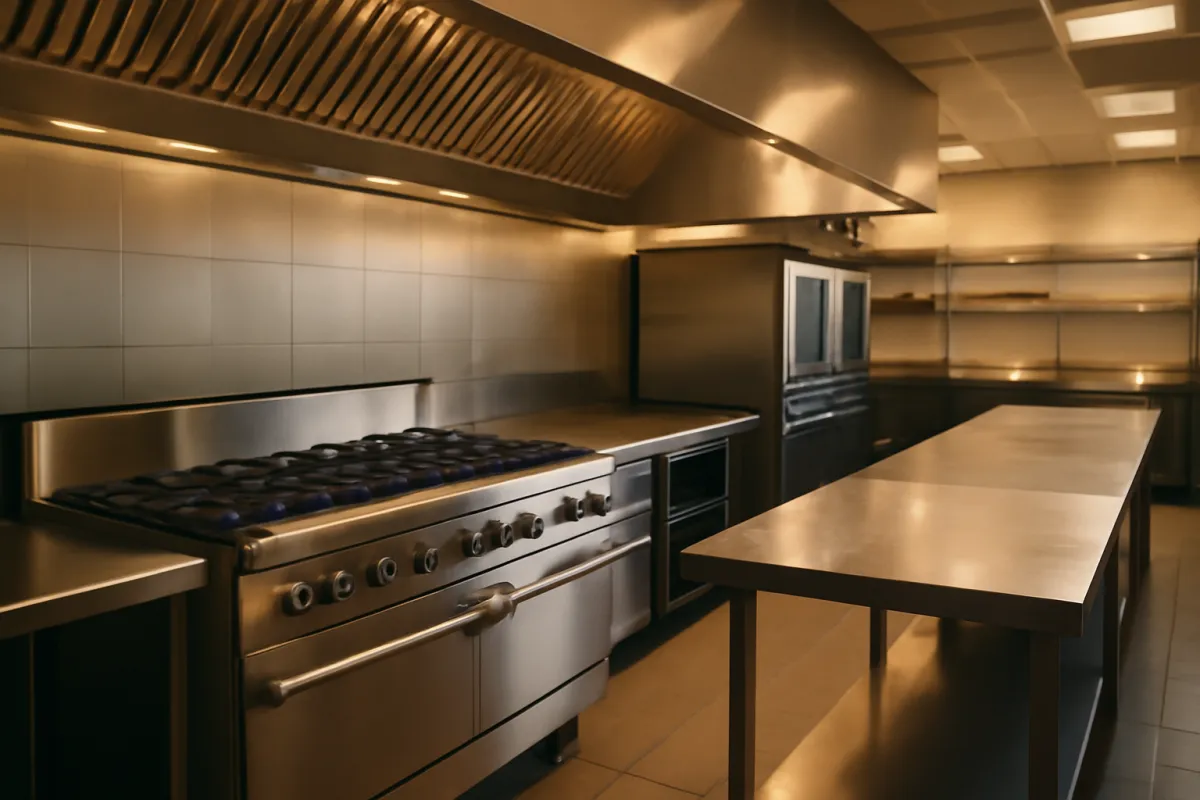
The jump in price from one width to the next tracks burner count closely, because a wider plate needs more burners spaced evenly beneath it to hold a flat temperature across the whole surface. A 72-inch griddle commonly carries roughly twice the burners of a 36-inch model, which is most of why its price is roughly twice as high even though the plate itself is only twice the steel.
Gas versus electric griddles
Gas and electric griddles solve the same job through different heat paths, and the choice shows up in recovery speed, installation needs, and where the machine can go. A gas griddle fires burners beneath the plate and recovers a dropped surface temperature quickly after a heavy load of cold product hits it, which is why most higher-volume kitchens default to gas.
An electric griddle heats through elements embedded in or beneath the plate, holds a steadier edge-to-edge temperature than many gas units, and needs no gas line at all, only an adequately rated electrical circuit. That makes electric the practical choice in a space where gas is unavailable, where a landlord restricts open flame, or where a food truck’s power budget already leans on propane for other appliances and an electric griddle balances the load. Illustratively a countertop gas unit runs somewhat above its electric equivalent, and the real cost difference between the two heat sources usually shows up in the hookup rather than in the machine price.
Chrome plate versus steel plate
The plate surface is the second major fork in a griddle purchase, after width. A standard plate is mild steel or stainless steel, builds a seasoned patina with regular use the same way a cast iron pan does, and is the common, lower-cost choice across most kitchens.
A chrome plate is plated over a steel base, resists sticking and staining more than bare steel, wipes clean faster between items, and does not depend on seasoning the way a steel plate does. Illustratively, a 36-inch chrome plate floor griddle runs near $3,600 against roughly $2,400 for the same width in plain steel, a meaningful premium for the same stated footprint. A high-turnover breakfast or sandwich concept, where the plate gets scraped and reloaded dozens of times an hour, often recovers that premium in faster cleanup and fewer labor minutes spent scraping and reseasoning a steel surface between dayparts.
Griddle plate thickness and heat recovery
Plate thickness, usually stated in inches of steel, is a quieter spec than width or plate material but it drives how well a griddle recovers heat under a heavy load. A thinner plate heats faster from cold but loses temperature quickly when a stack of cold patties or a tray of frozen hash browns hits it, which shows up as a slow, uneven cook until the plate recovers. A thicker plate holds more heat in reserve, recovers faster under the same load, and cooks more evenly across a busy rush, at the cost of a longer initial warm-up time.
Heavier duty griddles built for continuous high-volume service commonly specify a thicker plate for exactly this reason, and the plate thickness is one of the specs worth reading on a data sheet before assuming two griddles of the same width perform the same under a real rush.
Thermostats and temperature zones
Most commercial griddles divide the plate into independently controlled zones, commonly one thermostat per roughly 12 inches of width, so a cook can run eggs at a lower temperature on one zone while searing burgers hotter on an adjacent zone of the same plate. More zones cost more but buy real menu flexibility, letting a single griddle run several different items at their correct temperatures at once rather than forcing a single plate-wide setting that compromises every item on it.
A narrow countertop griddle commonly runs a single zone, which is fine for a short, uniform menu. A wide floor model running a varied breakfast and lunch menu benefits from the extra zones, because the alternative is either running everything at one compromise temperature or constantly readjusting a single thermostat through the rush.
The gas line, electrical, and hookup work
A gas griddle needs a supply line sized to its total burner rating, and on a wide floor model with many burners that load adds up quickly. Illustratively, running a new gas line and regulator to a floor griddle costs near $410 where the supply is nearby and adequate, and considerably more where the kitchen’s gas service needs to be upsized to carry the griddle alongside everything else already firing on the line.
An electric griddle needs an electrical circuit sized to its element wattage rather than a gas line, and a wide electric floor model can draw enough current that it needs its own dedicated circuit rather than sharing one with other equipment. Either way, confirm the hookup requirement with a licensed gas fitter or electrician before the griddle arrives, because a machine sitting crated with nowhere to connect is a lost week of planned service.
Ventilation and why a griddle needs a hood
A griddle cooks at sustained high heat and throws grease-laden vapor into the air the same way a range, a fryer, or a charbroiler does, which means it needs a Type I exhaust hood with grease filters, rated ductwork, and fire suppression over it. This is a code requirement an inspector checks before the kitchen opens, not an optional upgrade, and it applies to a griddle exactly as it applies to the rest of a grease-producing cooking line.
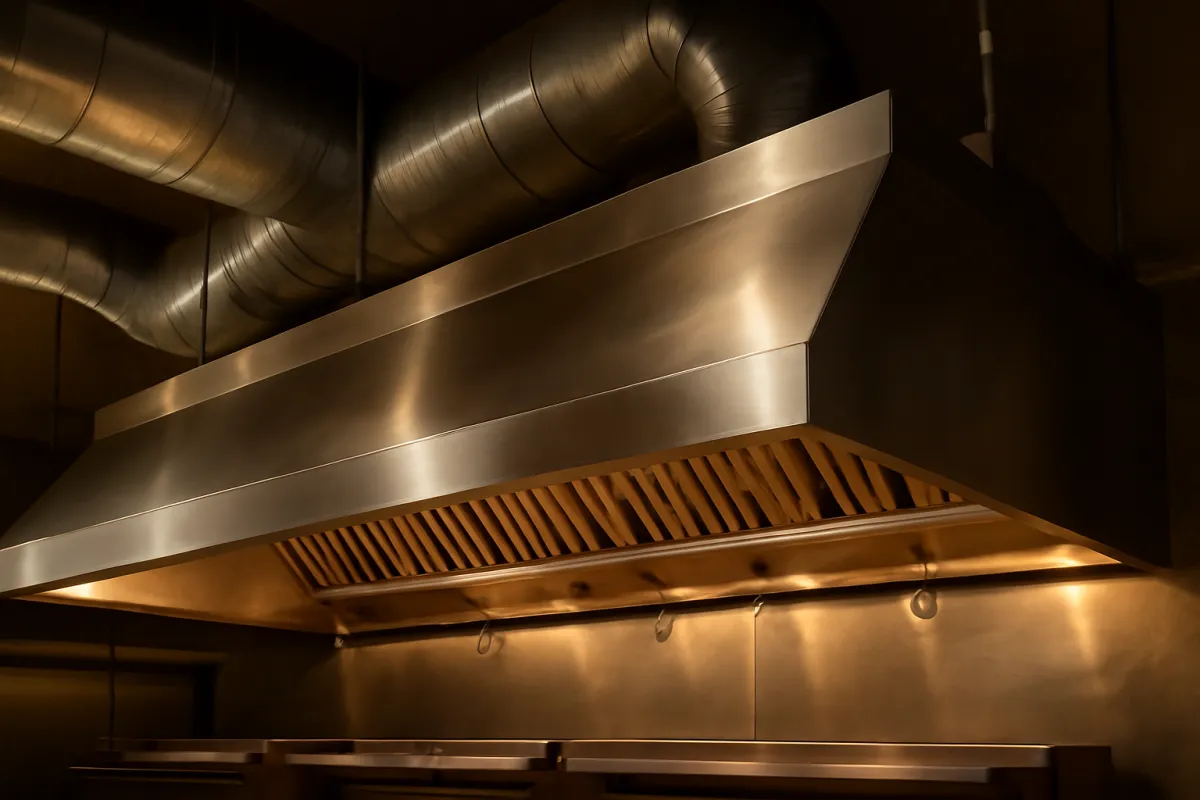
A griddle rarely arrives alone on a cooking line, and its hood cost is almost never calculated by itself, because the same hood is engineered to cover the range, the fryer, or the charbroiler sitting beside it. Our commercial kitchen hood cost case study prices that system in full, including the fork between a Type I and a Type II system and what drives a ventilation package’s total cost.
Griddle accessories and the small extras
A griddle purchase rarely stops at the plate itself. A bench scraper and a set of spatulas are the daily tools a line cook reaches for every few minutes, and a dull or missing scraper turns cleanup into a slower, messier job than it needs to be. A grease caddy or trough liner catches runoff before it reaches the floor drain, and a splash guard along the back edge keeps spatter off a nearby wall or an adjacent cold station.
None of these individually cost much, commonly well under a hundred dollars combined for a basic set, but they are also the items a first-draft budget forgets because they do not appear on the appliance spec sheet the way the griddle’s width and burner count do. Add a small line for them when pricing a griddle purchase rather than discovering the gap on opening week, because a brand-new griddle with no scraper on hand is a brand-new griddle nobody can clean properly.
What drives the cost of a commercial griddle
Five factors move a griddle’s price inside its class: plate width, plate material, plate thickness, the number of independently controlled zones, and heat source. Width and plate material usually dominate what a buyer compares machine to machine, but plate thickness is what actually determines how the griddle behaves under a real rush rather than on a showroom floor at rest.
Controls add a smaller but real amount. A simple mechanical thermostat per zone costs less than a digital temperature readout with programmable presets, and the digital version matters more to consistency across shifts and staff than to raw cooking capability. A kitchen chasing repeatable results across a changing crew benefits from precise, labeled controls; a kitchen with one or two experienced cooks running the same short menu daily rarely needs them.
Where the first griddle dollar goes
Zoom out and the griddle itself is the large majority of its own first-year cost, which is a predictable shape for a mechanically simple appliance with no moving parts beyond a few burner valves or heating elements. The stacked bar below splits the first-year total for the 48-inch floor gas griddle worked example used throughout this case study: the griddle at $3,200, the gas hookup at $410, delivery and leveling at $240, and first-year service at $220, for a first-year total near $4,070.
Where the first griddle dollar goes
Illustrative first-year split for the 48-inch floor gas griddle worked example, summing to 100 percent.
The hood sitting over this griddle is not in this chart on purpose, because it is priced against the whole cooking line rather than against the griddle alone. See the hood cost case study for that number.
That shape puts a griddle closer to a mixer than to a fryer or a hood in how its budget breaks down, because a griddle has no vat of oil, no filtration system, and no code-mandated suppression wired specifically to it the way a fryer’s does. The lines a budget most often forgets are the gas or electrical hookup, which can grow quickly if the existing supply needs upsizing, and the hood allocation, which belongs to the cooking line rather than to this appliance.
New versus used commercial griddles
Used griddles are common in the secondhand equipment market, because a griddle has few parts that wear out and a well seasoned steel plate or a well maintained chrome plate can give many years of service beyond its first kitchen. A used 48-inch floor griddle can often be found for a fraction of its new price from a closing restaurant, a dealer, or an equipment auction.
The part to inspect before anything else is the plate itself. Look across the surface under raking light for warping, deep gouges, or pitting, and run the burners or elements through their full range listening for uneven heat response from one zone to the next. A plate that is flat, evenly seasoned, and shows consistent heat across every zone is usually a sound buy. A visibly warped plate is close to a dealbreaker, because warping changes how oil and food move across the surface and no amount of reseasoning corrects it.
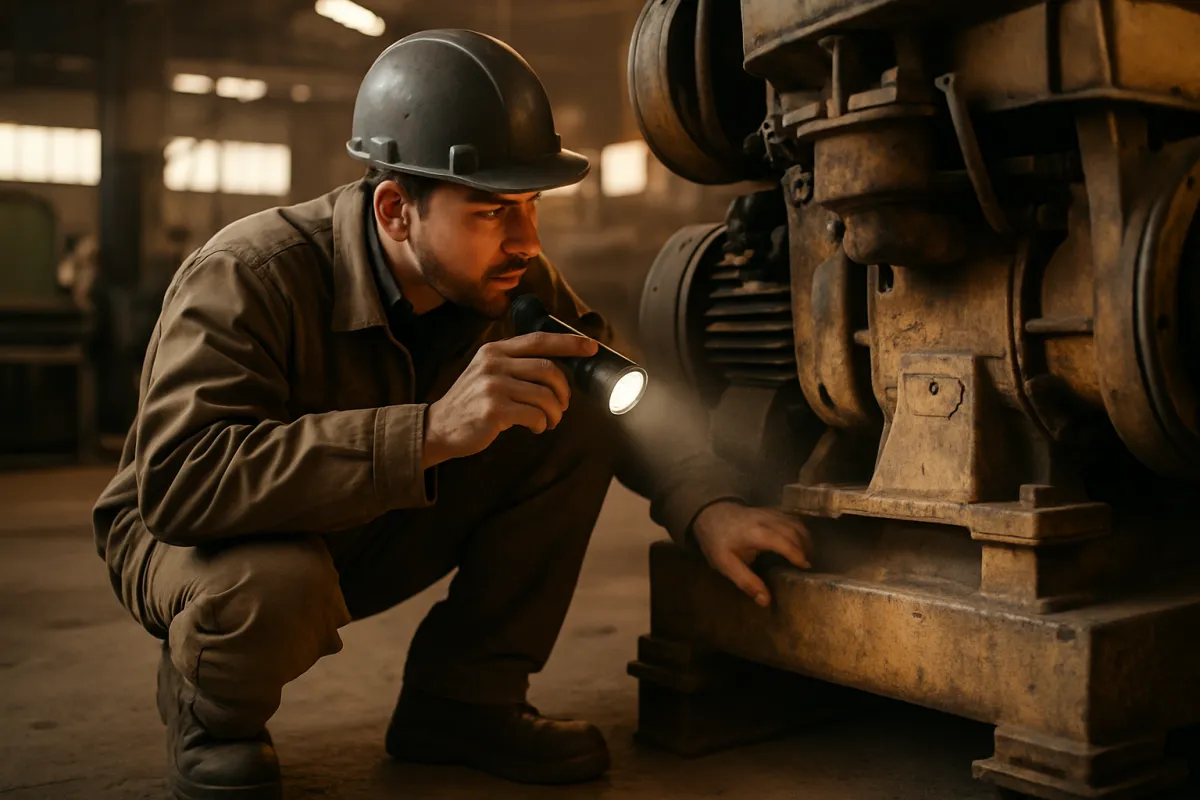
Weigh what a used price does not touch as well. On the worked example in this case study, the griddle itself is nearly four fifths of its own first-year cost, which means a used machine bought at half price saves close to half the first-year total rather than a small slice of it. That makes used buying an effective lever on a griddle, provided the plate inspection comes back clean. Our used versus new equipment case study sets out the cost-per-working-year math that decides this properly.
Maintenance items that actually fail
A commercial griddle fails in a short, predictable list of places. The plate itself can warp from repeated thermal shock, most commonly from dumping cold water on a hot surface to clean it rather than letting it cool first, which is the single most avoidable cause of plate damage on the appliance. Burner ports clog with grease and debris over time and need regular clearing to hold an even flame across the plate.
Thermostats drift out of calibration with age, which shows up as a plate that reads one temperature on the dial and runs noticeably hotter or cooler in practice, a problem that is cheap to catch with a surface thermometer and expensive to ignore because it quietly produces inconsistent food. Grease troughs and drains clog if not scraped and cleared daily, and a blocked drain sends grease pooling on the plate rather than draining away from it. None of these are expensive individually when caught early; a warped plate from thermal shock is the one that is not.
Sizing a griddle to your menu
Size a griddle to how many items need to be on the plate at once during your single busiest moment, not to how many items you cook across a whole shift. A countertop or narrow floor griddle run consistently at capacity during a short, predictable rush can outperform a wider griddle run half empty most of the time, because the wider model is paying for plate space the menu rarely uses.
A breakfast-heavy concept running eggs, pancakes, and hash browns simultaneously needs more plate area at the peak moment than a lunch-focused burger concept running a single item type, even if the lunch concept’s total daily cover count is higher. Count the items a single ticket at your busiest hour puts on the plate at once, size to that number with some headroom, and the width decision stops being a guess.
Cost of ownership per cover
Cost per cover is the number that compares a $650 countertop griddle against a $4,900 floor griddle honestly, because it folds the machine, the hookup, delivery, and ongoing service into one figure you can set against how many covers actually cross the plate.
On the illustrative 48-inch worked example in this case study, an installed package near $3,850 plus about $220 of first-year service, spread over ten years and across 150 covers a day for 300 days a year, roughly 45,000 covers annually, works out to a little over a penny of cost per cover served off that plate. Push the same griddle to 220 covers a day and the per-cover cost falls further still, because the machine and its install cost are fixed while the covers dividing them keep growing. Run your own cover count through the companion beside this case study to see where your own number lands.
Warranty, service, and the parts that fail
Griddle warranties commonly separate the burner or heating element system from the plate itself and from the thermostats, and the burner or element warranty is the one worth reading closely, the same way a mixer’s gearbox warranty is the one that actually signals what the manufacturer believes about the machine’s working life. A plate warranty against warping matters too, since warping is the single most common catastrophic failure on an otherwise well built griddle.
What actually fails, roughly in order of frequency, is thermostat calibration drifting out of range, burner ports clogging with grease and debris, grease troughs and drains clogging from inconsistent cleaning, and eventually a plate warping from thermal shock on a unit that has been repeatedly shocked with cold water while hot. Before buying any class of griddle, ask who services that platform locally, how quickly they can respond, and whether they stock thermostats and burner parts for it. A griddle down during a breakfast rush is a missed morning of service, not a slow one.
Lease versus buy on a griddle purchase
A countertop griddle is usually small enough to buy outright, because financing fees on a sub-thousand-dollar purchase commonly cost more than the cash does sitting in the business for a few months. A 48-to-72-inch floor griddle, especially one bought as part of a wider cooking line package with a range, a fryer, and a hood, is large enough that the lease-versus-buy question is worth running properly.
The honest comparison is the total cost of financing against what that cash would otherwise earn or protect in the business, not the monthly payment against the sticker price. Leasing preserves working capital during a kitchen’s early, cash-tight months and can bundle service into the payment; buying ends the payments sooner and leaves an asset with a modest residual value, since a used griddle’s resale is real but rarely large relative to its new price. Our lease versus buy payback math works through the arithmetic in full, and our restaurant equipment financing case study covers the funding routes. Tax treatment of equipment purchases and leases differs and changes over time, so put a qualified accountant between you and the assumption.
Common mistakes that inflate the number
The first mistake is sizing by width alone without counting how many items a single busy-hour ticket actually puts on the plate at once, which leaves a kitchen either crowded onto too narrow a griddle or paying for plate space it rarely fills. The second is treating the hood as part of the griddle’s own budget rather than pricing it against the whole cooking line it covers, which produces a budget that is wrong in both directions depending on what else shares that hood.
The third is skipping the gas or electrical capacity check until the griddle is sitting crated in the kitchen with nowhere to connect. The fourth is buying used without inspecting the plate under raking light, which is the one check that actually tells you what you are buying. The fifth is dumping cold water on a hot plate to speed up cleaning, the single most avoidable cause of a warped plate on an otherwise well built griddle.
A worked example: a diner and a food truck
Take a neighborhood diner running a full breakfast and lunch menu. It buys a 48-inch floor gas griddle at $3,200, runs a new gas line and regulator for $410, pays $240 for delivery and leveling, an installed package near $3,850. First-year service adds about $220, for a first-year total near $4,070. Running 150 covers a day across 300 days, about 45,000 covers a year, the ten-year total near $6,050 works out to a little over a penny per cover, a cost the plate barely notices against what each cover actually brings in.
Now a taco-and-breakfast food truck with a tight power budget. It buys a 24-inch countertop gas griddle at $900, skips a dedicated gas regulator since the truck’s existing propane system already covers it, pays $120 for delivery and mounting, an installed package near $1,020. At 90 covers a day across 280 service days, about 25,200 covers a year, and roughly $115 of first-year service, the per-cover cost lands a touch higher than the diner’s, because the smaller installed package is spread across fewer covers even though the machine itself cost far less.
The comparison is the lesson. The diner’s griddle costs more than three times the truck’s, but because it runs nearly twice the covers across a longer season, its cost per cover is not proportionally higher. Size and utilization move together, and the griddle that looks cheaper on the invoice is not always the one that costs less to run. Run your own width and cover count through the equipment ROI calculator to see where your own kitchen lands.
The bottom line
How much does a commercial griddle cost? Illustratively $650 for a 24-inch countertop electric unit, $900 for a 24-inch countertop gas unit, $2,400 for a 36-inch floor gas griddle, $3,200 for a 48-inch floor gas griddle, $3,600 for a 36-inch chrome plate floor griddle, $4,100 for a 60-inch floor gas griddle, $4,400 for a 48-inch griddle-charbroiler combo, and $4,900 for a 72-inch floor gas griddle. Unlike a fryer or a hood, the machine itself is the large majority of what a griddle costs in its first year, with the gas or electrical hookup, delivery, and service filling in the rest.
Operators who buy a griddle well do three things in order. They size to the busiest single moment the menu produces, not the daily total, because an undersized plate crowds the rush and an oversized one wastes capital that could go elsewhere on the line. They price the hood against the whole cooking line rather than folding it into the griddle’s own number. And they judge the whole purchase on cost per cover over the planning life of the plate, where a wider, pricier griddle run hard often beats a narrower one run lightly.
Place the griddle inside the whole kitchen budget with our commercial kitchen equipment case study, check the full spec reference with our commercial kitchen equipment list, price the hood it sits under with our commercial kitchen hood cost case study, and weigh a used machine with our used versus new equipment case study, so the griddle line arrives as a plan rather than a surprise.
This case study was written for an operator pricing a griddle purchase, and it is educational material rather than engineering, financial, tax, or legal advice. It names no brand, model, dealer, installer, or lender. Every griddle price, hookup figure, delivery estimate, service cost, cost-per-cover figure, and percentage split appearing above is an illustrative sketch built to show how a griddle purchase is priced and run, and a real machine is quoted on its own width, plate material, heat source, and service terms. Gas supply sizing, electrical capacity, and ventilation requirements are governed by local mechanical, electrical, and fire codes that vary by jurisdiction and change over time, and your local authority having jurisdiction, a licensed gas fitter, and a licensed electrician are the only sources that can tell you what applies to your kitchen. Gather written quotes from licensed dealers and current pricing from your own suppliers, and put a qualified professional between you and any purchase, lease, or installation you commit to.
Frequently asked questions
How much does a commercial griddle cost?
Illustratively, a 24 inch countertop electric griddle runs near six hundred fifty dollars, a 24 inch countertop gas griddle near nine hundred, a 36 inch floor gas griddle near twenty four hundred, a 48 inch floor gas griddle near thirty two hundred, a 36 inch chrome plate floor griddle near thirty six hundred, a 60 inch floor gas griddle near forty one hundred, a 48 inch griddle charbroiler combo near forty four hundred, and a 72 inch floor gas griddle near forty nine hundred. Width and plate material move the number more than almost anything else on the appliance.
What size griddle do I need?
Size a griddle to how many items you need cooking on it at the busiest single moment, not to your daily total. A 24 to 36 inch griddle suits a cafe or small diner running a short breakfast and burger menu, a 48 inch griddle is the common step for a quick-service or full breakfast concept, and a 60 to 72 inch griddle belongs to a high-volume diner or a griddle-led concept running pancakes, eggs, and griddled sandwiches at once across a long rush. Measure the plate in cooking surface, not just width, since depth varies between models.
Should I buy a gas griddle or an electric griddle?
A gas griddle heats faster and recovers temperature more quickly after a heavy load hits the plate, which is why most higher-volume kitchens choose gas. An electric griddle holds a steadier, more even surface temperature across the plate and needs no gas line, which suits a location where gas is unavailable or where a landlord restricts open flame. Illustratively a countertop gas unit runs somewhat above its electric equivalent, and the real cost difference is usually in the utility hookup rather than the machine itself.
What is the difference between a chrome griddle plate and a steel griddle plate?
A standard steel griddle plate is mild steel or stainless steel, develops a seasoned patina with use, and is the common choice across most kitchens. A chrome plate is plated over the steel base, resists sticking and staining more than bare steel, cleans faster, and does not need the seasoning a steel plate benefits from. Illustratively a chrome plate upgrade adds a meaningful premium over the same griddle in plain steel, which a high-turnover breakfast or sandwich concept often recovers in faster cleanup and fewer scraped-plate hours.
Does a commercial griddle need its own ventilation hood?
Yes. A griddle cooks at high, sustained heat and produces grease laden vapor the same way a range or a fryer does, so it needs a Type I exhaust hood with grease filters and fire suppression over it, which is a code requirement an inspector checks before the kitchen opens. Our commercial kitchen hood cost case study prices that system separately, because the hood is engineered to the whole cooking line rather than to any single appliance, and a griddle rarely arrives without range, fryer, or broiler equipment sharing the same hood.
Is it worth buying a used commercial griddle?
Often yes, because a griddle is mechanically simple with a thick steel or chrome plate, burners or elements, and a thermostat, which gives it a long working life when it has been cared for. The part to inspect before anything else is the plate itself: look for deep gouges, warping, or uneven heat response across the surface, since a warped plate cooks unevenly no matter how well the burners work. A used griddle with a flat, well seasoned plate and functioning thermostats is usually a sound buy; one with a visibly warped or heavily pitted surface is a seasoning problem that never fully resolves.
How long does a commercial griddle last?
A well maintained commercial griddle commonly gives ten to fifteen years of service, and the plate itself often outlasts the thermostats, the burners, or the heating elements underneath it. Gas griddles with cast iron or steel burners tend to hold up longest when the burner ports are cleaned on schedule, and electric griddles depend on how often the heating elements are replaced. Treat ten years as a reasonable planning horizon for a griddle bought new and run through a daily rush.
Should I buy or lease a commercial griddle?
A single countertop griddle is usually small enough to buy outright, since the fees on financing a sub thousand dollar purchase commonly outweigh what the cash would otherwise earn sitting in the business for a few months. A 48 to 72 inch floor griddle, especially one bought as part of a wider cooking line package with a range, fryer, and hood, is large enough that the lease versus buy math is worth running properly. Tax treatment of equipment purchases and leases differs and changes over time, so ask a qualified accountant about your own situation.