
What's on this page
- What a commercial oven costs
- Illustrative cost by oven type
- The classes of commercial oven
- Convection ovens, the default workhorse
- Combi ovens and what the premium buys
- Deck ovens and stone hearth baking
- Conveyor ovens and throughput per hour
- Rack and rotary rack ovens
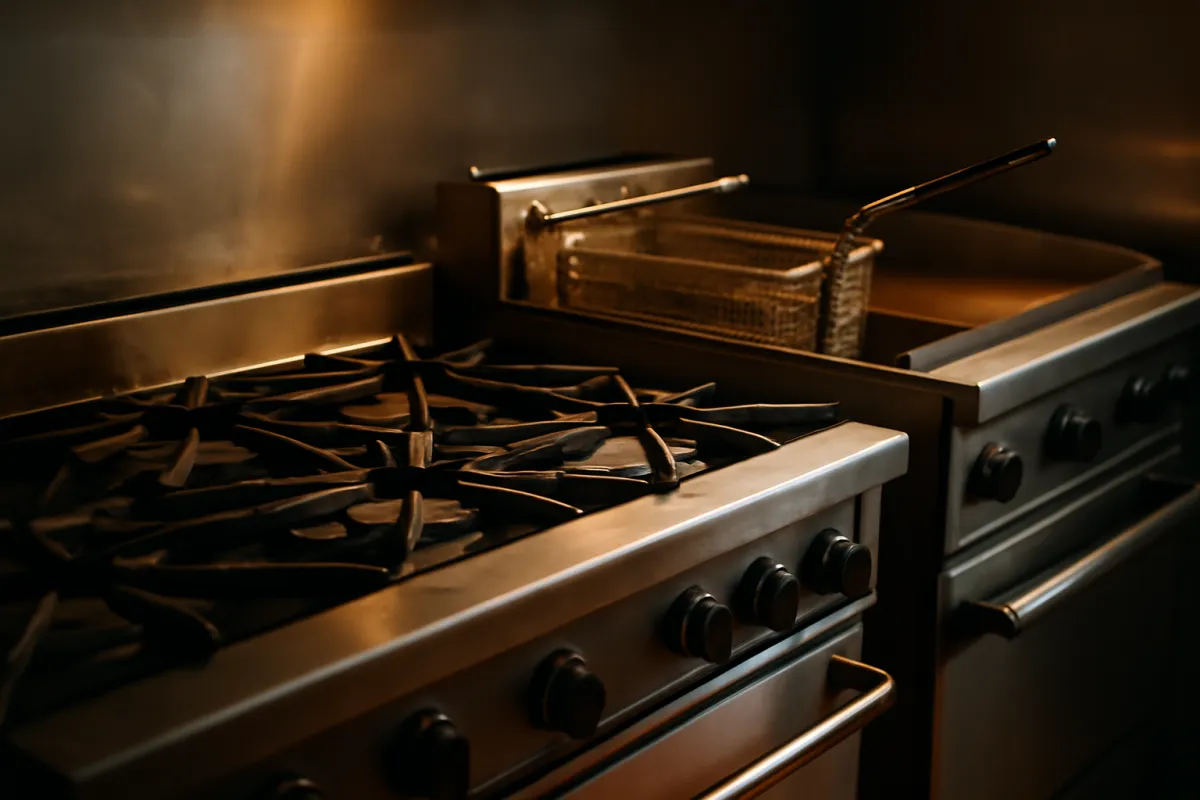
- Range ovens and the cook line base
- Gas versus electric commercial ovens
- Capacity measured in pans and decks
- Ventilation and the hood requirement
- Electrical service and gas line upgrades
- Installation, delivery, and clearance
- What drives the cost of a commercial oven
- Where the first oven dollar goes
- Energy and the running cost
- Cost of ownership per production hour
- Sizing the oven to your production volume
- New versus used and refurbished ovens
- Warranty and the service network
- Service, parts, and the maintenance you actually do
- Lease versus buy on an oven package
- Common mistakes that inflate the number
- A worked example: a restaurant and a production kitchen
- The bottom line
Short answer: Illustratively, a countertop convection oven runs near $2,500, a full-size convection oven near $5,500, a double deck oven near $12,000, a conveyor oven near $14,000, a six-pan combi near $22,000, a rack oven near $35,000, and a rotary rack oven near $60,000. The ventilation package commonly costs more than the oven under it, and over ten years energy, ventilation, and service cost well over twice the oven and its install combined.
Ask what a commercial oven costs and the answer depends almost entirely on which oven you mean. A countertop convection box that plugs into a wall and a rotary rack oven that a baker wheels a full rack into are both commercial ovens, and roughly twenty four times as much money separates them. Between those ends sit the full size convection oven that most restaurants actually buy, the deck oven that a pizzeria lives on, the conveyor that a high volume kitchen uses to remove judgment from the cook, and the combi that does the work of several machines at once. The class you need is set by what you produce and how fast, not by the budget you wish you had.
This case study prices ovens end to end: the classes from countertop convection to rotary rack, gas versus electric and what each choice does to the install and the running cost, capacity counted in pans and decks rather than vague size, the ventilation package that frequently costs more than the oven itself, the electrical service and gas line work behind it, and total cost of ownership measured the way an operator should measure it, per production hour. It sits alongside our commercial kitchen equipment case study, which prices the whole kitchen, and our commercial dishwasher case study, which runs the same method on the other end of the room. Run your own production hours as you read with the equipment ROI calculator.
Key takeaways
- Ovens span a huge range. Illustratively a countertop convection oven runs near twenty five hundred dollars, a full size convection oven near fifty five hundred, a double deck oven near twelve thousand, a conveyor near fourteen thousand, a six pan combi near twenty two thousand, a rack oven near thirty five thousand, and a rotary rack oven near sixty thousand.
- The ventilation package commonly costs more than the oven under it. On the worked example here a single full size oven position carries an illustrative seventy four hundred dollar hood package against a fifty five hundred dollar oven.
- Gas versus electric is an install decision as much as a running cost decision. Gas needs a line of adequate size, electric may need a heavier circuit or a panel with spare capacity, and neither is universally cheaper to run.
- Capacity is sold in pans, decks, and belt width, not in vague sizes. Size to peak output rather than average output, and discount published throughput for real kitchen interruptions.
- Judge an oven on cost per production hour over its life, not on sticker. On the illustrative worked example, ten years of energy, ventilation, and service costs well over twice the oven and its install combined.
What a commercial oven costs
How much does a commercial oven cost? Illustratively, a countertop or half size convection oven commonly runs near twenty five hundred dollars, a standard oven base under a range near thirty five hundred, a full size single convection oven near fifty five hundred, a double deck oven near twelve thousand, a single belt conveyor oven near fourteen thousand, a six pan combi oven near twenty two thousand, a single rack oven near thirty five thousand, and a double rotary rack oven near sixty thousand. Those are machine prices for new units of ordinary specification, and the spread between the ends of that list is why an average oven price tells you nothing useful.
Machine price is also only the opening line. An oven has to be fed fuel, vented, delivered into a room that may not have a door wide enough for it, set with legal clearances around it, and then run for thousands of hours a year. On a small oven those surrounding lines routinely exceed the machine. That is the same lesson our commercial refrigerator case study draws about a compressor that never sleeps, and it lands even harder here, because an oven forces a ventilation decision that refrigeration does not. Price the class, then the room, then the hours, and the number turns into a plan.
Illustrative cost by oven type
Put the classes on one axis and the decision explains itself. The chart below sketches illustrative purchase figures across the common commercial oven types, from a countertop convection box to a rotary rack oven. These are planning shapes rather than quotes, and any specific machine can land well outside them depending on capacity, fuel, controls, build quality, and options.
Illustrative machine cost by oven type
Typical purchase cost for a new oven of each class, before ventilation and install. Shape, not a quote.
The rotary rack oven costs roughly twenty four times a countertop convection oven, and the gap is capacity and continuous duty, not a fancier version of the same box. Pick the class from your peak output first.
The shape is the lesson. A spread this wide tells you the oven budget is a function of production volume and product type, not a fixed cost of owning an oven, and that the smartest lever you hold is buying the class that matches your busiest hour rather than the one that matches your comfort with the price. Run your own class and production hours through the companion beside this case study, and the range collapses into a single planning number for the kitchen you are actually building.
The classes of commercial oven
Before pricing any single machine it helps to see the whole family, because buying the wrong class is a far more expensive mistake than paying a little too much inside the right one. The convection oven circulates hot dry air with a fan and is the general purpose workhorse of the American commercial kitchen. The combi oven adds controlled steam to that convection, so one cabinet can roast, steam, poach, proof, and hold. The deck oven cooks on a heated stone or steel hearth with the product placed directly on the deck, which is what pizza and hearth bread want.
Above and beside those sit the volume machines. A conveyor oven pulls product through a heated tunnel on a belt at a set speed, so the cook becomes a setting rather than a judgment call. A rack oven takes an entire rolling rack of pans at once, and a rotary rack oven turns that rack while it bakes for evenness, which is the bakery and production kitchen answer. Under all of them sits the humble range oven, the cabinet built into the base of a cooking range. Each class carries a different footprint, a different utility draw, a different ventilation demand, and a different price.
Convection ovens, the default workhorse
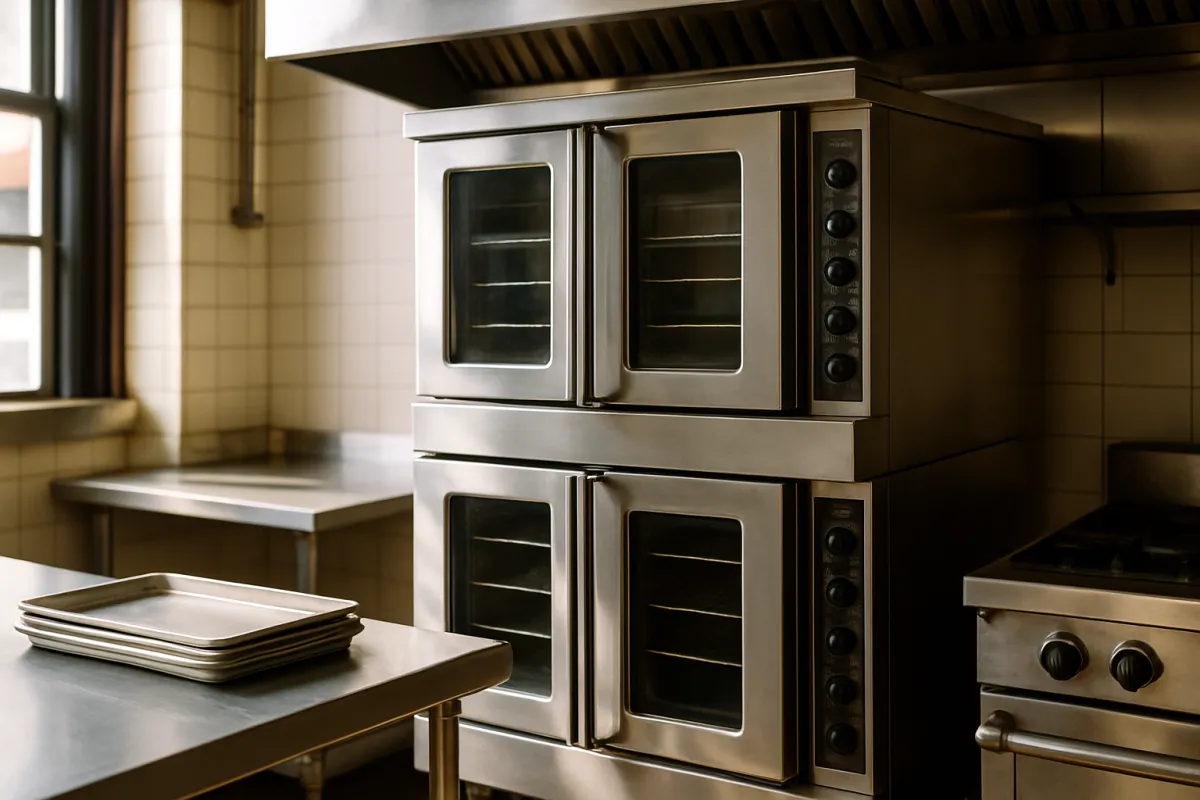
If a kitchen buys one oven, it is usually a convection oven. A fan circulates heated air across the product, which cooks faster and more evenly than still air and lets a single cabinet hold several full size sheet pans at once. Illustratively a full size single convection oven lands near fifty five hundred dollars new in ordinary specification, and a countertop or half size unit lands near twenty five hundred. Two full size cabinets stacked on one footprint, the classic restaurant answer, roughly doubles the machine line while using the same floor space and the same hood position.
What you are buying inside that price is mostly build and control. Heavier gauge steel, better door seals, a stronger fan motor, and a two speed fan that lets you slow the airflow for delicate product all separate a cabinet that runs a decade from one that becomes a service call. Controls range from a simple thermostat and mechanical timer to programmable digital controls with recipe memory, and each step up costs money and adds something that can fail. For most restaurants a robust mechanical oven with good seals is the better buy, and the money saved is better spent on the ventilation the oven forces you to build anyway.
Combi ovens and what the premium buys
A combi oven runs convection, steam, or a controlled blend of the two, and that single capability is why it costs several times a convection oven of similar pan capacity. Illustratively a six pan combi lands near twenty two thousand dollars and a ten pan machine costs meaningfully more. What the premium buys is consolidation: one cabinet can roast proteins, steam vegetables, poach, proof dough, retherm banquet plates, and hold at temperature, which in a tight kitchen can replace a steamer, a holding cabinet, and part of a range.
The premium also buys precision. Controlled humidity reduces shrink on roasted proteins, which on high value product can be a real yield argument rather than a chef preference. Probe cooking, programmable multi stage recipes, and automatic cleaning cycles make output consistent across a crew with mixed skill levels, which matters more in a kitchen that turns over staff than any specification on paper.
The costs that follow the combi are the ones buyers miss. A combi needs a water supply, a drain, and in most areas treated water, because scale destroys steam generators faster than anything else in a kitchen. It carries more electronics, more sensors, and more parts that need a trained technician rather than a handy cook. Budget the water treatment, the drain, and a service contract as part of the purchase, and buy the combi only when the menu genuinely uses the steam side. A combi bought as a very expensive convection oven is the most common way to overspend on an oven.
Deck ovens and stone hearth baking
Deck ovens cook by conduction from a heated hearth as well as by the surrounding air, which is what produces the bottom crust that pizza and rustic bread depend on. Product goes straight onto the deck, usually with a peel, and the deck holds and returns heat as each load pulls temperature out of it. Illustratively a double deck oven lands near twelve thousand dollars, with single deck units costing less and three or four deck stacks costing proportionally more.
Capacity here is measured in deck area rather than pans, which is a genuinely different unit and one worth understanding before you buy. A deck oven’s output is the number of pies or loaves the hearth surface holds at once divided by the bake time, so a longer deck or a second deck is a direct throughput purchase. Recovery matters as much as capacity: a deck that drops temperature when a cold load lands and takes minutes to come back will throttle a busy service regardless of its size.
The variants split on fuel and construction. Gas deck ovens are common and inexpensive to run in most areas, electric decks give tighter control over top and bottom heat and are the answer where gas is unavailable, and wood or coal fired hearth ovens are a construction project rather than an equipment purchase, with masonry, structural, and ventilation implications that belong in a buildout budget. Whichever you choose, the ventilation package over a deck oven is a serious line and is priced in our commercial kitchen hood case study.
Conveyor ovens and throughput per hour
A conveyor oven moves product through a heated tunnel on a belt at a set speed, so the bake time is a dial rather than a decision. That removes judgment from the cook, which is exactly the point in a high volume operation with a crew that changes constantly. Illustratively a single belt conveyor oven lands near fourteen thousand dollars, with stacked units and wider belts costing more in proportion to the belt area they add.
Conveyors are specified by belt width and by the length of the heated tunnel, and those two numbers together with belt speed determine output per hour. Two smaller conveyors stacked often beat one large one for an operation with variable volume, because you can run one during slow periods and fire the second only when volume demands it, which cuts idle energy substantially. That is a real operating saving rather than a marketing claim, since an empty hot oven consumes energy at close to its full idle rate whether product is moving or not.
The tradeoff is flexibility. A conveyor does one thing at one setting extremely well, and changing product often means changing belt speed and temperature, which takes time to stabilize. Kitchens that run a narrow menu at high volume love them. Kitchens with a broad menu and unpredictable mix usually find a convection or combi oven more useful, and end up regretting the floor space and the hood capacity the conveyor consumed.
Rack and rotary rack ovens
Rack ovens are the production answer. A whole rolling rack of sheet pans goes into the cabinet at once, bakes, and rolls out, which removes the loading and unloading labor that dominates pan by pan baking. Illustratively a single rack oven lands near thirty five thousand dollars and a double rotary rack oven near sixty thousand. A rotary oven turns the rack during the bake so that every pan sees the same conditions, which is the difference between acceptable and consistent across a full rack of product.
These are not equipment purchases so much as construction decisions. A rack oven is tall, heavy, and frequently arrives in pieces or needs a doorway opened to get in. It draws serious fuel or electrical capacity, produces a lot of heat and moisture, and usually needs its own ventilation. Floor loading, ceiling height, and the path from the loading dock to the final position all have to be checked before the order is placed, not after the truck arrives.
The economics that justify them are labor and volume. If a bakery or production kitchen is running racks of product all day, a rack oven changes the staffing plan, which repays a large purchase far faster than any energy saving would. If the volume is not there, the same money buys several convection ovens and a lot of flexibility. Our equipment financing case study works through the payback discipline that decides this kind of purchase.
Range ovens and the cook line base
The cheapest oven in most kitchens is the one nobody prices separately: the cabinet in the base of a cooking range. A standard range oven under a six burner top costs relatively little as an incremental line, illustratively near thirty five hundred dollars when you separate it from the range above it, and for a small operation it can genuinely be enough oven. It sits under a hood that already exists for the burners, it needs no additional gas connection beyond the range, and it consumes no extra floor space.
Its limits are real, though. Most range ovens are still air rather than convection, so they bake less evenly and more slowly, they hold fewer pans, and the space is often shared with the range top’s own demands during service. A convection version of the same base costs more and helps, but the capacity ceiling remains. Kitchens routinely discover that the range oven is fully committed to one task, at which point every other baking or roasting job has nowhere to go.
The practical planning point is to treat the range oven as capacity you already own rather than as capacity you can count on. Our restaurant equipment list places the range and its base in the wider equipment plan, and the honest question is whether the base can carry the volume you have forecast or whether it is a convenient assumption hiding a bottleneck.
Gas versus electric commercial ovens
Fuel is one of the first decisions and it moves both the install and the running cost. Gas ovens are common, generally cost less per unit of heat in most of the country, and recover temperature quickly after a door opens, which matters in a kitchen that opens doors constantly. They need a gas line of adequate size and pressure, a connection with the correct shutoff and flexible connector arrangement, and combustion air, and they usually carry a firmer ventilation requirement because they produce combustion products as well as cooking vapor.
Electric ovens generally hold temperature more evenly and give finer control, which is why electric decks are favored where precision matters. They need no gas infrastructure at all, which is decisive in buildings with no gas service, in food halls, and in commissary spaces. What they need instead is electrical capacity, and a full size electric oven is a substantial load that may require a heavier circuit, a larger feeder, or in an older building a panel that simply has no room left.
Neither is universally cheaper. On the illustrative figures in this case study a full size gas convection oven runs about sixty three cents an hour in energy and the electric equivalent about ninety five cents, but those figures are built on assumed rates, and local gas and electricity pricing varies enough to reverse the comparison. Get your own rates off a recent utility bill, apply them to the oven’s rated input, and let the arithmetic decide. Run the same comparison against your own hours in the equipment ROI calculator.
Capacity measured in pans and decks
Vague size language causes more oven buying mistakes than price does. Ovens are sold in specific units, and using them makes comparison possible. Convection, combi, and rack ovens are counted in full size sheet pans, and the honest number is the pans you can run with usable spacing rather than the maximum rack positions the cabinet contains. A full size convection oven commonly runs around five pans with real spacing, a double stack doubles that on the same footprint, and a rack oven takes a whole rolling rack at once.
Combi ovens are counted the same way, as six pan, ten pan, twenty pan and so on, which makes the price ladder legible. Deck ovens are counted in decks and in deck area, since output is the surface you can load divided by the bake time. Conveyor ovens are counted in belt width and heated length, with belt speed converting that into pieces per hour.
Learn the unit that applies to the class you are buying, then convert your own menu into it. Count the pans, pies, or loaves your busiest hour actually has to produce, add the load that arrives all at once when a seating turns, and compare that against realistic throughput with a discount applied for interruption, loading time, and doors opening. That conversion, done honestly on paper, is worth more than any negotiation on the machine price.
Ventilation and the hood requirement
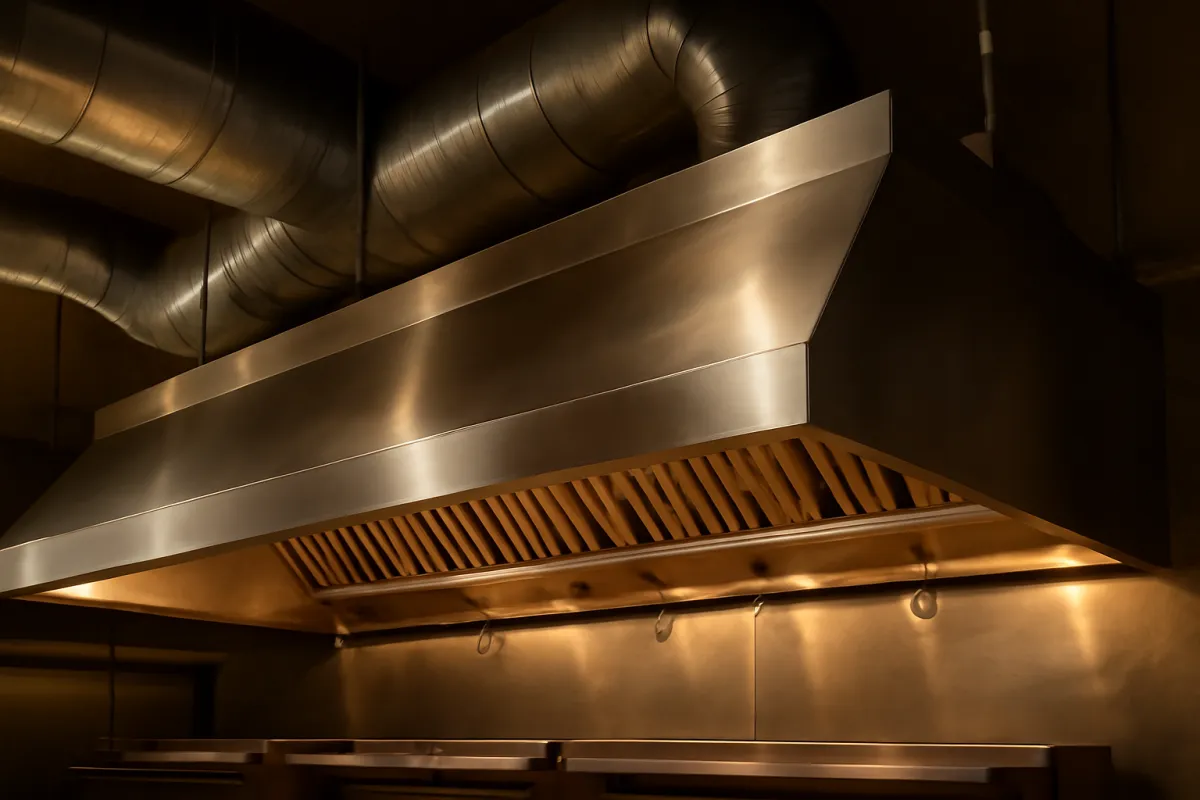
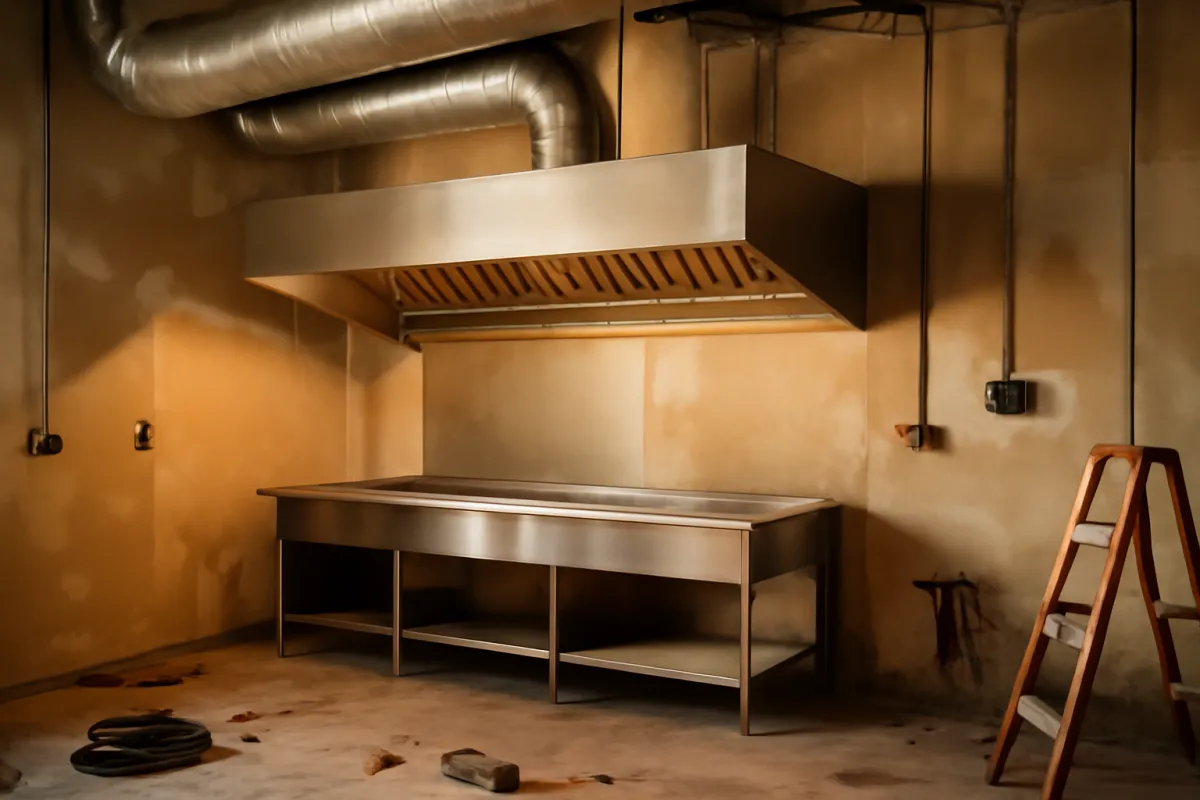
The most expensive thing about a commercial oven is frequently not the oven. Cooking equipment that produces grease laden vapor is commonly placed under a grease rated hood with filtration, a fan, ducting to the roof, makeup air to replace what is exhausted, and in most cases a fire suppression system over the line. That package is a five figure line on many installations, and on the illustrative worked example here a ventilation package for a single full size oven position lands near seventy four hundred dollars, comfortably more than the fifty five hundred dollar oven under it.
Requirements are set by local mechanical, fire, and health codes and vary by jurisdiction, so the local building authority and health department are the only authorities on what your oven in your room requires. As a general shape, heavier grease producing equipment carries the firmest requirements, while some low output or self venting equipment falls under lighter ones. Ventless oven designs exist and can change the calculation, but whether they satisfy your local code is a question for the authority having jurisdiction rather than for a catalog.
The planning consequences are worth naming. Adding an oven to a line already under a hood may consume spare capacity you did not know you had, or may require the hood and fan to be resized, which is a much larger job than sliding a machine into place. Inheriting a compliant hood with genuine spare capacity in a former food space is one of the biggest single levers on an oven budget. Our commercial kitchen hood case study prices the whole package and explains where the categories divide.
Electrical service and gas line upgrades
Behind every oven sits an infrastructure question the quote does not mention. A gas oven needs a supply line sized for its input rating, and adding a large appliance to a line already feeding a range, a fryer, and a water heater can push the whole system past what the pipe can deliver at pressure. The fix ranges from a modest run of new pipe to an upgraded meter and service, and the difference between those two outcomes is thousands of dollars decided by facts about the building, not about the oven.
Electric ovens raise the equivalent question on the panel. A full size electric oven is a serious load, and the question is whether the existing service has capacity, whether the panel has physical space for the breaker, and whether the feeder from the meter can carry the new total. In an older building the honest answer is sometimes a service upgrade, which is a utility coordination project with a timeline as well as a cost.
Illustratively, on a single full size convection oven the gas line work and connection land near eighteen hundred dollars and the equivalent electrical work runs somewhat higher, and both scale with the size of the machine. Have a licensed mechanical contractor and a licensed electrician assess the actual room before ordering, because discovering a capacity problem after delivery converts a planned expense into an emergency one. Our commercial kitchen requirements note covers the wider set of things a compliant kitchen has to have in place.
Installation, delivery, and clearance
Getting the oven into the room is its own line item and a surprisingly common source of overruns. Ovens are heavy, and the larger classes arrive on pallets that do not fit through standard doors. Doorways get removed, machines get disassembled and rebuilt in place, and occasionally a wall gets opened. Measure the full path from the delivery point to the final position, including turns, thresholds, and ceiling height, before the order is placed rather than on delivery day.
Once it is in the room, the oven has to be set correctly. It needs to be level for even baking, on legs or casters appropriate to the floor and to the cleaning regime, with the manufacturer’s required clearances to combustible surfaces on every side and above. Those clearances are not negotiable and they frequently force a layout change, which is easier to discover on a drawing than with a machine already in position. Stacked cabinets need the correct stacking kit and often a restraint, and casters need a restraining device so gas connections are not stressed.
Illustratively, delivery, setting, leveling, and clearance work on a single full size convection oven land near fourteen hundred dollars, rising steeply with size and with the difficulty of the path. Add commissioning: a competent installer should verify gas pressure or electrical supply, confirm the oven reaches and holds its set temperature, and hand over a machine that has been checked rather than merely plugged in.
What drives the cost of a commercial oven
Once the class is chosen, a handful of factors decide where a machine lands inside its range. Capacity comes first, because pans, decks, or belt area is the specification you are really paying for, and a cabinet rated for double the output costs meaningfully more in every class. Fuel follows, since gas and electric versions of the same oven rarely carry the same price and never carry the same install. Build quality is the factor buyers most often underrate: heavier steel, better insulation, robust door hinges and seals, and a serviceable fan motor are what separate a decade of service from a monthly service call.
Beyond those sit the options that quietly add up. Programmable controls with recipe memory, probe cooking, two speed fans, humidity injection on a convection oven, steam generators versus boilerless designs on a combi, automatic wash cycles, stacking kits, casters, legs, and pan racks all cost money up front and change the running cost afterwards. Insulation quality deserves special mention because it is invisible on a spec sheet and shows up on every energy bill and in the comfort of the room. Read capacity, fuel, build, and options together, and the price stops looking arbitrary.
Where the first oven dollar goes
Zoom out and the oven is rarely the largest line in its own budget. The stacked bar below splits the first year of the single full size gas convection oven worked example used later in this case study: the oven at fifty five hundred dollars, the ventilation package at seventy four hundred, the gas line and install work together at thirty three hundred, and the first year of running cost at thirty eight hundred, for a first year total near nineteen thousand nine hundred.
Where the first oven dollar goes
Illustrative first-year split for the single convection oven worked example, summing to 100 percent.
The oven is barely a quarter of the first year. Ventilation leads, and the running slice repeats every year for the life of the machine.
That is the whole argument for judging an oven on cost per production hour rather than on price. In year one the machine is a minority of the total. By year four the cumulative running cost has passed the oven and its install combined, and by year ten it dwarfs them. An oven that costs more up front but insulates better, idles lower, or holds temperature without cycling hard is frequently the cheaper oven well before its life is over, which is the same total cost of ownership lens that runs through all of our equipment coverage.
Energy and the running cost
Ovens are among the heaviest energy consumers in a kitchen, and the reason is idle time rather than cooking time. An oven that is hot and empty draws close to its idle rate for every hour it waits, and in a typical restaurant the oven is hot for far longer than it is loaded. That is why the single largest energy saving available to most kitchens costs nothing: turning ovens on later, turning them off earlier, and consolidating production so that one cabinet runs full rather than two running half empty.
Insulation and door seals decide how much of that idle draw is wasted. A worn gasket bleeds heat continuously and forces the burner or elements to cycle harder, which raises the bill and cooks the room. Door seals are cheap parts and they are the most reliably profitable maintenance item on an oven.
On the illustrative figures used throughout this case study, a full size gas convection oven runs about sixty three cents an hour in energy, the electric equivalent about ninety five cents, and a six pan combi worked harder in a production kitchen about ninety cents. Add roughly twenty cents an hour for the ventilation the oven forces you to run, counting hood fan energy and the periodic cleaning that keeps the system safe and legal. Local rates move all of these figures, so substitute your own from a recent bill.
Cost of ownership per production hour
Cost per production hour is the number that lets you compare a cheap oven against an expensive one honestly, because it folds everything the machine consumes into one figure you can multiply by hours. Build it from four components: energy, the ventilation the oven obliges you to run, routine service and parts, and the whole package amortized over the years you expect to keep it.
On the illustrative figures used here, a full size gas convection oven running ten hours a day for three hundred fifty days a year covers thirty five hundred production hours. Energy at sixty three cents, ventilation at twenty cents, and service and parts at twenty five cents make one dollar and eight cents an hour of running cost, or about three thousand seven hundred eighty dollars a year. Spread the sixteen thousand one hundred fifty five dollar package, oven plus hood plus gas plus install, over ten years and ownership adds about forty six cents an hour, for roughly one dollar and fifty four cents all in.
Run the same arithmetic on a busier six pan combi in a production kitchen and the shape shifts: a larger package, more hours, and a higher hourly running cost that lands near two dollars and twenty six cents all in. The lesson is not that one machine wins. It is that the per hour lens is the only comparison that survives contact with reality, because it prices idle time, ventilation, and the install that a sticker price ignores entirely.
Sizing the oven to your production volume
The sizing mistake that costs the most is sizing to average volume. A kitchen that keeps up on an average day will drown on the busiest hour of the busiest night, and when the oven becomes the bottleneck, every ticket behind it waits. The right method is to count peak output per hour in the unit the oven is sold in, not daily output. Estimate the pans, pies, or loaves your busiest hour has to produce, add the load that arrives all at once when a seating turns or a catering order lands, and compare that peak against class ratings.
Published throughput deserves a discount when you apply it. Ratings assume continuous, perfectly timed operation with a full load and a closed door. A real kitchen opens the door, loads unevenly, and loses recovery time on every cycle. As a planning habit, assume an oven delivers meaningfully less than its rating in daily use and size accordingly.
Stacking is the usual answer when peak demand exceeds one cabinet. Two full size convection cabinets stacked double the pan capacity on the same footprint and the same hood position, which is why the double stack is so common in restaurants. It also gives redundancy: when one cabinet fails, service continues at half speed rather than stopping. Weigh that against the flexibility argument for one larger machine, and let the peak hour decide. Our catering business walkthrough shows how quickly peak load logic changes when volume arrives in batches.
New versus used and refurbished ovens
Used ovens are plentiful, because restaurants close and kitchens get rebuilt, and a used convection oven can cost a fraction of new. The savings are real, and for an operator with more time than capital a well chosen used oven is a legitimate way to open. But ovens carry specific used risks. Door seals and hinges wear in ways that are easy to miss and expensive in energy. Fan motors and bearings fail. Thermostats drift, so a dial that reads correctly may be running the cabinet twenty five degrees off. Deck ovens can have cracked stones, and combi ovens can carry scale damage that is effectively terminal.
Refurbished is a different proposition from used. A dealer who has actually tested, cleaned, replaced seals, calibrated, and warranted a machine is selling something meaningfully closer to new, and the price difference between a refurbished unit and a listing that says it was working when removed reflects real work. Insist on seeing an oven run, reach set temperature, and hold it before money changes hands, and check that the machine will physically fit your ventilation and your fuel supply.
Our used versus new equipment case study works through the cost per year arithmetic that makes this decision numerically rather than emotionally, and our note on where to buy restaurant equipment covers the channels where used ovens actually surface.
Warranty and the service network
Warranty terms deserve as much attention as price, and they are easy to skim. What matters is not just the length but the coverage: parts only versus parts and labor, what counts as a wear item excluded from cover, whether the warranty requires professional installation to remain valid, and whether it survives a change of ownership if you might sell the business. Combi ovens and other electronics heavy machines often carry conditions about water quality, and neglecting treatment can void cover on exactly the component most likely to fail.
Service network availability is the factor that actually decides downtime, and it is invisible on a spec sheet. An oven with excellent specifications and no authorized technician within a reasonable distance is a machine that sits cold while parts ship. Before buying, ask who services this equipment locally, how quickly they respond, and whether common parts are stocked regionally or ordered from overseas. A dealer who cannot answer those questions clearly has told you something useful.
The practical move is to line up a service relationship before you need one. Get the technician who will maintain the oven involved at the specification stage, because they know which machines fail in your area and which parts sit on a shelf. That relationship costs nothing to establish and is worth a great deal on the morning an oven will not light.
Service, parts, and the maintenance you actually do
An oven works in heat, grease, and constant use, and things wear. Door gaskets, hinges, latches, fan motors and bearings, igniters, thermocouples, heating elements, thermostats, and on a combi the steam generator, water valves, and probes are all consumables on a long enough timeline. Illustratively, budgeting around twenty five cents per production hour for service and parts is a reasonable planning figure, which on a restaurant running thirty five hundred hours a year is close to nine hundred dollars annually and rises as the machine ages.
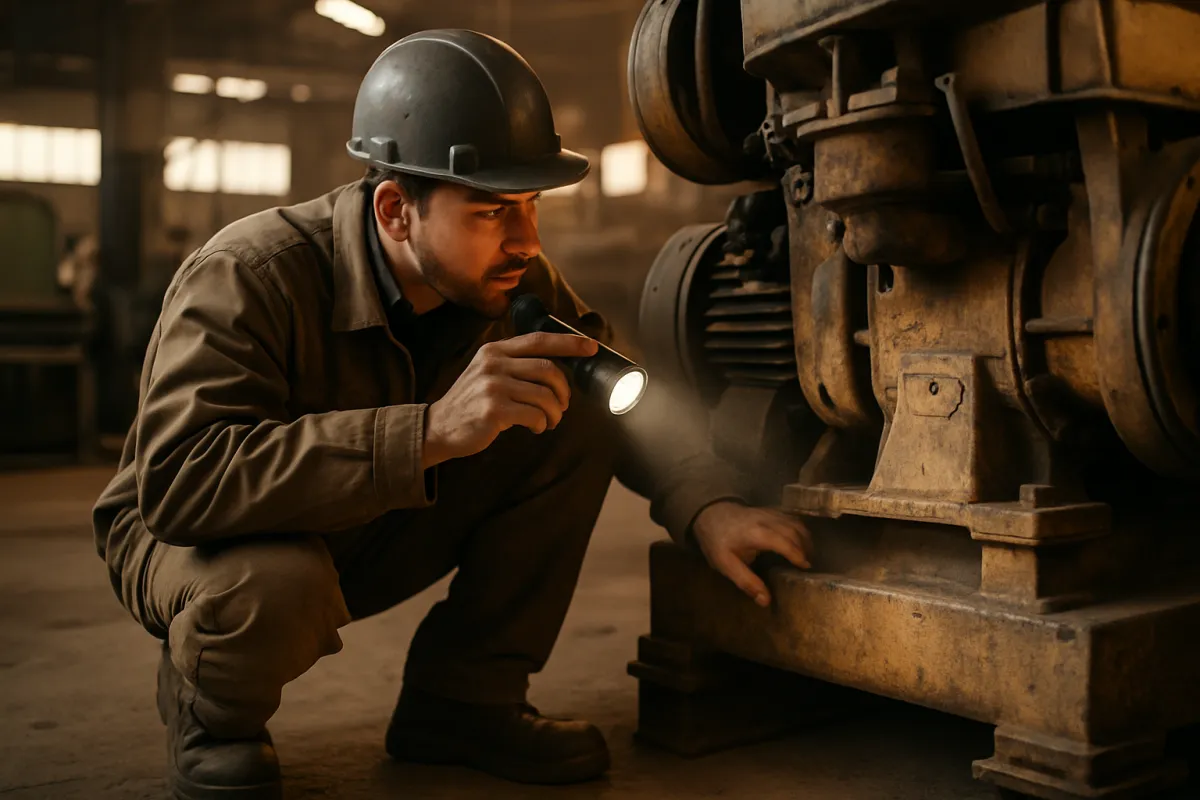
The maintenance that extends life is unglamorous and mostly daily. Keep the interior clean, because carbonized grease is both a fire risk and an insulator. Inspect and replace door gaskets the moment they harden or tear, since a bad seal costs energy every hour. Keep fan wheels and, on gas machines, burner ports clear. Delime the steam side on a schedule set by water hardness rather than by how the machine looks. Verify with an independent thermometer that the oven actually reaches and holds its set temperature, and calibrate rather than compensating by memory.
Write it down. A simple log of temperature checks and service visits makes warranty claims straightforward, makes a used machine easier to sell later, and turns a vague sense that the oven is fine into a record. Our commercial dishwasher case study makes the same argument on the other side of the kitchen, and for the same reason.
Lease versus buy on an oven package
Cash on day one is the scarcest resource in a new kitchen, and an oven package competes with the buildout, the refrigeration, and the working capital reserve for it. Leasing or financing converts a lump sum into a monthly line, which can be exactly right when the alternative is opening underfunded. Our lease versus buy case study works through the payback math, and our restaurant equipment financing case study covers the mechanics of getting a package funded.
The oven raises one wrinkle worth naming. A large part of an oven budget is not the machine at all, it is ventilation, gas or electrical work, and installation, and that portion is generally harder to finance as equipment because it becomes part of the building rather than a movable asset. Buyers who plan to finance the oven and forget that the hood package may not be financeable on the same terms find a cash gap at exactly the wrong moment.
Plan the funding the way the costs actually fall: the machine on one path, the improvements on another, and the reserve untouched by either. Our equipment leasing walkthrough covers the documents and terms involved, and the discipline in all of it is the same one that runs through this case study, which is to price the whole package before choosing how to pay for any part of it.
Common mistakes that inflate the number
A few errors show up repeatedly in oven budgets, and every one of them is avoidable on paper. The first is pricing the oven and forgetting the hood, which on smaller machines routinely doubles the number. The second is assuming the existing ventilation has spare capacity for another appliance, then discovering at inspection that the whole system needs resizing. The third is buying a combi to use as a convection oven, paying several times the price for steam capability the menu never touches.
The fourth is sizing to average rather than peak output, which produces an oven that is adequate on a Tuesday and a bottleneck on a Saturday. The fifth is ignoring the path into the room, and paying for a doorway to be removed or a machine to be disassembled and rebuilt on site. The sixth is choosing fuel by habit rather than by arithmetic on your own utility rates and your own building’s capacity. And the seventh is buying a machine that no local technician services, which converts every fault into a wait.
The pattern in all of them is the same: the oven gets priced and the system around it does not. Price the system, and most of these mistakes disappear before anyone signs anything.
A worked example: a restaurant and a production kitchen
Put the framework on two illustrative oven budgets. First a neighborhood restaurant adding a single full size gas convection oven in a space that needs new ventilation. The oven is an illustrative $5,500. The ventilation package for that position, canopy, duct, fan, and makeup air, is about $7,400. The gas line and connection are about $1,800, and delivery, setting, leveling, and clearance work about $1,450, for a package of roughly $16,150. Call the use 10 production hours a day over 350 days, which is 3,500 hours a year.
At 63 cents an hour of energy, 20 cents of ventilation, and 25 cents of service and parts, running cost is $1.08 an hour, or about $3,780 a year. Year one totals $16,150 plus $3,780, or roughly $19,930. Spread the package over ten years and ownership adds about 46 cents an hour, for roughly $1.54 an hour all in. Ten years totals $16,150 plus $37,800, or about $53,950, and the running lines outweigh the oven and its install more than two to one.
Now a production kitchen buying a six pan gas combi. The oven is an illustrative $22,000, ventilation about $11,500, gas work about $2,820, and install about $3,100, for a package near $39,420. At 12 hours a day over 360 days, that is 4,320 hours. Energy at 90 cents, ventilation at 20 cents, and service at 25 cents makes $1.35 an hour, or about $5,830 a year. Year one lands near $45,250, ten years near $97,740, and the all in figure is about $2.26 an hour. Run your own class and hours through the companion beside this case study, and the oven budget stops being a guess.
The bottom line
How much does a commercial oven cost? Whatever your peak output and your product demand, and that one pairing answers most of the question. Illustratively a countertop convection oven runs near twenty five hundred dollars, a full size convection oven near fifty five hundred, a double deck near twelve thousand, a conveyor near fourteen thousand, a six pan combi near twenty two thousand, a rack oven near thirty five thousand, and a rotary rack oven near sixty thousand. Around every one of those sits ventilation, fuel work, and installation that frequently exceed the machine, and behind them a running cost that repeats every year for a decade.
The operators who buy an oven well do three things in order. They convert the menu into pans, decks, or belt hours and buy the class that clears the peak with room to spare, because a bottleneck taxes every service forever while the price difference is paid once. They budget the system, not the machine, pricing the hood, the gas or electrical work, the path into the room, and the clearances that decide the layout. And they judge the purchase on cost per production hour over its whole life, where energy, ventilation, and service outweigh the sticker many times over.
Place the oven inside the whole kitchen with our commercial kitchen equipment case study, price the ventilation with our commercial kitchen hood case study, weigh new against used with our used versus new equipment case study, and run your own production hours through the equipment ROI calculator so the oven budget is a plan rather than a surprise.
Written for the operator costing a cook line, not for anyone moving a single cabinet off a warehouse floor: this case study is educational material, not financial, tax, legal, or engineering advice, and it names no brand, model, dealer, installer, or lender. Every oven price, ventilation figure, install band, hourly rate, and percentage split here is an illustrative sketch built to teach how an oven is priced and operated, and a real machine is quoted on its own class, its own capacity, its own fuel, and its own room. Ventilation, fire suppression, gas piping, electrical capacity, clearances to combustibles, and equipment approval are governed by local mechanical, fire, plumbing, electrical, and health codes that differ by jurisdiction and change over time, and your local building authority and health department are the only authorities on what applies to you. Gas and electricity pricing varies widely by location and by contract, so gather quotes from licensed contractors and suppliers on the actual room in front of you, and put a qualified professional between you and any purchase, lease, or installation you commit to.
Frequently asked questions
How much does a commercial oven cost?
Illustratively, a countertop convection oven commonly runs a few thousand dollars, a full size single convection oven lands in the mid four figures, a double deck oven or a conveyor oven runs into the low to mid five figures, a combi oven sits around the low twenties of thousands, and a rack or rotary rack oven reaches the mid five figures. The spread is roughly twenty four to one between the smallest and the largest, because the word oven covers a box on a counter and a machine that a baker wheels a whole rack into. Machine price is also only the opening line, because ventilation, electrical service or a gas line, delivery, and clearance work all ride alongside it. Treat any single figure as a planning shape rather than a quote, and price the class of oven your production volume actually demands.
Is a gas or electric commercial oven cheaper to run?
It depends entirely on local utility rates, which is why no honest general answer exists. Gas ovens typically cost less per unit of heat in most of the country and recover temperature quickly after a door opens, while electric ovens usually hold temperature more evenly and are easier to install where no gas service exists. On the illustrative figures used in this case study a full size gas convection oven runs about sixty three cents an hour in energy and the electric equivalent about ninety five cents, but flipping the local gas and electricity rates can flip that comparison. The install side matters as much as the running side: gas needs a line of adequate size and a connection, while electric may need a heavier circuit or even a panel upgrade. Price both against your own utility rates and your own building before deciding.
Do I need a hood over a commercial oven?
Ventilation requirements for cooking equipment are set by local mechanical, fire, and health codes, and they vary by jurisdiction, so your local building authority and health department are the authorities on what your specific oven in your specific room requires. As a general shape, ovens that produce grease laden vapor are commonly placed under a grease rated hood, while some low output or self venting equipment may fall under lighter requirements. The cost consequence is large: on the illustrative figures used here a ventilation package for a single full size oven position lands near seventy four hundred dollars, which is more than the oven itself. Inheriting a compliant hood with spare capacity in an existing food space is one of the biggest levers on an oven budget. Confirm the requirement in writing before you order equipment, never after.
What is the difference between a convection oven and a combi oven?
A convection oven circulates hot dry air with a fan, which cooks faster and more evenly than a still air oven and is the default for roasting, baking, and reheating in most commercial kitchens. A combi oven adds controlled steam, so the same cabinet can run dry convection, pure steam, or a blend of the two at a chosen humidity, which lets one machine roast, steam, poach, proof, and hold. That flexibility is what the price difference buys: illustratively a full size convection oven lands near fifty five hundred dollars while a six pan combi lands near twenty two thousand. A combi also needs water supply, drainage, and usually treated water, which adds install cost a convection oven does not carry. Buy the combi when the menu genuinely uses the steam side, not because the spec sheet is impressive.
How much does it cost to install a commercial oven?
Installation is the line first time buyers underestimate most, because an oven needs fuel, ventilation, clearance, and often floor reinforcement or a curb. Illustratively, on a single full size convection oven the gas line and connection land near eighteen hundred dollars and the delivery, setting, leveling, and clearance work near fourteen hundred, with the ventilation package a separate and larger line again. Larger machines cost more to install in every direction: a rack oven arrives on a pallet, may not fit through a standard door, and sometimes needs a wall opened. The single biggest lever is the space itself, because a former food space with an existing hood, an adequate gas line, and a panel with spare capacity can cut the install side dramatically. Have licensed mechanical and electrical contractors price the actual room before you commit to a machine class.
What does it cost to run a commercial oven per hour?
The honest way to judge an oven is cost per production hour, which folds energy, the ventilation the oven forces you to run, routine service and parts, and the machine amortized over its life into one number. On the illustrative figures used in this case study, a full size gas convection oven running ten hours a day for three hundred fifty days lands near one dollar and eight cents an hour in running cost, and roughly one dollar and fifty four cents an hour once the whole package is spread over ten years. A busier six pan combi in a production kitchen lands nearer two dollars and twenty six cents an hour on the same method. Your own number depends on local gas and electricity rates, on how many hours the oven sits hot and empty, and on how disciplined the kitchen is about idle time.
What size commercial oven do I need?
Size the oven in the unit the equipment is actually sold in, which is full size sheet pans for convection, combi, and rack ovens, decks and deck area for deck ovens, and belt width plus belt speed for conveyors. Then size to peak output, not average output, because an oven that keeps up on a Tuesday becomes the bottleneck that stalls every ticket on a Saturday. Count the pans your busiest hour has to produce, add the pans that all arrive at once when a seating turns, and compare that against realistic rather than laboratory throughput. Illustratively, a full size convection oven holds around five pans on usable spacing and a double stack doubles that, while a rack oven takes a whole rolling rack at once. Buying one class too small costs labor and turnaround every service, while buying two classes too large ties up capital, floor space, and ventilation capacity.
How long does a commercial oven last?
A well maintained commercial oven commonly runs for many years, often a decade or more, and the ones that fall short usually die of neglected door seals, burnt out elements, failed fan motors, or grease buildup rather than of age. Simpler machines generally last longer with less attention, which is part of why a basic gas convection oven is such a durable buy, while combi ovens carry more electronics, water systems, and sensors that need real maintenance and scale control. The maintenance that extends life is unglamorous: clean gaskets and door seals, keep fan wheels and burner ports clear, delime the steam side on the schedule your water hardness demands, and calibrate the thermostat rather than assuming the dial is honest. Budget for a service relationship from the start, because an oven that fails mid service takes the menu with it.